
Stainless Steel Cutlery Handle End Width: A Practical Detail for B2B Custom Designs
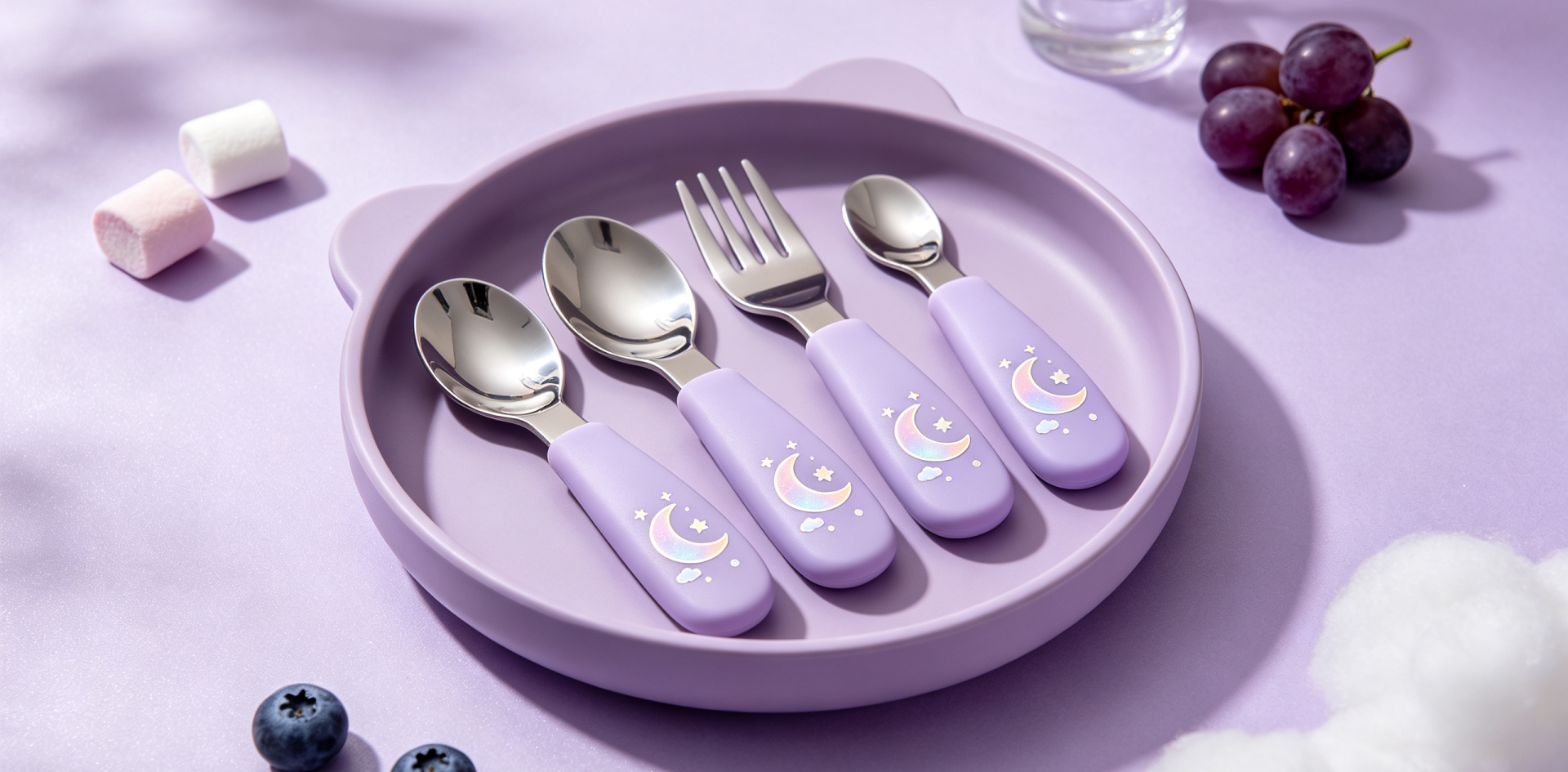
Stainless Steel Cutlery Handle End Width: A Practical Detail for B2B Custom Designs
When developing a custom stainless steel cutlery collection, buyers often define the overall handle length, width, thickness, surface finish, and general shape. One smaller detail that can also influence the appearance of a finished piece is the width at the end of the handle.
The handle end is one of the visible finishing points of a knife, fork, or spoon. Its width can affect the visual balance of the handle and the way the product looks when placed beside the other pieces in a collection.
For B2B buyers developing OEM, ODM, private label, or wholesale stainless steel flatware, handle end width can therefore be included as part of a complete product specification.
What Is Handle End Width?
Handle end width refers to the width of the handle at its terminal section.
A handle may remain relatively consistent in width from beginning to end, gradually become wider, gradually become narrower, or use a more distinctive end profile.
These different approaches can create different visual impressions even when the overall handle length remains unchanged.
For a standard catalog product, the handle end dimensions are normally already established.
For a custom private label project, however, the buyer may want to modify this area to create a particular design character.
Why the Handle End Matters
The end of the handle provides a visual conclusion to the product.
A broader end can give the handle a stronger visual finish, while a narrower end can create a lighter and more streamlined appearance.
The correct proportion depends on the complete design.
The handle end should work with the main handle width, handle length, transition area, and overall dimensions of the knife, fork, or spoon.
For this reason, it is better to treat handle end width as part of the complete handle design rather than as an isolated measurement.
Handle End Width and Overall Proportion
A stainless steel cutlery handle is a continuous visual element.
The width can change along its length, and those changes affect the overall silhouette.
If the end becomes significantly wider than the central handle section, the product may have a more substantial visual finish.
If it becomes narrower, the handle may appear more tapered toward the end.
Neither approach is automatically correct for every collection.
For OEM projects, the appropriate proportion depends on the customer's design requirements and the relationship between the handle and functional part of the utensil.
This is why handle end width can be reviewed during technical development rather than decided only after the main shape has been completed.
Creating a Consistent Cutlery Collection
A complete flatware collection often uses related handle designs across knives, forks, and spoons.
The exact dimensions may differ because each utensil has a different structure.
However, the handle end can share common design characteristics.
For example, a brand may use a similar end proportion across the knife, fork, and spoon while adapting the dimensions to each product.
This creates a visual connection between the individual pieces.
For private label brands, such consistency can help establish a recognizable product family.
OEM Customization of Handle Ends
OEM buyers may provide different types of design information.
Some customers have complete technical drawings with specific dimensions.
Others provide reference samples and ask the manufacturer to develop a customized version.
Another customer may have a general design concept but need assistance translating it into production dimensions.
Handle end width can be defined according to any of these development methods.
When the customer provides a drawing, the specified dimension can be followed during sampling.
When a reference product is provided, the manufacturer can review the existing proportions and discuss possible modifications.
The final requirement can then be confirmed through an approved sample.
Handle End Width and Sample Development
A physical sample is useful for evaluating the effect of handle end width.
The buyer can examine the complete silhouette rather than looking at one measurement by itself.
The sample can also be placed beside the matching fork and spoon.
This helps determine whether the handle end creates the intended visual relationship across the collection.
If the end appears too wide or too narrow compared with the main handle, the specification can be adjusted before mass production.
For custom B2B projects, this provides an opportunity to refine the product before committing to a large order.
Different Products, Related Design Language
Knives, forks, and spoons do not need to have identical handle dimensions.
A table knife may require a different handle proportion from a table spoon because the functional areas are different.
The important point is that the products can share a common design direction.
Handle end width can be one of the characteristics used to create that connection.
For example, a brand may want all three pieces to have a similar visual finish at the handle end while allowing each product to maintain its own functional proportions.
This approach can help create a coordinated private label flatware collection.
Handle End Width for Wholesale Products
Wholesale customers often need products that are commercially distinctive while remaining practical for larger quantities.
A customized handle can provide a recognizable appearance without requiring a complicated manufacturing structure.
The handle end is one of the details that can be adjusted during product development.
For a wholesaler developing its own range, this can help create a product assortment that is visually coordinated across different SKUs.
The same design language can then be applied to individual cutlery pieces and complete flatware sets.
Production Considerations for Custom Handles
Once the handle end design is approved, the dimensions need to be incorporated into the production specification.
The manufacturer can use the approved drawing and sample as references during mass production.
For larger quantities, consistency becomes especially important.
The final product should maintain the approved handle proportions throughout the production run.
Clear specifications also become useful when the customer places a repeat order later.
Instead of redefining the handle from the beginning, the buyer and factory can refer to the established product specification.
Private Label and Repeat Orders
Private label brands often build their collections over time.
A successful knife, fork, or spoon may remain in the assortment for multiple purchasing cycles.
This makes consistent product identification and specifications valuable.
Handle end width can be documented together with the other approved product dimensions.
When a repeat order is placed, the manufacturer can use the established reference to reproduce the product.
This helps maintain continuity across shipments and reduces the need for unnecessary redesign.
Developing a Complete Handle System
For larger private label programs, buyers may want to establish a common handle design system across multiple products.
Instead of designing each handle independently, the brand can define several shared principles.
These may include general proportions, end treatment, transition characteristics, surface finish, and visual weight.
The exact measurements can then be adapted to knives, forks, and spoons.
This approach can make it easier to expand the collection with additional SKUs while maintaining a recognizable design identity.
Homefelt for Custom Stainless Steel Cutlery Manufacturing
Homefelt specializes in stainless steel knives, forks, spoons, cutlery sets, and flatware for B2B customers.
With more than 40 years of experience in the stainless steel cutlery business, the factory supports OEM, ODM, private label, wholesale, and bulk manufacturing projects.
Customers can provide drawings, reference samples, product photographs, or initial design requirements when developing a custom collection.
Handle end width can be reviewed together with the other handle dimensions, overall product proportions, material, finish, and matching cutlery pieces.
For customers developing a complete flatware range, the handle design can also be coordinated across knives, forks, and spoons.
This gives B2B buyers a practical way to create customized stainless steel cutlery that is suitable for sampling, quotation, bulk production, and future repeat orders.
From Handle Detail to Commercial Product
A successful custom cutlery product is built from many connected design decisions.
The handle end may be a relatively small area, but its proportion contributes to the final silhouette of the product.
When this detail is defined together with the rest of the handle and the functional section, the manufacturer has a clearer basis for product development.
For B2B buyers, the combination of a clear specification, approved sample, and defined production reference can make the transition from custom design to bulk manufacturing more efficient.
If you are developing a private label stainless steel cutlery collection or sourcing custom knives, forks, and spoons for wholesale, you can send your product requirements, drawings, or reference samples to begin a quotation discussion.
Request a Custom Stainless Steel Cutlery Quotation
Develop an OEM Stainless Steel Flatware Collection
Start a Private Label Cutlery Manufacturing Project
Request Wholesale Stainless Steel Cutlery Pricing
Develop Custom Knives, Forks and Spoons
Stainless Steel Cutlery Set Piece Count: A Practical Guide for B2B Buyers
Stainless Steel Table Knife Shoulder Width: A Practical Detail for B2B Custom Designs
Related Article



