
Stainless Steel Cutlery Handle-to-Head Visual Alignment for OEM Production
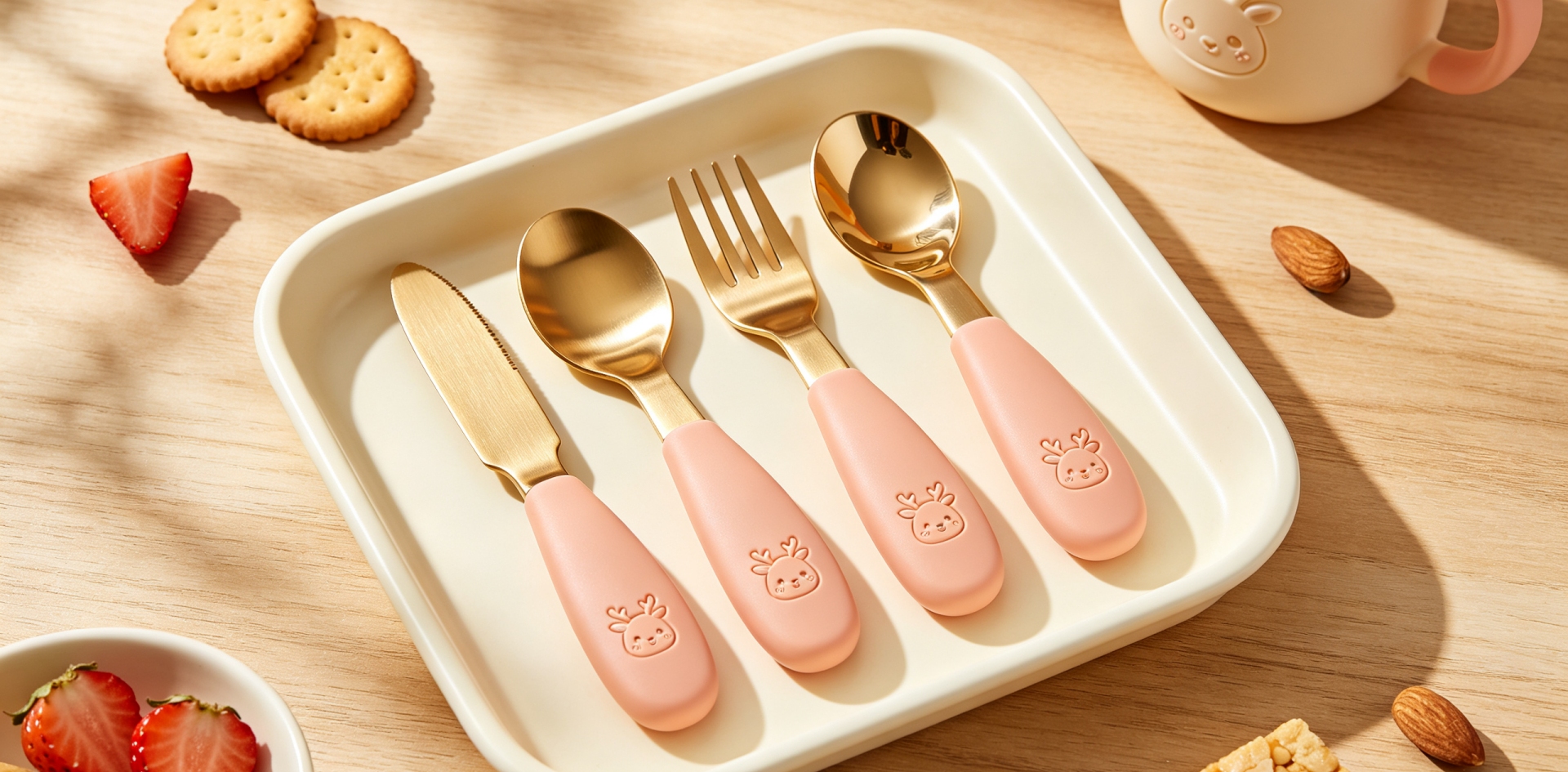
Stainless Steel Cutlery Handle-to-Head Visual Alignment for OEM Production
When buyers evaluate stainless steel cutlery, the overall appearance of a knife, fork or spoon is shaped by more than its length, material and surface finish. The relationship between the handle and the working head also influences how balanced and coordinated the product looks. Even when individual dimensions meet the drawing, an inconsistent visual transition can make pieces from the same collection appear mismatched.
For importers, distributors, hospitality suppliers and private label brands, handle-to-head visual alignment is worth reviewing during sample approval. Homefelt factory supports OEM and ODM stainless steel cutlery development, helping customers coordinate design requirements, product specifications, packaging and transportation for wholesale and bulk orders.
What Is Handle-to-Head Visual Alignment?
Handle-to-head visual alignment describes how the handle appears to connect with the functional part of a cutlery item. On a spoon, this includes the relationship between the handle centerline and the bowl. On a fork, it includes the visual relationship between the handle and fork head. On a table knife, it concerns the alignment of the handle with the blade assembly and overall profile.
This concept is related to dimensional accuracy, but it is not identical to it. A product may meet its specified length and width while still looking visually off-center because of its shape, transitions or decorative details.
The correct alignment depends on the design. Some collections intentionally use offset shapes or asymmetrical handles. The objective is not to make every product symmetrical, but to ensure that the finished item matches the approved design.
Why Alignment Matters to Wholesale Buyers
1. A consistent product collection
Retailers and distributors often sell knives, forks and spoons as a coordinated set. If the handle appears centered on one item but noticeably shifted on another without that difference being part of the design, the collection may look inconsistent.
A shared design reference helps manufacturers maintain the intended relationship between the handle and working head across different product types and sizes.
2. Visual quality in product photography
Cutlery is commonly displayed in catalogues, ecommerce listings, packaging artwork and sales presentations. Straight-on photographs can make small alignment differences easy to notice, especially when several pieces are arranged in parallel.
Reviewing samples from a consistent viewing angle helps buyers identify whether the overall appearance matches their reference before approving a bulk order.
3. Reliable private label presentation
For private label products, handle shape, logo position, surface finish and head geometry work together to create a recognizable collection. Alignment should be assessed as part of the complete design rather than as an isolated feature.
A stable reference sample can help the factory and buyer agree on the intended appearance, reducing subjective disagreements during production inspection.
Factors That Influence Handle-to-Head Alignment
Handle and head geometry
The handle may taper, widen, curve or include decorative contours. The working head also has its own geometry, such as a spoon bowl, fork head or knife blade. These features determine the visual center and transition of the finished piece.
A handle that is visually centered on a spoon may not use the same reference method as a fork or table knife. Each product should be reviewed according to its own technical drawing.
Forming and assembly
Cutlery production may involve stamping, forming, grinding, polishing and, for certain constructions, joining separate components. Variation at different stages can affect the final visual relationship between parts.
For products with joined components, buyers may also need to review the joint position and overall straightness. The applicable checks depend on whether the design uses a one-piece construction or multiple components.
Surface finish and decoration
Mirror polishing, satin finishing, colored coatings and decorative patterns can influence how the eye perceives alignment. A reflective surface may emphasize a small deviation that is less obvious on a matte finish.
Logo placement and decorative lines can also create a visual reference. They should be reviewed alongside the handle and head geometry, without assuming that decoration itself defines the product's centerline.
How to Specify Visual Alignment for OEM Orders
Use a clear technical drawing
A useful drawing identifies the handle centerline, working-head reference and relevant dimensions. For a spoon, this may include the bowl center relative to the handle. For a fork, it may include the head centerline. For a table knife, the drawing should identify the intended relationship between the handle and blade.
If the product deliberately uses an offset design, show that offset clearly rather than relying on photographs alone.
Approve a representative sample
A physical sample allows buyers to assess the product from several directions. Check the front view, side view and overall silhouette against the drawing. Where relevant, review the item beside matching pieces from the same collection.
The approved sample should correspond to the correct material, finish, decoration and design revision. Otherwise, later changes may make comparisons unreliable.
Agree on measurable acceptance criteria
Terms such as “centered,” “straight” or “visually balanced” can be interpreted differently. Where alignment is critical, identify the reference points and define the permitted deviation on the drawing or inspection specification.
Not every visual feature needs a separate numerical tolerance. The important point is to establish a repeatable evaluation method that both the buyer and manufacturer understand.
Quality Inspection for Bulk Production
For large-volume stainless steel cutlery orders, handle-to-head alignment can be included in a practical inspection plan.
-
Compare the finished item with the current approved drawing and sample.
-
Check the specified centerline or offset at the defined reference points.
-
Review the overall silhouette under consistent lighting and viewing conditions.
-
Inspect matching knives, forks and spoons together to identify unintended differences.
-
Confirm that polishing and decoration do not obscure required reference features.
-
Record nonconforming samples and verify corrective actions before approving further production.
A fixture, profile template or suitable measuring instrument may be useful when a particular alignment dimension requires repeatable measurement. The inspection method should reflect the product design and agreed acceptance requirements.
For buyers who need formal quality documentation, the inspection plan can identify sampling rules, measurement records and relevant test reports. Requirements should be confirmed before production begins, especially for projects with retailer-specific quality procedures.
Material and Manufacturing Considerations
Stainless steel grade, sheet thickness, forming characteristics and finishing requirements all contribute to the final product. Common material choices include 304 and 430 stainless steel, but the appropriate grade depends on the intended application, product design and buyer specification.
Material selection alone does not guarantee visual alignment. The drawing, tooling, forming process, assembly method and finishing operations must work together to produce the required shape.
For private label and wholesale orders, buyers should confirm the material grade, product dimensions, surface treatment and applicable documentation in the purchase specification. This provides a consistent reference for sample approval and production inspection.
Example: Coordinating a Private Label Cutlery Set
A distributor may be preparing a set containing dinner spoons, forks and table knives. The initial samples have similar finishes and handle decorations, but the working heads appear to sit differently relative to the handles.
The buyer and factory can compare the pieces against their drawings, identify the correct reference points and determine whether the differences are intentional design features or production deviations. Once the specifications are clarified, the revised sample can be checked as a complete set before mass production.
This approach is especially useful when several sizes share a similar handle design. It helps maintain a coordinated appearance without requiring every piece to have identical geometry.
OEM and ODM Cutlery Support from Homefelt Factory
Homefelt factory provides stainless steel knife, fork and spoon customization for wholesale buyers, importers, distributors and private label brands. Project discussions can cover product dimensions, material specifications, handle design, head geometry, surface finishes, logo application, packaging and shipment arrangements.
Homefelt's experience in stainless steel cutlery manufacturing supports projects that require coordinated product development and larger-volume production. Its documented credentials include BSCI, SEDEX 4P, BRC and ISO 9001, along with Disney audit experience and FAMA and FSC certificates for applicable projects. Buyers should verify the scope of each document against their specific product and market requirements.
A one-stop service arrangement can bring product design, sample development, production, packaging and transportation into one coordinated project. To receive a more relevant quotation, buyers can provide reference images or drawings, estimated quantities, material preferences, packaging needs and target delivery dates.
You May Be Interested In
Website: //www.huabao-homecollection.com/
Stainless Steel Fork Head Plane Angle for OEM and Private Label Manufacturing
Stainless Steel Spoon Bowl Sidewall Angle for OEM and Private Label Production
Related Article



