
Stainless Steel Cutlery Master Sample for OEM and Bulk Production
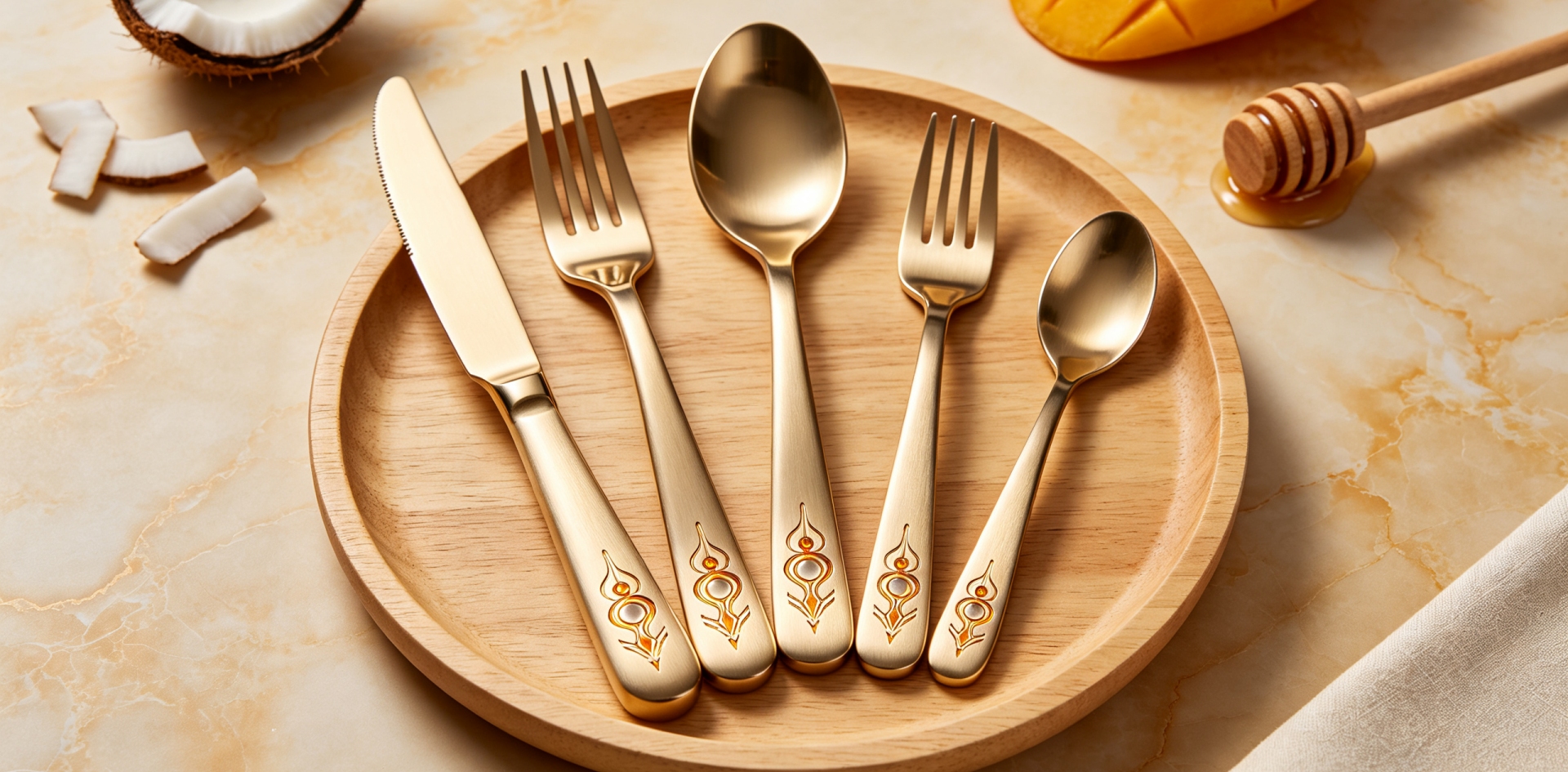
Stainless Steel Cutlery Master Sample for OEM and Bulk Production
For a B2B stainless steel cutlery project, written specifications are important, but a physical product can often communicate details that are difficult to describe in words.
The appearance of a spoon, fork or knife includes many visual and tactile characteristics. Buyers may want the production pieces to follow the same overall appearance as an approved reference, especially when the product is part of an established private label collection.
A master sample can provide a practical physical reference for the manufacturing project.
For OEM and bulk buyers, using a clearly identified master sample can help connect product development, purchasing and production through one common reference.
What Is a Master Sample?
A master sample is an approved physical product kept as a reference for manufacturing and project communication.
For stainless steel cutlery, it may represent the agreed version of a spoon, fork, knife or complete flatware item.
The sample can help demonstrate details such as:
-
Overall appearance
-
Product shape
-
Handle styling
-
Surface appearance
-
Relative proportions
-
Product feel
-
General finish
-
Construction details
It does not replace technical specifications, drawings or other required documentation. Instead, it works alongside them.
This combination can be particularly useful when a product contains visual characteristics that are difficult to describe precisely through text alone.
Why Physical Reference Matters for Cutlery
Stainless steel cutlery is a highly visual product.
Two products may both be described as stainless steel spoons, yet their appearance can be noticeably different because of handle styling, bowl shape, surface treatment or overall proportions.
For a private label brand, these differences can matter because the product is connected with the brand's established presentation.
A physical master sample gives the factory a direct reference to the approved product.
For Homefelt factory, customer samples, drawings and product requirements can be reviewed together when preparing OEM and ODM stainless steel cutlery projects.
This helps the manufacturing team understand not only what the product is called, but also what the buyer expects the finished item to represent.
Selecting the Right Master Sample
Not every sample should automatically become the production reference.
The master sample should ideally be the version that the buyer has formally approved for production.
For a new stainless steel cutlery project, the process may involve:
-
Initial product concept or reference
-
Product discussion
-
Sample development
-
Customer review
-
Adjustments if required
-
Final approval
-
Master sample confirmation
Once the final product has been approved, the buyer and manufacturer can identify which sample should be treated as the production reference.
This is particularly useful when several samples have been exchanged during product development.
Avoiding Multiple Reference Samples
One potential problem in B2B manufacturing is having several samples that appear similar but represent different stages of development.
If the buyer has one sample in the purchasing department, another at the design office and another at the factory, the project can become difficult to manage if their status is unclear.
A simple identification system can help.
The master sample can be labeled with:
-
Product reference
-
Customer name or project reference
-
Approval date
-
Product description
-
Sample status
The exact system can be adapted to the buyer's internal process.
The important point is that both buyer and factory should know which physical reference represents the approved production requirement.
Connecting the Sample With the Purchase Order
A master sample becomes more useful when it is connected with the commercial order.
For example, the purchase order may identify a stainless steel spoon by its product reference and indicate that production should follow the approved master sample and corresponding specification.
This creates a clear connection between:
Customer requirement → Approved sample → Purchase order → Production
Such a structure can be especially helpful for repeat OEM orders.
When the buyer reorders the same product, the established master sample can continue to serve as a physical reference for the manufacturing relationship.
Master Samples for Private Label Flatware
Private label buyers often have stronger requirements for collection consistency.
A branded stainless steel flatware collection may contain several related products, such as knives, forks and spoons.
Each item can have its own master sample, while the complete collection can also be reviewed together.
The buyer may want to confirm that the products communicate the same design language without requiring every item to be identical.
For example, a spoon and fork may share a similar handle appearance while naturally having different functional shapes.
Homefelt can manufacture stainless steel knives, forks, spoons and flatware sets for private label customers and coordinate product requirements across the collection.
Using Samples During Production
The master sample is primarily a reference, not a substitute for the factory's production controls.
During manufacturing, the factory still needs to follow the agreed product specifications and applicable quality requirements.
The sample provides a practical visual and physical benchmark that can support communication when discussing the product.
For a B2B buyer, this can make conversations about product appearance more concrete.
Instead of describing a preferred appearance only through words, both sides can refer to the same approved physical product.
This is particularly useful for stainless steel cutlery because subtle differences in shape and finish can be easier to understand through direct comparison.
Master Sample and Packaging Reference
The product itself is not the only part of a private label project that may need a physical reference.
Packaging can also be represented by an approved sample where appropriate.
For example, a customer may approve a branded flatware box together with the stainless steel cutlery inside it.
In this case, the project can maintain separate references for:
-
Stainless steel cutlery
-
Retail packaging
-
Inner packaging
-
Outer carton arrangement
Homefelt provides one-stop service covering product design, manufacturing, packaging and transportation, so product and packaging requirements can be coordinated within the same project.
Useful for Repeat Orders
The value of a master sample becomes particularly clear when a customer places repeat orders.
Instead of restarting the product discussion every time, the buyer and manufacturer can refer to the established product reference.
The new order can then specify:
-
Existing product reference
-
Required quantity
-
Packaging arrangement
-
Delivery requirement
-
Any approved changes
If there are no changes, the established master sample continues to provide a useful physical benchmark.
If changes are required, the buyer can establish a new approved reference rather than leaving the factory to interpret an old sample.
Supporting Large-Volume Manufacturing
Large-volume orders benefit from clear references because the commercial impact of misunderstanding a product requirement can be greater.
For example, a private label buyer ordering thousands of stainless steel knives, forks and spoons needs confidence that the factory understands the intended product before production begins.
Homefelt has 40 years of experience in the stainless steel cutlery business and supports OEM, ODM, private label, wholesale and large-volume manufacturing.
The factory has experience working with well-known brands and can review customer samples, specifications and project requirements when preparing production.
Certification and Manufacturing Background
A master sample does not replace factory qualification or product documentation.
B2B buyers may also review the manufacturer's relevant certifications, audits and testing information.
Homefelt has passed BSCI, SEDEX 4P, BRC and ISO9001-related requirements, with experience involving Disney audits. The company also has FAMA and FSC certificates.
The documentation applicable to each order should be confirmed according to the customer's target market, product requirements and purchasing standards.
For professional sourcing, the physical sample, product documentation and factory capability should be considered together.
Creating a Clear Production Reference
The purpose of a master sample is simple: to make the approved product easier to understand and reproduce.
For stainless steel cutlery buyers, it can provide a practical connection between design, purchasing and manufacturing.
A useful reference system does not need to be complicated. The key is to identify the approved sample clearly and make sure the factory and buyer are referring to the same product.
For OEM, ODM and private label programs, this can create a more reliable foundation for both initial orders and future repeat purchasing.
Homefelt factory provides stainless steel knife, fork, spoon and flatware manufacturing for brands, distributors and wholesale buyers. The factory can support product development, manufacturing, packaging and transportation as part of a one-stop service adapted to customer requirements.
If you are developing a new stainless steel cutlery collection or transferring an existing product to a manufacturing partner, you can send Homefelt your reference samples, product specifications, estimated quantities and packaging requirements. The team can review the project and discuss the next manufacturing steps.
Stainless Steel Cutlery Production Changeover for OEM and Bulk Orders
Stainless Steel Cutlery Split Shipment for OEM and Wholesale Orders
Related Article



