
Stainless Steel Cutlery Material Yield for B2B Projects
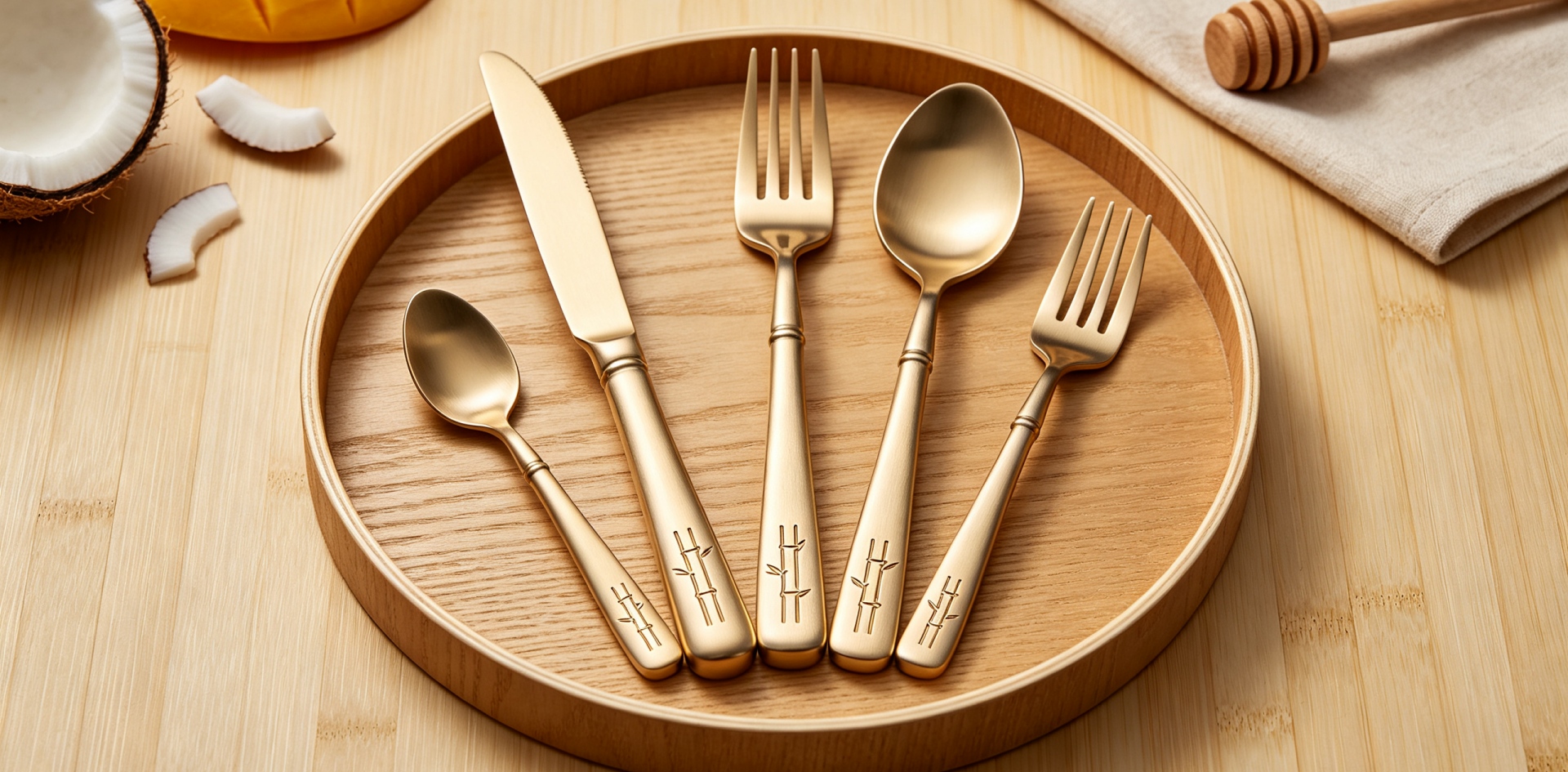
Stainless Steel Cutlery Material Yield for B2B Projects
When a company develops custom stainless steel cutlery, the quotation is influenced by more than the finished weight of each spoon, fork or knife. The way stainless steel material is used during manufacturing can also affect production efficiency and the overall economics of a B2B project.
This is why material yield is a useful consideration when developing customized flatware.
For buyers, understanding the basic relationship between product design, material usage and production can make discussions with a stainless steel cutlery manufacturer more practical. It can also help when comparing different design options before committing to a large order.
What Is Material Yield in Cutlery Manufacturing?
Material yield refers broadly to how efficiently raw stainless steel material is converted into finished products.
Stainless steel cutlery is manufactured from material that goes through processes such as cutting, forming, stamping and finishing. Depending on the product design and production method, not every part of the original material becomes part of the finished knife, fork or spoon.
The design of the product therefore has a direct relationship with material utilization.
A simple and well-balanced cutlery shape may allow efficient use of raw material, while a more complex design can require different production arrangements.
For B2B buyers, this does not mean that every product should be designed purely around material efficiency. The commercial objective is to find a practical balance between the desired product appearance, function, quality and manufacturing cost.
How Cutlery Design Influences Material Usage
The dimensions and shape of stainless steel cutlery can influence how material is used during production.
For example, a wider handle requires more material than a narrower handle. A longer product naturally requires a larger material area. Certain decorative shapes or unusual profiles may also influence how efficiently material can be arranged for production.
These factors become more noticeable when a product is manufactured in large quantities.
A difference that appears small on one individual spoon or fork can become commercially relevant when multiplied across thousands of pieces.
This is one reason why custom product development should consider manufacturing requirements at an early stage.
Material Yield and Custom Cutlery Quotations
When a B2B buyer requests a quotation for customized stainless steel flatware, the manufacturer needs to understand the product before calculating the production cost.
Product dimensions, material specification, thickness, weight, construction and manufacturing requirements all contribute to the quotation.
Material yield is one of the production considerations behind this calculation.
A buyer does not necessarily need to calculate material yield independently. Instead, providing accurate drawings, samples and product requirements allows the factory to evaluate the proposed design using its manufacturing experience.
This can be especially helpful when a brand is comparing several versions of the same product.
For example, two handle designs may provide a similar visual impression but require different amounts of stainless steel material. Reviewing these differences with the manufacturer can help the buyer understand the practical production implications before selecting the final design.
Why Design Development Should Consider Production
A common challenge in custom OEM projects is developing a product that looks attractive but is difficult to manufacture efficiently.
A successful stainless steel cutlery design needs to work not only as a drawing but also as a physical product.
The manufacturer therefore needs to consider how the design moves through production.
For a spoon, fork or knife, the overall dimensions and shape can affect the material requirements and manufacturing process. When several SKUs belong to the same collection, the relationship between their designs can also influence the overall production program.
This is where communication between the product development team and the factory becomes valuable.
A manufacturer can review the proposed design and explain which elements may have a significant effect on production.
Balancing Design and Commercial Requirements
B2B cutlery buyers often have several objectives at the same time.
A private label brand may want a distinctive handle. A wholesaler may need a competitive target price. A distributor may require a collection with several different SKUs. A hospitality project may prioritize practical specifications and large-volume supply.
Material efficiency can be considered alongside these requirements rather than treated as a separate issue.
A slightly different handle profile may provide a better balance between appearance and manufacturing efficiency. A coordinated collection may allow related products to share certain production characteristics.
The purpose is not simply to reduce the amount of stainless steel used. It is to develop a product that makes commercial sense for the intended market.
Material Yield in Large-Volume Production
The relationship between material utilization and order quantity becomes more significant as production volume increases.
For a small sample order, the difference may have limited commercial importance. For a large wholesale or private label program, however, manufacturing efficiency can have a much greater impact.
This is why B2B buyers planning bulk production should discuss the intended order quantity during product development.
The factory can then evaluate the design in the context of actual production rather than considering the product only as an individual sample.
This also helps when a brand expects to reorder the same cutlery design in the future.
Planning Several Cutlery SKUs Together
Material efficiency can also be considered at collection level.
A stainless steel flatware range may contain knives, forks and spoons with related handle designs. If the collection has been developed as a coordinated product family, the manufacturer can evaluate the different SKUs together.
This does not mean that every product should have identical dimensions or manufacturing characteristics. Each piece still needs to perform its intended function.
Instead, the objective is to create a collection where the design decisions are commercially and technically coherent.
For brands preparing a larger private label range, this approach can make the product development process more systematic.
How Buyers Can Discuss Material Efficiency With a Factory
A B2B buyer does not need to use highly technical manufacturing terminology when discussing material yield.
A practical conversation can start with a few simple questions:
Does the proposed design use stainless steel efficiently?
Would a small dimensional adjustment affect manufacturing cost?
Are there design elements that significantly increase material usage?
Can the same design language be maintained across several SKUs?
Would the factory recommend any production-oriented changes before finalizing the design?
These questions give the manufacturer an opportunity to explain the practical implications of the design.
For OEM and ODM projects, this type of communication can be useful before tooling, sampling and bulk production decisions are finalized.
Homefelt for Custom Stainless Steel Cutlery Manufacturing
Homefelt focuses on stainless steel knives, forks, spoons and cutlery sets for B2B customers. With more than 40 years of experience in the stainless steel cutlery business, the factory works with brands, wholesalers and other professional buyers on OEM, ODM, private label and bulk manufacturing projects.
When developing a customized cutlery product, the factory can work from buyer-provided drawings, samples or product concepts and evaluate the requirements from a manufacturing perspective.
For buyers planning a new collection, discussing material usage during the development stage can provide useful information before the final product is released for bulk production.
The most commercially effective cutlery design is not necessarily the one that uses the least material. It is the design that achieves the required appearance, function and quality while remaining practical to manufacture at the intended production volume.
For B2B customers, considering material yield early can therefore become another useful part of professional cutlery sourcing and product development.
Custom Stainless Steel Cutlery Manufacturing
Stainless Steel Cutlery Raw Material Planning for B2B Orders
Pre-Production Meetings for B2B Stainless Steel Cutlery
Related Article



