
Stainless Steel Cutlery Neck Width: A Practical Detail for Custom B2B Designs
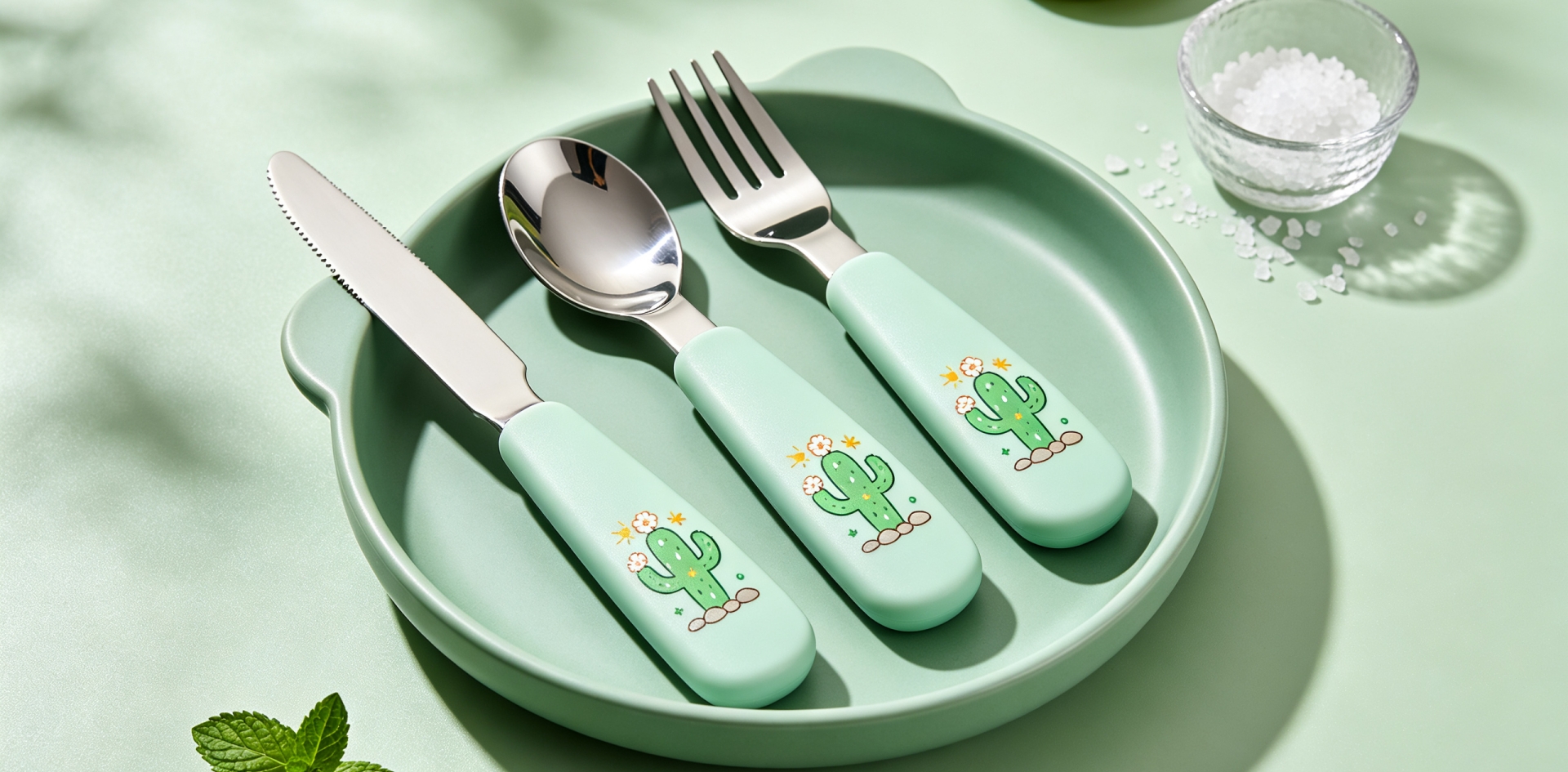
Stainless Steel Cutlery Neck Width: A Practical Detail for Custom B2B Designs
When a B2B buyer develops a custom stainless steel cutlery collection, attention naturally goes to the overall silhouette, handle design and surface finish. Yet some of the most important design decisions are found in smaller areas of the product.
The neck of a cutlery piece is one of them.
The neck connects the handle with the functional section of a knife, fork or spoon. Its width and shape can influence the overall proportions, visual balance and character of the finished piece. In a custom project, this small area can also affect how different products work together as a collection.
For OEM and private label buyers, understanding the role of neck width can make product development discussions more precise and help turn a design concept into a practical manufacturing specification.
Why the Neck Area Matters
Although the neck occupies only a relatively small part of a cutlery piece, it creates an important visual connection between two different sections.
A handle may have a broad, narrow, curved or geometric design, while the functional section has its own required shape. The neck needs to connect these areas naturally.
If the neck is too narrow compared with the handle, the product can have a very different visual character from one with a broader connection. Likewise, a wider neck can create a stronger transition between the two sections.
For a standard product, these proportions have already been established. For a custom product, they need to be considered as part of the overall design.
Neck Width and Overall Proportions
The appearance of a cutlery piece is determined by the relationship between its individual dimensions rather than by one measurement alone.
Handle width, handle thickness, total length, functional section and neck width all contribute to the final silhouette.
This is especially relevant when developing a complete flatware collection.
A knife, fork and spoon do not have identical functional shapes, but they can still share similar proportions and visual characteristics. A consistent approach to the neck area can help the pieces look like members of the same collection.
For private label brands, this type of consistency can be an important part of product identity.
Different Cutlery Pieces Need Different Considerations
The neck cannot always be designed in exactly the same way for every product.
A table knife has a blade, while a fork has tines and a spoon has a bowl. These functional sections naturally create different shapes and requirements.
The neck therefore needs to connect the handle with each functional section while maintaining the intended appearance.
A manufacturer developing several SKUs for one customer may need to adjust individual dimensions while preserving the common design language.
This is one reason why developing a complete collection can be more involved than simply applying one handle design to several products.
Neck Width and Handle Design
The relationship between the neck and handle is particularly important when the handle itself has a distinctive shape.
For example, a handle that gradually widens toward the end creates a different visual effect from a straight handle. If the neck width is changed without considering the rest of the handle, the overall balance can be affected.
The same applies to decorative handles.
When a brand develops a custom collection, it is useful to look at the complete handle profile rather than discussing the neck as an isolated detail.
Reference drawings or samples can help the manufacturer understand the intended relationship between these areas.
A Small Change Can Affect the Whole Silhouette
One advantage of working with physical samples is that buyers can see how individual dimensions interact.
A change in neck width may appear insignificant on a technical drawing but become much more noticeable once the complete cutlery piece is produced.
The sample stage gives the buyer an opportunity to evaluate the proportions from different angles and compare the new design with the other pieces in the collection.
If adjustments are necessary, they can be discussed before bulk production.
For OEM projects, this development stage is particularly useful because the final product may be based on a design that does not yet exist as a standard factory item.
Neck Design and Manufacturing
From the manufacturing side, the neck is also part of the product geometry that must be formed consistently.
The manufacturer needs to consider how the desired shape can be produced and repeated across a larger quantity.
A custom design may require specific forming or tooling arrangements depending on its geometry.
This does not mean that every new neck design is complicated. Many custom projects use relatively straightforward shapes. The important point is that the design should be evaluated together with the intended production method.
A practical design is one that looks right in the sample and can also be reproduced consistently in series production.
Why Production Volume Matters
The expected quantity is relevant when discussing a new custom design.
A brand developing a long-term product range may plan regular bulk orders. In this situation, it is important that the approved neck geometry can be maintained across future production batches.
For a one-time promotional project, the commercial requirements may be different.
This is why B2B buyers should communicate their expected order volume and future purchasing plans whenever possible.
The manufacturer can then understand whether the project is intended as a single order or as a continuing product program.
Building a Consistent Private Label Collection
Private label brands often want their products to have a recognizable appearance.
That recognition does not always come from a large logo or an unusual decorative element. It can also come from the proportions and small design details used consistently across the collection.
The neck area can contribute to this visual language.
For example, several models can use related neck proportions while adapting the functional sections to the specific purpose of each piece.
This approach can create a collection that feels coordinated without making every product look exactly the same.
How to Communicate Neck Requirements to a Manufacturer
A buyer does not necessarily need to provide a fully engineered drawing to begin a discussion with a factory.
If neck width is an important part of the design, the buyer can provide an approximate dimension, reference photograph or sample. It can also be useful to indicate whether the neck should appear slim, broad, straight, curved or integrated into the handle design.
If exact measurements are already available, they should be included.
The manufacturer can then review the information together with the other product requirements.
This type of communication is particularly helpful when the project involves several SKUs.
Avoid Treating Each Dimension Separately
One of the most useful principles in custom cutlery development is to consider dimensions as a system.
Changing the neck width may affect the visual relationship with the handle. Changing the handle width may affect the overall proportions. Adjusting the total length can change how both areas appear.
For this reason, a manufacturer should evaluate the design as a complete product rather than approving each measurement independently.
This approach can reduce unnecessary revisions during sample development and make the final product more coherent.
The Role of Samples in B2B Development
A custom cutlery sample is more than a simple product preview.
It allows the buyer to evaluate the actual proportions, surface, weight and visual relationship between the different sections.
For a new OEM collection, the sample can also serve as a reference for future production.
Once the buyer approves the design, the manufacturer has a clearer basis for moving toward bulk manufacturing.
For brands planning repeat orders, this continuity can be especially valuable.
From Design Discussion to Bulk Production
A successful B2B cutlery project usually develops through several practical stages.
The buyer begins with a product concept and commercial requirements. The manufacturer reviews the design and production possibilities. Technical details are clarified, a sample is developed and the buyer provides approval.
After approval, the product can move toward larger-scale production.
The more clearly the important design details are discussed at the beginning, the easier it becomes to maintain the intended product during these stages.
This is particularly important when the cutlery will become part of a long-term wholesale or private label range.
Working With an Experienced Stainless Steel Cutlery Manufacturer
Custom details such as neck width show why manufacturing experience matters when developing stainless steel flatware.
A design needs to work visually, functionally and commercially. At the same time, it needs to be suitable for consistent production.
Homefelt has more than 40 years of experience in the stainless steel cutlery business and works with international B2B customers on custom knives, forks, spoons and flatware sets.
For OEM and private label projects, customers can provide their own concepts, drawings, photographs or reference products. These materials can be used as the starting point for discussing the design and production requirements.
If you are planning a new cutlery range, you do not need to have every technical detail finalized before contacting a manufacturer.
You can start with the products you need, the desired design direction, approximate quantities and any important visual requirements. The manufacturer can then help clarify the details needed for sample development and production.
The neck may be a small section of a stainless steel cutlery piece, but it demonstrates an important principle in product development: small proportions can have a noticeable influence on the finished product.
For B2B brands, wholesalers and distributors, paying attention to these details during the development stage can help create a more consistent collection and a clearer manufacturing specification.
If your company is preparing a custom stainless steel cutlery project, sharing your design concept with a manufacturer is a practical first step toward discussing samples, quotations and bulk production.
Request a Custom Stainless Steel Cutlery Quotation
Discuss Your OEM Flatware Design
Request a Private Label Cutlery Sample
Fourchette Inox : Design de l’Épaule pour les Projets B2B sur Mesure
Edelstahlbesteck Griffbreite: Ein wichtiger Designfaktor für B2B-Projekte
Related Article



