
Stainless Steel Cutlery Order Specifications for B2B Buyers
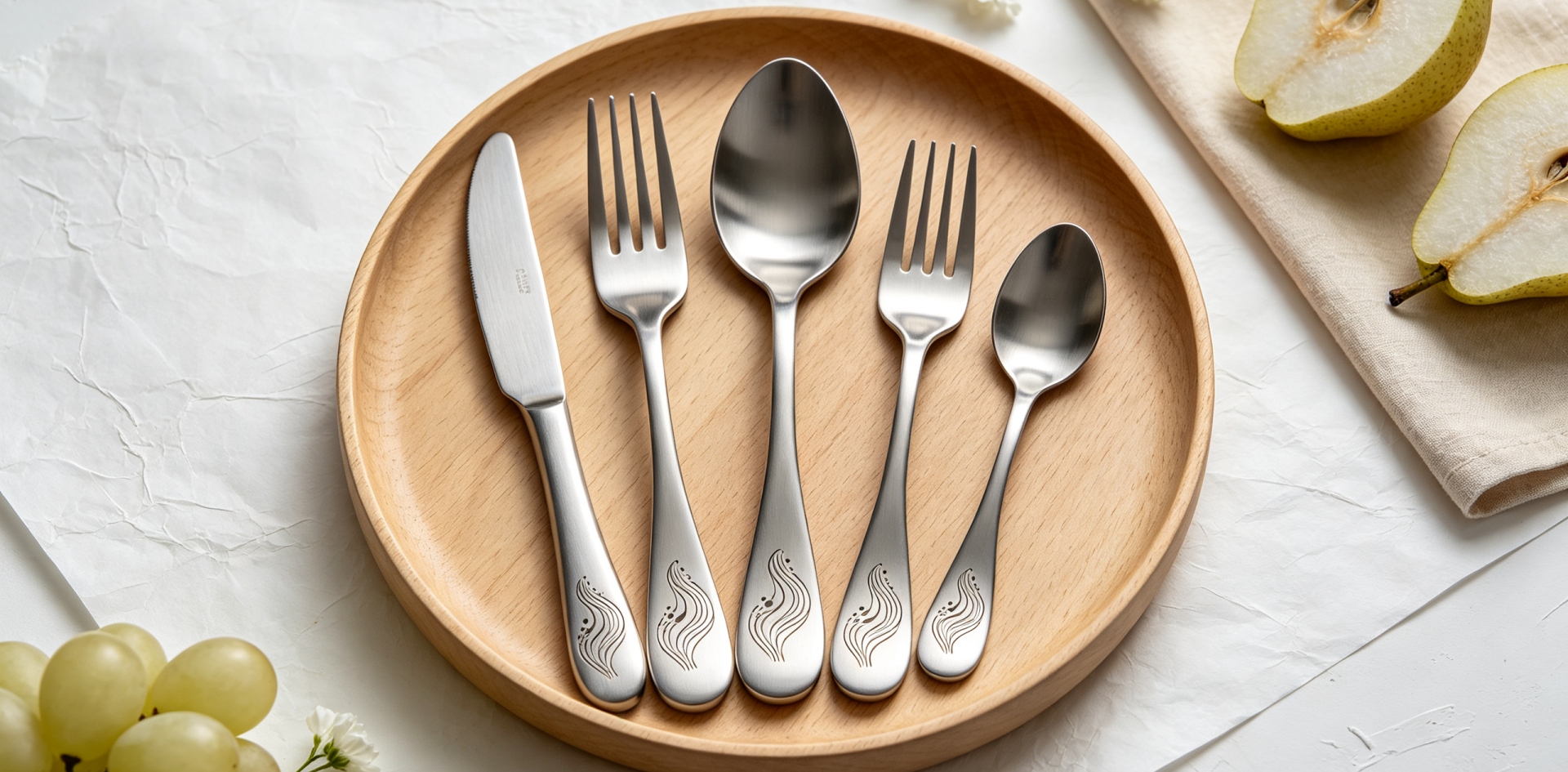
Stainless Steel Cutlery Order Specifications for B2B Buyers
When a B2B buyer moves from product discussion to actual purchasing, one of the most important steps is making sure the product information is clear.
This is particularly important for stainless steel cutlery because a commercial order may contain several knives, forks, spoons and complete flatware sets. Similar-looking products can have different dimensions, finishes, branding details or packaging requirements.
A clear order specification gives the buyer and manufacturer a shared reference before production begins.
Why Order Specifications Matter
A product name such as “stainless steel spoon” may be enough for a simple inquiry, but it is often not enough for a customized commercial order.
A buyer may require a particular material, thickness, length, surface finish or handle design.
A fork may have a specific number of tines or a defined overall length. A knife may require a particular blade profile. A spoon may need a certain bowl proportion.
When these details are organized clearly, the manufacturer has a much better understanding of what the buyer actually wants to purchase.
For B2B projects, clear specifications also make future repeat orders easier to manage.
What Information Should Be Included?
The exact requirements depend on the product, but a practical stainless steel cutlery specification can include several basic categories.
Product identification
Each product should have a clear name, product code or other reference.
For a collection containing multiple SKUs, using individual references can prevent confusion between similar products.
For example, a buyer may have several spoons with different sizes. Giving each one a clear reference is more useful than describing all of them simply as “spoon.”
Material Information
The material should be identified according to the agreed product specification.
For stainless steel cutlery, buyers may have a defined stainless steel grade or material requirement.
If a project has specific material documentation or testing requirements, these should also be communicated clearly before production.
This allows the manufacturer to evaluate the requirements accurately during the product development and quotation stages.
Dimensions and Product Size
Dimensions are another important part of an order specification.
Depending on the product, relevant information may include:
Overall length
Handle length
Handle width
Spoon bowl dimensions
Fork head dimensions
Knife blade dimensions
Product thickness
The manufacturer can use these details together with approved drawings or samples.
For custom cutlery, dimensions should ideally be confirmed before the order moves into mass production.
Product Weight
Weight can also be relevant for commercial cutlery projects.
A buyer developing a particular collection may want the knives, forks and spoons to have a consistent feeling in the hand.
If weight is part of the approved specification, it can be recorded as a product requirement.
For large-volume orders, having a clear reference helps both sides understand the intended product construction.
Surface Finish
Stainless steel cutlery can be produced with different surface appearances depending on the project.
A buyer may request a standard polished appearance or another agreed finish.
The specification should identify the required finish clearly, especially when several finishes are being developed for the same collection.
For a private label range, consistency between products is often important because the knife, fork and spoon need to look like part of the same collection.
Handle Design
The handle is one of the most visible parts of stainless steel cutlery.
A specification can identify the general handle shape, proportions, decorative elements and other agreed design details.
For OEM and ODM projects, the buyer may provide drawings or reference samples.
If the handle design has already been approved, that approved reference should be clearly identified in the order documentation.
Knife Specifications
Knives often require additional product information because the blade has a specific functional role.
Depending on the project, the specification may identify:
Knife type
Overall length
Blade dimensions
Handle dimensions
Blade profile
Surface finish
Cutting-edge requirements
The exact information depends on the intended application and design.
A clear specification helps the manufacturer understand the intended knife configuration rather than relying only on a product name.
Fork Specifications
Forks can also contain several design details that matter during custom manufacturing.
The buyer may specify the overall length, head dimensions, handle design and other structural characteristics.
If a collection contains dinner forks, dessert forks or other fork styles, each product should have its own reference.
This becomes particularly useful when a wholesale buyer manages a large product range.
Spoon Specifications
For spoons, the specification can cover the overall dimensions as well as the bowl and handle design.
Different spoon styles can serve different applications, so using clear product references is useful when several spoon SKUs are ordered together.
For a custom collection, the spoon should also match the overall visual language of the knives and forks.
Branding Requirements
Private label customers may need branding information to be included in their product specifications.
This can include:
Logo
Logo position
Logo size
Branding method
Approved artwork
Brand reference
The buyer should provide the latest approved branding information.
If the same logo is used across multiple products, identifying the approved artwork can help maintain consistency across the collection.
Packaging Information
Packaging can be another part of the order specification.
A buyer may order individual cutlery pieces, multi-piece sets or retail-ready flatware sets.
The specification can identify the required packaging configuration and product-to-packaging relationship.
For example, a four-piece set and a six-piece set are different commercial products even when some of the individual cutlery pieces are identical.
Clear packaging information helps connect the correct product combination with the correct sales format.
Specification for Multi-SKU Orders
Large B2B buyers often purchase several products in one project.
A useful specification document can organize the collection in a simple table containing:
Product code
Product name
Material
Dimensions
Finish
Quantity
Branding
Packaging
Approved reference
This structure gives purchasing teams and manufacturers a practical overview.
It also makes it easier to identify missing information before the order moves forward.
Using Drawings and Samples
Written specifications are useful, but they do not always communicate every design detail.
For custom stainless steel cutlery, technical drawings and physical samples can provide additional references.
A buyer may specify a product using a drawing together with an approved sample.
The important point is that the relevant references should be clearly identified so both sides know which version applies to production.
This is especially useful for products with complex handle shapes or small decorative details.
Keeping Specifications Consistent Across a Collection
A successful flatware collection is not only about individual products.
The knives, forks and spoons should also work together as a commercial range.
For example, the handle proportions and surface appearance may need to create a consistent visual identity.
When developing a collection, buyers can therefore organize the specifications for all products together rather than treating every SKU as a completely separate project.
This gives the manufacturer a clearer understanding of the overall collection.
Specifications for OEM and ODM Projects
OEM customers may already have detailed product requirements.
ODM customers may develop some specifications together with the manufacturer.
In both cases, the final approved information should be clearly documented before bulk production.
A professional stainless steel cutlery manufacturer can review the specifications and identify any details that need clarification during the development stage.
This creates an opportunity to solve questions before manufacturing rather than after production has started.
Private Label Applications
For private label brands, product specifications become part of the wider product development process.
The buyer may be coordinating product design, branding, packaging and retail requirements at the same time.
A clear specification helps keep these elements connected.
When a brand expands its collection later, the existing specifications can also provide a useful reference for new products.
This can make product development more organized as the brand grows.
Homefelt for B2B Stainless Steel Cutlery Manufacturing
Homefelt manufactures stainless steel knives, forks, spoons and complete cutlery sets for international B2B customers.
The factory supports OEM, ODM, private label and wholesale projects, including customized product requirements and bulk production.
Buyers can provide product ideas, drawings, samples, specifications or existing product references when discussing a new project.
For customers developing a complete flatware collection, organizing the product information clearly can help both sides move from initial discussion toward a confirmed manufacturing project.
Whether you are a distributor, retailer, hospitality supplier or private label brand, a detailed product specification gives your stainless steel cutlery project a clearer foundation.
From Product Information to a Manufacturing Project
A good specification does not need to be unnecessarily complicated.
Its purpose is to answer the practical questions a manufacturer needs in order to understand the product: What is being purchased? Which version is required? What material and dimensions apply? What finish and branding are needed? How should the product be packed?
When these details are clear, the communication between buyer and factory becomes more efficient.
For B2B stainless steel cutlery projects, this can be particularly valuable when the order includes multiple SKUs or customized products.
If you are preparing a new stainless steel cutlery project, sharing your product specifications with an experienced manufacturer can be a practical first step toward developing samples, confirming requirements and moving toward bulk production.
Request a Stainless Steel Cutlery Quote
Discuss Your Custom OEM Flatware Project
Protecting Custom Stainless Steel Cutlery Designs in B2B
Stainless Steel Cutlery Version Control for B2B Orders
Related Article



