
Stainless Steel Cutlery Version Control for B2B Orders
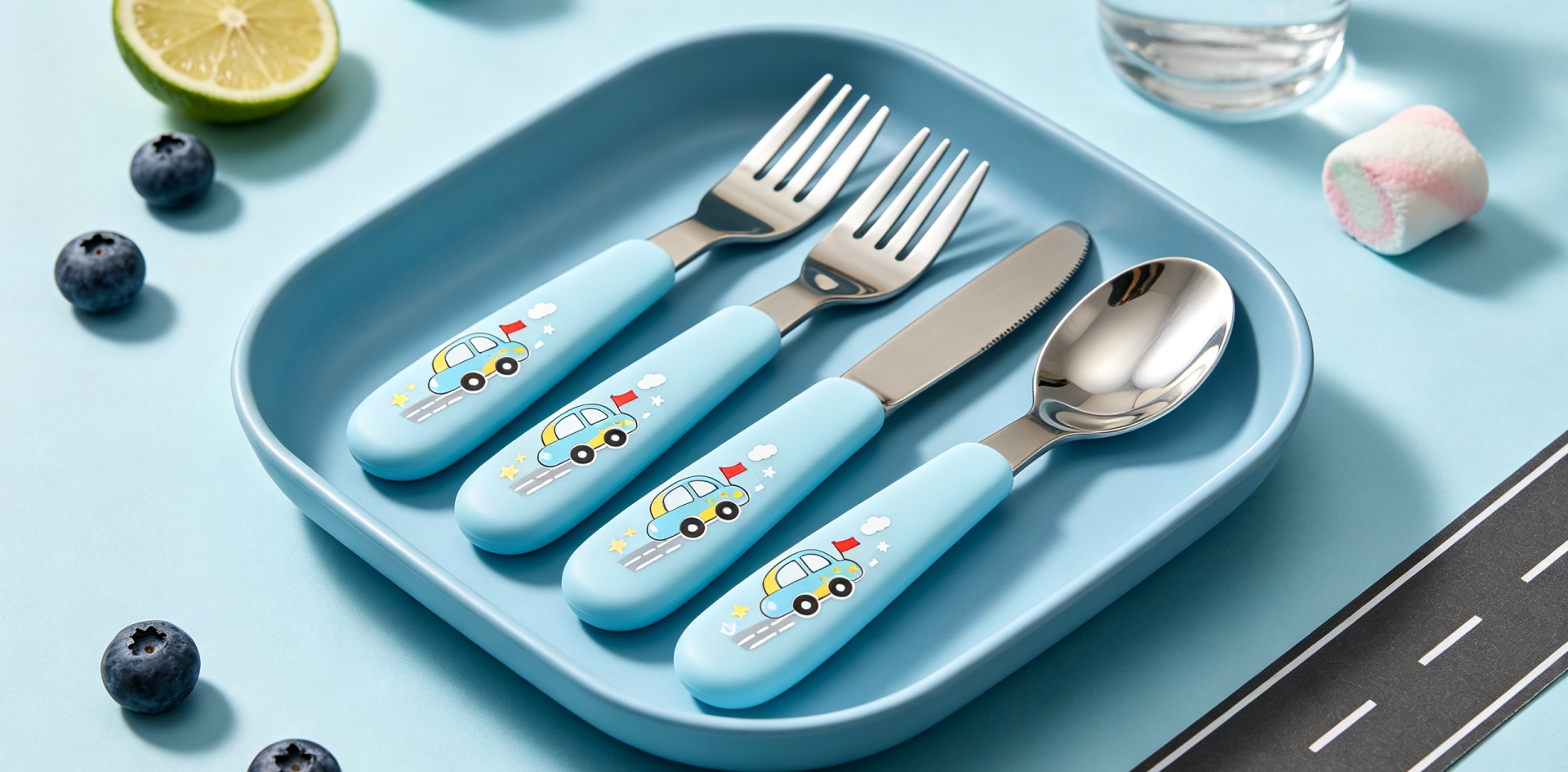
Stainless Steel Cutlery Version Control for B2B Orders
A stainless steel cutlery project can begin with one design and eventually develop into several versions.
A buyer may adjust the handle, dimensions, finish, packaging or branding before the final product is approved. Later, the same collection may also be expanded with new spoons, forks or knives.
For B2B buyers managing OEM, ODM, private label or wholesale projects, keeping these product versions clearly identified can make communication with the manufacturer much easier.
Why Product Versions Matter in B2B Cutlery
Stainless steel cutlery often contains products that look very similar at first glance.
Two spoons may have the same general shape but different bowl dimensions. Two forks may belong to the same collection while having different lengths or handle details.
A buyer may also have an original sample, a revised sample and a final approved sample.
If these versions are not clearly distinguished, an old drawing or sample can accidentally become a reference for a new order.
For large-volume manufacturing, this can create unnecessary confusion.
A simple version reference gives the buyer and factory a clearer way to identify the exact product being discussed.
When Does a Cutlery Product Become a New Version?
Not every minor communication update requires a completely new product version.
However, a new reference can be useful when an agreed specification changes in a way that affects production or product identification.
Examples can include:
A change in handle dimensions
A change in spoon bowl proportions
A revised fork head
A different knife blade specification
A new surface finish
A modified logo position
A change in material specification
A revised packaging configuration
A different set composition
The appropriate approach depends on the project. The key is to make the change identifiable and traceable.
Using Product Codes for Custom Cutlery
A product code is one of the simplest tools for managing multiple cutlery products.
Instead of referring only to a general name such as “stainless steel spoon,” a buyer can use a specific product code.
For example, a collection might contain separate codes for a dinner spoon, dessert spoon and teaspoon.
When a product is modified, the buyer and manufacturer can agree on whether the existing code remains applicable or whether a new reference should be created.
This becomes especially useful when a buyer manages a large number of SKUs.
Connecting Samples With Product Versions
Samples are an important part of many custom stainless steel cutlery projects.
A buyer may receive an initial sample and request adjustments before approving the final version.
During this process, it is useful to distinguish between the different samples.
A simple reference such as Sample A, Sample B and Final Approved Sample can make communication easier during development.
Once the final version is approved, the relevant product code or specification reference should clearly point to that approved version.
This helps prevent an earlier sample from being used accidentally when bulk production begins.
Version Control for OEM Cutlery
OEM customers often have their own product specifications and brand requirements.
A manufacturer may receive drawings, reference samples, packaging artwork and other files from the customer.
When several revisions are exchanged, identifying the latest approved version becomes increasingly important.
For example, a handle engraving may move from one position to another during development.
If the old artwork remains in circulation, the factory needs a clear way to determine which file is approved for production.
A version number or revision date can provide a simple reference.
This does not need to make the purchasing process complicated. It simply creates a clear connection between the product and its latest approved specification.
ODM Projects Can Also Benefit From Clear References
ODM projects may involve more collaboration between the buyer and manufacturer during product development.
The original concept can change several times before the final design is established.
A buyer may adjust the proportions of a spoon, change the handle appearance or modify the composition of a complete flatware set.
Each significant change should be reflected in the working product information.
Once the buyer approves the final design, the manufacturer can use the approved reference as the basis for production.
This creates a cleaner transition from product development to manufacturing.
Private Label Cutlery and Branding Changes
Private label projects often involve more than the cutlery itself.
The buyer may need to coordinate product branding, packaging, labels and presentation.
For example, a retailer may approve the stainless steel cutlery first and later finalize the packaging artwork.
If the packaging version changes after the original approval, the updated information should be clearly identified.
This is particularly important when a collection contains several products using the same brand identity.
Clear references help connect the right product with the right packaging and branding requirements.
Managing Different Finishes
A single cutlery design can sometimes be offered in multiple finishes.
For example, a collection may have a standard stainless steel finish as well as a PVD-colored version.
Although the basic shape may remain similar, the finish can create a distinct commercial product.
When different finishes are offered to different customers or markets, each version should be clearly identified.
This helps avoid mixing specifications when preparing a repeat order.
The same principle applies to other agreed surface treatments or decorative details.
Keeping Repeat Orders Consistent
Version control becomes particularly valuable when a customer places repeat orders.
A buyer may return to the same supplier six months or one year after the original order.
By that time, the purchasing team may have changed, product managers may have changed, or the product range may have expanded.
A clear product reference gives the new purchasing team a straightforward way to identify the previously approved product.
This can make repeat ordering more efficient.
If the customer wants to modify the product, the new requirement can then be treated as a new development or revised version rather than being confused with the original item.
Avoiding Similar-SKU Confusion
Large stainless steel cutlery collections can contain many similar SKUs.
For example, a buyer may have several spoons with different bowl sizes and handle lengths.
The same situation can occur with forks and knives.
Using only photographs or general descriptions may not always be enough to distinguish every item.
Product codes, specification references and approved samples can work together to provide a clearer identification system.
This is especially useful for distributors and retailers managing large product catalogs.
How Buyers Can Organize Cutlery Version Information
A practical product record can include:
Product code
Product name
Material
Dimensions
Finish
Branding details
Approved sample reference
Drawing reference
Packaging reference
Revision date
Approval status
Not every project needs a complicated database.
Even a well-organized spreadsheet can provide a useful record for smaller purchasing teams.
The objective is simply to make it clear which version has been approved for production.
Why This Matters Before Bulk Manufacturing
Once a stainless steel cutlery order enters large-scale production, changing an approved specification can become more difficult.
For this reason, the buyer should review the final product reference before production starts.
The review can confirm that the factory is working from the correct product version and that the commercial order corresponds to the intended specification.
For a multi-SKU order, checking each product individually can be worthwhile.
This is particularly important for OEM and private label collections where several products share similar design elements.
Homefelt for Custom Stainless Steel Cutlery Projects
Homefelt supports B2B customers developing stainless steel knives, forks, spoons and complete flatware sets.
The factory works with OEM, ODM, private label and wholesale projects, including customized product requirements for international buyers.
During a custom project, buyers can provide drawings, samples, product specifications and other reference information so that the required cutlery version can be clearly identified.
For customers developing several related products, establishing clear product references can also make future communication and repeat purchasing more convenient.
Whether you are developing a new cutlery collection or expanding an existing product range, clear product information gives both the buyer and manufacturer a practical foundation for production.
Build a Clearer B2B Cutlery Program
Product version control may seem like a small part of stainless steel cutlery sourcing, but it becomes increasingly useful as a project grows.
A single product can go through several development stages before approval. A collection can contain many similar SKUs. Repeat orders can take place months or years after the first production.
Clear product references help connect the approved design with the actual manufacturing requirement.
For buyers sourcing custom stainless steel cutlery in bulk, this can make communication more organized from product development through repeat purchasing.
If you are developing a new stainless steel cutlery collection, working with a manufacturer that can support product customization and bulk production can help turn approved designs into a consistent commercial range.
Discuss a Custom Stainless Steel Cutlery Project
Request a Quote for OEM Flatware
Stainless Steel Cutlery Order Specifications for B2B Buyers
Stainless Steel Cutlery Purchase Orders for B2B Buyers
Related Article



