Stainless Steel Cutlery Production: How an Experienced Manufacturer Ensures Quality
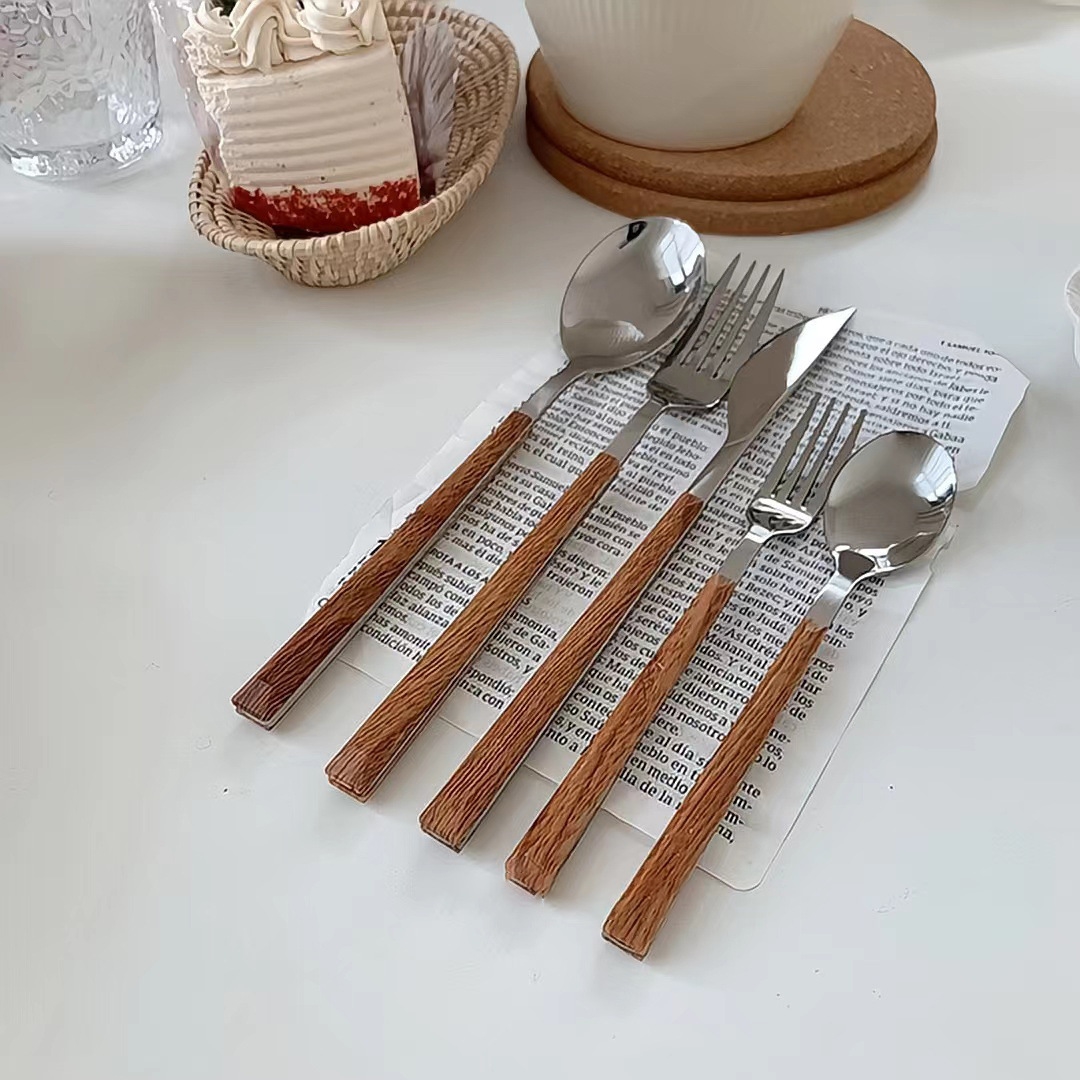
What Does Keep the Spoon Chef Mean?
In the world of culinary arts, phrases and expressions often carry a unique meaning, especially in professional kitchens.
One such phrase, "Keep the Spoon Chef," has recently gained some popularity, but what does it really mean?
If you're passionate about food and intrigued by its subtleties, this article will explain the phrase's origins, usage,
and its connection to top-tier ingredients like American Spoon Sour Cherry Preserves and American Spoon Foods Michigan. Let's dive into the details!
The Origins of "Keep the Spoon Chef"
The phrase "Keep the Spoon Chef" originates from a playful yet practical aspect of fine dining.
It typically refers to the importance of a chef's control over the flavor and consistency of a dish by constantly tasting it, particularly with a spoon.
The "spoon" serves as a metaphor for a chef's intimate involvement in the cooking process—ensuring that each element is balanced perfectly.
It's an expression of dedication to precision and attention to detail.
In the culinary world, every ingredient must be carefully measured and tested for flavor, and the spoon is often the instrument of choice.
Much like the chefs in American Spoon Foods Michigan, who are meticulous in crafting their high-quality preserves, keeping the spoon ensures consistency and quality in every dish.
A Spoon in Every Dish: From Soup to Dessert
As chefs hone their craft, they frequently rely on specific tools to enhance their cooking. The spoon, in particular, plays an essential role in the kitchen.
Whether it's for tasting soups, sauces, or even desserts like the American Spoon Sour Cherry Preserves, a spoon is often the chef's most trusted companion.
In American Spoon Foods Michigan, every product—whether it's jam, preserves, or fruit spreads—is created with the same level of care and attention.
The result is a perfect balance of flavors that chefs rely on for their culinary creations.
The Art of Tasting: Why the Spoon Matters
A spoon is not just an eating utensil; it's a critical tool in the process of crafting exquisite dishes.
For example, chefs frequently use spoons to ensure that their American Spoon Harbor Springs preserves meet the highest standards.
These preserves are often incorporated into fine dining dishes and desserts, where the right balance of sweetness and acidity is crucial.
By keeping the spoon close at hand, chefs are able to make real-time adjustments, ensuring every bite of food is a masterpiece.
Just as Homefelt maintains its commitment to quality in their manufacturing processes, chefs strive to deliver dishes that reflect the same level of dedication and craftsmanship.
Conclusion: A Spoonful of Excellence
Whether you're a professional chef or a home cook, the phrase "Keep the Spoon Chef" serves as a reminder of the importance of attention to detail.
Much like the passion that goes into creating American Spoon Foods Michigan products or the meticulousness of Homefelt in producing high-quality kitchenware,
the spoon symbolizes the care and dedication needed to craft exceptional culinary experiences.

How Stainless Steel Cutlery Is Produced: What B2B Buyers Should Know
When purchasing stainless steel cutlery in large quantities, buyers usually see the finished spoon, fork or knife. What happens behind the product is less visible.
However, the manufacturing process has a direct influence on product quality, appearance, consistency and long-term purchasing reliability.
For wholesalers, retailers, restaurant groups, hotels and private-label brands, understanding how stainless steel cutlery is produced can make it easier to evaluate potential suppliers. It also helps buyers communicate their requirements more effectively when developing customized products.
An experienced stainless steel cutlery manufacturer manages many individual production stages before a finished product is ready for shipment. Material preparation, forming, cutting, welding where required, polishing, finishing, inspection and packaging all need to work together.
For customized B2B projects, the process begins even earlier, with product design and sample development.
From Product Idea to Manufacturing Specification
Before production starts, the buyer and manufacturer need to agree on the product specifications.
This may include the product type, dimensions, material, thickness, handle design, weight, surface finish, logo requirements and packaging.
For standard cutlery, the manufacturer may already have established production specifications.
For custom products, the process can be more involved.
The buyer may provide a drawing, photograph, physical sample or design concept. The manufacturer reviews the requirements and determines how the design can be translated into a practical production specification.
This stage is important because a design needs to be suitable not only for appearance but also for manufacturing.
A handle may need a particular shape or thickness. A spoon bowl may require specific dimensions. A fork may need precise tine spacing. A knife may require a particular blade profile.
These details should be confirmed before mass production begins.
Material Preparation
Stainless steel is the foundation of the finished cutlery.
The selected material needs to match the product requirements and intended application. Buyers may have specific requirements depending on their target market, product positioning and expected usage.
Once the appropriate material has been confirmed, it is prepared for the next manufacturing stage.
Material consistency matters because changes in the raw material can affect the production process and final product characteristics.
For large B2B orders, manufacturers need to maintain consistent specifications across the production batch so that the finished products meet the agreed requirements.
Forming the Basic Cutlery Shape
Different cutlery products require different forming processes.
Spoons need to be shaped to create the bowl and handle. Forks require forming around the handle and tines. Knives involve blade shaping as well as handle forming.
The objective is to achieve accurate and repeatable shapes.
This is particularly important for customized products.
A buyer may approve a particular handle design during sampling, and the mass-produced pieces need to maintain the same basic proportions and appearance.
Production experience becomes valuable at this stage because the manufacturer needs to understand how the chosen design behaves during manufacturing.
A design that appears simple may require careful control of forming pressure, dimensions and tooling.
Developing Tooling for Custom Products
Customized cutlery may require dedicated tooling.
Tooling allows the manufacturer to reproduce a specific design consistently during production.
For OEM and ODM projects, tooling can therefore become an important part of the development process.
The manufacturer reviews the approved design and determines what tooling is required to produce it efficiently.
This is one reason why buyers should provide as much product information as possible when requesting a quotation for a custom cutlery project.
The design, quantity and expected repeat orders can all influence the manufacturing approach.
For businesses planning long-term production, customized tooling can provide a foundation for maintaining product consistency across future orders.
Creating Smooth and Accurate Edges
After the main forming stages, the products need to be processed to achieve the required surface condition and edge quality.
Cutlery comes into direct contact with the hands and mouth, so smooth and properly finished surfaces are essential.
Spoon edges need to be appropriately formed and finished. Fork tines require consistent shaping. Knife edges and handles need to be processed according to the intended product specification.
These details may appear small, but they contribute significantly to the final user experience.
For commercial customers, consistent edge quality across a large production run is particularly important.
Polishing Stainless Steel Cutlery
Polishing is one of the most recognizable stages of stainless steel cutlery production.
A polished surface can give the finished product a bright and refined appearance. The level and type of polishing depend on the required finish.
Mirror-polished cutlery has a highly reflective appearance and is commonly associated with classic or elegant table settings.
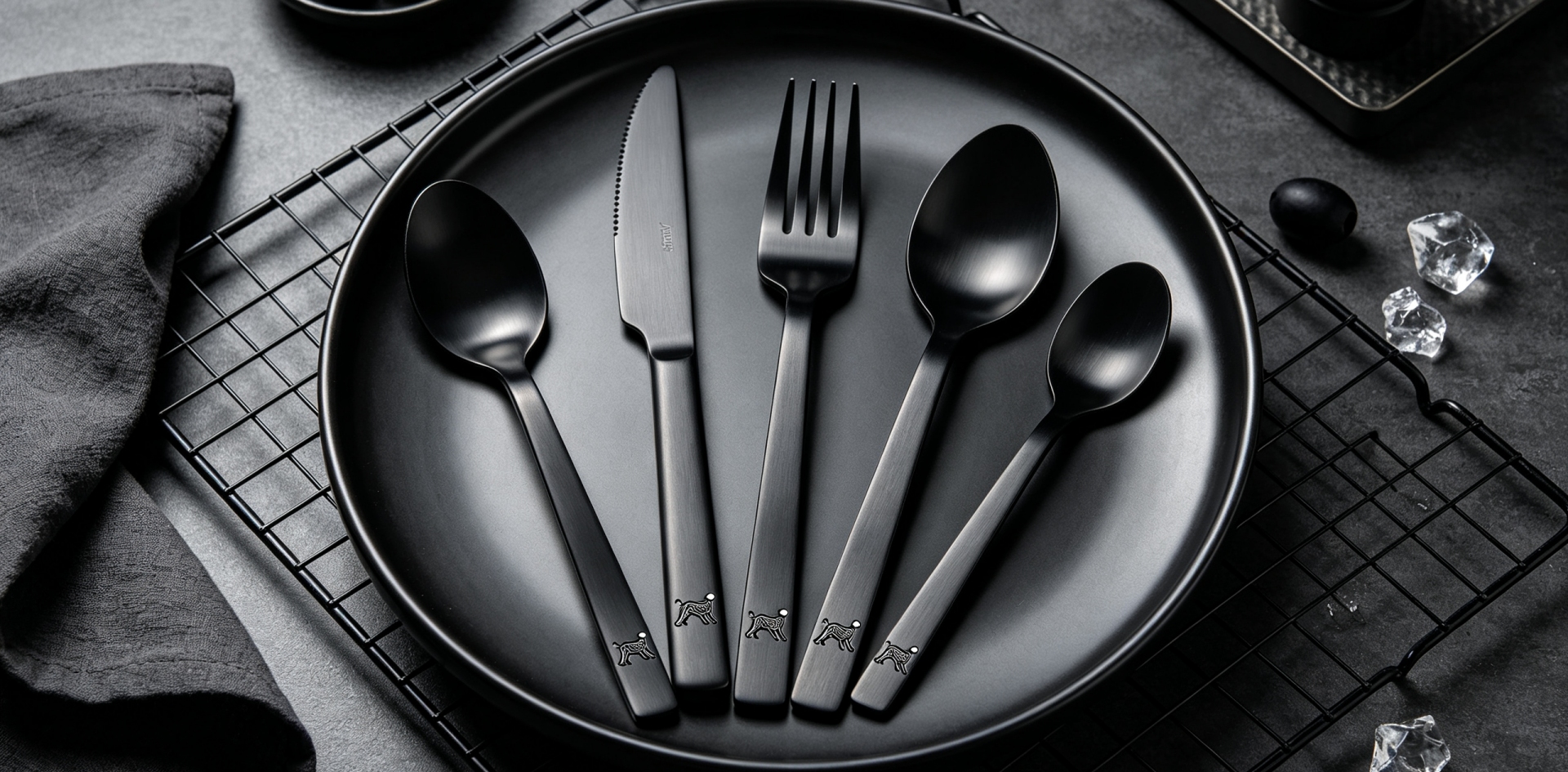
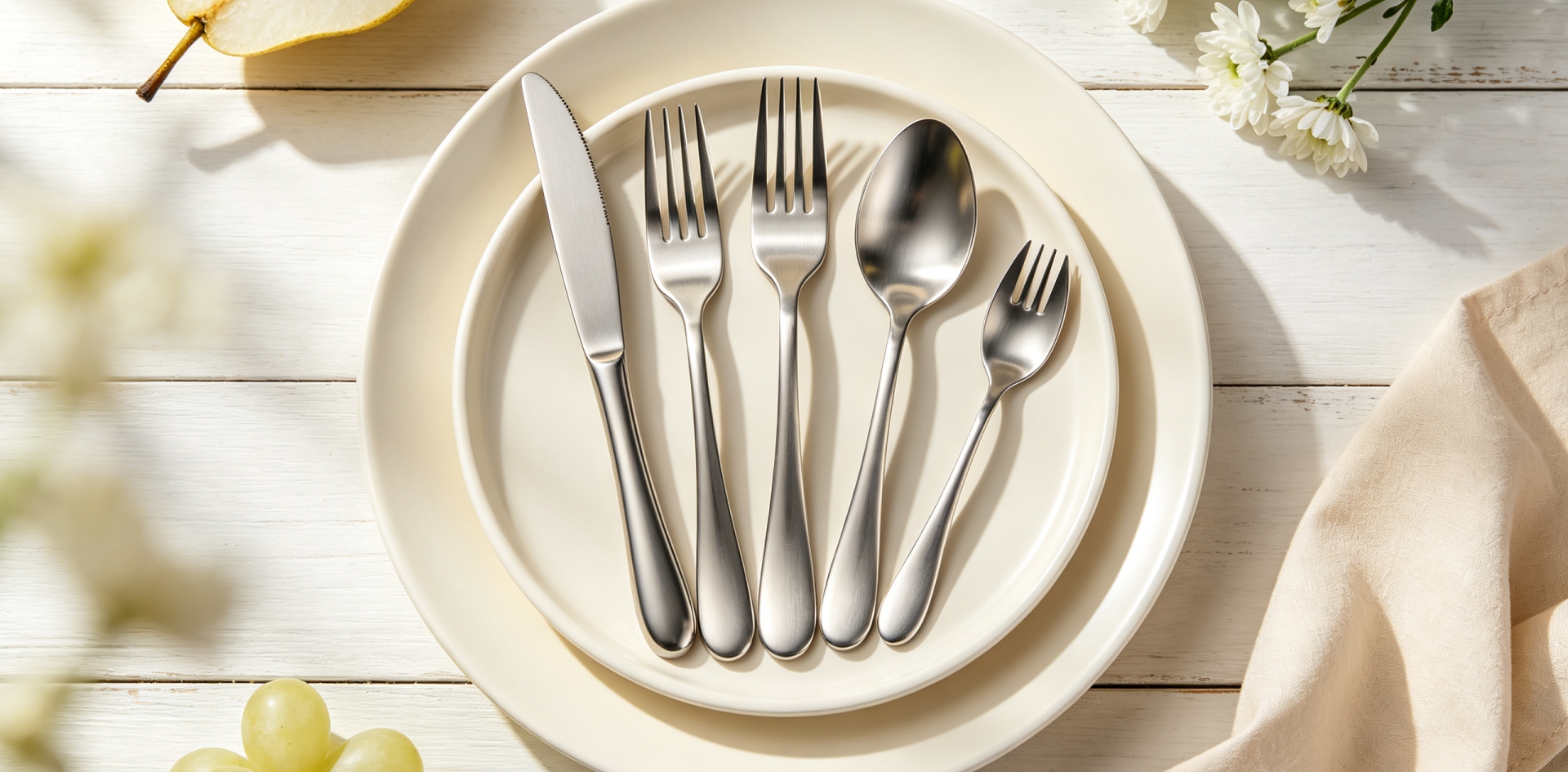
Other products may use satin or brushed finishes for a more contemporary appearance.
The polishing process needs to be controlled carefully because surface inconsistencies can become visible across a large set of products.
For private-label and premium retail collections, consistent surface appearance is an important part of maintaining the quality of the brand.
Applying Special Finishes
Some custom cutlery projects require more than a traditional stainless steel finish.
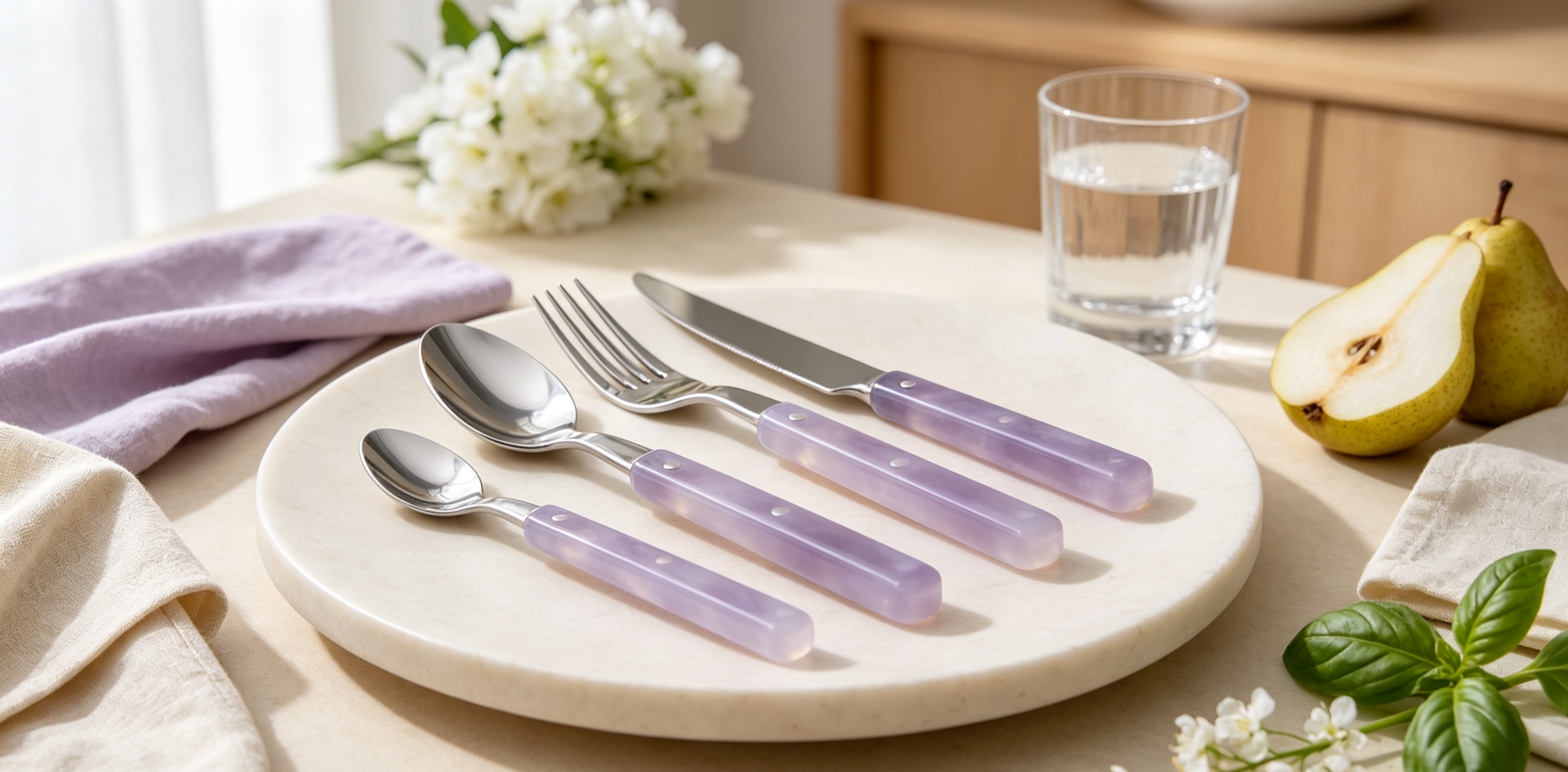
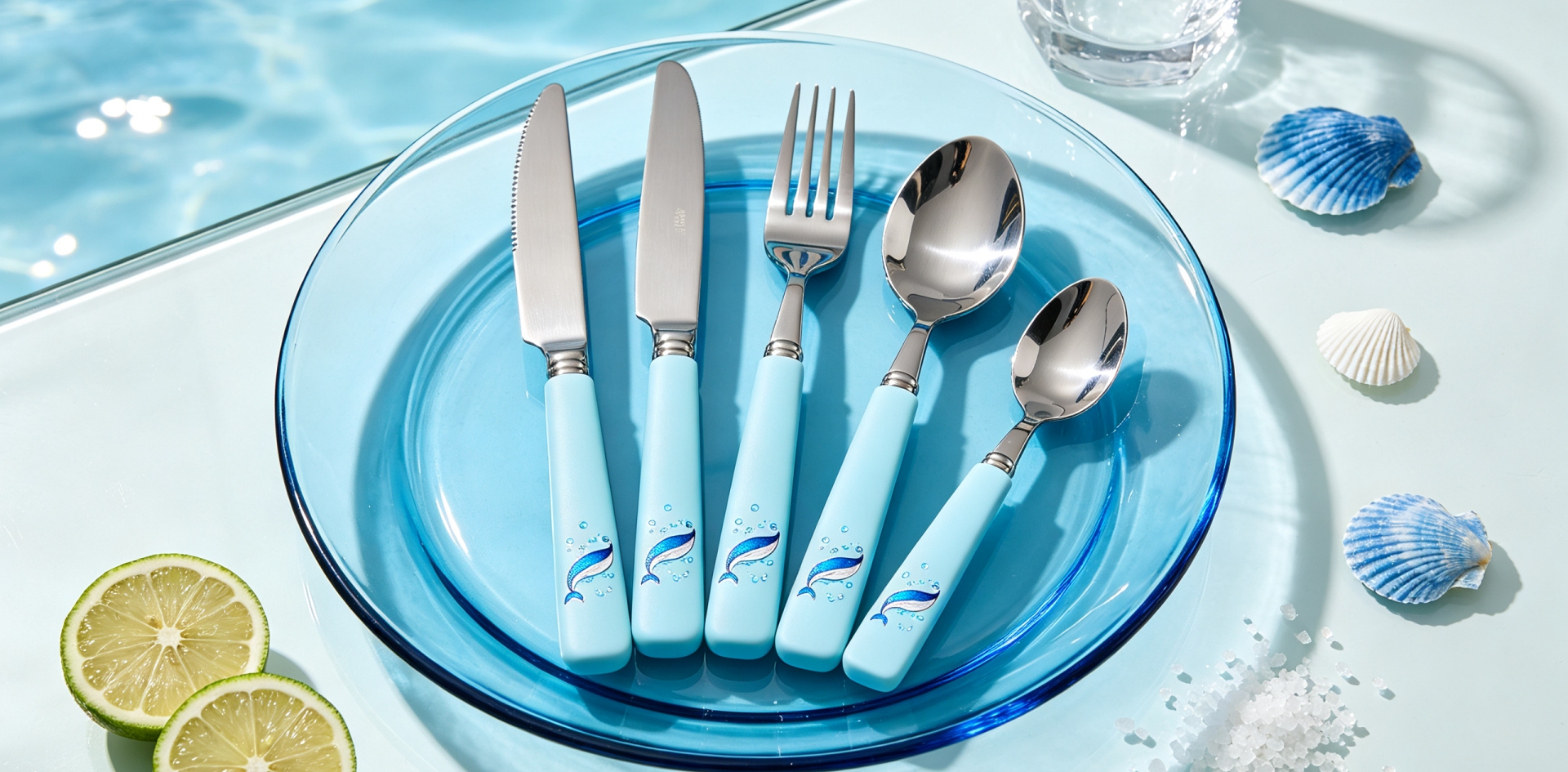
Depending on the design, buyers may request decorative treatments or colored finishes to create a distinctive collection.
These options can be particularly relevant for modern retail brands, hospitality projects and premium tableware collections.
The selected finish should be considered together with the product's intended application and target market.
A professional stainless steel cutlery manufacturer can discuss the available options and evaluate what is appropriate for the specific product and order quantity.
Logo and Branding Requirements
Branding is another stage that may be incorporated into the manufacturing process.
Private-label buyers may want a logo or other brand identification incorporated into their cutlery.
The exact branding method and position depend on the product design.
For example, the handle may provide a suitable location for subtle branding, while retail packaging can provide more space for the brand identity and product information.
For restaurant and hotel projects, customized branding can also create a more distinctive dining experience.
Branding should be confirmed during product development rather than added as an afterthought, particularly when customized tooling or packaging is involved.
Quality Inspection During Production
Manufacturing quality cannot depend only on the final inspection.
Professional production requires quality checks throughout different stages.
Depending on the product and project requirements, inspections may consider dimensions, weight, shape, surface appearance, polishing quality, edges, finish consistency, logo positioning and packaging.
For large-volume orders, production consistency is particularly important.
If a retailer receives thousands of pieces, small differences can become obvious when the products are displayed or used together.
For repeat B2B orders, stable quality is also important because future products may need to match earlier shipments.
An experienced stainless steel cutlery manufacturer therefore needs appropriate procedures to monitor production from beginning to end.
The Importance of Sample Approval
For custom projects, the sample provides an important reference point.
Before mass production, buyers can review the actual product and confirm whether the design matches their expectations.
The sample can be evaluated for dimensions, weight, balance, surface finish, handle shape and overall appearance.
If changes are needed, they can be discussed before the production order begins.
This reduces the risk of discovering major differences after a large quantity has already been manufactured.
For new product development, sample approval is therefore an important bridge between design and mass production.
Producing Complete Cutlery Sets
Some B2B buyers do not purchase individual spoons, forks or knives. They need complete flatware sets.
A set can contain several coordinated pieces depending on the target market.
The manufacturing challenge is not simply producing each item separately. The products also need to look consistent as a collection.
Handle proportions, surface finish, color and overall style should work together.
For private-label brands, the set may also require customized packaging designed around the number and arrangement of the individual pieces.
Working with one manufacturer for the complete collection can simplify this coordination.
Packaging for International B2B Orders
After production and inspection, the cutlery needs to be packed according to the buyer's requirements.
Packaging serves two purposes.
First, it protects the products during storage and transportation.
Second, it can present the product to the final customer.
Wholesale and foodservice buyers may prioritize efficient bulk packaging, while retail brands may require customized boxes, sets or branded presentation.
For export orders, packaging also needs to take international transportation into consideration.
Discussing packaging early in the project allows the manufacturer to coordinate the product dimensions, set configuration and packaging requirements.
Supporting OEM and ODM Production
The manufacturing process becomes more flexible when the factory supports OEM and ODM projects.
OEM customers can provide their own specifications and develop products according to their brand requirements.
ODM customers can start with existing product concepts and work with the manufacturer to make selected changes.
Both approaches can be useful for businesses that want something different from standard wholesale products.
An experienced stainless steel cutlery manufacturer can help buyers understand which customization options are practical according to their expected quantity and product concept.
This can make the development process more efficient and reduce unnecessary production changes.
Why Factory Experience Matters
The production of stainless steel cutlery involves many connected processes.
A problem during one stage can affect the next stage. An unsuitable design may create difficulties during forming. Poor surface preparation can affect polishing. Inconsistent dimensions can make packaging or set assembly more difficult.
Manufacturing experience allows the factory to recognize these relationships.
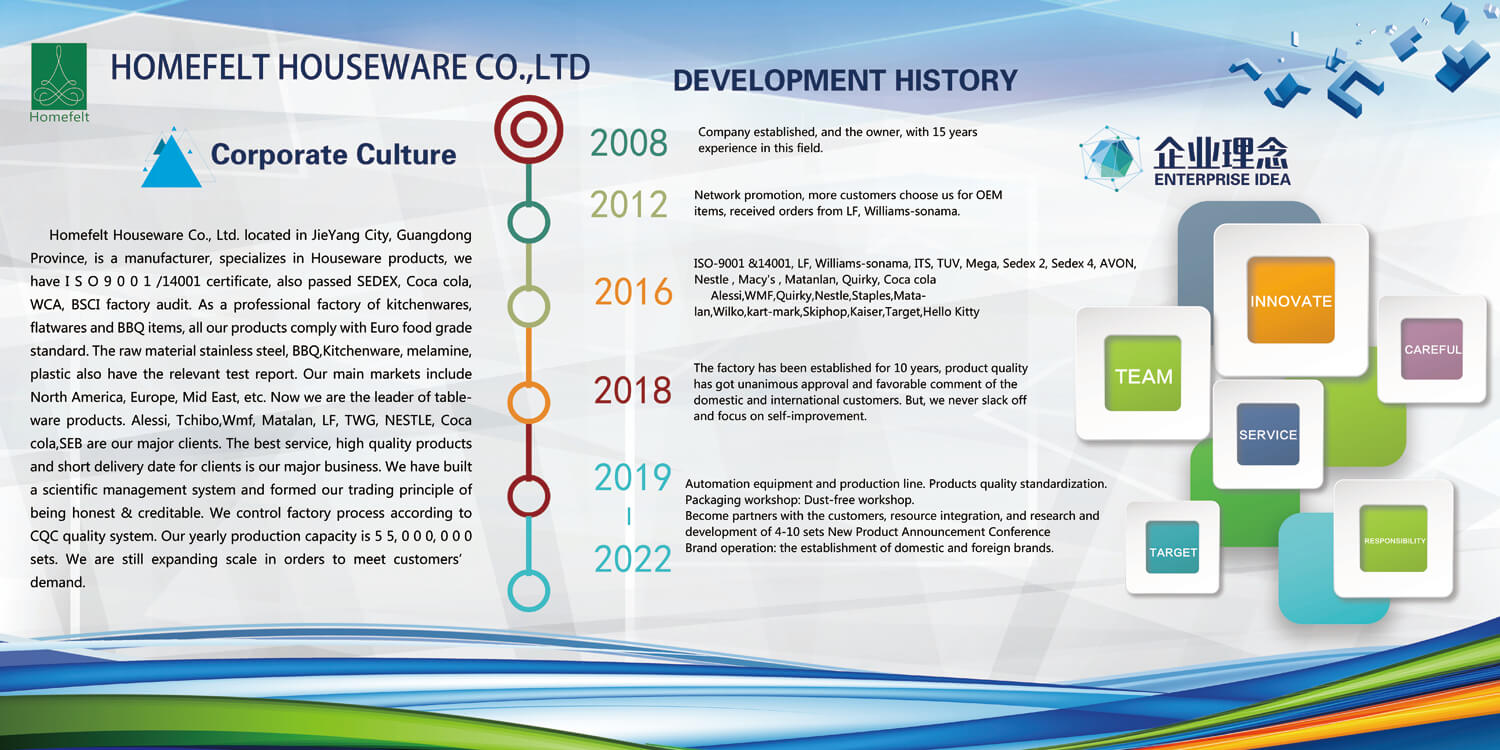
Homefelt has more than 40 years of experience in the stainless steel cutlery business and serves international B2B customers. The company also highlights audits and certifications including BSCI, SEDEX 4P, BRC, ISO9001 and Disney audit, along with FAMA and FSC certifications. This background can be relevant for international buyers evaluating factories for customized and bulk cutlery projects.
For buyers, the benefit of long-term manufacturing experience is not simply the number of years a factory has operated. It is the practical knowledge developed through different products, markets and production requirements.
Choosing a Manufacturer for a Custom Project
When evaluating a stainless steel cutlery manufacturer, buyers should consider the complete production capability rather than looking only at the product catalog.
Ask whether the factory can support custom designs.
Ask how samples are developed.
Ask about material and finishing options.
Ask how quality is controlled during mass production.
Ask whether customized branding and packaging are available.
These questions can help identify whether a supplier is capable of supporting the complete project.
For long-term B2B purchasing, it is also useful to understand whether the manufacturer can support repeat orders and maintain the same product specifications over time.
What to Send When Requesting a Manufacturing Quote
A buyer does not need to prepare a complicated technical document before contacting a factory.
A basic inquiry can include a product image, reference design, approximate quantity and intended application.
If available, add dimensions, material requirements, finish, logo information and packaging expectations.
If you have a physical sample, describe the sample and explain what you want to change.
If you are developing a completely new collection, explain your target market and preferred style.
These details give the manufacturer a starting point for evaluating the project.
The factory can then discuss the specifications that need to be confirmed before sampling and quotation.
From Manufacturing to Long-Term Supply
A successful cutlery project does not end when the first shipment leaves the factory.
For many B2B customers, the first order is the beginning of a longer relationship.
Retailers may need replenishment as products sell. Hotels and restaurants may require replacement pieces. Distributors may expand their product ranges. Private-label brands may introduce additional products using the same design language.
A manufacturer that understands the original specifications can support these future requirements more effectively.
This is why selecting a manufacturing partner should be considered as a long-term sourcing decision.
Develop Your Next Cutlery Project With an Experienced Factory
Understanding the stainless steel cutlery production process gives buyers a clearer picture of what happens behind the finished product.
From the initial design and material selection to forming, polishing, inspection, branding and packaging, every stage contributes to the final result.
For B2B buyers, the right stainless steel cutlery manufacturer should be able to combine manufacturing experience with flexible customization and consistent quality.
Homefelt has been involved in stainless steel cutlery manufacturing for more than four decades and provides solutions for international B2B customers. Whether the requirement is a standard wholesale collection, an OEM product, an ODM project or a private-label cutlery set, the manufacturing process can be developed around the buyer's requirements.
If you are planning a new stainless steel cutlery project, you can start by sending your product images, drawings, estimated quantity and customization requirements.
You do not need to have every detail finalized before making an inquiry. Sharing the basic concept allows the factory to understand what you want to develop and determine the next steps.
A product idea can become a sample, and an approved sample can become a reliable bulk-production program.
The right manufacturing partner can help make that process clearer, more efficient and easier to manage.
If you are ready to develop your next custom stainless steel cutlery project, send your requirements to an experienced manufacturer and start discussing the possibilities.
Want to Understand Your Custom Cutlery Production Options? Request a Factory Consultation
Have a New Cutlery Design? Send Your Product Idea to Our Manufacturing Team
Need OEM Stainless Steel Cutlery for Your Brand? Request a Direct Factory Quote
Looking for a Cutlery Factory for Your Next Bulk Order? Contact Us Today
Ready to Turn Your Cutlery Concept Into a Finished Product? Start Your Project
Need Custom Spoons, Forks or Knives? Send Your Requirements for Evaluation
Looking for a Manufacturer for Your Private Label Cutlery Collection? Get in Touch
Want to Develop a Complete Stainless Steel Flatware Set? Request a Quote
Need a Reliable Factory for Long-Term Cutlery Production? Talk to Our Team
Ready to Start Your Custom Stainless Steel Cutlery Order? Send an Inquiry Today
What Restaurants Take Synergy Gift Cards?
How to Get Spoonful Glove in Slap Battles?
Related Article