
Stainless Steel Cutlery Quantity Ratios for B2B Orders
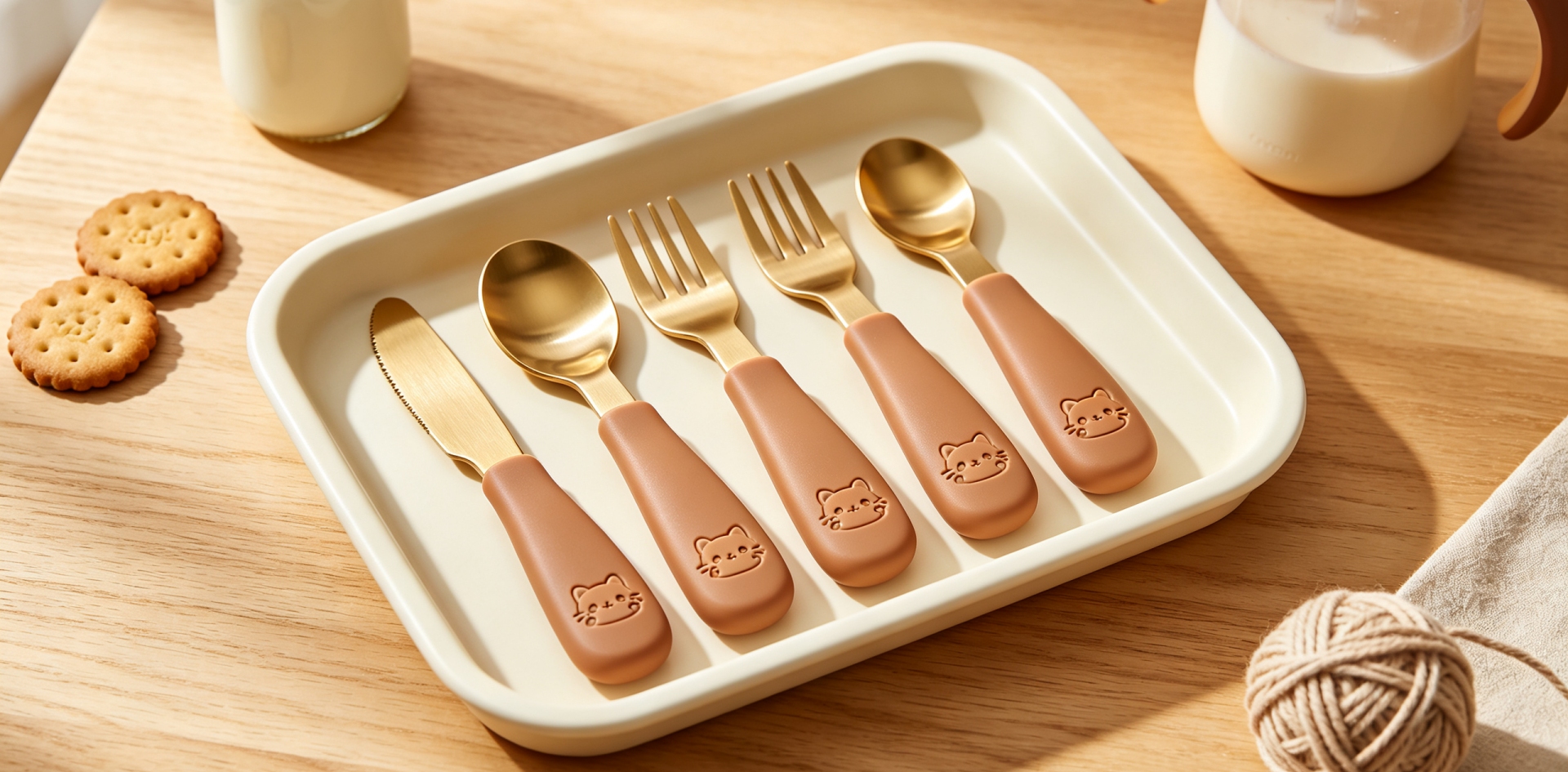
Stainless Steel Cutlery Quantity Ratios for B2B Orders
For B2B stainless steel cutlery purchasing, deciding how many knives, forks and spoons to order is more important than it may first appear.
A cutlery collection may contain several different pieces, but the required quantity of each item does not always need to be identical. Depending on the sales channel, customer usage and product format, buyers may require different quantities of knives, forks and spoons within the same purchasing program.
For wholesalers, retailers, hospitality suppliers and private label brands, establishing a practical quantity ratio can help make the order more closely match actual demand.
This is especially relevant when purchasing large volumes from a stainless steel cutlery manufacturer.
Why Quantity Ratios Matter
A B2B cutlery order may include several individual products that are sold together or separately.
For example, a buyer may need dinner forks and spoons in larger quantities than knives. Another project may require an equal quantity of all three pieces. A replacement program may focus primarily on individual spoons or forks.
If every product is ordered in exactly the same quantity without considering actual demand, some items may be sold faster than others.
Planning the quantity relationship in advance can therefore make the purchasing program more practical.
The appropriate ratio depends on the business model rather than following one universal formula.
Different B2B Applications Need Different Ratios
A restaurant supplier may require a balanced range of knives, forks and spoons for hospitality customers.
A retailer selling individual pieces may have a completely different purchasing pattern.
A private label brand selling complete four-piece or five-piece sets may need the component quantities to match the planned set structure.
A distributor serving several types of customers may require both complete sets and individual replacement pieces.
These situations demonstrate why B2B cutlery quantity planning should begin with the intended sales model.
Planning Quantities for Complete Sets
When stainless steel cutlery is sold as a complete set, the component relationship is relatively straightforward.
If one set contains one knife, one fork and one spoon, the basic production requirement needs to reflect that combination.
However, larger collections may contain additional pieces.
A set might include:
-
Dinner knife
-
Dinner fork
-
Dinner spoon
-
Teaspoon
-
Dessert fork
In this situation, each component may have a different role within the final set.
For a large production order, the manufacturer needs to know the exact quantity relationship so that each component can be produced and prepared according to the final commercial requirement.
Planning Individual Piece Sales
Some B2B buyers do not sell cutlery only as complete sets.
They may sell individual knives, forks and spoons through retail, foodservice supply or distribution channels.
In these cases, purchasing quantities can be adjusted according to expected demand for each product.
A buyer may therefore order more of one particular spoon or fork than another item in the collection.
This type of purchasing can also be useful for replacement programs, where customers need individual pieces rather than complete sets.
For manufacturers, receiving the individual quantities clearly in the RFQ helps ensure that the quotation reflects the actual order structure.
Balancing Demand Across a Product Range
When a collection contains many SKUs, buyers should consider how the products relate to each other.
For example, three different spoon styles may be offered alongside two fork styles and two knife styles. The demand for these products may not be evenly distributed.
Instead of assuming that every SKU should have the same quantity, buyers can establish quantities according to expected sales.
This can help avoid unnecessary stock accumulation for slower-moving products.
For wholesale and private label programs, this approach may also allow buyers to create a broader product range without requiring identical quantities across every item.
Quantity Planning for New Product Launches
A new cutlery collection presents a different challenge.
There may be limited historical sales data available, so the buyer has to estimate the expected demand for each product.
In this situation, it can be useful to separate the core products from supporting products.
Core knives, forks and spoons may require larger quantities, while less frequently purchased pieces can be ordered in smaller volumes.
This gives the buyer an opportunity to introduce a wider collection while keeping the initial purchasing structure practical.
As the product range develops, future orders can be adjusted according to actual market demand.
Communicating Quantity Requirements to the Factory
Clear quantity information is particularly important when an order contains many related products.
A B2B buyer can prepare a simple product list showing each item and its required quantity.
For example:
-
Dinner knife — required quantity
-
Dinner fork — required quantity
-
Dinner spoon — required quantity
-
Teaspoon — required quantity
-
Dessert fork — required quantity
If several products belong to the same set, the buyer can also identify the intended quantity per set.
This gives the stainless steel cutlery manufacturer a clearer understanding of the complete order.
It can also make the quotation easier to review because each product is connected to a specific commercial requirement.
Quantity Ratios and Custom Cutlery
Custom projects often contain more complex quantity relationships than standard products.
A private label brand may develop a collection with different set configurations for different markets. A distributor may require several combinations under one purchasing program. An OEM customer may want certain pieces produced in larger quantities because they are expected to sell individually.
These requirements can be discussed during the product development stage.
Homefelt factory supports OEM, ODM and private label manufacturing for stainless steel knives, forks, spoons and cutlery sets. Buyers can provide their desired product combinations and quantities so the factory can evaluate the project and prepare a suitable quotation.
This is particularly useful for large-volume projects where the order contains multiple products.
Avoiding Overly Complicated Purchasing Structures
More products do not always mean a better cutlery program.
If a collection contains too many variations with very small quantities for each item, purchasing and production can become more complicated.
For some B2B buyers, a focused collection with clear quantity priorities may be easier to manage.
The goal is to create a product range that supports the intended sales strategy while remaining practical for manufacturing and inventory management.
An experienced cutlery manufacturer can discuss the product structure with the buyer and identify which information is needed before production.
Planning Quantities for Repeat Orders
Quantity ratios can also change after the first order.
Once a product has been on the market, the buyer may have a clearer understanding of which knives, forks or spoons sell more quickly.
Future orders can then be adjusted accordingly.
One product may require a larger replenishment quantity, while another may remain at a lower level. This allows the purchasing program to respond to actual business demand instead of maintaining the same ratio indefinitely.
For long-term B2B relationships, this flexibility can be useful when managing an evolving stainless steel cutlery range.
Working With a B2B Cutlery Manufacturer
Quantity planning is one of the practical details that connects product development with commercial purchasing.
The buyer knows how the products will be sold and what quantities are expected. The manufacturer understands the production requirements behind each individual product.
When these two areas are communicated clearly, it becomes easier to develop an order that matches the buyer's business needs.
Homefelt factory provides stainless steel cutlery manufacturing for wholesale buyers, distributors, retailers and private label brands. The product range includes stainless steel knives, forks, spoons and complete cutlery sets, with OEM and ODM support for custom B2B projects.
If you are preparing an RFQ, providing the required quantity for each cutlery item can help the factory understand your project more accurately.
A clear quantity structure is a simple detail, but it can make a significant difference when a B2B order includes multiple products and large production volumes.
Custom Stainless Steel Cutlery Manufacturing
Private Label Stainless Steel Cutlery
Stainless Steel Cutlery Surface Reflectivity for B2B Brands
Stainless Steel Cutlery Sample Sets for B2B Buyers
Related Article



