
Stainless Steel Cutlery Scratch Control for B2B Orders
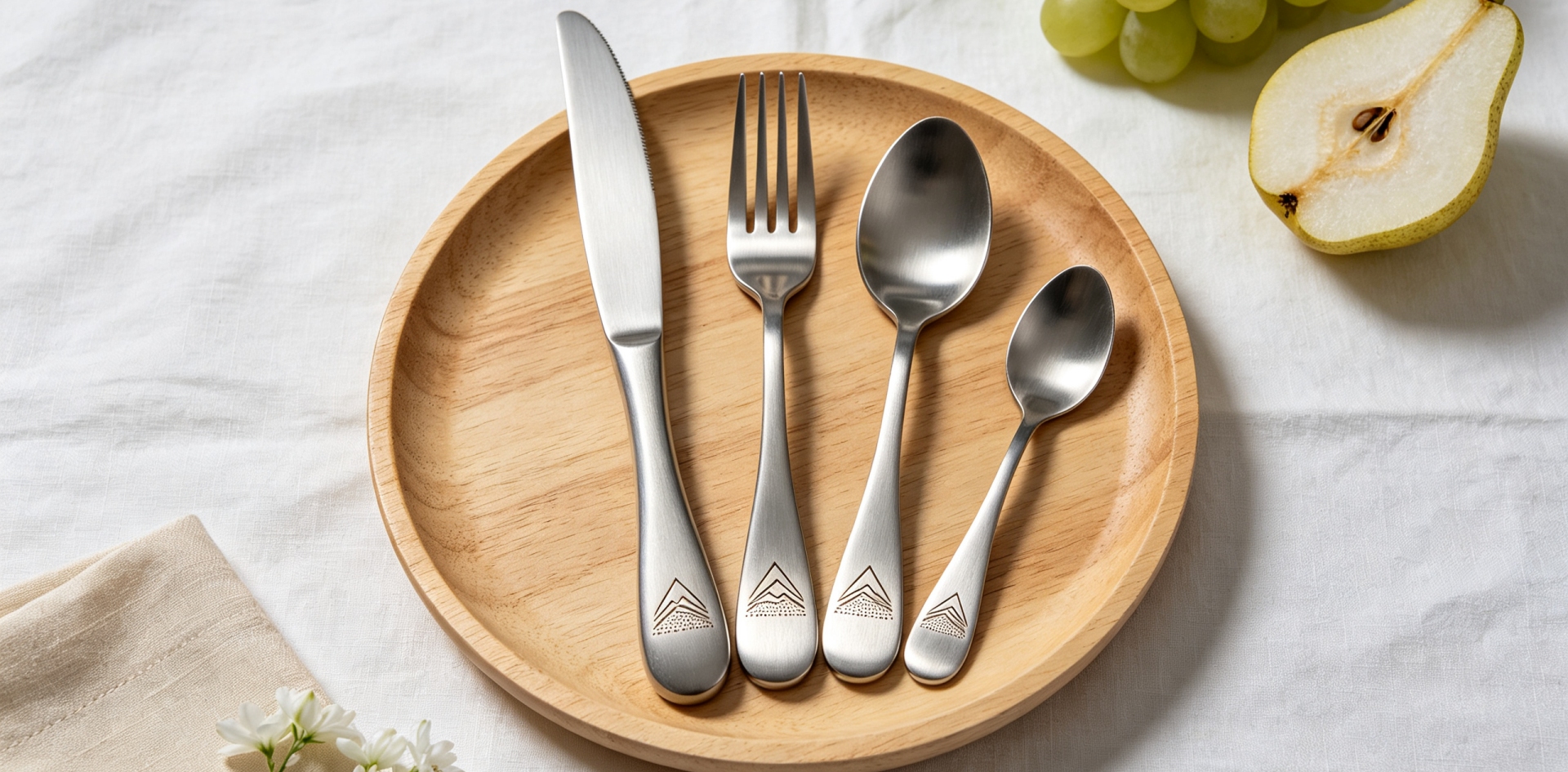
Stainless Steel Cutlery Scratch Control for B2B Orders
When purchasing stainless steel cutlery in bulk, buyers usually pay attention to material, design, finish, dimensions and packaging. Another practical quality consideration is the condition of the surface after manufacturing and handling.
Small scratches may not be obvious in a single product photograph, but they can become much more noticeable when hundreds or thousands of pieces are packed together for a commercial order. For brands, wholesalers and distributors, maintaining a consistent surface appearance is therefore an important part of managing a stainless steel cutlery program.
Scratch control does not mean that every piece must be treated as a delicate display product. It means establishing reasonable surface expectations and applying suitable handling and inspection practices throughout the production process.
Why Surface Scratches Matter in B2B Cutlery
Stainless steel cutlery is often sold as a coordinated product collection. Knives, forks and spoons may appear together in one package or be displayed next to one another in retail or hospitality environments.
When the surface finish is intended to have a clean and consistent appearance, visible scratches can affect the overall impression of the collection.
This is especially relevant for private label products. A brand may have approved a particular appearance during product development, and the bulk order needs to maintain the same general visual standard.
For wholesale buyers, consistent surface quality also helps when products are distributed to different customers or markets. A stable production standard reduces unnecessary discussions about differences between batches.
Where Can Scratches Occur During Cutlery Production?
Surface marks can potentially appear at different stages of manufacturing and handling.
During forming and processing, products may come into contact with equipment or other metal components. During polishing and finishing, the surface is worked to achieve the specified appearance. After production, pieces may also contact one another during sorting, inspection, packing and transportation.
The final condition of a stainless steel fork, spoon or knife is therefore influenced by more than the basic material.
This is why surface expectations should be discussed as part of the complete product specification, particularly when a customer is developing a customized flatware range.
Different Finishes Can Show Marks Differently
The visibility of surface marks can vary depending on the finish selected for the product.
A highly reflective surface can make certain marks more visible under strong lighting, while other finishes may present a different visual effect. This does not mean that one finish is automatically more suitable than another. The important point is to establish the desired appearance before production.
For OEM and ODM projects, customers can provide reference samples or photographs showing the intended surface appearance. A physical reference is particularly useful when the final product needs to match an existing collection.
Once the finish has been confirmed, the sample can provide a practical reference for subsequent production discussions.
Defining a Reasonable Surface Standard
For B2B purchasing, quality requirements should be specific enough to be understood by both the buyer and manufacturer.
Instead of simply requesting “perfect surfaces,” a customer can provide a physical reference or clearly describe the expected visual standard.
The project may specify:
The required surface finish
The acceptable overall appearance
Reference samples
Important visible areas
Packaging and handling expectations
Inspection requirements
These details help create a common understanding.
A practical standard should also consider the intended commercial use. A product designed for retail presentation may have different visual priorities from heavy-duty commercial foodservice cutlery. The specification should therefore match the actual market and application.
Why Reference Samples Are Useful
A physical sample can communicate surface expectations more effectively than a long written description.
For example, a buyer may have a particular level of visual uniformity in mind but use general terms such as “polished” or “smooth.” A manufacturer may interpret those words differently depending on the project.
When both sides work from the same approved sample, communication becomes clearer.
For custom stainless steel cutlery, the approved sample can represent not only the product shape but also its surface appearance. This gives the factory a useful reference when preparing the production specification.
Scratch Control During Bulk Handling
After manufacturing, handling becomes another important part of surface protection.
Stainless steel cutlery consists of individual metal pieces that can contact each other when moved, sorted or packed. Appropriate handling procedures can help reduce unnecessary contact between products.
Packaging design also has a role.
For larger B2B orders, buyers may specify individual protection, separators, sleeves, trays, boxes or other packing methods depending on the product and sales channel. The appropriate solution depends on the product design, order requirements and final packaging format.
The objective is not simply to add more packaging. It is to select a practical method that protects the finished products while remaining suitable for bulk logistics.
Inspection Before Shipment
Inspection is another stage where surface condition can be evaluated.
For a B2B order, inspection may focus on the general consistency of the production batch and whether the products correspond with the approved specifications.
Surface inspection can be carried out together with checks on dimensions, product appearance, set composition, packaging and other agreed requirements.
For customized private label orders, keeping these requirements together in one product specification makes the inspection process more structured.
The goal is to compare the finished products with the agreed standard rather than relying on subjective expectations after the goods have already been produced.
Managing Surface Expectations Across Repeat Orders
Repeat orders create another important consideration.
A brand or distributor may reorder the same stainless steel cutlery model several times over an extended period. In this situation, the approved product specification becomes increasingly valuable.
If the surface finish, product design and packaging requirements are clearly documented, the factory has a stronger reference for future production.
This can help the customer maintain consistency across different purchasing cycles and reduce the need to redefine the product every time a new order is placed.
For B2B customers building long-term product programs, this type of documentation can be particularly useful.
Surface Quality and Private Label Branding
For a private label collection, the appearance of the finished product is closely connected to the brand presentation.
Customers may invest significant effort in developing a specific handle design, finish or complete cutlery collection. If the surface appearance varies noticeably between products, the overall presentation can become less consistent.
This is why surface requirements should be considered during product development rather than treated only as a final inspection issue.
The earlier the expected appearance is established, the easier it is for the manufacturer and buyer to work toward the same result.
How Buyers Can Discuss Scratch Control With a Factory
A B2B buyer does not need to prepare a complicated technical document before contacting a stainless steel cutlery manufacturer.
A simple project brief can already provide useful information.
The buyer can share:
Product drawings or reference photographs
Existing samples if available
Required stainless steel cutlery models
Preferred surface finish
Estimated quantity
Target market
Packaging requirements
Special visual expectations
Planned repeat-order requirements
With this information, the manufacturer can better understand the project and discuss the appropriate production and handling requirements.
For a custom order, it is also useful to identify which areas of the product are most visually important. This helps the factory understand where consistency is particularly important to the customer's brand.
Choosing a Manufacturer for Consistent Cutlery Production
Surface appearance is only one part of a successful stainless steel cutlery project, but it illustrates why manufacturing experience matters.
A factory producing knives, forks, spoons and cutlery sets needs to manage many details at the same time. Product design, material, forming, finishing, handling, inspection and packing all contribute to the final commercial product.
For B2B customers, working directly with a stainless steel cutlery manufacturer can make it easier to discuss these requirements before production begins.
Homefelt focuses on stainless steel cutlery and flatware for wholesale, OEM, ODM and private label projects. The factory has long-term experience in the stainless steel cutlery business and works with customers developing customized products and larger-volume orders.
From a standard wholesale model to a customized private label collection, the product specification can be discussed according to the customer's design, quantity and commercial requirements.
Turning Quality Requirements Into a Clear Order Specification
Good B2B sourcing is not only about finding a product at a suitable price. It is also about making sure that the product requirements are clearly understood before a purchase order is confirmed.
Surface scratch control is a good example.
A buyer may simply want the finished cutlery to look clean and consistent. A manufacturer needs enough information to understand what that expectation means in practical production terms.
Using reference samples, defined finishes, suitable handling and clear inspection requirements can help turn a general expectation into a workable product specification.
Once the specification is confirmed, it can support the quotation, sample development, bulk production and future repeat orders.
For brands, importers, wholesalers and distributors planning a new stainless steel cutlery project, discussing surface expectations at the beginning can help create a clearer path from product concept to commercial production.
Custom Stainless Steel Cutlery Manufacturing
Private Label Stainless Steel Cutlery
Stainless Steel Cutlery Order Changes in B2B Manufacturing
Stainless Steel Cutlery Sample Kits for B2B Buyers
Related Article



