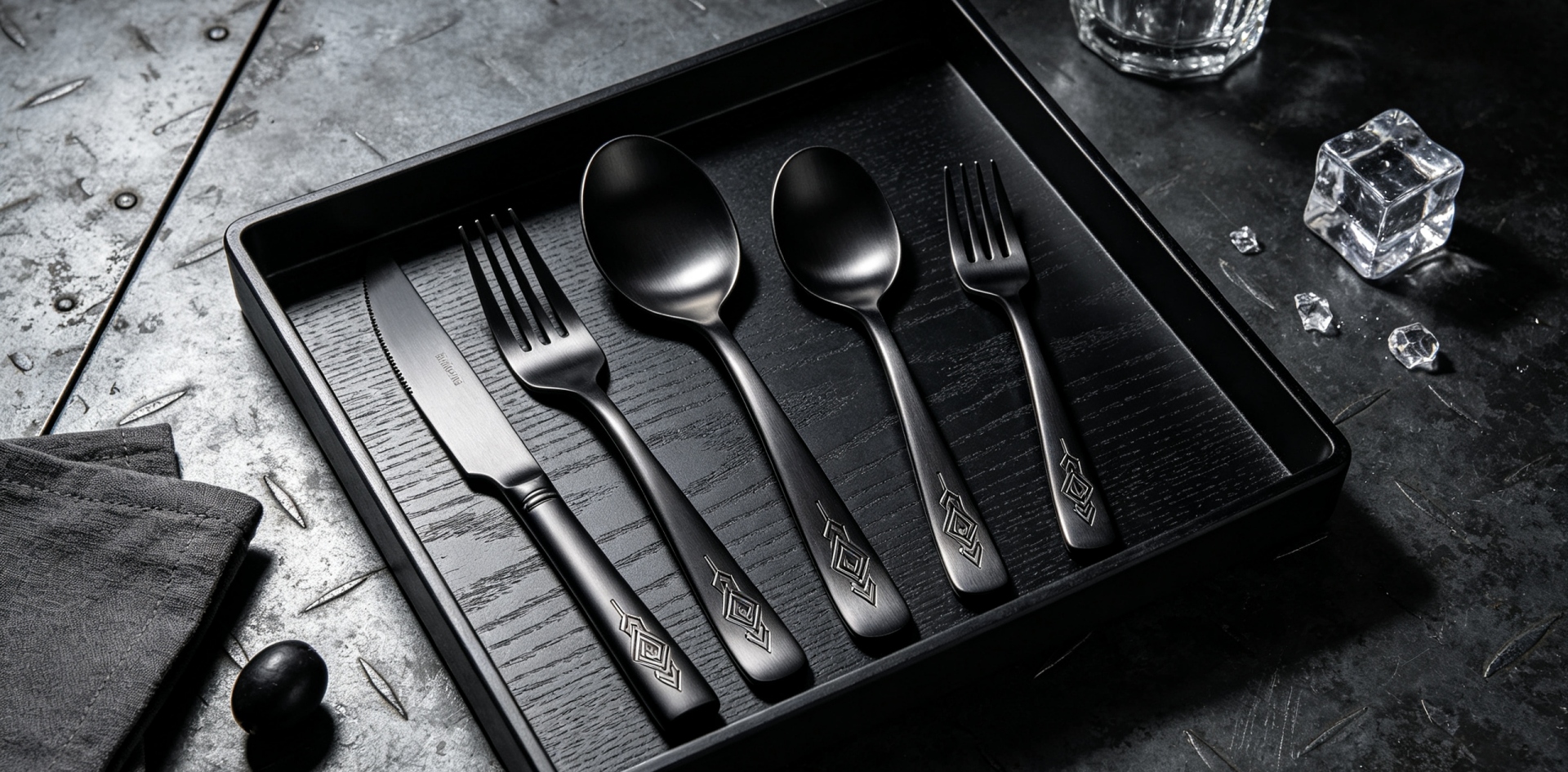
How to Prepare a Supplier Contingency Plan for Stainless Steel Cutlery

How to Prepare a Supplier Contingency Plan for Stainless Steel Cutlery
For importers, wholesalers, and private-label brands, a reliable stainless steel cutlery supplier is essential for maintaining product availability and meeting customer commitments. However, even an established supply relationship may face unexpected challenges, including material shortages, equipment problems, transport interruptions, or sudden changes in demand.
A supplier contingency plan helps purchasing teams decide what to do when normal supply arrangements are disrupted. Rather than waiting until a shipment is delayed, buyers can identify critical products, define acceptable alternatives, and agree on communication procedures in advance.
For stainless steel knives, forks, spoons, and flatware sets, contingency planning must protect not only delivery schedules but also product specifications, quality expectations, branding, and packaging consistency.
Identify Which Cutlery Products Need Priority Protection
Not every product requires the same contingency measures. A standard spoon with stable demand may be easier to replace than a customized flatware set with a proprietary handle design, special finish, or printed retail box.
Begin by reviewing the products that would cause the greatest commercial impact if they became unavailable. Consider sales volume, customer commitments, replenishment time, customization requirements, and the availability of approved alternatives.
A simple product risk register can include:
-
Product model and internal SKU
-
Average or forecast demand
-
Current inventory and expected replenishment date
-
Standard production and shipping lead time
-
Custom features that limit substitution
-
Key customer or promotional commitments
-
Potential business impact if supply is interrupted
This review helps buyers prioritize contingency resources instead of treating every item as equally urgent.
Assess Supplier Risks Beyond Quoted Capacity
A supplier may offer an attractive price and substantial production capacity, but buyers also need to understand how the factory would respond to an unexpected disruption.
During supplier evaluation, discuss how production schedules are managed, how material availability is reviewed, and how quality requirements are maintained when orders are rescheduled. Buyers can also ask which processes depend on external partners and how changes affecting those partners are communicated.
For customized stainless steel cutlery, clarify the availability and control of product drawings, approved samples, logo specifications, and packaging artwork. These records are important when a project needs to resume after a delay or be reviewed by another qualified manufacturing source.
Useful questions include:
-
How are urgent changes to production schedules communicated?
-
What happens if a critical material or packaging component is delayed?
-
How are approved product specifications maintained between orders?
-
Which quality checks must be completed before a delayed order can ship?
-
Who is responsible for providing revised delivery estimates?
The purpose is not to expect a factory to eliminate every risk. It is to understand whether the supplier has a clear process for identifying and managing problems.
Define Acceptable Backup Sourcing Options
A secondary supplier may reduce dependence on one source, but selecting an alternative should not be treated as an emergency price comparison. The replacement must be capable of meeting the relevant product and commercial requirements.
Before approving a backup source, compare the stainless steel grade, dimensions, thickness where applicable, weight targets, handle construction, surface finish, logo method, and packaging configuration. Differences that appear minor in a quotation can affect the appearance, performance, or retail presentation of the finished cutlery.
Where appropriate, request samples and evaluate them against the approved reference. Confirm inspection criteria and any applicable product testing requirements before committing to a large order.
Factory audit information, quality records, and relevant certificates should also be reviewed according to the project's requirements. A certificate or report should be checked for its actual scope and validity rather than assumed to cover every model or production process.
For private-label products, confirm that designs, artwork, trademarks, and other intellectual property may legally and contractually be used by the proposed manufacturer.
Separate Essential Specifications From Flexible Details
During a supply disruption, buyers may need to decide whether an order can proceed with a different schedule, packaging arrangement, or product configuration. These decisions are easier when essential requirements have already been identified.
For example, a buyer may consider changing the outer shipping carton while keeping the retail box, product dimensions, and branding unchanged. Another buyer may be willing to adjust shipment timing but not the approved surface finish or material grade.
Create a specification review that distinguishes:
-
Non-negotiable product and safety requirements
-
Brand-critical features, such as logos and colors
-
Packaging elements that require formal approval
-
Commercial details that may be adjusted with written agreement
-
Changes that require new samples or additional inspection
No product, material, or packaging substitution should be implemented without the appropriate buyer approval. A contingency option is only useful when it remains acceptable to the customer and destination market.
Plan Inventory and Reordering Triggers
Inventory can provide a buffer when replenishment is delayed, but holding excessive stock ties up working capital and warehouse space. Buyers should set inventory policies according to actual demand patterns, supplier lead times, and the commercial importance of each cutlery model.
A reorder trigger can be based on expected consumption during replenishment time plus an appropriate safety allowance. For products with long customization or packaging lead times, buyers may need to begin planning earlier than they would for standard items.
Review these assumptions periodically. Demand forecasts can change because of seasonal sales, new retail listings, customer promotions, or discontinued models. A contingency plan based on outdated demand data may provide too little stock for a high-priority item or create excess inventory for a slow-moving product.
When discussing repeat orders with the factory, share forecasts early where possible and distinguish forecast quantities from firm purchase orders. This helps both parties plan without confusing preliminary estimates with confirmed commitments.
Establish a Response Process for Disruptions
A written response procedure helps purchasing teams act quickly when a potential problem is reported. It should identify who assesses the impact, who communicates with the customer, and who can authorize changes to the order.
A practical response process may follow these steps:
-
Confirm the nature of the disruption and the products affected.
-
Review current inventory, open purchase orders, and customer delivery commitments.
-
Obtain a revised production or shipping estimate from the supplier.
-
Evaluate available options, including partial shipments, revised schedules, or approved alternative products.
-
Confirm commercial and specification changes in writing.
-
Update internal teams and affected customers with realistic information.
-
Record the outcome and adjust the contingency plan if needed.
For a bulk stainless steel cutlery order, partial shipment may be useful when some models are ready and others are delayed. However, buyers should compare additional freight and handling costs against the benefit of receiving priority products earlier.
Learn From Previous Disruptions
A contingency plan should evolve as the business gains experience. After a delay or unexpected supply issue, review what happened, how quickly the problem was communicated, which decisions were effective, and whether the original risk assessment was accurate.
Track practical measures such as delivery performance, frequency of schedule changes, quality issues following rescheduling, and the time required to approve corrective actions. These indicators can help buyers identify recurring problems without relying solely on the supplier's quoted capacity.
For example, if customized packaging repeatedly becomes the critical path, future orders may benefit from earlier artwork approval and clearer packaging-material milestones. If changes to product specifications create repeated rework, a controlled approval record may be the more important improvement.
The objective is to turn each experience into a more effective sourcing process.
How Homefelt Factory Supports Cutlery Sourcing Projects
Homefelt factory works with B2B buyers seeking stainless steel knives, forks, spoons, and complete flatware sets for wholesale, OEM, ODM, and private-label programs. Buyers can discuss product specifications, target quantities, logo requirements, packaging arrangements, and expected delivery schedules when planning new or repeat orders.
For projects requiring customization, early confirmation of drawings, approved samples, and packaging details can help reduce avoidable changes later in the process. Depending on the project, support may include product design, customized packaging, and transportation coordination as part of a one-stop service.
Buyers evaluating a potential supplier can also discuss relevant factory audit information, quality-control procedures, and product-specific inspection or testing documentation. The appropriate records depend on the product, destination market, and buyer's requirements.
When requesting a quotation, provide the intended product models, material expectations, approximate order quantities, branding details, and target delivery window. These details help establish a clearer basis for reviewing production arrangements and potential supply risks before an order is confirmed.
You May Be Interested In
How to Adapt Stainless Steel Cutlery Assortments for Different Markets
How to Allocate Stainless Steel Cutlery Orders Across Multiple Warehouses
Related Article