
Stainless Steel Cutlery Surface Flatness Control for Bulk Production
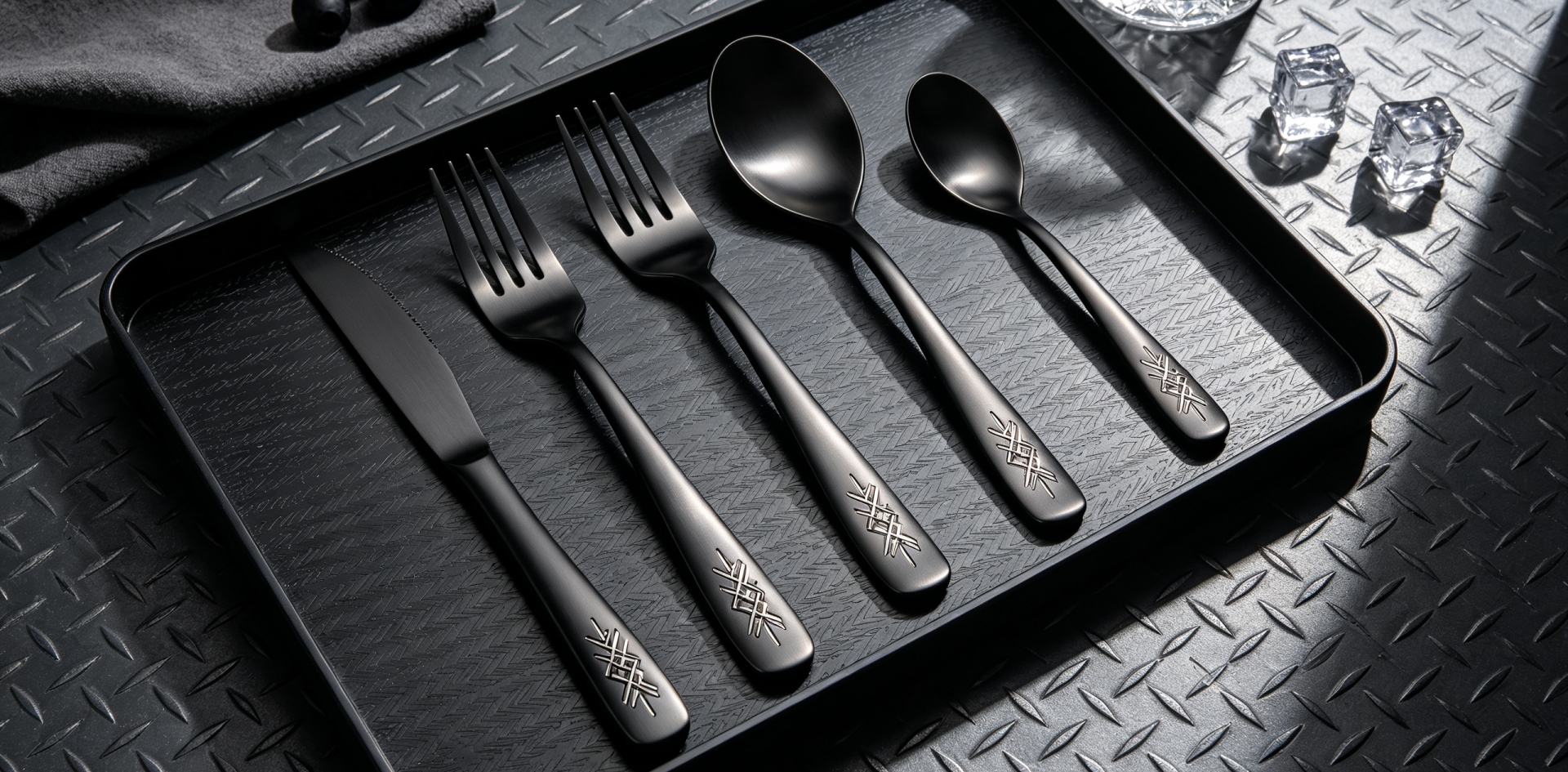
Stainless Steel Cutlery Surface Flatness Control for Bulk Production
When buyers compare stainless steel cutlery samples, attention often goes to material, thickness, finish and overall appearance. However, another product detail can have a direct effect on how knives, forks and spoons look and perform in daily use: surface flatness.
For B2B cutlery projects, surface flatness is not simply an appearance issue. It can influence how individual pieces sit on a table, how multiple items are stacked, how the product reflects light after polishing, and how consistently the same design is reproduced during large-volume production.
For wholesalers, distributors, hospitality suppliers and private label brands, controlling this detail from sample development through mass production can help create a more consistent stainless steel cutlery collection.
What Surface Flatness Means in Stainless Steel Cutlery
Surface flatness refers to how evenly a stainless steel cutlery piece maintains its intended shape without unwanted deformation, twisting or irregular high and low areas.
Knives, forks and spoons naturally have different structures. A spoon includes a bowl and handle transition, a fork contains several tines and a shaped neck, while a table knife usually has a blade, spine and handle with its own dimensional requirements.
Because of these differences, flatness should be considered according to the design of each product rather than applying one identical measurement approach to every item.
For a B2B buyer, the important point is consistency. If one sample looks correct but pieces from the same production batch show visible deformation or different positioning, the collection may not maintain the expected appearance.
Why Flatness Matters When Selecting Stainless Steel Cutlery
A well-controlled shape helps stainless steel cutlery maintain a clean and predictable appearance.
When flatware is placed on a table, uneven deformation can become noticeable, particularly when several pieces from the same collection are arranged together. Differences may also become more visible under restaurant lighting, showroom lighting or strong photography conditions.
Flatness can also affect stacking. Buyers supplying restaurants, hotels, catering companies or other commercial users may store large numbers of spoons, forks and knives together. Products with consistent shapes can make stacking and handling more predictable.
For retail and private label collections, consistency is equally important. Customers may compare several pieces from the same package at the point of sale. A noticeable difference between individual pieces can reduce the visual quality of an otherwise well-designed collection.
Different Cutlery Pieces Require Different Flatness Control
A useful B2B inspection process does not treat every product as if it had the same geometry.
Spoons require attention to the relationship between the bowl and handle. The bowl should maintain the intended shape, while the transition area should remain consistent from one piece to another.
Forks require control around the handle, neck and head. The overall shape should remain aligned with the approved design, while the tines should maintain their intended position.
Knives require attention to the relationship between the blade and handle. A blade that is not properly aligned with the handle can be visible immediately when several pieces are placed together.
This is why a professional stainless steel cutlery manufacturer needs to evaluate the complete product structure rather than checking only one point.
Surface Flatness and the Appearance of Polished Cutlery
Polishing can make stainless steel cutlery highly reflective, which also means that irregularities can become easier to notice.
A flat, consistently formed surface allows light to reflect in a more predictable way. When the geometry changes from one piece to another, reflections may also appear different.
For B2B buyers developing a collection, this is particularly relevant when the same design includes several pieces. A spoon, fork and knife do not need identical shapes, but they should share a consistent design language and production standard.
Sample approval therefore should include visual comparison under practical lighting rather than relying only on photographs.
How Flatness Is Considered During Custom Development
For OEM and ODM stainless steel cutlery projects, surface flatness should be considered during the sample development stage.
The approved sample becomes an important reference for later production. Buyers can compare the shape, proportions and surface condition of production pieces against the confirmed sample.
This is especially useful when developing a new private label collection. Instead of discussing quality only in general terms, buyers and manufacturers can identify specific product characteristics that need to remain consistent.
For example, a project specification can define the intended dimensions, thickness, overall shape, handle structure and finishing requirements. Flatness and deformation control can then become part of the production inspection process.
This approach gives both sides a clearer reference when evaluating bulk orders.
Flatness Control in Large-Volume Production
Large-volume orders create a different challenge from producing a small number of samples.
During mass production, thousands of stainless steel spoons, forks or knives may need to maintain the same basic shape. Production control therefore needs to focus on repeatability rather than simply achieving a good result on the first sample.
A factory serving B2B customers can use production inspection points to identify unwanted deformation during processing and finishing. Products that do not meet the approved standard can then be separated before packing.
For buyers, this means that quality discussions should not stop after receiving the first sample. The same characteristics should be considered when confirming the requirements for the complete production order.
What Buyers Can Check During Sample Approval
When reviewing a stainless steel cutlery sample, buyers can place several pieces of the same model together and compare them from different angles.
Check whether the pieces maintain the same general shape. Look at the transition between different sections of the product. Place multiple pieces on a flat surface to observe whether their positioning is consistent.
For spoons, compare the bowl shape and handle alignment. For forks, compare the overall head and handle alignment. For knives, check whether the blade and handle maintain the intended relationship.
These simple checks can help buyers identify potential production requirements before a large order is confirmed.
Why Consistency Matters for Private Label Flatware
Private label buyers are usually building a recognizable product collection rather than purchasing individual pieces without a long-term design strategy.
A collection may include several spoon sizes, forks, knives and matching sets. If each item is produced according to a different interpretation of the design, the collection can lose visual consistency.
A reliable manufacturing partner should therefore be able to work from approved product specifications and samples and reproduce the intended characteristics across repeat orders.
Homefelt factory supports stainless steel cutlery customization for B2B customers, including OEM, ODM, private label development, wholesale orders and large-volume production. Product requirements can be discussed around dimensions, materials, shapes, finishes, branding, packaging and other project specifications.
Building a Clear Product Specification
A detailed product specification does not need to be complicated.
For a stainless steel cutlery project, buyers can organize the main requirements into several practical categories:
-
Product type: spoon, fork, knife or cutlery set
-
Stainless steel material specification
-
Product dimensions
-
Thickness requirements
-
Weight requirements where applicable
-
Handle design
-
Surface finish
-
Logo or branding requirements
-
Shape and flatness reference
-
Packaging requirements
-
Sample approval reference
-
Quantity and production requirements
Including the approved sample as a visual reference can make communication easier, especially for custom projects involving multiple product models.
Why Product Details Matter for Repeat Orders
A successful first order is often only the beginning of a B2B relationship.
Wholesale distributors, hospitality suppliers and private label brands may reorder the same stainless steel cutlery design several times. If product specifications are clearly established, future orders can be compared against the original requirements.
This is particularly useful when a buyer needs consistent products across different purchasing cycles.
For manufacturers, keeping clear production references also helps connect product development with future bulk production. The goal is not simply to produce one acceptable sample, but to establish a repeatable standard for the collection.
Working With an Experienced Stainless Steel Cutlery Factory
Choosing a supplier for stainless steel knives, forks and spoons involves more than comparing unit prices.
Buyers should consider whether the factory can understand detailed product specifications, develop samples, maintain production consistency and support the requirements of larger orders.
Homefelt has 40 years of experience in the stainless steel cutlery business and has worked with international customers and well-known brands. The factory supports OEM/ODM and private label stainless steel cutlery projects, including custom designs, wholesale production and large-volume orders.
For B2B customers, the production discussion can cover the complete product from its basic dimensions and material to shape, surface treatment, branding, packaging and final order requirements.
Conclusion
Surface flatness is one of the practical details that can influence the appearance and consistency of stainless steel cutlery. Although it may not be the first specification buyers consider, it becomes more important when products are compared side by side or produced in large quantities.
For spoons, forks and knives, the appropriate control points depend on the individual product structure. During custom development, buyers can use approved samples and clear specifications to establish a consistent reference for production.
For wholesalers, distributors, hospitality suppliers and private label brands, working with a stainless steel cutlery manufacturer that understands these product-level details can make communication and repeat production more efficient.
If you are developing a new stainless steel cutlery collection or planning a bulk order, you can contact Homefelt factory at ingrid@homefelt.net to discuss product specifications, customization, OEM/ODM, private label requirements and production needs.
You May Be Interested In
Stainless Steel Table Knife Blade Straightness for Consistent B2B Cutlery
Stackable Stainless Steel Cutlery Design for Commercial B2B Projects
Related Article



