
Stainless Steel Cutlery Surface Smoothness for B2B Buyers
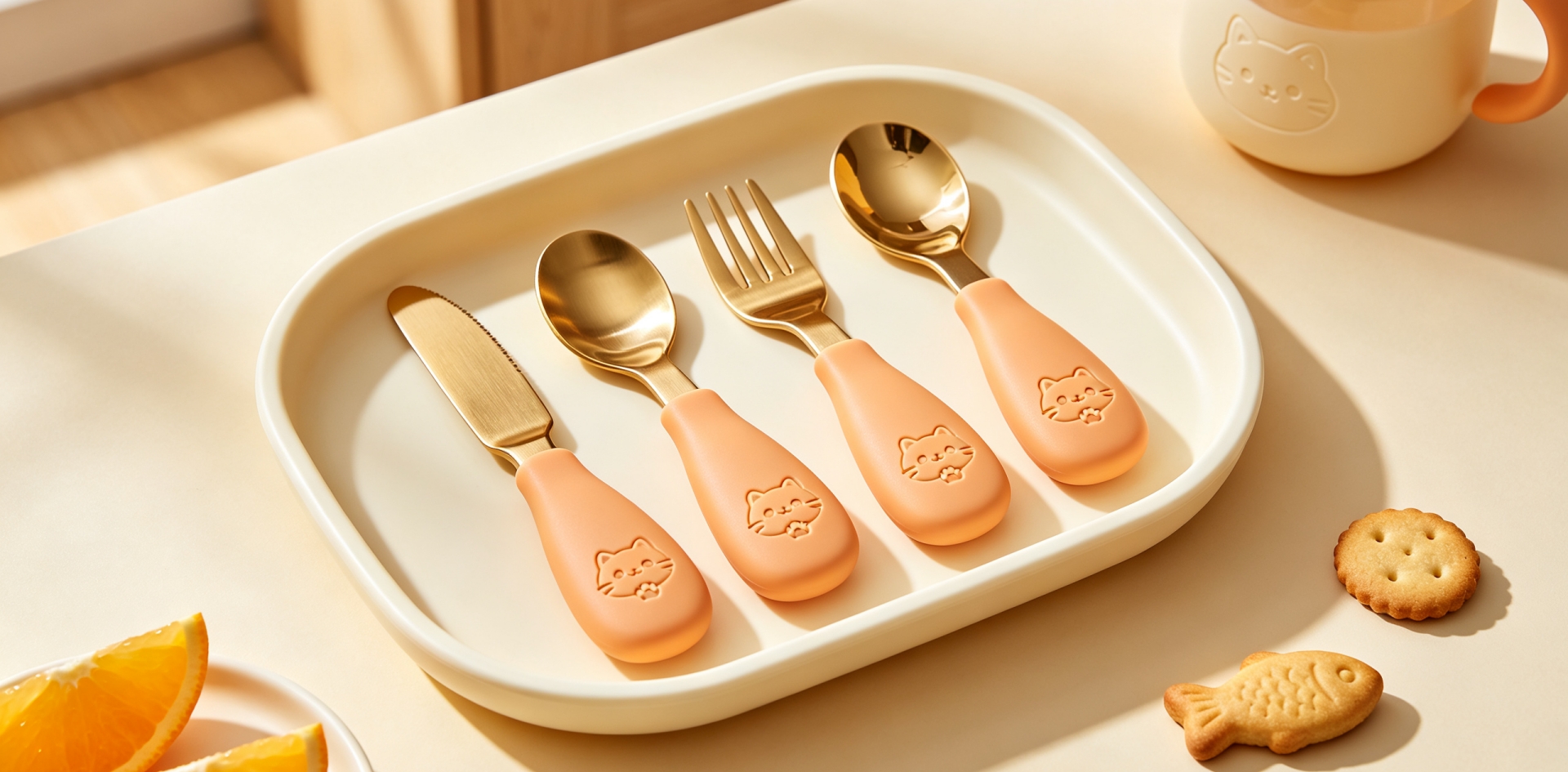
Stainless Steel Cutlery Surface Smoothness for B2B Buyers
When evaluating stainless steel cutlery, buyers often focus on material, shape, weight and visual finish. Another detail that deserves attention is the smoothness of the finished surface.
A stainless steel knife, fork or spoon can look attractive at first glance while still having differences in surface condition that become more noticeable during handling and everyday use.
For B2B buyers developing custom flatware, surface smoothness is therefore worth considering as part of the overall product requirement.
What Does Surface Smoothness Mean?
Surface smoothness refers to the condition of the finished stainless steel surface after manufacturing and finishing processes.
A well-finished piece of cutlery should have a consistent surface without obvious rough areas, unwanted scratches, sharp irregularities or inconsistent finishing.
The requirement is not simply about making the product look shiny.
A smooth and well-controlled surface contributes to the overall feel of the product when it is handled and used. It can also influence how consistent a complete cutlery collection appears.
For a custom stainless steel cutlery manufacturer, surface quality is therefore part of producing a finished product that feels coherent from piece to piece.
Why Surface Smoothness Matters During Use
Cutlery is handled frequently.
A spoon passes through the hand before reaching the mouth. A fork and knife are also repeatedly held, moved and placed on a table or plate.
Small surface irregularities that are difficult to notice in a product photograph may become more obvious when the product is handled directly.
This is particularly relevant for brands positioning their stainless steel flatware as a carefully developed product rather than a basic commodity item.
For B2B customers, the physical feel of the finished product can therefore be an important part of product perception.
The Relationship Between Polishing and Surface Quality
Polishing is one of the important processes used to achieve the desired appearance and surface condition of stainless steel cutlery.
The exact process depends on the product design, material and required finish.
A polished surface can create a reflective appearance, while other finishing approaches may produce a more subdued visual effect.
Regardless of the selected appearance, the finishing process needs to be controlled consistently across the product.
For an OEM stainless steel flatware factory, this becomes especially important when several different pieces are developed as one collection.
A spoon and fork should not only share a similar design language; their surface treatment should also feel consistent when placed together.
Smoothness Is Not the Same as High Shine
One useful distinction for B2B buyers is that surface smoothness and visual gloss are not exactly the same thing.
A product can have a less reflective finish while still having a well-controlled, smooth surface.
Therefore, buyers should not judge surface quality solely by how much the product reflects light.
The intended finish should be defined according to the product concept and then evaluated based on whether the finished surface matches that requirement.
This gives an ODM cutlery manufacturing supplier a clearer understanding of the actual objective.
Pay Attention to Transitions Between Different Areas
Cutlery is not always made with one completely uniform surface.
A handle may have decorative elements, a different texture or a transition between sections. These areas deserve attention during product development because changes in surface treatment can affect how the finished piece feels.
For custom flatware, the transition should be consistent with the design rather than appearing accidental.
This is particularly important for modern handle designs where different visual areas may be combined within one product.
A coordinated transition can help the product look more carefully developed.
Inspect the Complete Cutlery Piece
Surface quality should not be evaluated only on the most visible area.
When reviewing a stainless steel spoon, fork or knife, buyers can look at the handle, neck, working end and other relevant areas.
The goal is to understand whether the overall finishing is consistent.
For a B2B private label flatware program, evaluating the complete product is more useful than focusing only on one attractive section.
It also gives the manufacturer clearer feedback if an adjustment is required.
Consistency Across Multiple Pieces
A commercial cutlery collection normally contains multiple products.
A buyer may order several spoon sizes together with forks and knives. If the surface appearance or feel varies noticeably between the pieces, the collection may appear less coordinated.
This is why surface smoothness should be considered at collection level.
During custom product development, buyers can place the main pieces together and compare them under the same lighting and handling conditions.
This simple comparison can reveal differences that may not be obvious when the products are reviewed separately.
Surface Smoothness and Product Perception
For B2B brands, product perception can influence how customers view the entire collection.
A cutlery set with a consistent finish and comfortable surface can give a more coherent impression when displayed in a retail environment, hospitality setting or product catalog.
This does not mean every product needs an expensive or highly polished finish.
The important point is that the selected surface treatment should match the intended product positioning and be manufactured consistently.
For a wholesale stainless steel flatware program, consistency is often more useful than unnecessary complexity.
Discuss the Desired Finish Before Production
When developing custom stainless steel cutlery, buyers can communicate the expected surface appearance and feel before the production stage.
Reference samples can be particularly useful.
If the buyer already has a product with the desired surface condition, providing a physical sample or clear visual reference can help the factory understand the target.
The manufacturer can then review the design and determine how the requested finish can be achieved through the production process.
This is more practical than relying only on general terms such as “smooth” or “premium.”
Use a Clear Reference for Repeat Orders
Once a product has been approved, its surface finish should remain part of the established product reference.
This becomes important when the same product is reordered later.
A B2B buyer may expect the new production to maintain the same appearance and handling characteristics as the original approved product.
Keeping the surface requirement connected to the approved product reference gives the manufacturer a clearer basis for repeat production.
This is particularly valuable for private label brands that intend to keep the same cutlery collection in their product range for several years.
A Detail Worth Considering Early
Surface smoothness may seem like a small manufacturing detail compared with product design or order quantity, but small details often influence the way a finished cutlery product is experienced.
For B2B buyers, discussing the desired surface condition early can prevent uncertainty later.
The objective is not to create unnecessary technical requirements. It is simply to make sure that the buyer and manufacturer share the same understanding of the finished product.
Supporting Custom Stainless Steel Cutlery Projects
Homefelt factory manufactures stainless steel knives, forks, spoons and complete flatware collections for B2B customers, including OEM, ODM, private label and wholesale projects.
Customers can provide their own designs, reference samples or product concepts when developing a new collection. Surface finish and other product details can then be discussed as part of the manufacturing requirements.
For importers, distributors, retailers and brands, this provides a practical way to turn a product concept into a consistent commercial cutlery range.
A well-designed stainless steel cutlery product is made up of many small details. Surface smoothness is one of them.
When material, design, finishing and production requirements are considered together, the finished product can better match the expectations established during the development stage.
For B2B buyers, that attention to detail can make the difference between simply sourcing a cutlery item and developing a product that fits a long-term collection.
Custom Stainless Steel Cutlery Manufacturing
OEM & ODM Stainless Steel Flatware
Private Label Cutlery Production
Stainless Steel Cutlery Dimension Consistency for B2B Buyers
Stainless Steel Cutlery Stain Resistance for B2B Buyers
Related Article



