Stainless Steel Cutlery Manufacturer | B2B Technical Specification Guide
Stainless Steel Cutlery Manufacturer: How Clear Technical Specifications Improve B2B Projects
For B2B buyers sourcing stainless steel cutlery, a successful order starts with more than choosing a product image or sending a simple request for price. Clear product specifications are an important part of communication between a buyer and a Stainless Steel Cutlery Manufacturer.
Whether the project involves standard wholesale cutlery, private-label flatware, OEM products, or a completely customized collection, manufacturers need accurate information to understand what the buyer expects.
A well-prepared specification can reduce misunderstandings, make product evaluation easier, and provide a useful reference throughout production and future repeat orders.
Why Technical Specifications Matter in Cutlery Purchasing
Stainless steel cutlery may appear simple, but individual products can vary significantly in dimensions, weight, shape, material, surface treatment, branding, and packaging.
Two spoons can have similar appearances while differing in thickness, handle construction, bowl dimensions, overall length, or finishing quality.
For B2B buyers, these details can influence the final product experience and market positioning.
Clear specifications help both sides establish a common understanding before manufacturing begins. Instead of relying only on photographs or general descriptions, buyers can communicate measurable requirements that a manufacturer can review and reproduce.
This becomes particularly important for custom projects and repeat orders.
What Should Be Included in a Cutlery Specification?
A useful specification sheet does not necessarily need to be complicated. The goal is to provide enough information for the manufacturer to understand the product accurately.
Depending on the project, a specification may include:
Product name and item number
Product type
Overall dimensions
Handle dimensions
Bowl or blade dimensions
Material requirement
Thickness or gauge
Approximate product weight
Surface finish
Logo or branding requirements
Packaging requirements
Quantity
Reference sample or drawing
Special production requirements
Not every project needs every detail at the beginning. However, the more customized the product is, the more important detailed information becomes.
Product Dimensions and Shape
Dimensions are among the most important technical details for stainless steel cutlery.
For spoons and forks, buyers may need to specify overall length, bowl or tine dimensions, handle proportions, and other relevant measurements. Knives may require additional information about blade dimensions and handle construction.
For a complete cutlery collection, dimensional relationships are also important.
A dinner spoon, dinner fork, knife, and teaspoon should feel visually coordinated when presented together. If one piece is significantly different in proportion, the collection may not achieve the intended appearance.
A Stainless Steel Cutlery Manufacturer can use drawings, reference samples, or agreed specifications to establish these requirements before production.
Material Information
Material selection is another important part of a technical specification.
Buyers may have requirements related to stainless steel grade, product positioning, durability, appearance, or intended application.
The material specification should be clearly communicated rather than assumed from the product name alone.
For commercial B2B purchasing, this information can also help purchasing and quality teams compare products from different suppliers on a more consistent basis.
When a buyer already has a material requirement, it should be included in the initial project information so the manufacturer can evaluate the production requirements accurately.
Thickness and Gauge
Thickness can influence the structure and handling characteristics of stainless steel cutlery.
A buyer may have a target thickness based on an existing product, market requirement, product positioning, or internal specification.
However, thickness should be considered together with the overall design and manufacturing process rather than viewed as an isolated number.
For custom products, the manufacturer can evaluate the relationship between material thickness, shape, forming requirements, product weight, and intended application.
This helps ensure that the technical specification is practical for production.
Product Weight
Product weight can also be included in a B2B cutlery specification.
Weight affects the way a spoon, fork, or knife feels in the hand and can contribute to the overall positioning of a collection.
Premium products may require a different tactile experience from lightweight promotional or high-volume commercial products.
For buyers with an existing reference product, providing its approximate weight can help the manufacturer understand the intended product characteristics.
For new designs, weight can be established as part of the development process and then controlled within an agreed production range.
Surface Finish Requirements
The surface finish should be clearly identified when appearance is important to the project.
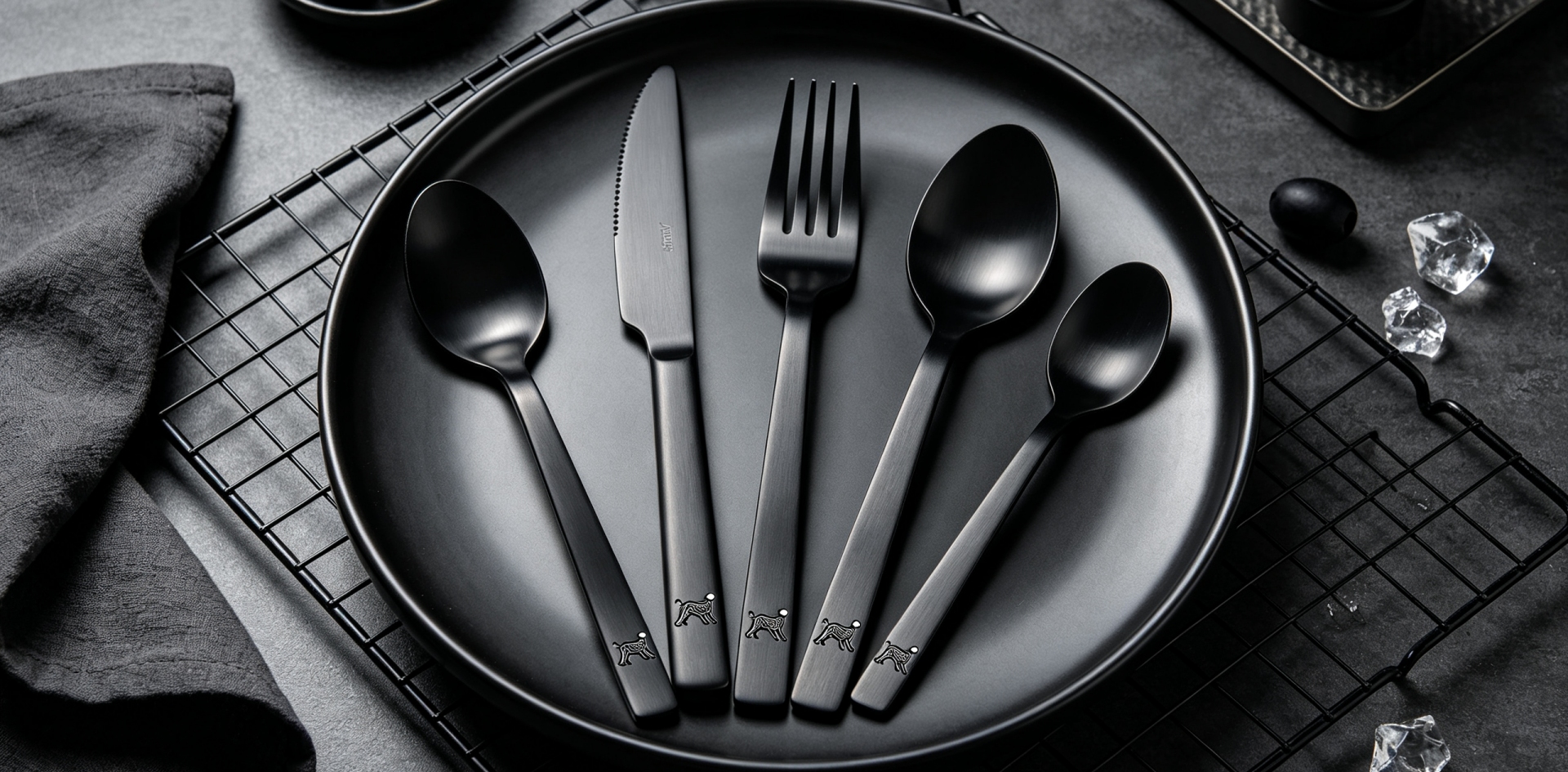
Common commercial requirements may include polished, matte, satin, mirror-like, or other customized surface treatments.
The finish can significantly affect the visual character of stainless steel cutlery.
A polished surface may create a bright and refined appearance, while a matte or satin finish can provide a more understated contemporary look.
For branded collections, the selected finish should also work with the overall product design and packaging.
Providing reference images or physical samples can be helpful when a buyer has a specific appearance in mind.
Logo and Branding Specifications
Custom branding requires clear communication.
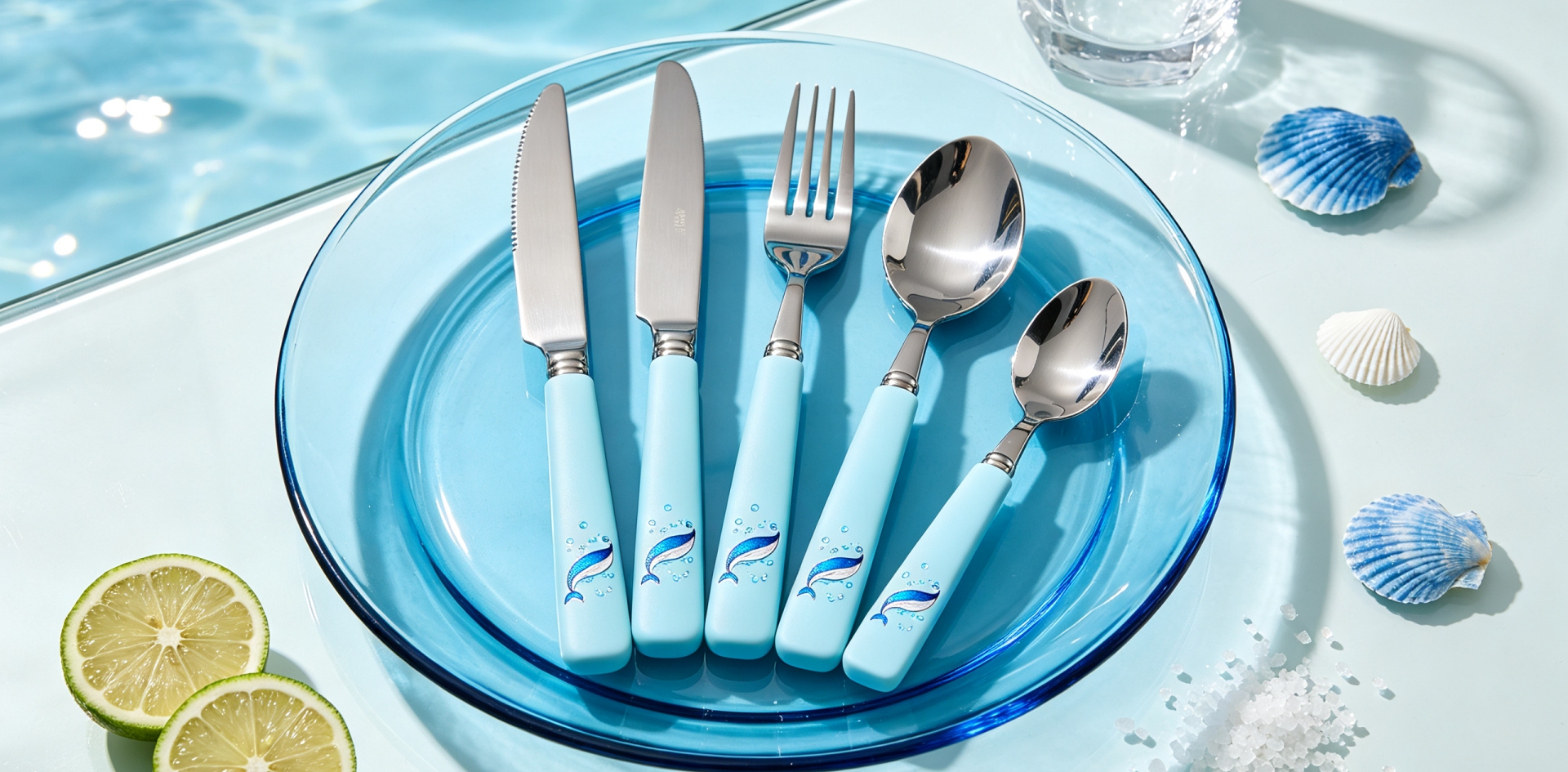
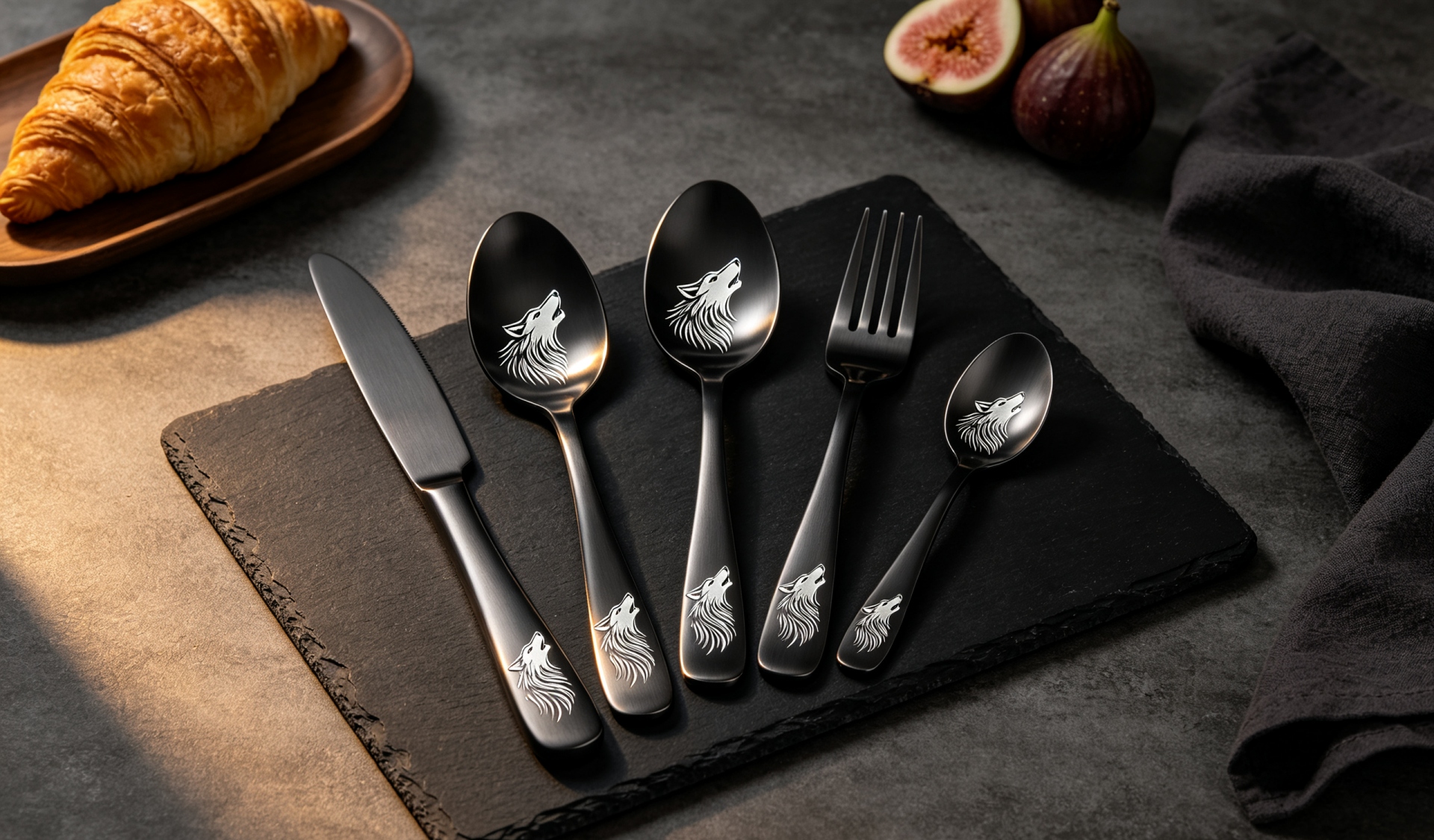
A specification sheet can indicate whether the buyer needs a logo, brand name, pattern, symbol, or other identifying detail.
It can also define the preferred location and approximate size of the branding.
For example, a brand may require its logo to appear on a handle while keeping the rest of the product visually clean.
The manufacturer's technical team can then evaluate the proposed branding requirements according to the product structure and production process.
For private-label projects, keeping branding specifications documented can also help maintain consistency across future orders.
Packaging Information
Packaging should be treated as part of the overall product specification when the cutlery is sold under a brand or retail program.
Different B2B customers may require different packaging formats.
A wholesaler may prefer efficient bulk packaging, while a retail brand may require individual boxes, sets, sleeves, inserts, labels, or other presentation elements.
The specification can identify the number of pieces per package, packaging style, branding information, carton requirements, and other relevant details.
Clear packaging information helps the manufacturer understand the complete order rather than treating the cutlery itself as the only finished product.
Reference Samples and Drawings
Visual references can make technical communication much easier.
A buyer may provide a drawing, CAD file, photograph, existing cutlery sample, product sketch, or combination of these materials.
A physical reference product can be particularly useful when the desired shape or proportions are difficult to describe in words.
The manufacturer can use the reference to understand the buyer's expectations and identify which characteristics should be reproduced or modified.
For custom projects, combining visual references with measurable specifications is often more effective than relying on either one alone.
Specifications for Different B2B Buyers
The information required can vary depending on the type of buyer.
A distributor purchasing an established cutlery model may need relatively straightforward information covering product specifications, packaging, quantity, and commercial requirements.
A private-label brand developing a new collection may require much more detailed information covering design, material, finish, logo, packaging, and production standards.
A foodservice supplier may focus more heavily on functional specifications and consistent supply.
An e-commerce brand may need detailed product dimensions and packaging information for product listings and fulfillment planning.
An experienced Stainless Steel Cutlery Manufacturer should be able to work with different levels of specification depending on the project.
Keeping Specifications Consistent Across Multiple Items
When a buyer develops a collection containing multiple cutlery pieces, consistency becomes particularly important.
Each item should have its own technical information, but the collection should also follow a common specification framework.
For example, the buyer can establish the same categories for every item:
Item number
Product dimensions
Material
Thickness
Weight
Finish
Branding
Packaging
This structure makes it easier for purchasing and quality teams to review the complete collection.
It also creates a useful reference for future product additions.
Using Specifications for Repeat Orders
One of the biggest advantages of a well-prepared specification is that it remains useful after the first order.
When a product needs to be reordered months later, the original specification provides a reference for both buyer and manufacturer.
Instead of relying on memory or old conversations, both sides can refer to the agreed product information.
This is particularly useful for B2B customers who manage multiple SKUs or sell the same cutlery collection over an extended period.
Clear documentation can therefore become part of a long-term supply relationship.
How an Experienced Manufacturer Reviews Buyer Specifications
A professional Stainless Steel Cutlery Manufacturer should not simply receive a specification and immediately begin production.
The information should first be reviewed for completeness and manufacturing practicality.
If a dimension is unclear, if different documents contain conflicting information, or if a requested feature requires further clarification, these points should be addressed before production.
This review stage can help prevent unnecessary corrections later.
For international B2B projects, it is especially valuable because buyer and manufacturer may be working across different languages, time zones, and business systems.
Clear written specifications provide a common technical reference.
Why Documentation Matters for International B2B Orders
International cutlery projects often involve several departments on the buyer's side.
Purchasing may handle supplier communication, designers may manage product appearance, quality teams may review specifications, and logistics teams may manage packaging and shipment.
A documented specification helps keep these departments aligned.
It also provides a clearer basis for communication with the manufacturer.
For international customers, this level of organization can make the purchasing process more efficient and reduce the possibility of important product information being lost during communication.
Choosing a Stainless Steel Cutlery Manufacturer That Understands Specifications
When selecting a manufacturing partner, B2B buyers should consider whether the supplier can work with detailed technical requirements rather than only standard catalog products.
A capable manufacturer should understand product dimensions, materials, finishes, branding, packaging, sampling, production, and quality requirements as connected parts of the same project.
This is particularly important for buyers developing private-label or OEM products.
Homefelt Houseware Co., Limited has more than 40 years of experience in the stainless steel cutlery business and works with international B2B customers on standard and customized cutlery projects.
With experience in OEM, ODM, private-label, and bulk stainless steel cutlery supply, the manufacturer can support projects where clear product specifications are important for development and production.
Preparing Your Information Before Contacting a Manufacturer
B2B buyers do not need to have a perfect technical document before contacting a manufacturer.
A project can begin with basic information such as product type, reference images, approximate dimensions, target quantity, preferred material, finish, branding requirements, and packaging ideas.
The manufacturer can then help identify which additional information is required for the next stage.
The most useful approach is to provide what is already known rather than delaying the project because every detail has not yet been finalized.
Clear communication can develop progressively as the product moves toward production.
Build a Clear Foundation for Your Custom Cutlery Project
A successful stainless steel cutlery project depends on more than attractive design and competitive pricing.
Accurate technical specifications give buyers and manufacturers a common reference for understanding the product.
Dimensions, material, thickness, weight, finish, branding, packaging, and other requirements can all contribute to the final result.
For B2B buyers planning OEM, ODM, private-label, wholesale, or customized stainless steel cutlery, preparing clear product information can make communication more efficient and provide a stronger foundation for future production.
Working with an experienced Stainless Steel Cutlery Manufacturer also allows buyers to discuss their requirements from both a product and manufacturing perspective.
Whether you are developing one customized item or an entire collection, clear specifications can help turn your requirements into a practical product for commercial production and long-term supply.
Request a Quote for Your Stainless Steel Cutlery Project
Send Your Cutlery Specifications to Our Factory
Contact Our Stainless Steel Cutlery Manufacturer
Request OEM Stainless Steel Cutlery Manufacturing
Start Your Custom Flatware Development Project
Send Your Product Drawings and Requirements
Request a Custom Stainless Steel Cutlery Solution
Discuss Your Private Label Cutlery Project
Stainless Steel Cutlery Manufacturer in China | B2B Import Guide
Stainless Steel Cutlery Manufacturer | Custom Product Development for B2B
Related Article