
Stainless Steel Flatware Bending Resistance for OEM and Bulk Production
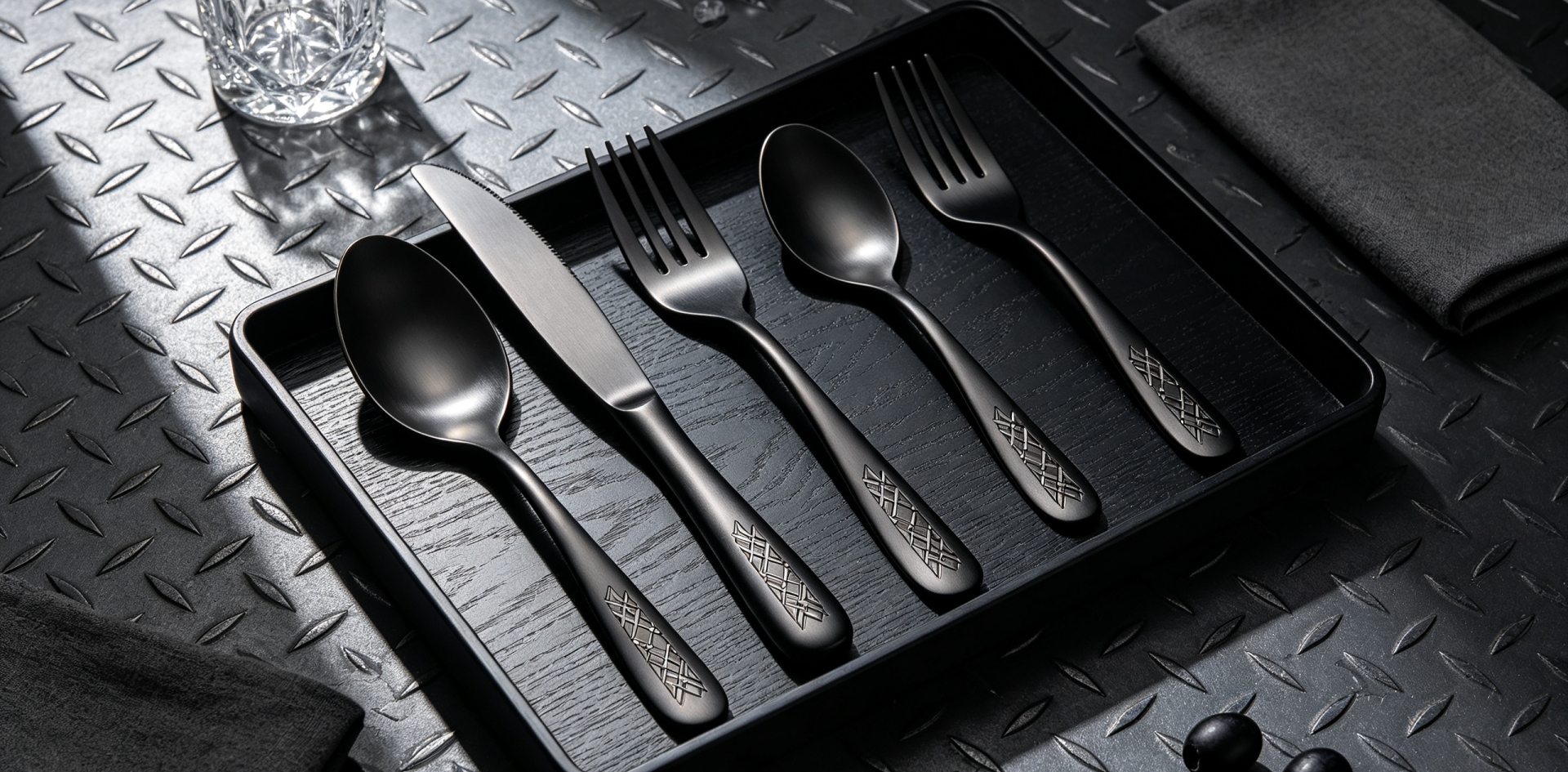
Stainless Steel Flatware Bending Resistance for OEM and Bulk Production
For stainless steel flatware, maintaining the intended shape during everyday handling is an important part of product performance. Knives, forks and spoons are repeatedly picked up, placed down, stored and used with food. In commercial environments, this cycle can occur hundreds of times during normal operation.
For B2B buyers, bending resistance is therefore worth considering when developing stainless steel cutlery for restaurants, hotels, catering suppliers, distributors and private label brands.
Bending resistance is not determined by one parameter alone. Material characteristics, product thickness, geometry, forming conditions and manufacturing consistency all influence how a finished piece responds to force.
Homefelt factory specializes in stainless steel knives, forks and spoons and provides OEM, ODM, private label, wholesale and bulk manufacturing services for international customers.
Why Bending Resistance Matters in Cutlery
A stainless steel fork should retain its intended shape during normal use. A spoon should maintain the designed bowl and handle form. A table knife should remain stable when used with ordinary food-cutting actions.
When products are used in commercial environments, repeated handling can place greater demands on the finished cutlery.
If a piece becomes visibly distorted, it may no longer match the appearance of the original collection. For a restaurant, hotel or distributor, inconsistent shapes across a large quantity can also affect the perceived quality of the product.
This makes resistance to unwanted bending a practical consideration during product development.
Material and Thickness Work Together
Material specification is an important foundation for mechanical performance, but it should not be considered independently.
Product thickness also influences how a flatware piece responds to an applied force. A change in thickness can alter the way the product behaves, while the overall shape can further change how forces are distributed.
For this reason, B2B buyers should establish the material and thickness requirements together with the intended product design.
Homefelt can discuss these parameters with customers during the development stage and recommend a practical specification according to the application and target market.
Product Geometry Influences Bending Behavior
The shape of a stainless steel flatware product can affect its resistance to unwanted deformation.
A long, narrow section may behave differently from a broader section. Changes in the handle, working end or transition areas can also influence the way force travels through the product.
This is particularly relevant for customized OEM and ODM designs.
A customer may have a specific appearance in mind, but the design also needs to be suitable for manufacturing and normal use. The manufacturer should therefore evaluate the complete product rather than focusing only on visual dimensions.
For customized projects, Homefelt can review the design before sample production and help translate the concept into a practical manufacturing specification.
Different Requirements for Knives, Forks and Spoons
Knives, forks and spoons are exposed to different types of everyday force.
A fork may experience downward and sideways pressure during use. A spoon needs to maintain its bowl shape when serving food. A table knife is subjected to force along the blade and handle during cutting.
Because the functional areas are different, the same bending-performance expectation does not necessarily apply identically to every product.
For a complete flatware collection, each piece should be considered according to its actual function while maintaining a consistent overall product standard.
This approach is especially useful when developing a private label collection with multiple product models.
What B2B Buyers Should Specify
When bending resistance is important for a stainless steel flatware project, buyers can clarify:
-
Stainless steel material specification
-
Product thickness
-
Knife, fork and spoon dimensions
-
Product geometry
-
Intended application
-
Expected usage frequency
-
Sample acceptance requirements
-
Bulk production quantity
-
Inspection standards
-
Repeat-order requirements
These details give the manufacturer a clear reference before production begins.
For customized products, an existing sample can also be useful. It allows the factory to understand the expected shape, product feel and performance target more accurately.
Sample Approval Before Mass Production
A physical sample is particularly useful when mechanical performance is part of the purchasing requirement.
Buyers can examine whether the finished knife, fork or spoon maintains its intended form during normal handling. The sample can also be compared with technical drawings or an existing reference product.
Once the sample is approved, the agreed specification can be applied to the bulk order.
For international B2B projects, this process helps reduce uncertainty because both the buyer and manufacturer have a physical product reference before large-volume production begins.
Maintaining Consistency in Bulk Orders
The challenge becomes greater when an order moves from hundreds of pieces to thousands or tens of thousands.
The goal of mass production is not simply to produce a strong individual piece. Every unit should follow the same product specification and maintain the approved shape.
Homefelt has extensive experience in stainless steel cutlery manufacturing and has worked with well-known brands. Its production capabilities cover stainless steel knives, forks, spoons and complete flatware collections for international B2B customers.
For repeat orders, maintaining the same production standard is also important. A clear product specification and approved sample can help the factory keep future batches aligned with the original product.
Factory Experience and Supporting Qualifications
Product performance should be considered together with manufacturing capability.
Homefelt has passed BSCI, SEDEX 4P, BRC, ISO9001 and Disney audits, and has FAMA and FSC certificates. Relevant testing and supporting documentation can be discussed according to individual project requirements.
For B2B buyers, these materials can provide additional information when evaluating a supplier, while the product specification and approved sample remain central to product acceptance.
OEM, ODM and Private Label Production
Bending-performance requirements can be included in the early development stage of an OEM or ODM project.
Homefelt provides customized stainless steel knives, forks, spoons and complete flatware collections for wholesalers, distributors and private label brands.
Customers can discuss product dimensions, material requirements, application conditions and expected quantities before confirming the production sample.
The factory can also coordinate product design, manufacturing, packaging and transportation as a one-stop service. This helps customers manage customized product development and bulk delivery through one manufacturing partner.
For each customer, Homefelt can create an exclusive service package according to the actual project situation rather than applying a fixed solution to every order.
Choosing a Manufacturer for Long-Term Supply
Bending resistance is not simply a question of making stainless steel flatware thicker or harder. The finished result depends on the relationship between material, thickness, geometry, forming and production consistency.
For B2B buyers, an experienced stainless steel cutlery manufacturer can help establish a realistic product specification before production and confirm the result through samples.
Homefelt factory focuses on stainless steel knives, forks, spoons and flatware sets, with OEM, ODM, private label, wholesale and bulk manufacturing capabilities. Through one-stop support from product development to packaging and transportation, Homefelt aims to become a reliable China service provider and grow together with long-term customers.
Stainless Steel Flatware Cleanliness Control for OEM and Bulk Orders
Stainless Steel Flatware Thermal Performance for OEM and Commercial Orders
Related Article



