
Stainless Steel Flatware Blank Design for OEM and Bulk Production
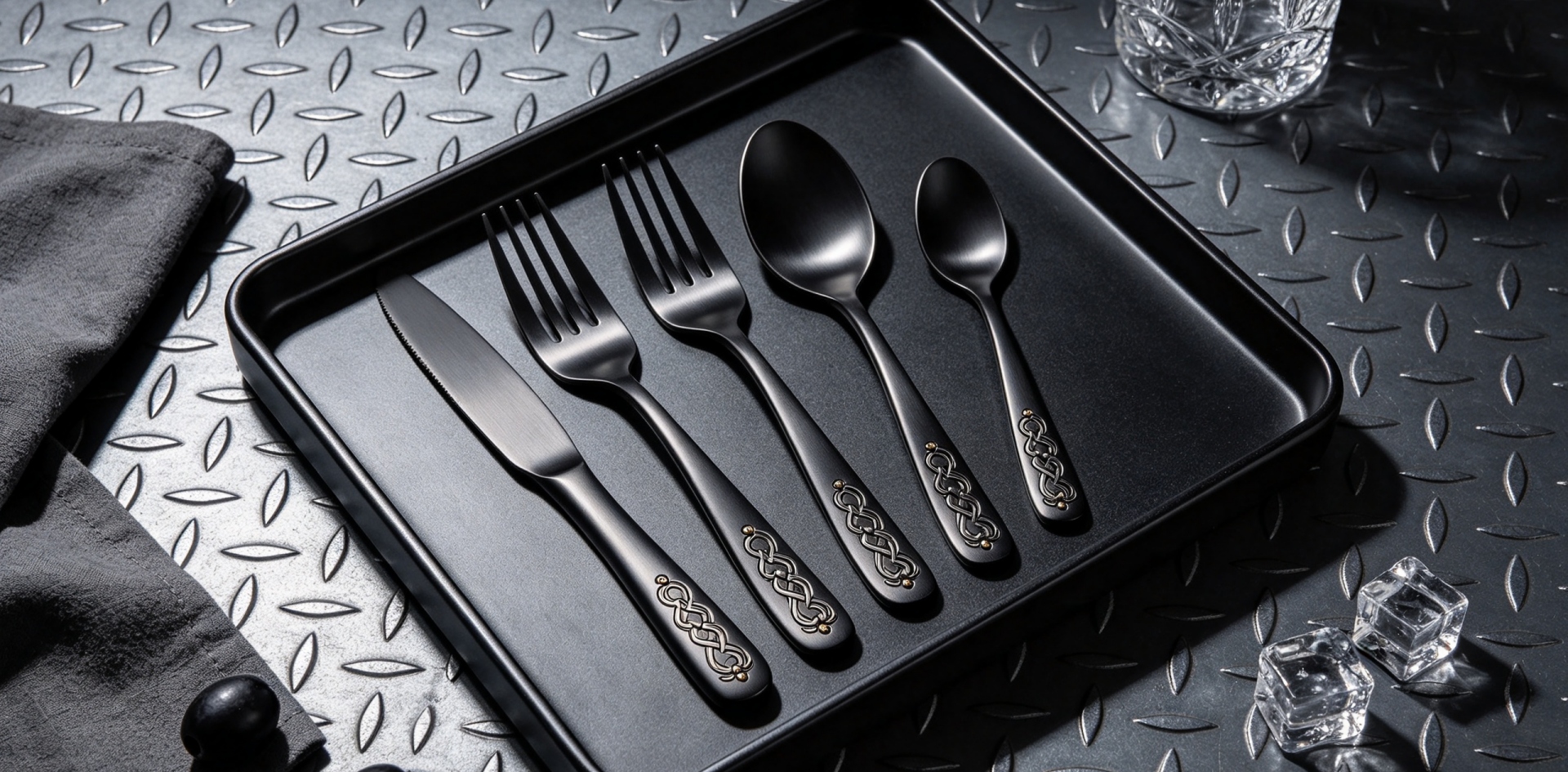
Stainless Steel Flatware Blank Design for OEM and Bulk Production
Before stainless steel becomes a finished spoon, fork or knife, the material must first be prepared in a suitable blank shape. For B2B cutlery manufacturing, this stage has an important influence on forming efficiency, dimensional consistency and the stability of later production.
A flatware blank is not simply a piece of stainless steel cut to approximate size. Its length, width, outline and material distribution need to correspond with the final product design and forming process. For customized OEM and ODM projects, careful blank development can help a factory reproduce the approved product more consistently during large-volume production.
Homefelt factory supports stainless steel knife, fork and spoon projects for wholesale buyers, distributors, hospitality suppliers and private label brands. Blank development can be evaluated as part of the complete product manufacturing process rather than treated as an independent production step.
What Is a Stainless Steel Flatware Blank?
A flatware blank is the prepared piece of stainless steel used as the starting material for forming a finished cutlery product. Depending on the product, the blank may be prepared for a spoon, fork or knife and will eventually go through the required forming and finishing operations.
The blank needs to provide sufficient material for the final shape while remaining suitable for efficient production. If the starting outline is not appropriate, later forming may become more difficult or create unnecessary material waste.
For B2B buyers developing a new product, this means that the initial material preparation should be considered together with the final product drawing.
Blank Length and Width for Different Cutlery Pieces
The required blank dimensions depend on the finished product.
A spoon requires sufficient material to develop both the bowl and handle. A fork requires enough material for the handle and head area, including the section that will later form the tines. A table knife has a different blank requirement because the blade and handle must be developed from a suitable starting shape.
The dimensions should therefore be established according to the final product specification rather than using one standard blank for every collection.
For OEM projects, buyers can provide target product dimensions or reference samples. The factory can then evaluate an appropriate starting blank based on the product structure and production requirements.
Material Distribution During Forming
One of the important considerations in blank development is where the stainless steel material is located within the starting shape.
During forming, different areas of the blank may experience different levels of deformation. A spoon bowl, for example, requires material to develop into a curved section, while the handle remains comparatively different in form.
A suitable blank should provide enough material in the areas where forming requires it. At the same time, unnecessary excess material can increase waste and production cost.
This is why experienced cutlery manufacturers evaluate the blank together with the forming process instead of selecting the starting dimensions only from the finished product's overall length.
Why Blank Design Matters for Bulk Orders
For small sample quantities, the starting material may appear to be a minor production detail. For large B2B orders, however, the effect can become much more significant.
When thousands of pieces are produced, inefficient blank preparation can increase material consumption and make production less economical. An unsuitable blank can also create greater variation during forming.
A well-developed blank standard provides a repeatable starting point for bulk manufacturing. Once the sample and production specifications are approved, the same standard can be applied across the order.
This is particularly valuable for distributors and private label brands that expect repeat production of the same stainless steel flatware design.
Blank Design for Customized OEM Products
Customized cutlery often differs from standard factory designs. A buyer may request a longer handle, a wider spoon bowl, a distinctive knife profile or a new fork shape.
When the finished product changes, the blank may also need to change.
For this reason, Homefelt's OEM and ODM development process considers the complete product rather than simply modifying a standard model. The product drawing, material specification, blank outline and forming requirements can be reviewed together during development.
This approach helps the factory understand the buyer's intended product before moving into larger production quantities.
Balancing Material Efficiency and Product Requirements
Material efficiency is important in stainless steel cutlery manufacturing, but it should not be considered separately from product quality.
The objective is not simply to make the blank as small as possible. It needs to provide the appropriate material for the final product while supporting stable forming and consistent production.
For a commercial flatware project, the right balance can help control manufacturing efficiency without compromising the approved product design.
This is one reason why experienced factory support can be useful when a buyer is developing a new knife, fork or spoon from an original concept.
From Drawing to Production Sample
A practical development process usually begins with a product drawing, reference sample or detailed product requirement.
Homefelt can review the requested stainless steel cutlery design and evaluate how the product can be developed from the starting material. The blank outline can then be coordinated with the intended product dimensions and forming process.
After sampling, the finished piece can be compared against the approved specifications. If adjustments are required, the production parameters can be refined before the bulk order begins.
This sample-based approach is particularly useful for OEM and private label projects where the buyer needs the finished product to closely follow an approved reference.
Supporting Different Knife, Fork and Spoon Requirements
Although knives, forks and spoons are often sold as one collection, their manufacturing requirements are not identical.
A spoon blank must support the development of the bowl and handle. A fork blank must provide suitable material for the head and tine area. A knife blank must accommodate the blade and handle configuration.
For a coordinated flatware collection, these differences should be considered while maintaining a common product specification and visual identity.
Homefelt can develop the three product categories as a complete stainless steel flatware project, helping buyers coordinate product development, manufacturing and packaging requirements through one supplier.
Project Experience and Production Capability
Long-term cutlery manufacturing experience provides practical knowledge about how product designs behave during production.
Homefelt factory has worked with different stainless steel flatware requirements for wholesale, commercial and customized projects. Buyers may approach the factory with an existing product, a drawing or an early-stage concept.
The factory can then evaluate the requested product and discuss suitable production methods before confirming the final specification.
For repeat orders, maintaining an approved production reference is also important. It provides a clear basis for reproducing the same product when customers return for additional quantities.
Quality Management and Certification Support
B2B buyers may need more than a product sample when evaluating a manufacturing partner. Depending on the market and project, documentation related to factory management, audits and product testing may also be required.
Homefelt has passed BSCI, SEDEX 4P, BRC and ISO9001-related requirements and has experience working with well-known brands. Relevant certification and testing materials can be discussed according to customer requirements.
These qualifications complement the practical manufacturing experience behind the product development process and provide buyers with additional information when evaluating a long-term supplier.
OEM, ODM and Private Label Manufacturing
Homefelt supports OEM and ODM stainless steel flatware production for customers with different levels of product development experience.
Some buyers already have complete specifications and only need a reliable manufacturing partner. Others may have a product concept and require assistance in turning it into a production-ready stainless steel knife, fork or spoon.
Private label customers can also combine customized products with branded packaging and other project requirements.
The goal is to provide a flexible manufacturing solution that matches the customer's actual business model, order volume and target market.
One-Stop Service for Wholesale Cutlery Projects
A B2B flatware order often involves more than manufacturing the stainless steel products themselves.
Homefelt can coordinate product development, production, packaging and transportation as part of a one-stop service. The service can be adjusted according to the customer's situation, whether the project involves a standard wholesale order or a customized private label collection.
For buyers looking for a long-term China manufacturing partner, this can simplify communication and help keep different stages of the project connected.
Commercial Stainless Steel Flatware Selection for OEM and Bulk Orders
Stainless Steel Flatware End Design for OEM and Wholesale Collections
Related Article



