
Stainless Steel Flatware Edge Finishing for OEM and Wholesale Production
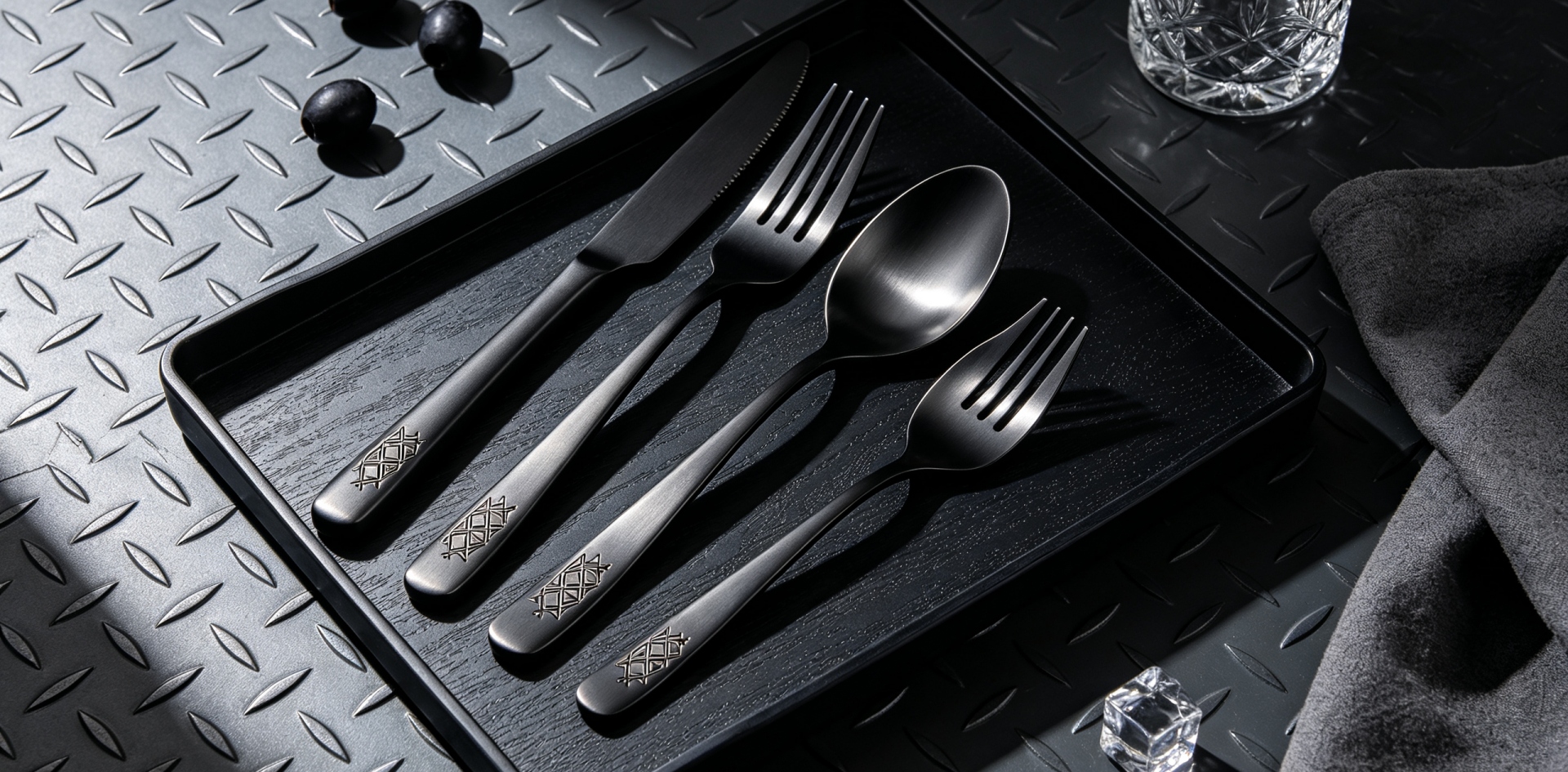
Stainless Steel Flatware Edge Finishing for OEM and Wholesale Production
When buyers evaluate stainless steel flatware, attention often goes to material, dimensions, surface appearance and overall design. However, the quality of the edges and contact surfaces can have an equally important effect on the finished product.
For spoons, forks and knives, different areas of the product require different finishing considerations. The spoon rim should feel smooth when it contacts the mouth, fork tines need clean and consistent edges, and handle transitions should not create uncomfortable sharp points. These details are especially important for B2B buyers developing private label collections or purchasing flatware in large quantities.
Homefelt factory focuses on stainless steel knife, fork and spoon production and can coordinate these finishing requirements as part of OEM, ODM and wholesale projects.
Why Edge Finishing Matters in Flatware
Stainless steel flatware is handled repeatedly during meals, cleaning, transportation and storage. A well-finished product should have controlled edges, consistent polishing and smooth transitions between different sections.
Edge finishing is not simply about making a product look polished. It also influences how the customer experiences the product in actual use.
For a spoon, the rim should transition smoothly around the bowl. For a fork, the tine ends and surrounding edges need consistent treatment. For a knife, areas away from the cutting function still require appropriate finishing where the user holds or touches the product.
The handle is another important area. Where the handle connects to the functional section, an inconsistent transition may affect both appearance and hand feel.
For a B2B flatware collection, these details should remain consistent across different SKUs.
Spoon Rim Finishing
The spoon rim is one of the most noticeable contact areas in a stainless steel spoon.
During product development, buyers can specify the desired rim profile and finishing requirements. The edge should maintain a clean appearance while providing a smooth transition around the spoon bowl.
The shape of the bowl and the finishing of its perimeter should also work together. If the rim is visually uneven or the polishing varies from one section to another, the finished spoon can appear less refined even when the overall shape is correct.
For OEM projects, Homefelt can review the spoon design and sample requirements before mass production. This allows the buyer to confirm the actual product rather than relying only on a drawing.
Fork Tine Edge Consistency
Fork tines are narrow and separated, which makes finishing consistency particularly important.
The tine ends should have a uniform appearance and controlled profile. Spacing, length and shape need to remain consistent across the production batch.
During inspection, buyers can pay attention to whether the tine edges look uniform, whether the transition between the tines is clean and whether the polishing remains consistent from the center to the outer sections.
For commercial and wholesale orders, this type of consistency is important because even small differences can become noticeable when hundreds or thousands of pieces are placed together.
Handle Transitions and Contact Areas
A stainless steel flatware handle is not simply a decorative component. It is one of the main areas that the user touches throughout the meal.
The transition between the handle and the functional section should therefore be carefully controlled. Sudden steps, uneven edges or inconsistent polishing can affect the overall impression of the product.
For custom flatware, buyers may provide drawings or reference samples showing the desired handle profile. The factory can then evaluate the construction and determine how the transition should be processed.
This is especially useful for private label brands because the handle is often one of the most recognizable elements of a flatware collection.
Consistency Across Knife, Fork and Spoon
A complete flatware collection should feel visually and physically coordinated.
The knife, fork and spoon do not necessarily need identical shapes, but their finishing standards should be consistent. The surface treatment, edge quality, handle transitions and overall polishing should create a unified collection.
For example, if the spoon has a highly polished smooth rim while the fork has visibly rougher edge treatment, the difference may become obvious when the products are displayed together.
Homefelt factory can review multiple pieces as one collection during OEM and ODM development. This helps buyers establish consistent finishing requirements across the complete knife, fork and spoon range.
How Factories Control Finishing Quality
A professional production process should include inspection at different stages rather than checking only the final packaged products.
Depending on the product design, inspection can include visual appearance, edge consistency, polishing quality, dimensions, weight and the transition between different sections.
Samples are particularly useful during the development stage. Buyers can compare the approved sample with production pieces to confirm whether the same design and finishing requirements are being maintained.
For larger orders, clear specifications make inspection easier. Instead of describing a product only as “smooth” or “high quality,” the buyer can provide drawings, reference samples, dimensional requirements and surface expectations.
This creates a clearer production standard for both sides.
Project Experience in Custom Flatware
In B2B projects, finishing requirements are often connected with the customer's overall product positioning.
A distributor may need a practical commercial collection with consistent finishing across large quantities. A retail brand may place more emphasis on the visual appearance of edges and polished surfaces. A private label customer may have an existing product sample that needs to be reproduced with specific details.
Homefelt's experience in stainless steel cutlery production allows the factory to work with different product specifications and customer requirements.
For a new project, the buyer can provide product drawings, photos, physical samples or existing specifications. The factory can use these references to evaluate the requested knife, fork and spoon structure and prepare samples for confirmation before bulk manufacturing.
Material, Specifications and Production Reference
Edge finishing should always be considered together with the basic product specification.
A complete product specification can include stainless steel material, thickness, length, width, weight, handle structure, surface treatment and packaging requirements.
For example, a buyer developing a new stainless steel flatware set may specify the required spoon length and bowl dimensions while also defining the desired rim appearance. The fork specification can include tine dimensions and spacing, while the knife specification can define blade and handle requirements.
Combining these details provides a more useful production reference than relying on product photographs alone.
Homefelt can help organize these requirements into a practical production specification before mass production, making it easier to maintain consistency across repeat orders.
Quality Documentation and Factory Qualifications
B2B buyers may also need supporting quality and factory documentation when developing products for international markets.
Homefelt has passed BSCI, SEDEX 4P, BRC and ISO9001 requirements and has experience working with well-known brands. The company also has FAMA and FSC certifications.
The exact documents required can vary according to the customer's market and project. Buyers can confirm their documentation requirements during the quotation and product-development stage so the factory can evaluate them together with the product specifications.
This approach avoids treating documentation as an isolated step and keeps product, production and purchasing requirements aligned.
OEM, ODM and Private Label Flatware
For an OEM or private label project, edge finishing can be included in the product specification from the beginning.
Homefelt supports OEM and ODM stainless steel flatware projects covering knives, forks, spoons and complete cutlery collections. Buyers can customize product structures, specifications, finishes, packaging and branding according to their market requirements.
For wholesale and bulk purchasing, the factory can also coordinate production according to approved samples and confirmed specifications.
This is particularly valuable when a customer plans repeat orders. Once the product standard has been confirmed, the same reference can be used to support future production and replenishment.
One-Stop Support for B2B Customers
Developing a stainless steel flatware collection involves more than manufacturing individual pieces.
Homefelt provides one-stop support covering product design, manufacturing, packaging and transportation. Based on the customer's business situation, the team can help create an exclusive service package around the required product and order volume.
For distributors, importers and private label brands, this can simplify communication between product development, packaging and logistics.
The objective is to provide a practical long-term supply solution rather than simply completing one production order.
What Buyers Should Check Before Bulk Production
Before approving a stainless steel flatware sample, buyers can pay attention to several details:
-
Smoothness and consistency of spoon rims
-
Uniform appearance of fork tine edges
-
Clean transitions between handles and functional sections
-
Consistency of polishing across each piece
-
Matching finishing quality between knife, fork and spoon
-
Dimensional consistency between samples and production pieces
-
Surface appearance under normal lighting
-
Consistency across multiple samples from the same batch
These checks can help buyers establish a clearer product standard before committing to a large quantity.
Stainless Steel Flatware Surface Polishing for OEM and Wholesale Orders
Stainless Steel Flatware Set Configuration for OEM and Bulk Orders
Related Article



