
Stainless Steel Flatware Edge Smoothness for OEM and Wholesale Orders
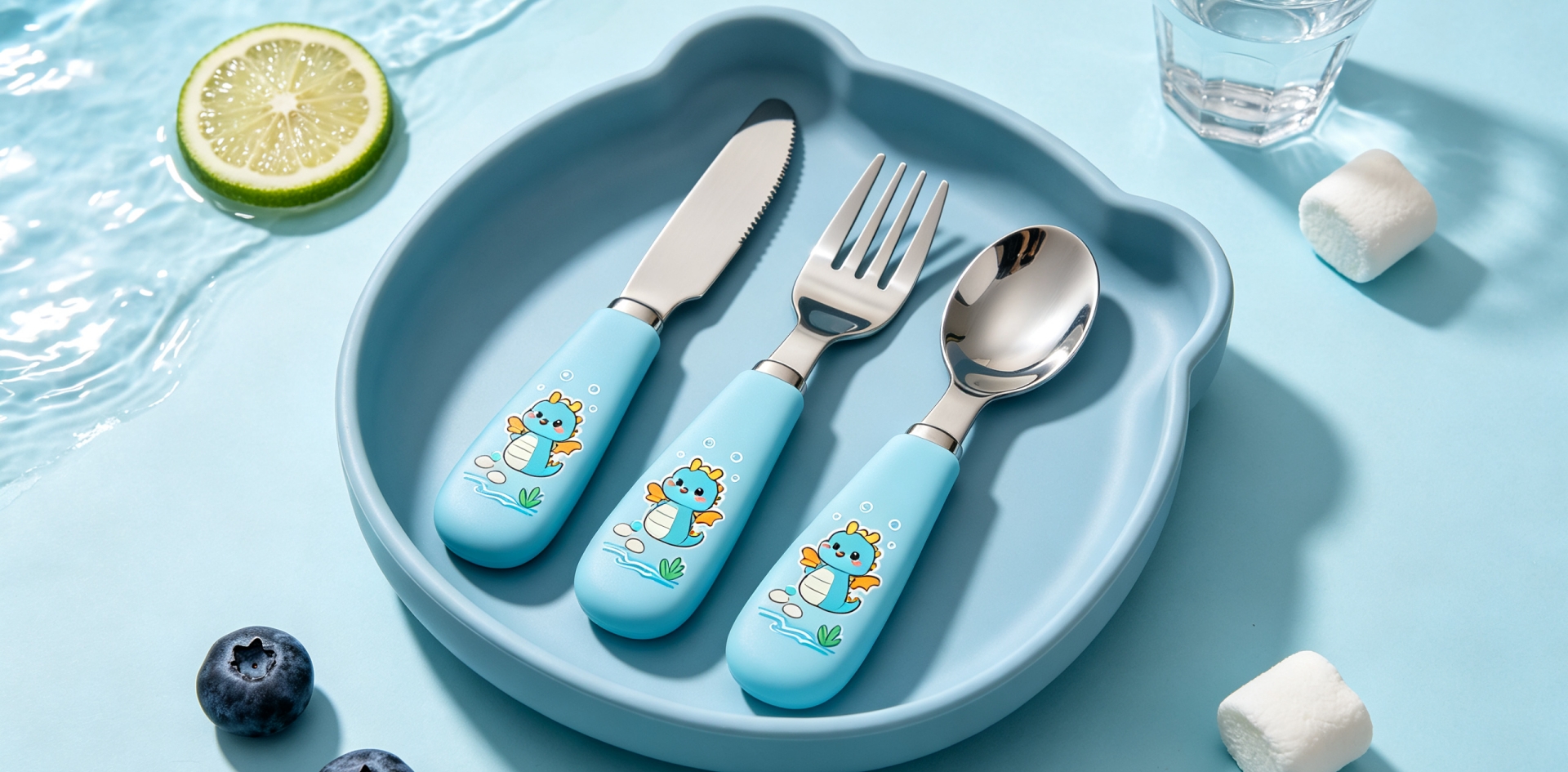
Stainless Steel Flatware Edge Smoothness for OEM and Wholesale Orders
The edge of stainless steel flatware is a small product detail, but it can have a noticeable effect on the overall user experience. Knives, forks and spoons are handled frequently and may come into contact with the lips, hands and food during normal use.
For B2B buyers, edge smoothness should therefore be considered when developing stainless steel cutlery for restaurants, hotels, catering suppliers, distributors and private label brands.
The objective is not simply to create a visually attractive surface. The finished edge should be appropriately processed, consistent across the product and suitable for its intended function.
Homefelt factory specializes in stainless steel knives, forks and spoons and provides OEM, ODM, private label, wholesale and bulk production for international B2B customers.
Why Edge Smoothness Matters
A stainless steel spoon has a continuous rim around the bowl. A fork contains multiple tine edges, while a knife has a functional blade edge as well as other edges around the handle and body.
Each area has a different role.
The edges that directly contact the user need to feel smooth and controlled. Functional knife edges, meanwhile, need to maintain their intended cutting characteristics without being confused with the non-cutting edges of the product.
For this reason, edge treatment needs to be considered according to product function rather than applying exactly the same finishing approach to every area.
Different Edge Requirements for Knives, Forks and Spoons
Spoons and forks are often used close to the mouth, making the condition of their outer edges particularly important.
The spoon rim should have a consistent transition around the bowl. On a fork, the tine ends and surrounding areas need appropriate finishing so that the product feels uniform during use.
Table knives require a different approach. The working blade needs to retain its designed function, while the handle, spine and other non-cutting areas should have an appropriate finished condition.
For a complete flatware collection, these differences should be defined before production.
A professional manufacturer can evaluate each product according to its actual function while maintaining a consistent appearance across the collection.
How Edge Finishing Affects Product Feel
The quality of stainless steel flatware is often judged through direct handling.
A buyer may first look at the product, but the impression changes when the knife, fork or spoon is held in the hand. Small irregularities along an edge can become more noticeable through touch.
For private label products, this is particularly important because the flatware represents the buyer's own brand.
Consistent edge treatment helps create a more controlled product experience from one piece to another.
Homefelt can discuss the desired product feel with customers during the development and sample approval stages.
Edge Geometry and Manufacturing
The final condition of an edge is influenced by the geometry of the stainless steel product and the manufacturing process.
The thickness of the material, the shape of the product and the transition between different sections can all affect how an edge is formed and finished.
This is why edge smoothness should not be considered as an isolated polishing operation.
For OEM and ODM projects, the manufacturer needs to understand the complete design before determining the appropriate production process.
A customer may provide drawings, reference products or samples, allowing the factory to evaluate the design and establish a suitable manufacturing approach.
Consistency Across Large Quantities
For a small sample, it is relatively easy to examine each individual piece.
For a bulk order containing thousands of knives, forks and spoons, consistency becomes much more important.
The goal is to ensure that the approved edge condition is reproduced across the production batch.
This requires clear product specifications and an established manufacturing process.
For international B2B customers, the approved sample can serve as an important reference for mass production. It provides a physical example of the expected appearance and finishing condition.
Homefelt has extensive experience in stainless steel cutlery manufacturing and works with customers on OEM, ODM and large-volume production projects.
Practical Specifications for B2B Buyers
When developing a stainless steel flatware product, buyers can define several practical requirements related to edge finishing:
-
Product type: knife, fork or spoon
-
Intended application
-
Edge location
-
Functional versus non-functional edges
-
Surface finish
-
Edge transition
-
Sample acceptance requirements
-
Inspection method
-
Bulk order quantity
-
Repeat-order consistency
These details can help prevent misunderstandings during product development.
For customized products, it is often more effective to define the expected result through a combination of drawings, written specifications and a physical sample.
Project Experience and Product Development
Homefelt has experience producing stainless steel knives, forks, spoons and complete flatware collections for international customers.
In an OEM or ODM project, edge requirements can be reviewed together with the overall product design. This allows the factory to consider the relationship between appearance, function and manufacturing feasibility.
For example, a customer developing a new private label collection may have different requirements for the spoon rim, fork tines and knife handle. Rather than treating the entire collection as one identical product, each functional area can be evaluated according to its actual use.
This approach helps create a more practical product specification before mass production begins.
Factory Qualifications and Supporting Documentation
B2B buyers may also need to evaluate the manufacturing capability behind a product.
Homefelt has passed BSCI, SEDEX 4P, BRC, ISO9001 and Disney audits, and has FAMA and FSC certificates. Supporting testing and certification documents can be discussed according to individual project requirements.
For product development, however, the physical sample and agreed technical specification remain the key references for confirming the final appearance and edge condition.
OEM, ODM and Private Label Flatware
Edge requirements can be incorporated into customized stainless steel flatware projects from the beginning.
Homefelt supports OEM and ODM manufacturing for wholesalers, distributors, restaurant suppliers and private label brands. Customers can customize stainless steel knives, forks, spoons and complete flatware collections according to their market requirements.
The service can extend beyond manufacturing. Homefelt can coordinate product design, packaging and transportation as a one-stop service, creating an exclusive service package according to each customer's actual project situation.
This approach is useful for buyers who want to develop a product and manage production through one experienced supplier.
Building a Reliable Long-Term Product Standard
For stainless steel flatware, small details often influence the final perception of quality.
Edge smoothness is one example. It combines product geometry, manufacturing technique, finishing and production consistency rather than depending on a single material specification.
For B2B purchasing, defining these details before mass production can make product approval and repeat ordering more efficient.
Homefelt factory focuses specifically on stainless steel cutlery and provides customized OEM, ODM, private label, wholesale and bulk manufacturing services. With experience supporting international brands and large-volume projects, Homefelt aims to become a reliable China service provider and grow together with customers through long-term cooperation.
Stainless Steel Fork Tine Spacing for OEM and Bulk Flatware Orders
Stainless Steel Flatware Cleanliness Control for OEM and Bulk Orders
Related Article



