
Stainless Steel Flatware Embossing Design for OEM and Private Label Orders
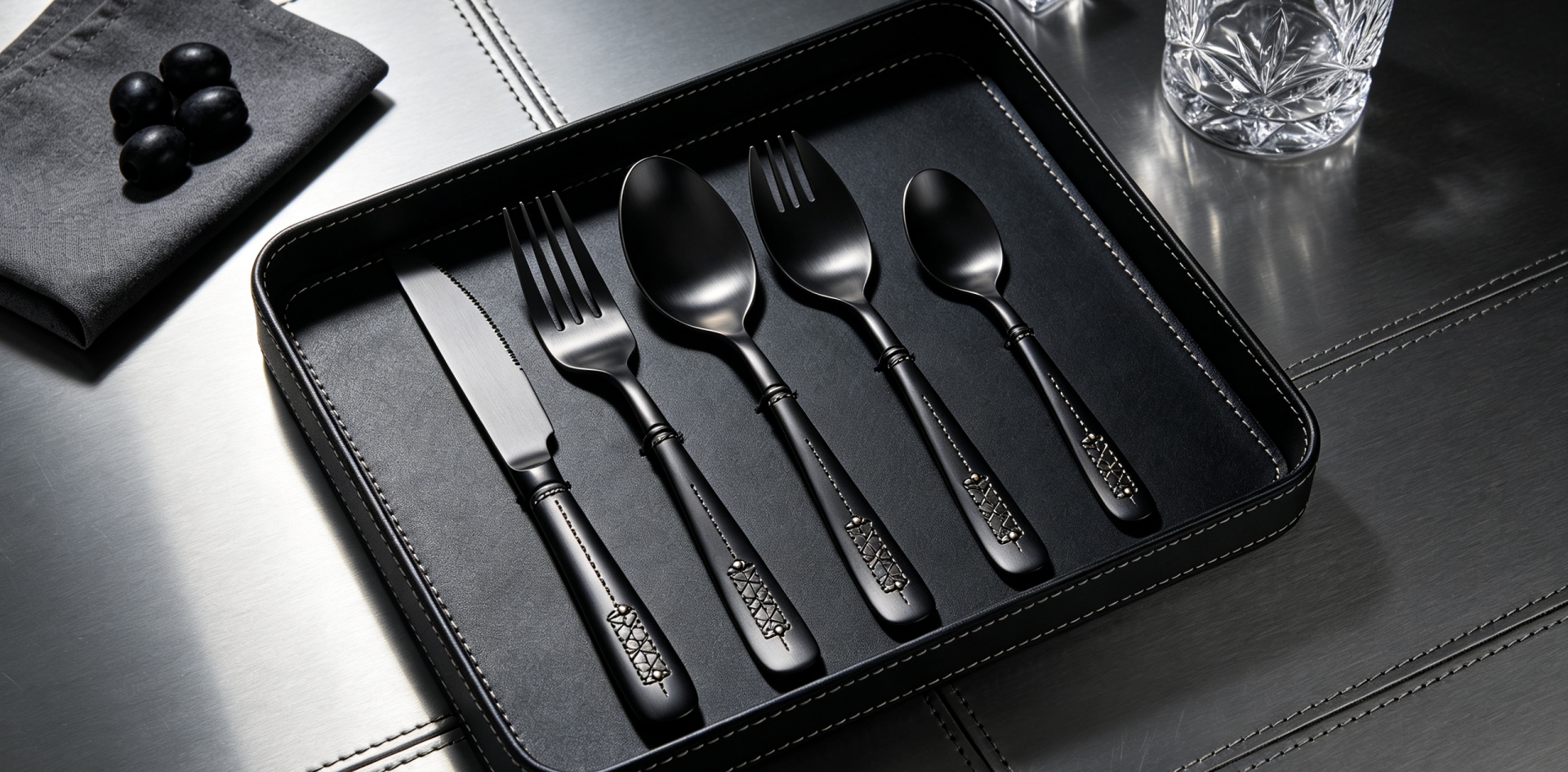
Stainless Steel Flatware Embossing Design for OEM and Private Label Orders
Embossed details can give stainless steel flatware a distinctive visual identity without changing the basic function of the spoon, fork or knife. For private-label brands, hotels, restaurants and distributors, carefully designed embossed patterns can help a collection stand apart while maintaining the practicality expected from stainless steel cutlery.
For B2B buyers, however, embossing is not simply a decorative feature. Pattern size, depth, position and relationship with the surrounding surface all need to be considered before mass production.
Homefelt factory specializes in stainless steel knives, forks, spoons and complete flatware collections, supporting OEM, ODM, private-label and wholesale projects with customized product development and large-volume production.
What Is Embossing on Stainless Steel Flatware?
Embossing creates a raised or recessed pattern on part of the stainless steel surface. Depending on the design, it can be used to introduce decorative lines, geometric elements, borders or other visual details.
The embossed area can become a recognizable feature of a private-label collection. It may be placed on the handle, around a defined section of the product or integrated into a broader decorative concept.
For OEM projects, the design should be confirmed as part of the product drawing or approved sample so the factory has a clear production reference.
Choosing the Right Pattern
The pattern itself should correspond with the overall style of the flatware.
Simple linear or geometric details can work well with contemporary collections, while more decorative patterns may suit classic or hospitality-oriented designs.
For B2B customers, it is useful to consider how the pattern will look across all three major pieces. A design that works on a spoon handle may need to be adjusted for the different shape of a fork or knife.
Homefelt can help coordinate the pattern concept across a complete stainless steel flatware collection.
Embossing Depth and Visual Effect
Embossing depth can influence how clearly a pattern appears on stainless steel.
A shallow detail can create a subtle visual effect, while a deeper design can become a more prominent feature of the handle or product surface.
The appropriate depth depends on the design, material specification and intended appearance. It should be tested through a physical sample before large-scale production.
For private-label projects, sample approval gives the buyer an opportunity to evaluate the pattern under actual lighting and compare it with the rest of the collection.
Pattern Placement on Spoon Handles
The handle is one of the most common areas for decorative embossing on a stainless steel spoon.
The pattern can be positioned toward the upper section, center or lower section of the handle depending on the desired visual balance.
Placement should also consider how the spoon is held and how the decorative detail appears when the product is placed on a table.
For OEM production, Homefelt can work from a customer drawing or reference sample to confirm the pattern position before production tooling is finalized.
Embossing on Forks
Fork handles provide another opportunity for customized embossed details.
Because the front section contains tines and the fork head has a specific functional shape, decorative patterns are often concentrated on the handle or transition area.
The pattern should remain visually connected to the fork's overall design without making the product appear excessively complicated.
When a spoon and fork are part of the same collection, their embossed details can be coordinated even when the actual pattern dimensions differ.
Embossing on Table Knives
A table knife can use embossed details to strengthen the visual connection between its blade and handle design.
For example, a private-label collection may use a small decorative feature on the handle that corresponds with the pattern used on the spoon and fork.
The knife pattern needs to be developed around the actual handle shape and available surface area. A design created for a spoon handle cannot always be transferred directly to a knife.
This is why collection-level product development is useful for customized flatware.
Embossing and Product Surface Appearance
The appearance of an embossed area depends not only on the pattern but also on the surrounding stainless steel surface.
A highly visible decorative pattern can interact differently with a polished or other specified surface treatment. Buyers should therefore evaluate the embossed sample under realistic lighting conditions before confirming the final design.
For large B2B orders, this sample stage helps ensure that the decorative effect matches the customer's intended product positioning.
Production Repeatability
Once an embossed design is approved, maintaining the same pattern across production batches becomes important for private-label customers.
The tooling and approved sample can provide a reference for subsequent production. Pattern position, overall shape and visual definition should remain consistent with the agreed product specification.
This is especially important for brands that reorder the same collection or add matching pieces later.
Homefelt can use the approved product references to support repeat manufacturing of customized stainless steel cutlery.
Experience in Customized Flatware Projects
In B2B product development, customers may have different reasons for choosing embossed details. A hotel supplier may want a subtle signature element, while a retail brand may want a distinctive handle design that supports its private-label identity.
A distributor may also request several patterns for different product ranges.
Homefelt's experience in stainless steel cutlery manufacturing allows these requirements to be discussed from both a design and production perspective. The factory focuses on knives, forks, spoons and flatware sets, keeping customized development centered on the actual products.
Quality References and Documentation
For commercial production, the approved embossed sample can be used together with product drawings and specifications as a manufacturing reference.
Important information can include pattern dimensions, position, material specification and other agreed product details.
Homefelt has experience working with well-known brands and has passed BSCI, SEDEX 4P, BRC, ISO9001 and Disney audit requirements. FAMA and FSC certificates are also available according to project requirements. Customers can discuss applicable testing and documentation based on their target market and product specifications.
OEM, ODM and Private Label Embossed Flatware
Embossed stainless steel flatware can be developed as part of a complete OEM or ODM collection. Customers can provide a sketch, drawing, reference sample or design concept.
Homefelt can coordinate product design, manufacturing, customized packaging and transportation as a one-stop service. This allows customers to develop an exclusive service package according to their product positioning, target market and order volume.
For private-label brands, the embossed design can become one of the recognizable elements shared across knives, forks and spoons.
A Long-Term Manufacturing Partner
A customized flatware design becomes more valuable when it can be reproduced consistently for future orders.
Homefelt has decades of experience in the stainless steel cutlery business and provides OEM, ODM, private-label, wholesale and bulk manufacturing services. Its product focus remains on stainless steel knives, forks, spoons and complete flatware collections.
From initial product design and sample development to manufacturing, packaging and transportation, Homefelt aims to provide one-stop support and become a long-term China service partner for customers looking to develop and expand their flatware ranges.
Stainless Steel Flatware Grain Direction for OEM and Bulk Manufacturing
Stainless Steel Flatware Proportion Design for OEM and Private Label Collections
Related Article



