
Stainless Steel Flatware End Design for OEM and Wholesale Collections
Stainless Steel Flatware End Design for OEM and Wholesale Collections
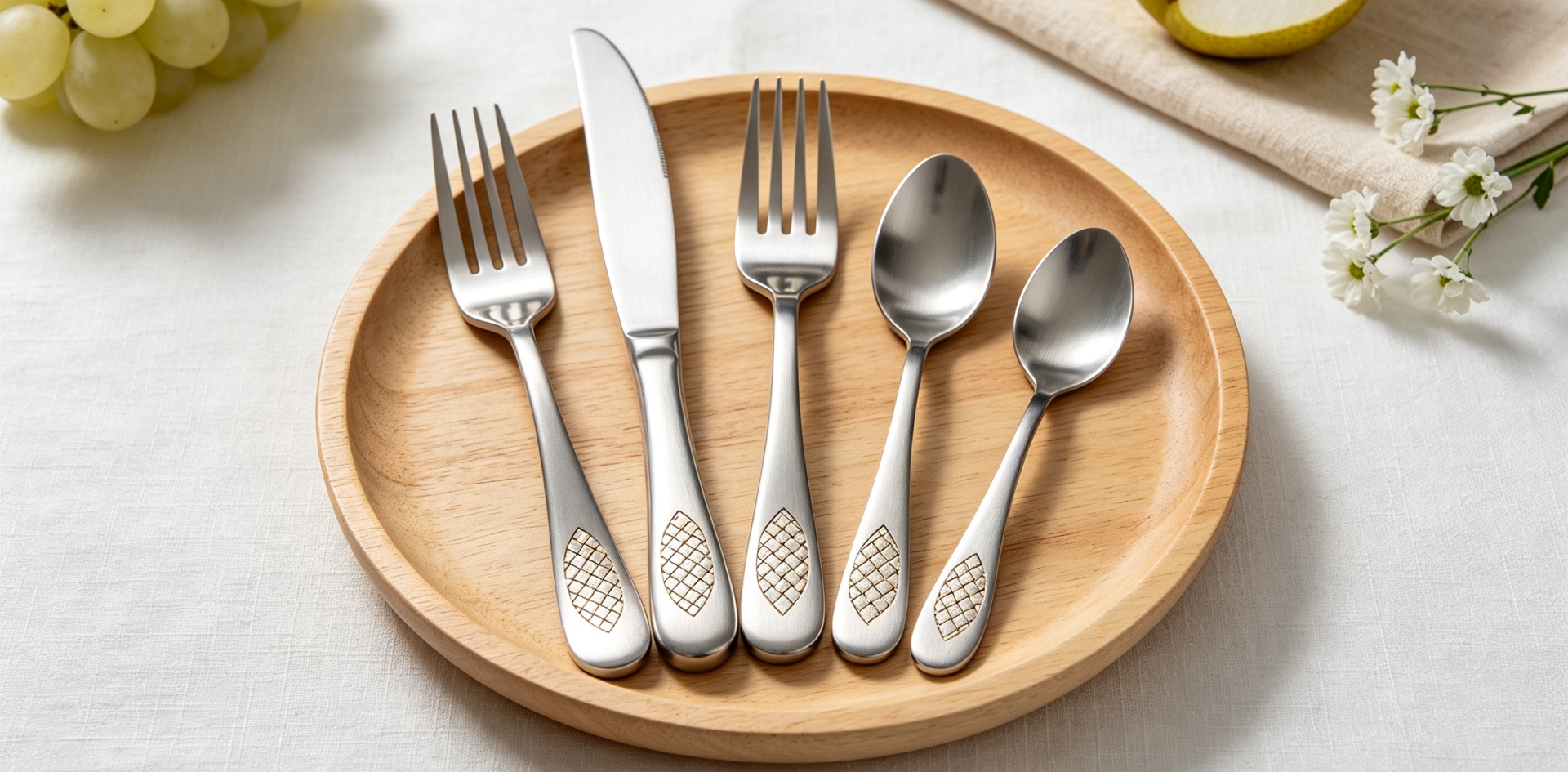
For stainless steel cutlery, the end of each piece may look like a small detail, but it can have a noticeable influence on the overall appearance of a collection. The final section of a spoon, fork or knife handle is one of the areas customers naturally see when the flatware is placed on a table, packed into a set or displayed for sale.
For B2B buyers, this makes the end design more than a decorative decision. It can affect how a collection looks as a complete product line, how different pieces visually relate to each other and how successfully a supplier can reproduce the same design across large production quantities.
For brands developing new stainless steel flatware, Homefelt factory works with buyers on product development, OEM and ODM manufacturing, private label programs and wholesale production. The end shape can be developed together with the overall cutlery concept rather than treated as an isolated detail.
How the Flatware End Influences the Overall Collection
The end of a flatware handle creates the visual finishing point of the product. Depending on the design, it can be straight, slightly tapered, rounded, angled, extended or formed with a distinctive decorative profile.
A simple end can create a clean commercial appearance, while a more recognizable profile may help a private label collection establish its own identity. The important point is that the design should remain visually compatible with the spoon, fork and knife within the same series.
For example, if a buyer is developing a three-piece or four-piece collection, the handle ends should not look like separate products from different ranges. Their visual language needs to be coordinated even when the individual shapes are different.
This is particularly important for hospitality and retail projects where the entire collection is normally presented together.
Key Parameters to Confirm Before Production
When developing a new stainless steel flatware end design, several product parameters should be confirmed during the sampling stage.
The first is the overall end shape. Buyers can provide a reference drawing, existing sample or visual concept, while the factory can evaluate how that shape can be translated into stainless steel production.
The second is the relationship between the end and the rest of the handle. A wider decorative end, for example, may require a different visual transition from the main handle area than a narrow or straight ending.
The third is the end profile when the product is viewed from different directions. A design that looks attractive from the front should also maintain a clean appearance from the side and back.
The fourth is consistency between different pieces. The spoon, fork and knife do not need to have identical handle ends, but they should share a recognizable design concept.
These details can be confirmed through drawings, samples and production specifications before bulk manufacturing begins.
Why End Design Matters for B2B Flatware Development
For consumer products, buyers may focus mainly on appearance. For commercial flatware, however, the design must also work as a repeatable manufactured product.
A successful design should be practical for forming, finishing, inspection and packing. When the same collection is produced in large quantities, small inconsistencies in the final handle area can become more noticeable when hundreds or thousands of pieces are displayed together.
This is why professional product development normally evaluates the end design during the sample approval stage rather than waiting until mass production.
For OEM and ODM projects, Homefelt can review the buyer's drawings or references and help translate the concept into production-ready stainless steel cutlery specifications. Samples can then be checked before the final production standard is confirmed.
Coordinating Knife, Fork and Spoon Designs
A complete flatware collection is usually judged as a group rather than as individual pieces.
The spoon may have a wider bowl, the fork may have a different handle connection and the knife naturally has its own functional structure. Despite these differences, the end design can provide a common visual element across the collection.
For example, a slightly rounded ending can be applied as a common design language to all three pieces. Another collection may use a more geometric ending to create a modern commercial appearance.
When buyers are developing a private label range, this type of repeated visual detail can help establish consistency without requiring complicated decoration.
The same principle applies when expanding an existing collection. If a buyer later adds serving spoons, teaspoons or other matching pieces, maintaining the established end design can make the new products look like part of the same family.
From Sample Approval to Bulk Production
A practical development process begins with the buyer's intended market, target appearance and product specifications.
Homefelt can review reference drawings, product samples or design concepts and determine suitable production details. During sampling, the end design is checked together with the overall handle form, product dimensions and visual appearance.
Once the sample is approved, the confirmed specification becomes the reference for bulk manufacturing. This is important for B2B buyers because the approved sample should represent the standard expected across the production order.
For repeat orders, keeping a clear product specification also helps maintain consistency when the same design is manufactured again.
Project Experience in Stainless Steel Cutlery
In large-volume cutlery projects, seemingly minor product details can become important when the products are displayed together.
Homefelt factory has experience supporting stainless steel cutlery projects for different customer requirements, including standard wholesale collections and customized OEM programs. Depending on the project, buyers may provide an existing product, a drawing, a reference sample or simply a desired visual direction.
The development process can then focus on turning that direction into a practical knife, fork and spoon collection.
For brands requiring private label production, the same product development can be connected with packaging and transportation arrangements, creating a one-stop service from product design through final delivery.
Quality and Manufacturing Documentation
For B2B purchasing, product appearance is only one part of supplier evaluation. Buyers may also need manufacturing and compliance documentation for internal approval and market requirements.
Homefelt's factory experience includes audits and certifications such as BSCI, SEDEX 4P, BRC and ISO9001, together with experience serving well-known brands. Relevant documentation and testing materials can be provided according to project requirements.
This gives buyers a clearer basis for evaluating not only the appearance of a customized flatware design but also the supplier's production capability and quality management system.
OEM, ODM and Private Label Support
Different buyers have different development requirements. Some already have complete drawings, while others have only a reference product or initial concept.
Homefelt can support both situations with OEM and ODM stainless steel cutlery manufacturing. Buyers can discuss product shape, specifications, packaging and other project requirements according to their target market.
For wholesale distributors, restaurant suppliers and private label brands, this flexible approach can make it easier to develop a stainless steel flatware range without managing separate suppliers for each stage.
The objective is not simply to manufacture one product, but to build a practical service package around the customer's actual requirements.
One-Stop Service for B2B Cutlery Projects
A successful cutlery project often involves more than the product itself. Product design, sample development, packaging, manufacturing and transportation all influence the final purchasing experience.
Homefelt provides a one-stop service that can be adjusted according to the customer's situation. This allows buyers to discuss their product concept and related requirements with one factory instead of coordinating every stage independently.
For customers planning long-term cooperation, this approach can also support future collection expansion, repeat orders and new private label projects.
Stainless Steel Flatware Blank Design for OEM and Bulk Production
Stainless Steel Flatware Grip Width Design for OEM and Wholesale Orders
Related Article



