
Stainless Steel Flatware Handle Length for OEM and Bulk Production
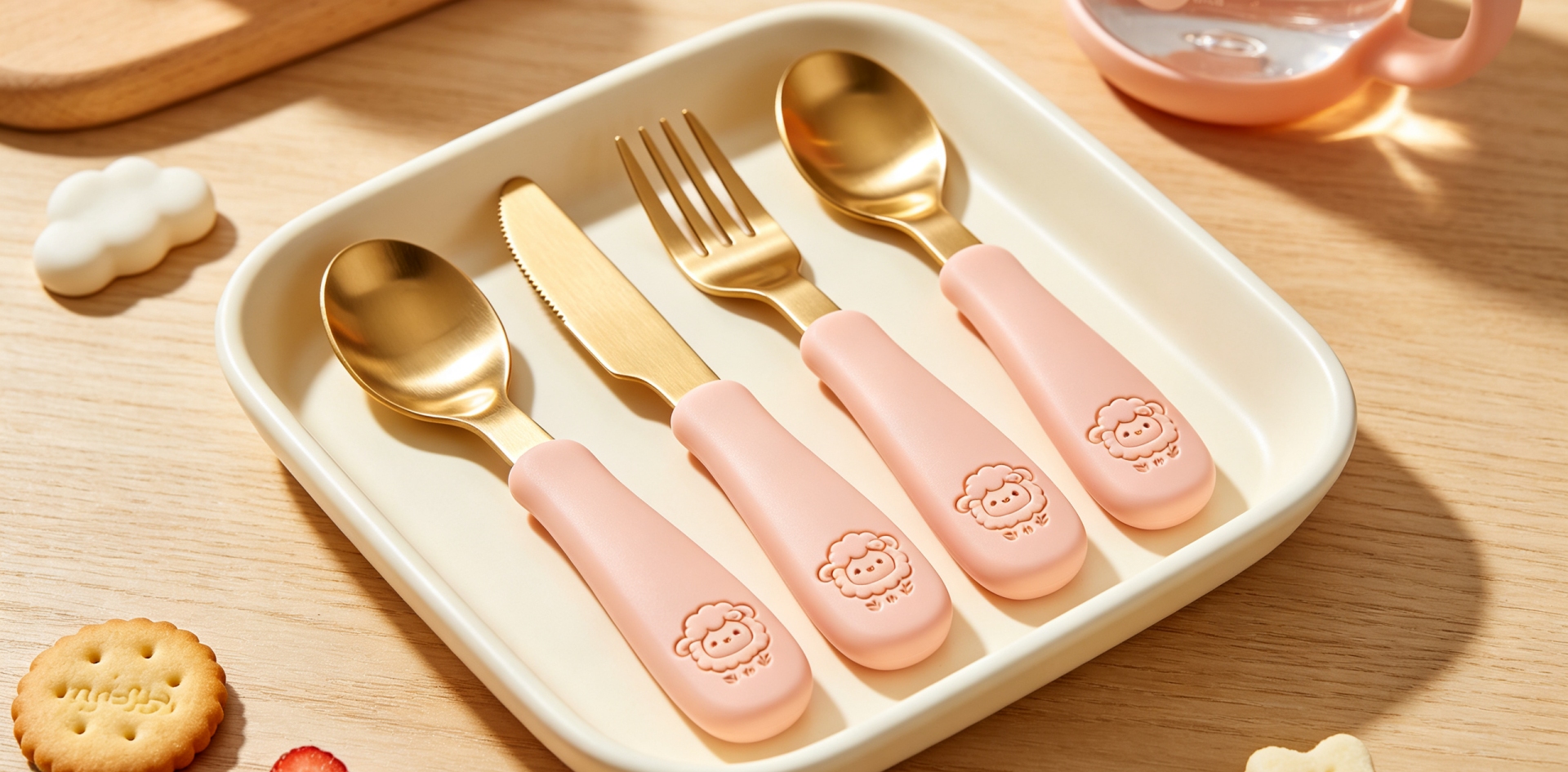
Stainless Steel Flatware Handle Length for OEM and Bulk Production
When buyers develop stainless steel knives, forks and spoons for wholesale or private label sales, handle length is an important product parameter that deserves attention before mass production. It affects the overall proportion of each utensil and can influence how a complete flatware collection looks when the pieces are placed together.
Handle length is not simply a matter of making a spoon, fork or knife longer or shorter. The selected dimension needs to work with the utensil head, overall product length and intended application. For OEM and ODM projects, defining this parameter clearly at the development stage can help the factory reproduce the approved design more consistently.
Why Handle Length Matters in Stainless Steel Flatware
The handle occupies a large visual area of most stainless steel cutlery. Even when two products use the same material and have similar head dimensions, different handle lengths can create noticeably different proportions.
A shorter handle may create a compact appearance, while a longer handle can give the utensil a more elongated profile. Neither approach is automatically better. The appropriate choice depends on the product concept, target market, utensil type and relationship between the handle and functional end.
For B2B buyers, consistency is particularly important. If a collection includes a stainless steel spoon, fork and knife, their individual handle lengths should be considered as part of the overall product system rather than selected independently.
Key Considerations When Defining Handle Length
One important reference is the overall length of the utensil. Handle length should be evaluated together with the total product dimension rather than as an isolated number.
The second consideration is the relationship between handle length and the working end. A spoon with a larger bowl, for example, may require a different visual proportion from a smaller spoon. A fork and knife also have different functional head structures, so their handle proportions need to be evaluated individually.
Another consideration is the consistency of the handle length within the same product model. If the approved sample has a specific handle dimension, bulk production should follow the agreed specification rather than allowing the dimension to vary between production batches.
For customized cutlery, buyers may also have existing product drawings or reference samples. These materials can provide a useful starting point for confirming the required dimensions before production begins.
Handle Length Across Spoons, Forks and Knives
Although the three main cutlery pieces share a common collection style, their handle dimensions do not necessarily need to be identical.
A stainless steel spoon has a bowl that determines a substantial part of its functional length. A fork has a head and tines with different dimensional requirements, while a table knife includes a blade with its own working area.
Therefore, handle length should be evaluated as part of each utensil's complete proportion.
For a coordinated collection, the buyer may want the three pieces to have a visually related handle concept while allowing practical differences between individual products. This is where professional product development becomes useful. The factory can review the dimensions of the spoon, fork and knife together instead of treating each SKU as a completely separate item.
This approach can help create a more coherent stainless steel flatware collection for wholesale and commercial applications.
How Homefelt Supports Customized Handle Dimensions
Homefelt is a stainless steel cutlery factory supporting OEM, ODM, private label and wholesale projects. Customers can provide drawings, existing samples or target product requirements for review during development.
For a new collection, handle length can be discussed together with overall utensil dimensions, material specifications and the intended market. Once the product requirements are confirmed, the approved sample becomes an important reference for subsequent manufacturing.
For buyers ordering large quantities, this development process is valuable because small dimensional decisions made before production can have a significant effect when thousands of pieces are manufactured.
Instead of selecting a standard product without modification, customers can work with the factory to develop a cutlery solution that better matches their brand positioning and market requirements.
Supporting OEM and Private Label Flatware Projects
Private label buyers often need products that maintain a consistent appearance across an entire collection. Handle length can contribute to this consistency because it influences the visual relationship between the different utensils.
For example, a buyer developing a modern flatware collection may prefer a particular overall proportion across its spoon, fork and knife. Another customer supplying hospitality projects may have established specifications based on an existing table setting.
Homefelt can discuss these requirements during product development and provide customized manufacturing support. Depending on the project, the service can cover product design coordination, stainless steel cutlery production, packaging and transportation as one integrated solution.
This one-stop approach can be useful for importers, distributors, hospitality suppliers and brands that need both product customization and reliable bulk supply.
Production Experience Matters
Dimensional requirements become more meaningful when they can be maintained consistently during actual manufacturing. Homefelt has 40 years of experience in the stainless steel cutlery business and has worked with well-known brands.
The factory supports large-volume production of knives, forks, spoons and flatware sets, with experience in handling customized specifications for different customers.
For B2B buyers, manufacturing experience also means having a practical process for communicating specifications from product development to production. Clear drawings, approved samples and agreed product parameters can help reduce misunderstandings before a bulk order enters production.
Certifications and factory qualifications can provide an additional reference when evaluating a long-term manufacturing partner. Homefelt has passed BSCI, SEDEX 4P, BRC, ISO9001 and Disney audits, and has FAMA and FSC certificates. Relevant certification and testing documents can be provided or discussed according to project requirements.
Maintaining Consistency for Repeat Orders
Handle length is especially important when a customer expects repeat orders. A successful initial sample should become a stable product reference for future manufacturing rather than a one-time visual target.
For repeat wholesale orders, maintaining the same dimensional specification can help customers keep their existing product range consistent. This is valuable for brands, distributors and commercial buyers who need to replenish the same stainless steel cutlery collection over time.
A reliable factory should therefore understand not only how to manufacture the first order, but also how to maintain the agreed product specification throughout future production.
Homefelt aims to build long-term cooperation with customers by combining manufacturing capability with product development and service support. The goal is to become a dependable China service partner and grow together with customers rather than simply complete individual orders.
Stainless Steel Fork Shoulder Contour for OEM and Bulk Production
Stainless Steel Spoon Symmetry Control for OEM and Bulk Production
Related Article



