
Stainless Steel Flatware Handle Profile for OEM and Private Label Orders
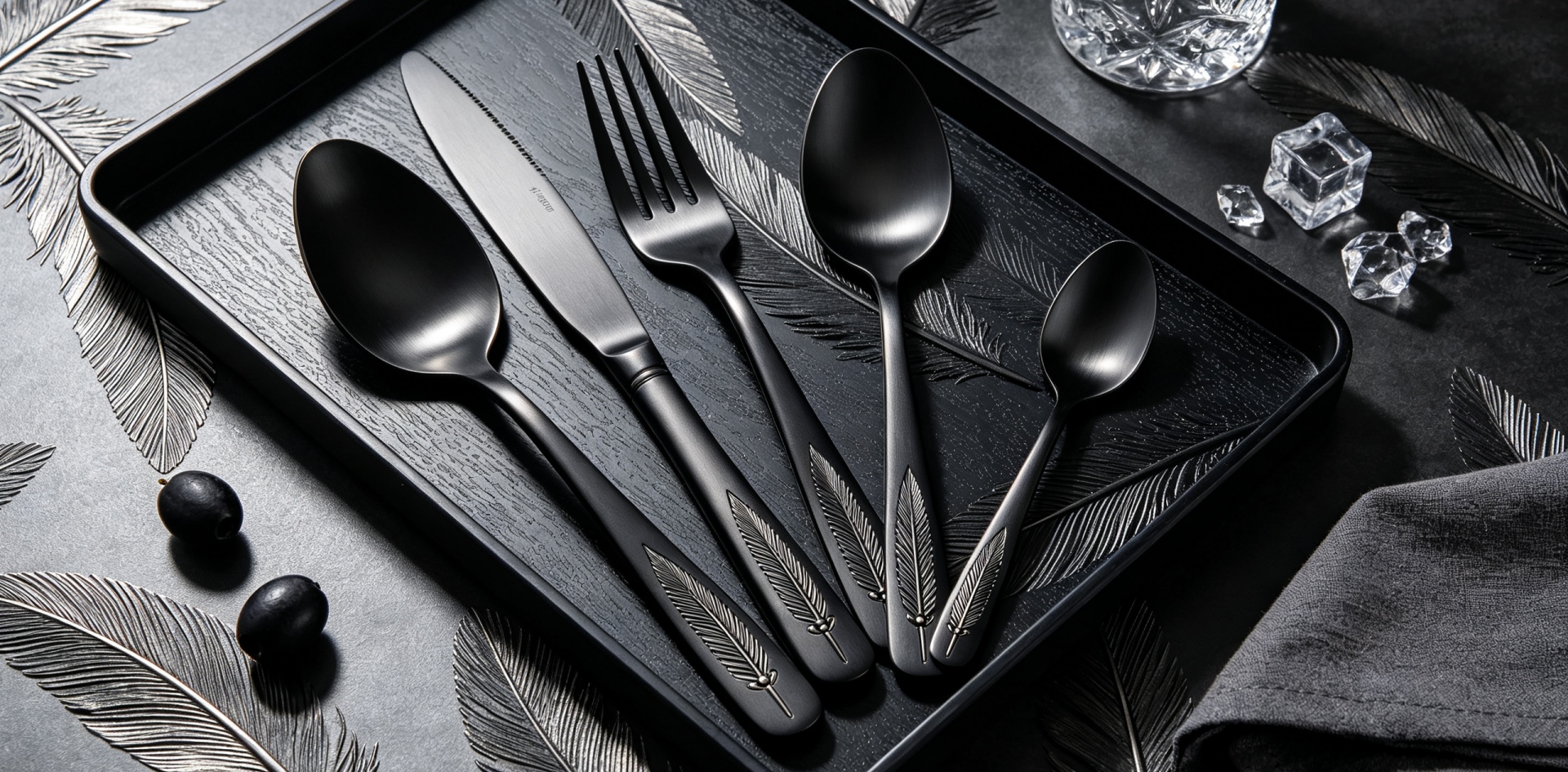
Stainless Steel Flatware Handle Profile for OEM and Private Label Orders
The handle profile is one of the details that determines how stainless steel cutlery feels in the hand. While buyers often focus on overall appearance, the cross-sectional shape of a knife, fork or spoon handle can also influence handling, visual proportion and the character of a complete flatware collection.
For B2B customers developing private label products, handle profile is therefore worth defining during the product development stage.
A handle can be relatively flat, rounded, oval or designed with a more distinctive profile. Each option creates a different combination of appearance and handling characteristics.
Homefelt factory specializes in stainless steel knives, forks and spoons and provides OEM, ODM, private label, wholesale and bulk manufacturing for international B2B customers.
What Is a Flatware Handle Profile?
The handle profile refers to the cross-sectional shape of the handle when viewed across its width and thickness.
This is different from the overall handle outline. Two handles can have almost identical top-view shapes while feeling noticeably different because their cross-sections are different.
For example, a flatter handle can create a broad contact area with the fingers, while a more rounded profile can provide a different hand feel.
For customized stainless steel flatware, these details can be defined together with the overall handle dimensions.
Why Handle Profile Matters
A knife, fork or spoon is held repeatedly during normal use. The handle is therefore one of the areas where the user directly experiences the product.
A suitable profile can contribute to a controlled and comfortable grip while also supporting the visual identity of the collection.
For commercial flatware, buyers may prefer a practical profile that is easy to handle across different users. For a premium private label collection, the profile may be developed as part of the brand's distinctive product appearance.
There is no universal shape that is best for every project.
Flat, Oval and Rounded Profiles
Different cross-sections create different product characteristics.
A relatively flat profile can give the handle a clean, modern appearance and create a broad contact surface.
An oval profile provides a transition between flat and rounded characteristics and can offer a softer visual appearance.
A rounded profile creates a different tactile experience and may be suitable for collections where a softer handle character is desired.
The choice should be made together with handle width, thickness, length and overall design.
A small change in one parameter can alter the final appearance of the complete product.
Handle Profile Across Knives, Forks and Spoons
A flatware collection usually contains multiple pieces, but they do not necessarily need identical handle dimensions.
A knife may require a different internal profile because of its functional role and blade connection. A fork and spoon may use related profiles while adapting to their own product geometry.
For a coordinated collection, the visual language should remain consistent even when the individual products have different functional requirements.
Homefelt can review the knife, fork and spoon as a complete collection during OEM and ODM development.
This helps avoid designing each piece independently and discovering inconsistencies after sampling.
Profile and Overall Handle Dimensions
Cross-section should not be considered separately from the basic handle dimensions.
Useful specifications may include:
-
Handle width
-
Handle thickness
-
Overall handle length
-
Cross-sectional profile
-
Transition between sections
-
End shape
-
Connection with the working area
-
Surface finish
These specifications provide a clearer manufacturing reference.
For customized projects, technical drawings can define the dimensions while a physical sample helps communicate the intended tactile result.
Developing the Profile Through Sampling
A sample is particularly useful when the handle profile is part of the product concept.
A drawing can describe measurements accurately, but the physical sample allows the buyer to evaluate the actual hand feel and visual proportion.
The customer can compare the sample with existing products, make adjustments and confirm the preferred profile before mass production.
Homefelt can support this development process for OEM and private label customers.
Once the sample is approved, the confirmed specification can be used as the reference for bulk manufacturing.
Consistency in Large-Volume Production
Handle profile becomes more important when a product moves into large-scale production.
The objective is not only to create one attractive prototype. Thousands of knives, forks and spoons need to follow the same approved design.
Consistent handle dimensions and profiles help maintain the visual identity of the collection and reduce differences between individual pieces.
For repeat orders, the original product specification and approved sample can also provide a reference for maintaining consistency across production batches.
Homefelt has extensive experience in stainless steel cutlery manufacturing and supports international customers with wholesale and large-volume orders.
Designing for Private Label Collections
For private label brands, the handle is often one of the strongest visual elements of a flatware collection.
A distinctive profile can help separate a product from standard market designs without requiring complicated decoration.
The profile can be developed together with the handle outline, surface finish and overall proportions to create a consistent product identity.
Homefelt supports customized stainless steel knives, forks, spoons and flatware sets for distributors, wholesalers and private label brands.
Customers can provide an existing concept, drawing or reference product, and the factory can discuss the manufacturing requirements before sample development.
Factory Experience and Qualifications
Product design needs to be supported by practical manufacturing experience.
Homefelt has worked with well-known brands and specializes in stainless steel cutlery production. The factory has passed BSCI, SEDEX 4P, BRC, ISO9001 and Disney audits, and has FAMA and FSC certificates.
Relevant testing and supporting documents can be discussed according to the requirements of each project.
For customized handle profiles, however, the approved product specification and physical sample remain the key references for production.
OEM, ODM and One-Stop Service
Homefelt provides OEM, ODM and private label manufacturing for stainless steel cutlery.
Customers can customize handle profiles, dimensions, finishes and other product characteristics according to their market positioning.
The service can also include product design, manufacturing, packaging and transportation. Homefelt can create an exclusive service package according to the customer's actual project requirements, helping buyers coordinate several stages through one supplier.
This one-stop approach is suitable for customers developing new collections as well as distributors looking for stable bulk supply.
Building a Consistent Product Identity
A stainless steel flatware collection is made up of many small design decisions. Handle profile is one of them.
The right profile can connect appearance and handling while helping knives, forks and spoons look like part of the same collection.
For B2B buyers, defining the profile early, approving a physical sample and maintaining the agreed specification during mass production can make customized projects more predictable.
Homefelt factory focuses on stainless steel cutlery and supports OEM, ODM, private label, wholesale and bulk production. With one-stop support from product design through manufacturing, packaging and transportation, Homefelt aims to become a reliable China service provider and grow together with customers.
Stainless Steel Flatware Handle Transition for OEM and Custom Orders
Stainless Steel Fork Tine Spacing for OEM and Bulk Flatware Orders
Related Article



