
Stainless Steel Flatware Proportion Design for OEM and Private Label Collections
Stainless Steel Flatware Proportion Design for OEM and Private Label Collections
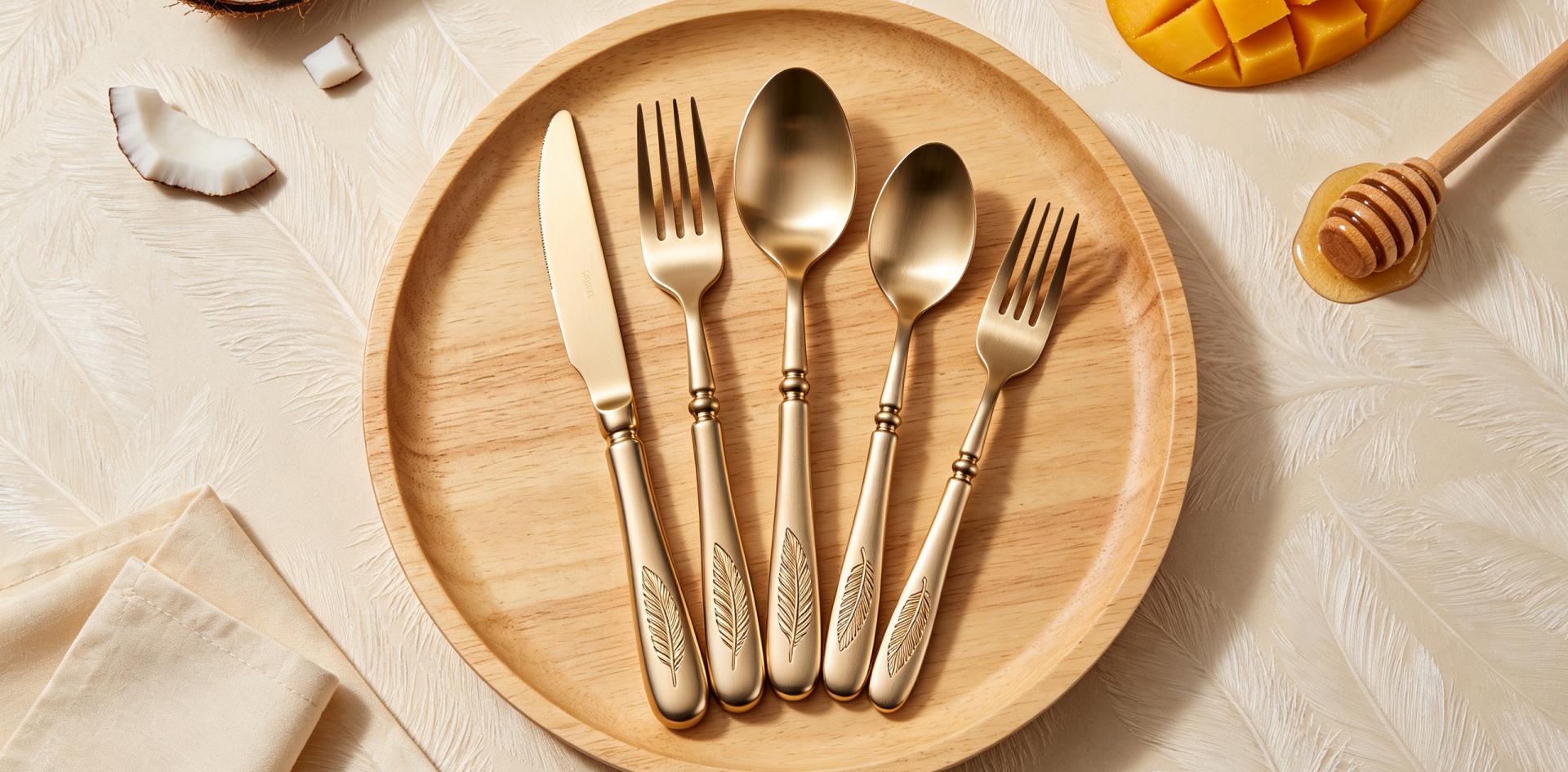
A stainless steel flatware collection is made up of individual knives, forks and spoons, but buyers usually judge the products as a complete group. The relationship between the functional head and handle can strongly influence whether the collection looks balanced, refined and commercially suitable.
For OEM and private-label projects, proportion is therefore an important product-development consideration. A spoon with a long bowl, a fork with a broad head or a knife with a shorter blade can create a very different visual impression even when the overall length is similar.
Homefelt factory specializes in stainless steel knives, forks, spoons and complete flatware collections, helping B2B customers develop products for wholesale, hospitality, retail and private-label markets.
Understanding Flatware Proportion
Proportion describes the relationship between different parts of a product rather than one individual measurement.
On a spoon, this can involve the relationship between the bowl and handle. On a fork, it may involve the head, tines and grip section. On a table knife, the blade and handle create the main visual balance.
Two products can have the same overall length but look completely different because their component proportions are different.
For OEM development, these relationships should be confirmed before the final sample is approved.
Spoon Head-to-Handle Proportion
The spoon is particularly sensitive to proportion because the bowl is visually dominant.
A longer bowl combined with a relatively short handle can create a compact appearance, while a narrower bowl with a longer handle may produce a more elongated profile.
The right relationship depends on the target collection. A hospitality project may prioritize a practical commercial appearance, while a retail brand may want a more distinctive silhouette.
Homefelt can review spoon bowl dimensions together with the handle and overall length to help customers develop a balanced product rather than selecting each measurement separately.
Fork Head-to-Handle Proportion
Fork proportions are influenced by the relationship between the head, tines and handle.
A wider fork head can create a stronger visual presence, while a narrower head may produce a more delicate appearance. The handle then needs to complement that head without making the product look front-heavy or excessively narrow.
For a complete OEM collection, the fork can be evaluated alongside the spoon to determine whether both pieces communicate the same design style.
Table Knife Blade-to-Handle Proportion
The table knife has a different visual structure because the blade becomes a major part of the product.
A longer blade can create a more elongated appearance, while a shorter blade combined with a substantial handle can make the knife look heavier.
For B2B buyers, the blade-to-handle relationship can be especially important when the knife is displayed together with matching spoons and forks.
Homefelt can develop the knife according to customer drawings, reference samples or product concepts and coordinate the overall proportions with the rest of the collection.
Proportion and Visual Weight
Even when two flatware pieces have similar dimensions, their visual weight can differ.
A broad handle, large spoon bowl or wide fork head can make a product appear more substantial. Narrower components can create a lighter visual impression.
This does not mean that every collection needs to use the same proportions. Instead, the proportions should support the intended product positioning.
For commercial flatware, the visual character should also be consistent with the expected use environment and packaging presentation.
Designing a Complete Collection
When a customer orders knives, forks and spoons together, proportion should be considered across the entire collection.
The three pieces have different functions, so their dimensions cannot simply be copied from one another. What matters is that the visual relationships feel intentional when the products are placed side by side.
For example, a spoon and fork may share similar handle proportions while using different head dimensions. The knife may have a longer functional section but still use a comparable handle concept.
This type of collection-level planning is useful for private-label brands that want their flatware to have a recognizable identity.
Using Samples to Confirm Proportions
Technical drawings are important for defining product dimensions, but physical samples provide a better opportunity to judge overall proportion.
A buyer can place the spoon, fork and knife next to one another and evaluate their appearance as a collection. This can reveal differences that may not be obvious when looking only at individual measurements.
During an OEM project, Homefelt can support sample development so customers can confirm the design before releasing the final production order.
Experience in Custom Flatware Development
B2B buyers often begin with a reference product, photograph or general design idea rather than a complete technical specification.
For example, a customer may request a spoon that looks slightly more substantial, a fork with a more prominent head or a knife with a longer blade. Turning these descriptions into measurable specifications requires experience with stainless steel cutlery.
Homefelt has decades of experience in stainless steel cutlery manufacturing and focuses on knives, forks, spoons and flatware collections. This specialized experience allows the factory to discuss both individual product requirements and the overall collection.
Production Considerations
Proportion should be confirmed before mass production because changes to one component can affect the relationship between the entire product.
If the spoon handle is lengthened, for example, the overall appearance may change. If the fork head is widened, the handle may need to be reconsidered. If the knife blade becomes longer, its relationship with the handle can also change.
For large-volume production, establishing the approved sample and specifications before manufacturing helps provide a clear reference for subsequent orders.
Quality and Product Documentation
For commercial orders, the approved product specifications can include overall dimensions, material requirements, product drawings and sample references.
These documents provide a useful foundation for production inspection and repeat orders.
Homefelt has experience working with well-known brands and has passed BSCI, SEDEX 4P, BRC, ISO9001 and Disney audit requirements. FAMA and FSC certificates are also available according to project requirements. Where applicable, customers can discuss testing and documentation requirements for their specific market.
OEM, ODM and Private Label Flatware
Proportion design can be customized as part of a complete OEM or ODM project. Customers can provide drawings, reference samples or simply describe the visual direction they want to achieve.
Homefelt can coordinate product development, stainless steel cutlery manufacturing, packaging and transportation as a one-stop service. The service can be adjusted according to the customer's product range, target market and expected order quantity.
For private-label and wholesale buyers, this approach makes it possible to develop coordinated knives, forks and spoons instead of sourcing each piece independently.
Building a Long-Term Product Range
For a B2B customer, a successful flatware design may eventually become part of a larger product range. Once the proportions are approved, the same design language can be extended to additional pieces or future collections.
Homefelt supports customers with OEM, ODM, private-label, wholesale and bulk stainless steel cutlery production. The factory's focus on knives, forks and spoons allows product development and manufacturing to remain centered on the actual flatware collection.
From product design and production to packaging and transportation, Homefelt aims to provide a complete service solution and become a long-term China service partner for customers who want to grow their flatware business.
Stainless Steel Flatware Embossing Design for OEM and Private Label Orders
Stainless Steel Flatware Radius Design for OEM and Private Label Orders
Related Article



