
Stainless Steel Flatware Radius Design for OEM and Private Label Orders
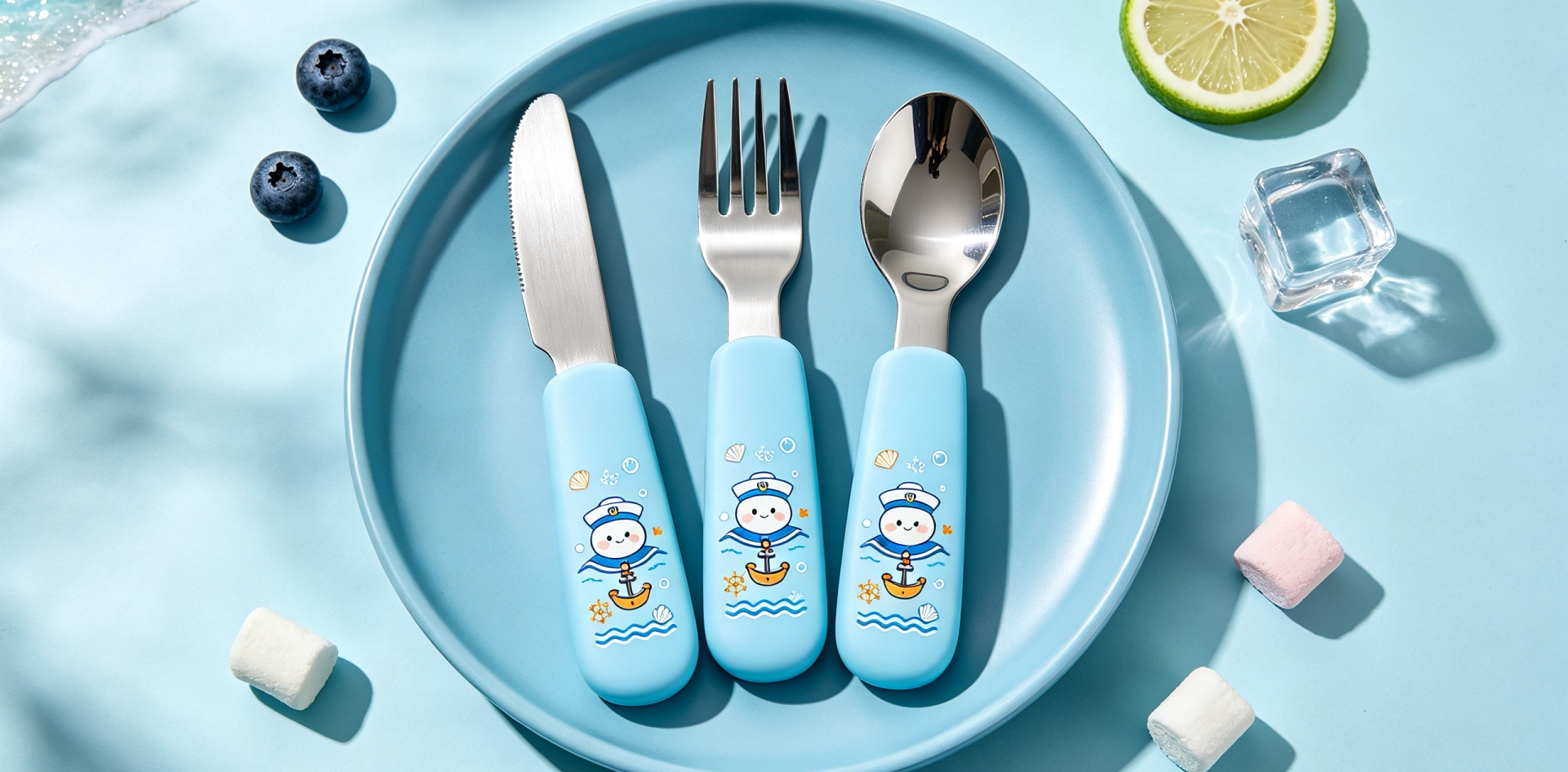
Stainless Steel Flatware Radius Design for OEM and Private Label Orders
The curves and rounded transitions of stainless steel cutlery have a strong influence on the visual character of a product. Although radius dimensions may appear small on a drawing, they can change the way a spoon, fork or knife looks when placed on a table or displayed as part of a complete flatware collection.
For B2B buyers developing OEM or private-label cutlery, radius design is therefore worth confirming during product development. The right proportions can create a softer appearance, a more contemporary profile or a stronger commercial look while keeping the individual pieces visually coordinated.
Homefelt factory focuses on stainless steel knives, forks, spoons and flatware sets, supporting OEM, ODM, private-label, wholesale and large-volume production projects.
What Does Radius Mean in Flatware Design?
In product drawings, a radius describes the curvature of a rounded section. Stainless steel flatware can contain many different curved areas, including the corners of handles, transitions around spoon bowls, fork shoulders and sections of table knife handles.
A smaller radius generally creates a tighter curve, while a larger radius produces a broader and softer transition. The appropriate choice depends on the overall product concept.
For B2B customers, radius specifications should be considered together with the complete product shape rather than selected as isolated numbers.
Handle Corner Radius
The corners of a stainless steel flatware handle are among the most visible areas where radius design can affect appearance.
A handle with relatively tight corners can create a more defined geometric impression. A larger corner radius can make the same handle appear softer and more rounded.
For OEM projects, buyers may specify the general handle profile while the factory helps translate the concept into practical production dimensions. The final radius should work with the handle width, thickness and overall length.
The goal is to maintain the intended design without creating unnecessary complexity in mass production.
Spoon Bowl Transitions
A spoon contains several curved areas that influence its overall appearance. The bowl gradually changes shape toward the neck, while the front and side sections form the functional surface.
Radius relationships can affect whether the spoon appears compact, soft, modern or more traditional. For a complete collection, these curves should also be visually compatible with the corresponding fork and knife.
When developing a private-label spoon, Homefelt can review the customer's reference sample or drawing and coordinate the curved areas with the overall product dimensions.
Fork Shoulder and Head Shape
The area between the fork head and handle can also contain rounded transitions. The shape of these transitions contributes to the overall visual flow of the fork.
A fork with sharper geometric changes may suit a contemporary collection, while broader curves can create a softer appearance.
Because fork tines and head dimensions have already established the functional front section, the radius of the transition needs to be coordinated with the remaining proportions.
Table Knife Rounded Sections
For stainless steel table knives, radius design may be visible around the handle, blade transition and other curved sections of the product.
A knife with a broad, softly rounded handle can communicate a different design style from one with straighter sides and tighter corners.
For OEM production, these details can be incorporated into the approved product drawing and sample. This provides a clear reference before large-volume manufacturing begins.
Radius and Overall Collection Style
A major consideration for B2B buyers is whether the spoon, fork and knife look like members of the same collection.
The pieces do not need to have identical radius measurements because their shapes and functions are different. Instead, the curves should follow a consistent visual language.
For example, a modern collection may use controlled curves and relatively clean transitions across all three pieces. A more traditional collection may use softer and more pronounced rounded sections.
Homefelt can review the three-piece collection as a whole during OEM development to help maintain a coordinated appearance.
Production Considerations
Radius design should also be evaluated from a manufacturing perspective. Extremely complicated curves or very small transitions may require additional tooling considerations.
For a large-volume order, it is useful to confirm the desired appearance through a physical sample before proceeding with mass production.
The sample provides an opportunity to compare the actual product with the original drawing and determine whether the curves, proportions and transitions achieve the intended result.
This development stage can be particularly valuable for private-label brands introducing a new flatware collection.
Material Thickness and Curved Profiles
The appearance of a radius can change depending on material thickness. A curved section on a thin piece can produce a different visual impression from the same nominal curve on a thicker product.
For this reason, radius dimensions should not be reviewed independently from the stainless steel specification.
Homefelt can consider material grade, thickness, product dimensions and forming requirements together during the development of customized stainless steel spoons, forks and knives.
Experience with B2B Flatware Projects
In practical B2B projects, buyers often begin with a visual reference rather than a complete set of manufacturing specifications. They may know that they want a softer handle, a more rounded knife or a cleaner spoon profile without initially defining every radius.
This is where manufacturing experience becomes valuable. A factory familiar with stainless steel cutlery can help translate the visual concept into measurable product specifications.
Homefelt has decades of experience in the stainless steel cutlery business and works with customers developing customized knives, forks, spoons and complete flatware collections.
Quality References for Customized Production
Once the design has been approved, the finished sample can be used as a production reference together with the technical specifications.
Important points can include overall dimensions, material requirements, curved profiles and other agreed product characteristics. This creates a practical reference for both initial and repeat orders.
Homefelt has experience working with well-known brands and has passed BSCI, SEDEX 4P, BRC, ISO9001 and Disney audit requirements. FAMA and FSC certificates are also available according to project requirements. Relevant testing and documentation can be discussed based on the customer's market and product specifications.
OEM, ODM and Private Label Manufacturing
Radius design can be included in a complete OEM or ODM development project. Customers can provide an existing sample, drawing, reference image or product concept.
Homefelt can coordinate product development with stainless steel cutlery manufacturing, customized packaging and transportation. This creates a one-stop service package based on the customer's product positioning, target market and order volume.
For private-label brands and distributors, the same process can be used to develop a coordinated range of knives, forks and spoons under one collection.
A Long-Term Stainless Steel Cutlery Partner
For B2B customers, a successful product development project should provide a foundation for future orders. Once the design, specifications and sample are approved, the same references can support repeat production and product-line expansion.
Homefelt focuses on stainless steel cutlery rather than unrelated kitchen products, giving customers a specialized manufacturing partner for knives, forks, spoons and flatware sets.
From product design and development to manufacturing, packaging and transportation, Homefelt provides one-stop support for OEM, ODM, wholesale and private-label customers. The goal is to become a reliable China service provider and grow together with customers over the long term.
Stainless Steel Flatware Proportion Design for OEM and Private Label Collections
Stainless Steel Flatware Tooling Development for OEM and Bulk Production
Related Article



