
Stainless Steel Flatware Scratch Resistance for OEM and Bulk Orders
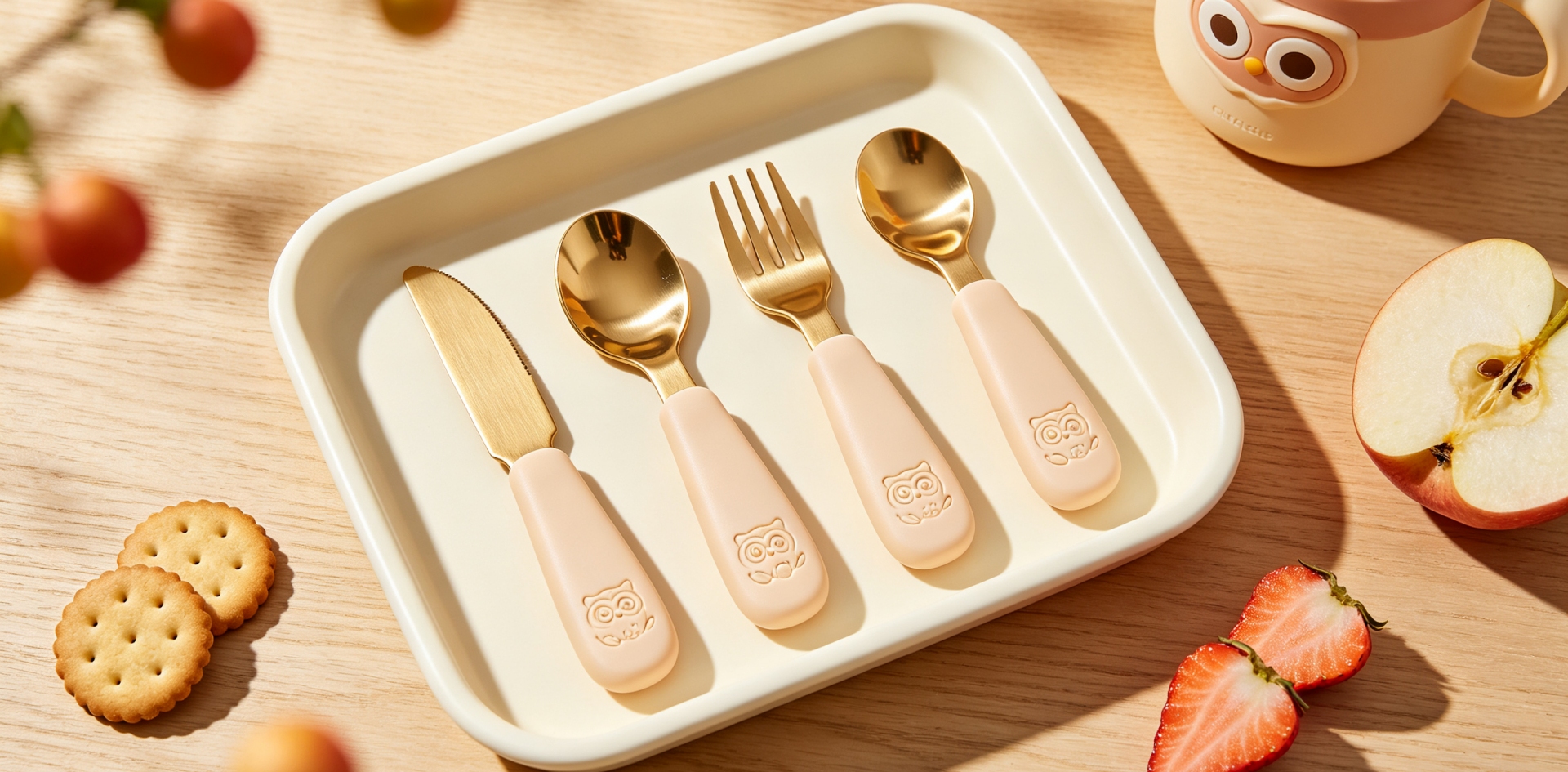
Stainless Steel Flatware Scratch Resistance for OEM and Bulk Orders
For stainless steel flatware, appearance is often one of the first factors noticed by buyers and end users. During repeated use, however, knives, forks and spoons can come into contact with other metal products, table surfaces, storage containers and washing equipment. Over time, these interactions may create visible marks on the surface.
For B2B customers, scratch resistance is therefore worth considering when developing stainless steel cutlery for wholesale, hospitality, commercial distribution or private label projects.
Scratch resistance should not be treated as a separate cosmetic feature. It is influenced by the material, product surface, geometry, manufacturing process and intended use. A professional stainless steel cutlery factory should consider these factors together when establishing the product specification.
Homefelt specializes in stainless steel knives, forks and spoons and provides OEM, ODM, private label and bulk manufacturing services for international customers.
Why Scratch Resistance Matters in Stainless Steel Cutlery
Flatware is handled frequently and often stored together with other pieces. A dinner fork may be placed beside several spoons, while knives can come into contact with other metal surfaces during transportation, service and storage.
In commercial environments, this handling is repeated many times.
For a premium private label collection, visible surface marks may affect the perceived quality of the product. For restaurants and hotels, maintaining a consistent appearance across a large quantity of cutlery can also be important.
This makes surface durability a useful consideration when defining a product specification.
However, no stainless steel flatware should be expected to remain completely free from marks under all conditions. The practical goal is to select a product and production standard that are appropriate for the intended environment.
Material Characteristics and Surface Durability
The stainless steel specification provides the foundation for the finished product, but scratch resistance cannot be determined from material grade alone.
Surface condition and manufacturing processes also influence how a piece of flatware looks after repeated contact.
Two products made from stainless steel can therefore have different visual performance if their surface treatment, production process or handling conditions are different.
For B2B buyers, this means that evaluating a finished sample is especially important. Product specifications should be combined with an actual sample so the customer can assess the appearance and surface condition before approving mass production.
How Product Geometry Can Influence Scratching
The shape of a cutlery product can also affect where surface contact occurs.
Handles, working ends and transition areas may interact differently with other pieces during storage and use. A flatware collection with tightly packed components may experience different contact patterns from products stored individually.
For this reason, scratch resistance should be considered together with the actual product design.
When developing a customized knife, fork and spoon collection, Homefelt can review the complete product rather than evaluating surface appearance independently from the shape and intended use.
This approach helps create a more practical production specification.
Evaluating Scratch Resistance for Different Applications
Different B2B customers may have different expectations.
A premium retail brand may place strong emphasis on maintaining a refined visual appearance. A hotel or restaurant supplier may focus on consistent appearance across frequent daily use. A distributor may need a practical balance between product appearance, durability and target cost.
The same stainless steel flatware specification may therefore not be ideal for every project.
Before selecting a product, buyers should consider:
-
Expected frequency of use
-
Storage method
-
Contact with other metal products
-
Washing environment
-
Required surface appearance
-
Target market positioning
-
Expected order quantity
-
Reorder requirements
These factors give the manufacturer useful information for developing a suitable product.
What B2B Buyers Should Confirm
When scratch resistance is an important purchasing requirement, buyers can discuss several details with the factory:
-
Stainless steel material specification
-
Product surface requirements
-
Knife, fork and spoon dimensions
-
Product thickness
-
Intended application
-
Sample appearance standard
-
Surface acceptance criteria
-
Bulk production requirements
-
Inspection expectations
For OEM and ODM projects, customers can also provide a reference sample showing the desired visual effect.
The approved sample can then become an important reference for mass production.
Sample Approval Before Bulk Manufacturing
For customized stainless steel flatware, sample approval is an important step because photographs cannot always show the actual surface appearance accurately.
A physical sample allows the buyer to examine the product under normal lighting and handling conditions. It also allows the customer to compare the knife, fork and spoon as a complete collection.
For large-volume orders, the approved sample provides a clear reference for production.
Homefelt can work with customers during the development stage to confirm the product specification before proceeding to bulk manufacturing.
Experience in Stainless Steel Cutlery Production
Surface appearance becomes more challenging to control when production quantities increase.
A factory may be able to produce an attractive sample, but the real manufacturing capability is demonstrated by its ability to maintain the agreed standard throughout a large production run.
Homefelt has extensive experience in stainless steel cutlery manufacturing and has worked with well-known brands. Its production scope includes stainless steel knives, forks, spoons and complete flatware collections for international B2B customers.
For repeat orders, maintaining the same product standard is also important. Clear specifications and production references help reduce unnecessary differences between the original order and subsequent batches.
Quality and Factory Qualifications
Product appearance and performance should be supported by appropriate factory management.
Homefelt has passed BSCI, SEDEX 4P, BRC, ISO9001 and Disney audits, and has FAMA and FSC certificates. Relevant testing and supporting documentation can be discussed according to the customer's project requirements.
For B2B buyers, these qualifications can form part of supplier evaluation together with product samples, manufacturing experience and agreed specifications.
OEM, ODM and Private Label Manufacturing
Scratch resistance requirements can be incorporated into the early stages of a customized flatware project.
Homefelt provides OEM, ODM and private label manufacturing for stainless steel knives, forks, spoons and complete cutlery collections. Customers can discuss their target market, expected usage and appearance requirements before the product specification is finalized.
The factory can also coordinate product design, manufacturing, packaging and transportation through one-stop service.
For a distributor, this can simplify the development of a new product range. For a private label brand, product appearance and packaging can be developed as one coordinated project. For a large-volume buyer, the focus can remain on consistent production and reliable supply.
Homefelt can develop an exclusive service package according to each customer's actual situation instead of applying one standard solution to every project.
Building a Practical Surface Standard
Scratch resistance should be evaluated realistically. Stainless steel flatware is designed for repeated use, and normal handling can eventually create signs of use. The key for B2B buyers is to establish a reasonable surface standard that matches the product's market position and application.
A clear specification, physical sample and consistent manufacturing process provide a stronger foundation than relying on appearance photographs alone.
Homefelt factory combines stainless steel cutlery manufacturing experience with OEM, ODM, private label, wholesale and bulk production capabilities. The factory aims to provide long-term service for international customers and grow together with customers through stable product development and manufacturing support.
Stainless Steel Flatware Food Contact Performance for OEM and Bulk Orders
Stainless Steel Flatware Flexibility and Springback for OEM Production
Related Article



