
Stainless Steel Flatware Set Configuration for OEM and Bulk Orders
Stainless Steel Flatware Set Configuration for OEM and Bulk Orders
For a stainless steel flatware project, the number of pieces included in a set can directly affect product positioning, packaging, shipping efficiency and purchasing cost. For distributors, hospitality suppliers, retailers and private label brands, choosing the right combination of knives, forks and spoons is therefore more than simply deciding how many pieces go into a box.
A well-planned set configuration should match the intended market, table setting requirements, packaging format and expected order volume. Homefelt factory works with B2B customers to develop stainless steel flatware sets around these practical requirements, supporting OEM, ODM, private label and wholesale production.
How to Build a Practical Flatware Set
The most common configuration starts with the three basic table pieces: knife, fork and spoon. However, the actual combination can be adjusted according to the customer's sales channel and application.
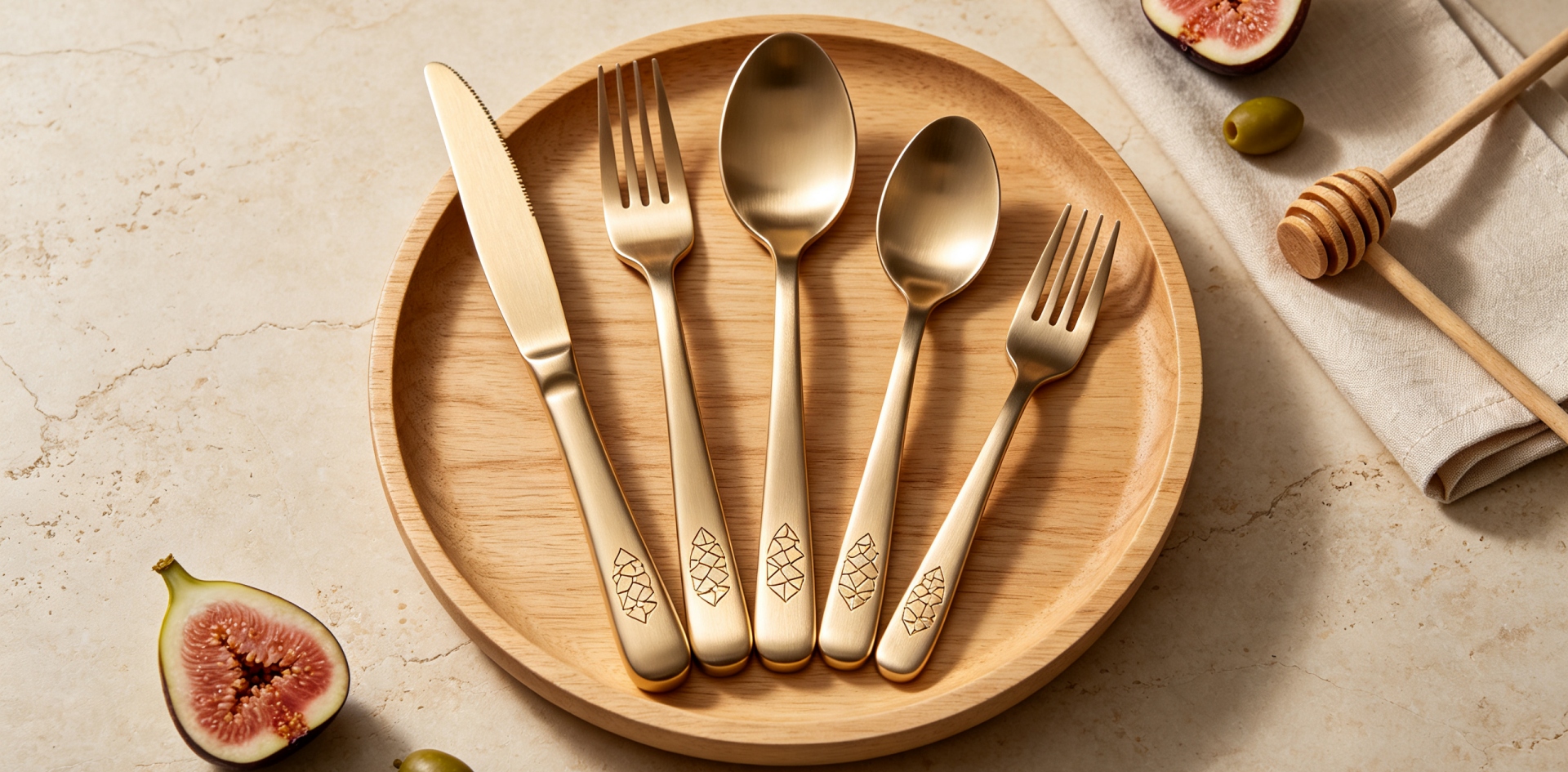
For example, a basic three-piece configuration can be suitable for simple table settings or promotional programs. A four-piece set may add a teaspoon, while larger combinations can include additional serving or specialty pieces when the customer's market requires them.
For B2B purchasing, the important point is consistency. Every piece within one collection should share a coordinated visual language, suitable proportions and compatible packaging dimensions. The set should look like one complete collection rather than several independent products placed together.
When developing a custom set, Homefelt can review the customer's target market and recommend a suitable combination before production. This helps buyers avoid unnecessary pieces that increase packaging and logistics costs while still maintaining a complete product offering.
Matching Pieces to the Target Market
Different customers require different set structures.
For retail-oriented projects, compact configurations can make the product easier to display and price. A four-piece individual place setting is often useful when the product is intended for household table use. Larger family-oriented packages can contain multiple place settings, creating a more substantial retail proposition.
For hospitality and commercial supply projects, buyers may prioritize standardized individual pieces rather than decorative packaging. Restaurants, hotels and catering companies may purchase knives, forks and spoons in large quantities according to table turnover and replacement requirements.
For private label brands, the set configuration can also become part of the product identity. A brand may choose a simple everyday combination for its entry-level range and a more comprehensive combination for a premium collection.
This is where a stainless steel flatware set manufacturer with flexible production capability becomes valuable. Instead of forcing every customer into a fixed combination, the factory can evaluate the required pieces, quantities and packaging format together.
Important Parameters Beyond Piece Count
Piece quantity is only one part of the specification.
A professional B2B specification sheet should also identify the stainless steel grade, thickness, individual piece dimensions, surface treatment, weight range, handle structure and packaging requirements. These parameters allow buyers to compare quotations on the same basis.
For example, two five-piece sets may contain the same number of items but have very different specifications. Differences in spoon size, fork dimensions, knife construction, material thickness and packaging can significantly affect the final product.
For this reason, Homefelt factory confirms product parameters before mass production. Sample approval can be used to verify appearance, dimensions, weight and overall set presentation before a larger order proceeds.
Packaging Should Be Planned Together With the Set
The configuration of the flatware set should be considered together with its packaging.
A compact set can reduce package volume and make transportation more efficient. At the same time, the internal arrangement should keep each piece properly positioned during transportation and presentation.
For private label projects, packaging can be customized according to the customer's brand requirements. Options may include branded cartons, retail boxes, inserts, sleeves and other presentation elements.
The relationship between product configuration and packaging is particularly important for large-volume orders. A small change in the number of pieces or the arrangement inside a package can influence carton dimensions, loading efficiency and shipping costs.
Homefelt provides one-stop customization from product development to packaging and transportation planning. This allows customers to coordinate the product and packaging instead of managing each stage with different suppliers.
Factory Experience in Set Development
A useful way to evaluate a cutlery supplier is to look beyond product photographs and ask how the factory handles complete project requirements.
Homefelt has long-term experience in stainless steel cutlery production and has worked with different types of customers and brand projects. During product development, the factory can review the requested knife, fork and spoon specifications, compare the required combinations and organize samples for confirmation.
For example, a customer developing a new flatware collection may need several configurations for different sales channels. Instead of creating completely separate products, the factory can coordinate common design elements across the collection while changing the piece combinations and packaging.
This approach can help maintain a consistent brand appearance while allowing different SKUs to serve different markets.
Quality and Certification Support
For B2B buyers, product specifications should be supported by appropriate quality-control procedures and documentation.
Homefelt has experience with international business requirements and has passed audits and certifications including BSCI, SEDEX 4P, BRC and ISO9001, as well as Disney-related audit requirements. The company also has FAMA and FSC certifications.
For individual projects, buyers can confirm which product documents, test reports and certification materials are required for their market and application. The relevant documentation can then be considered as part of the project process rather than added only after production has started.
This provides buyers with clearer information when comparing suppliers and preparing internal purchasing approval.
OEM, ODM and Private Label Production
A stainless steel flatware project may begin with a simple request for a knife, fork and spoon set, but the final requirement often includes many additional details.
Homefelt supports OEM and ODM projects covering product specifications, collection coordination, packaging and branding requirements. Private label customers can also develop their own product combinations according to their target market.
For wholesale buyers, the factory can organize bulk production according to confirmed specifications and packaging requirements. For distributors, the same production capability can support multiple SKUs within one product family.
The objective is not simply to produce a certain number of pieces. It is to create a stable and repeatable product configuration that can be used for future replenishment orders.
A One-Stop Approach for B2B Buyers
Working with multiple suppliers for product development, packaging and transportation can make a project more complicated. Specifications may be transferred incorrectly, packaging dimensions may need to be changed later, and production schedules can become difficult to coordinate.
Homefelt aims to provide a more integrated service model. Based on the customer's situation, the factory can help develop an exclusive service package covering product design, manufacturing, packaging and transportation.
This is particularly useful for customers preparing new private label collections or large-volume wholesale programs. The buyer can communicate the overall requirement to one experienced factory and confirm the key details before mass production.
For long-term B2B cooperation, this approach also makes future repeat orders easier because product specifications, packaging information and production references can be maintained as part of the project history.
What Buyers Should Confirm Before Ordering
Before placing a bulk order, buyers should confirm the complete set configuration rather than only the number of pieces.
The purchasing specification should clearly identify:
-
Number of pieces per set
-
Knife, fork and spoon models included
-
Material and thickness requirements
-
Individual product dimensions
-
Surface finish
-
Approximate weight range
-
Packaging structure
-
Private label or branding requirements
-
Carton packing quantity
-
Required certifications or testing documents
-
Target order quantity and delivery requirements
A clear specification reduces misunderstandings between buyer and factory and makes quotation comparison much more meaningful.
For customers who already have drawings, samples or reference products, these materials can also be provided during the inquiry stage. The factory can then evaluate the requirements and suggest a suitable production solution.
Stainless Steel Flatware Edge Finishing for OEM and Wholesale Production
Stainless Steel Table Knife Blade Design for OEM Flatware Projects
Related Article



