
Stainless Steel Flatware Texture Direction for OEM and Bulk Production
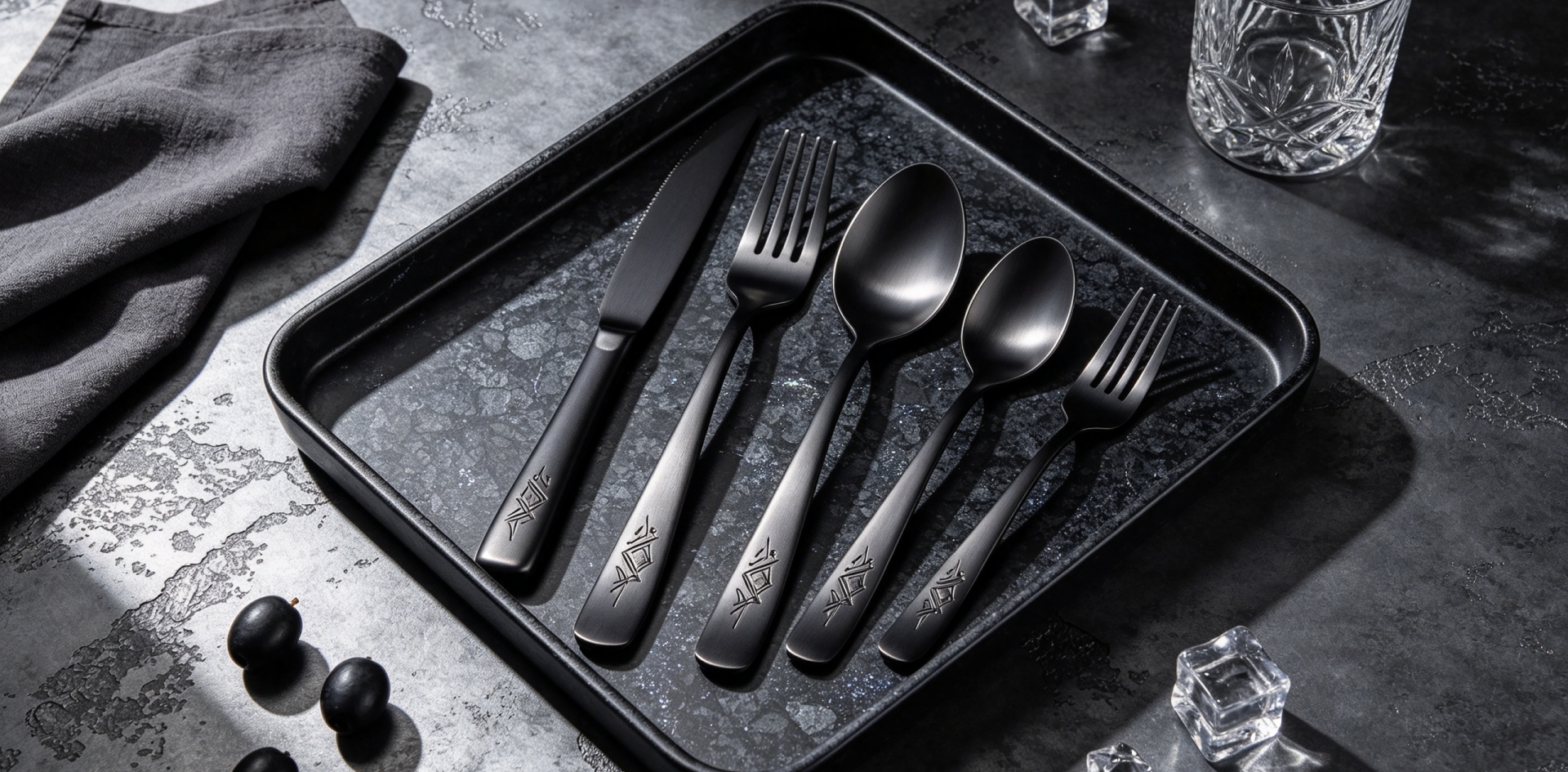
Stainless Steel Flatware Texture Direction for OEM and Bulk Production
When stainless steel cutlery is developed for wholesale, hospitality or private label collections, buyers often focus on material, dimensions and surface finish. Another detail that can influence the final appearance is the direction of the visible surface texture.
Texture direction is particularly relevant when a stainless steel flatware collection uses a brushed, satin or other directional surface treatment. If the direction changes unexpectedly between pieces, knives, forks and spoons may not look fully coordinated even when their dimensions are correct.
For OEM and ODM buyers, defining texture direction as part of the product specification can therefore help create a more consistent commercial collection.
What Is Flatware Texture Direction?
Texture direction describes the visual orientation of fine surface lines or grain created during a directional finishing process.
Depending on the selected finish, the surface may show a predominantly longitudinal, transverse or controlled directional appearance. The final effect depends on the finishing method and the shape of the individual cutlery piece.
For B2B product development, buyers may define:
-
Direction of visible surface lines
-
Orientation relative to the handle
-
Orientation on the spoon bowl
-
Orientation on the fork head
-
Orientation on the knife blade
-
Transition between different product areas
-
Overall visual consistency across the collection
The exact finishing specification should be confirmed through a physical sample because surface appearance can vary according to product geometry and finishing process.
Why Texture Direction Matters for Cutlery Collections
A stainless steel fork, spoon and knife have different shapes, so the same finishing direction does not always appear identical on every product.
A handle usually has a relatively long axis, while a spoon bowl has a curved surface. A knife blade may have another broad surface orientation. If the finishing direction is not clearly defined, the final collection can appear visually inconsistent.
For private label brands, this matters because surface appearance is part of the product identity. Buyers may want a controlled satin effect rather than an unpredictable mixture of directions.
For distributors and hospitality suppliers, consistent appearance can also make the complete flatware collection look more professional when the products are displayed or used together.
Defining Texture Direction in an OEM Specification
A customized stainless steel flatware specification can include the surface treatment together with its intended direction.
For example:
Product type: stainless steel flatware
Material: customer-approved stainless steel specification
Surface finish: satin or brushed finish
Handle texture direction: longitudinal
Spoon bowl direction: according to approved sample
Fork head direction: according to approved sample
Knife blade direction: according to approved sample
Overall appearance: consistent with approved reference
Application: retail, hospitality, catering or commercial supply
This approach gives the manufacturer a clearer reference than simply requesting “brushed stainless steel.”
The final specification should always be confirmed with an approved sample or reference standard.
Texture Direction Across Knives, Forks and Spoons
A complete cutlery collection may contain three or more different product shapes. Each shape needs to be considered separately while maintaining the same overall visual language.
On a knife handle, the texture may follow the length of the handle. On a fork handle, the same general direction can create a coordinated appearance. A spoon bowl requires additional consideration because its curved surface changes the way light reflects from the finish.
The objective is not necessarily to force every surface to have an identical visual line. Instead, the manufacturer should establish a controlled finishing standard appropriate to each product while maintaining the intended collection appearance.
This is especially important for OEM buyers developing a complete private label range.
Surface Direction and Product Appearance
Directional texture can change how stainless steel reflects light.
A consistent direction can make a satin finish appear clean and organized, while irregular orientation can produce visible differences between pieces.
For buyers comparing samples, it is useful to examine the products under similar lighting conditions and from several viewing angles. This gives a more practical understanding of the final appearance than evaluating only a single photograph.
Once the buyer approves the appearance, the sample can become the visual reference for bulk production.
Maintaining Consistency in Bulk Orders
For large-volume stainless steel cutlery production, the approved surface reference is important.
The manufacturer can use the confirmed sample, finishing requirements and product specifications as a reference during production. This helps reduce unnecessary variation between batches.
Consistency becomes even more important when a customer places repeat orders. A private label brand may continue using the same flatware collection for years, so the finishing standard needs to remain clear.
Documenting the texture direction therefore provides value beyond the initial order. It becomes part of the product information used for future production.
Homefelt Factory for Customized Stainless Steel Flatware
Homefelt factory specializes in stainless steel cutlery manufacturing, including knives, forks, spoons and complete flatware sets.
With 40 years of experience in the stainless steel cutlery business, Homefelt has experience supporting different product requirements and international customer projects.
For OEM and ODM development, customers can provide a reference product, drawing, surface sample or photographs. The factory can discuss the desired appearance and coordinate the product specifications before sample approval.
This is useful for private label buyers who want a controlled surface appearance rather than a standard off-the-shelf finish.
One-Stop Service for Private Label Cutlery
A customized flatware project normally includes more than the product itself. After the product design is confirmed, packaging and transportation also need to match the customer's commercial requirements.
Homefelt provides a one-stop service according to each customer's situation, covering product design, stainless steel cutlery manufacturing, customized packaging and transportation.
This allows buyers to coordinate the main stages of a project through one manufacturing partner and develop a more complete supply solution.
For customers ordering knives, forks and spoons together, the factory can also coordinate the collection so that the finished products have a consistent overall appearance.
Experience and Factory Qualifications
For B2B buyers, supplier evaluation should include both product capability and manufacturing background.
Homefelt has experience working with well-known brands and has passed BSCI, SEDEX 4P, BRC, ISO9001 and Disney audits. The factory also has FAMA and FSC certificates.
These qualifications provide supporting information for buyers considering Homefelt for OEM, ODM, private label, wholesale and bulk stainless steel cutlery projects.
Additional product testing or documentation requirements can be discussed according to the destination market and customer specifications.
From Surface Sample to Bulk Production
A customized finishing project can start with a simple physical reference. Buyers do not always need to prepare a complete technical document before contacting the factory.
A customer can provide an existing cutlery sample or desired surface reference. Homefelt can then discuss the finishing direction, product structure and other relevant specifications before developing the production sample.
Once the sample is approved, the confirmed appearance becomes a reference for bulk manufacturing and future repeat orders.
This process helps distributors, hospitality suppliers and private label brands maintain a stable product appearance across commercial shipments.
Homefelt aims to provide long-term support rather than simply complete a single production order. By combining product development, manufacturing, packaging and transportation, the factory can provide a customized one-stop service as customers expand their stainless steel cutlery business.
Stainless Steel Table Knife Blade Taper for OEM and Bulk Production
Stainless Steel Fork Tine Tip Shape for OEM and Bulk Production
Related Article



