
Stainless Steel Fork Back Profile for Custom B2B Cutlery
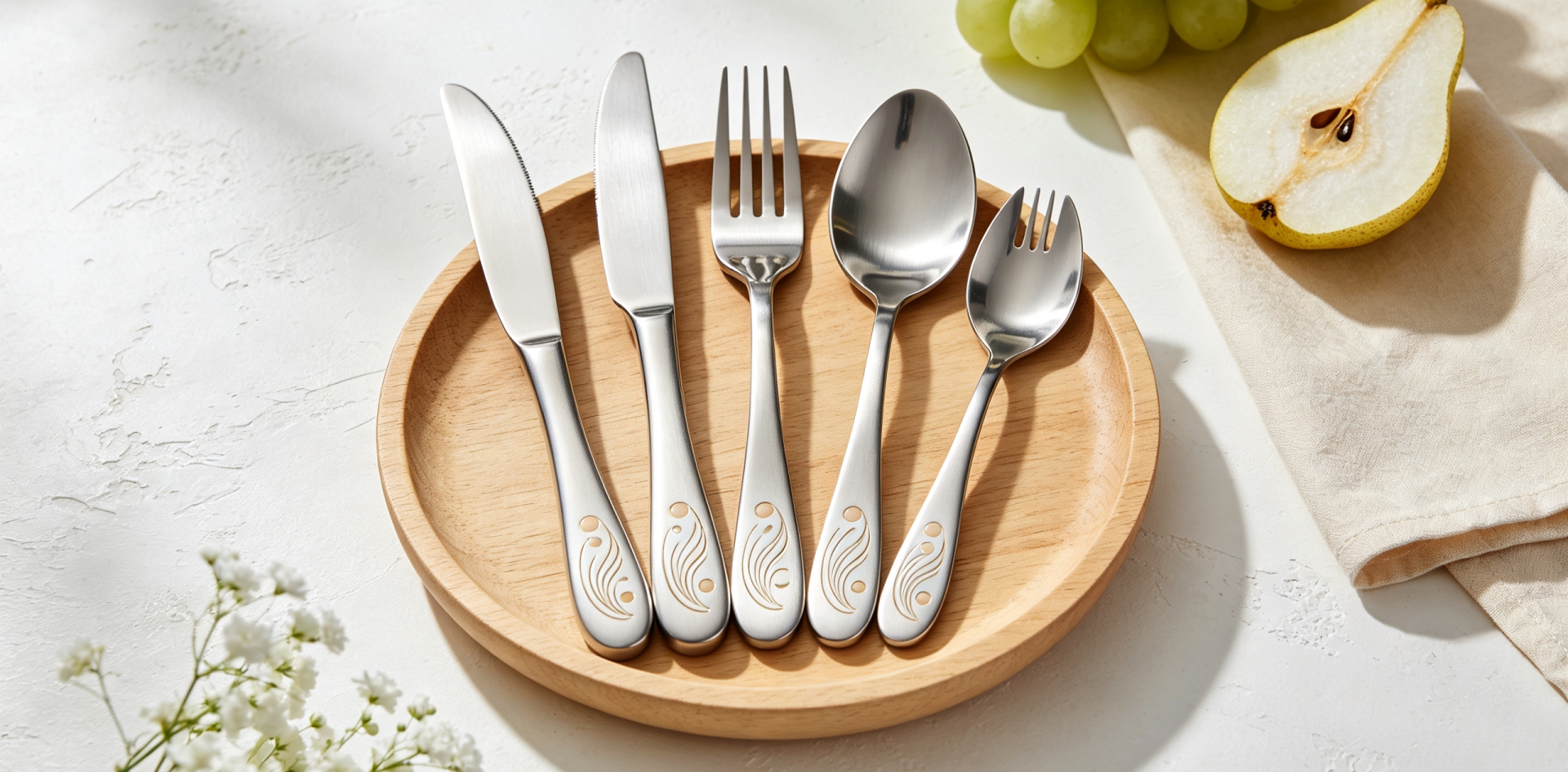
Stainless Steel Fork Back Profile for Custom B2B Cutlery
When designing stainless steel cutlery, attention often goes to the number of fork tines, tine spacing, handle shape and overall length. However, another detail can strongly influence the finished appearance and feel of a stainless steel fork: the back profile.
The back of a fork is the outer surface opposite the tines. Although it may appear simple, its curve, transition and visual proportion contribute to the overall character of the fork. For B2B buyers developing a custom stainless steel fork, understanding this detail can help create a more coordinated and distinctive cutlery design.
What Is the Back Profile of a Stainless Steel Fork?
The back profile describes the shape and contour of the fork when viewed from the side or rear. It can include the relationship between the handle, neck, shoulder and head of the fork.
A fork may have a relatively straight profile, a gently curved profile or a more pronounced flowing shape. These differences may not be obvious when looking only at a front-view drawing, but they can become noticeable when the fork is held, placed on a table or viewed together with other pieces.
For custom stainless steel cutlery, the back profile should therefore be considered as part of the complete product design rather than as an isolated detail.
Why Does the Fork Back Profile Matter?
A well-designed stainless steel fork should look balanced from multiple angles. The front profile creates the primary visual impression, while the back profile supports the three-dimensional appearance of the product.
If the rear contour changes abruptly between the handle and fork head, the product can appear visually disconnected. A smoother transition can create a more continuous silhouette.
This becomes especially important when a B2B buyer is developing a complete stainless steel flatware collection. The fork, spoon and knife may have different functional shapes, but their visual language should still feel related.
The back profile can help connect these pieces through similar curves, proportions and handle treatments.
Back Profile and Fork Handle Design
The handle is one of the most visible parts of stainless steel cutlery, but its appearance is affected by the way the handle connects with the fork head.
A straight handle combined with a strongly curved fork back can create a different appearance from a gently curved handle paired with a gradual rear contour.
For custom stainless steel fork projects, designers can consider several factors together:
-
Overall fork length
-
Handle thickness
-
Handle width
-
Neck shape
-
Shoulder transition
-
Head proportion
-
Rear curvature
-
Relationship between handle and fork tines
The goal is not simply to make each individual part attractive. The different areas should work together as one stainless steel fork.
The Importance of a Smooth Visual Transition
The area between the handle and fork head deserves particular attention. This is where the product changes from a relatively long handle into the wider functional section containing the tines.
A well-controlled back profile can make this transition appear natural. If the curve is too sharp, the fork may look heavy in one area. If it is too flat, the product may lose some of its designed character.
For OEM and ODM stainless steel cutlery, this transition can be adjusted according to the customer's design requirements. Small changes in the contour can produce a noticeably different overall appearance.
Matching the Fork With the Spoon and Knife
A stainless steel fork rarely exists alone in a complete cutlery collection. It is normally designed together with a stainless steel spoon and knife.
This makes cross-piece coordination important.
For example, a fork may use a gentle curved handle. The spoon can use a related handle contour, while the knife can incorporate a corresponding visual transition. The functional shapes of the three pieces remain different, but the overall collection can still appear unified.
This is particularly useful for B2B buyers developing their own stainless steel flatware collection. Instead of selecting completely independent fork, spoon and knife designs, buyers can work with a coordinated product concept.
How the Back Profile Affects the Look of the Fork
The back profile can influence whether a stainless steel fork looks traditional, modern, soft, substantial or minimalist.
A relatively straight rear contour may support a simple contemporary design. A more flowing curve can create a softer appearance. A stronger shoulder may give the fork a more substantial visual presence.
These characteristics do not need to be extreme. In many successful stainless steel cutlery designs, the difference comes from subtle changes in proportion and curvature.
For custom projects, the desired appearance can therefore be discussed before production rather than relying only on a standard stock model.
Back Profile in Custom Stainless Steel Fork Development
When developing a custom stainless steel fork, a product drawing should ideally show more than the front outline.
Side-view information can help communicate the intended rear contour, handle thickness and transition between different sections of the fork.
A supplier can then review the design from a manufacturing perspective and determine how the proposed shape can be produced consistently.
At Homefelt, custom stainless steel cutlery projects can be developed around customer drawings, reference samples or specific product requirements. The product team can review the fork structure and coordinate the design of the knife and spoon when a complete collection is required.
Small Design Changes Can Create a Different Product
One advantage of stainless steel cutlery is the large number of design possibilities available within relatively simple product shapes.
Two forks may have the same length, material and number of tines, yet appear completely different because of their handle proportions and three-dimensional contours.
The back profile is one of these less obvious design elements.
For B2B customers who want a recognizable private-label cutlery collection, details such as this can help create a product that feels different from standard market designs without making the overall structure unnecessarily complicated.
Considering the Product From Multiple Angles
A stainless steel fork should be evaluated from the front, side and rear rather than only from a flat product image.
From the front, buyers can examine the tines and overall silhouette. From the side, the handle and head relationship become clearer. From the rear, the back profile and transitions can be evaluated.
This three-dimensional approach is useful when developing a custom stainless steel fork because some design problems are difficult to identify from a single view.
For OEM and ODM projects, samples can also help buyers evaluate how the actual stainless steel fork looks and feels compared with the original concept.
Homefelt Custom Stainless Steel Cutlery Service
Homefelt provides stainless steel cutlery customization for B2B customers, including stainless steel knives, forks, spoons and complete cutlery sets.
For a custom project, customers can discuss product structure, dimensions, handle design, surface treatment and other product details according to their requirements. When a complete collection is needed, the fork, spoon and knife can be developed with a coordinated design direction.
Homefelt also provides OEM and ODM manufacturing support for customers who need their own stainless steel cutlery products. Based on the project requirements, the service can be organized as a dedicated solution covering product design, customization, packaging, transportation and other related arrangements.
The objective is not simply to manufacture one order. For customers developing a long-term product range, consistent communication and product development can provide a foundation for continued cooperation and future collection expansion.
A stainless steel fork may look like a simple product, but details such as the back profile can influence its overall appearance and relationship with the rest of a cutlery collection. When these details are considered during product development, buyers have more control over the final result.
Stainless Steel Knife Tip Profile for Custom B2B Cutlery
Stainless Steel Cutlery Collection Matching for B2B Brands
Related Article



