
Stainless Steel Fork Head Crown Geometry for OEM and Private Label Production
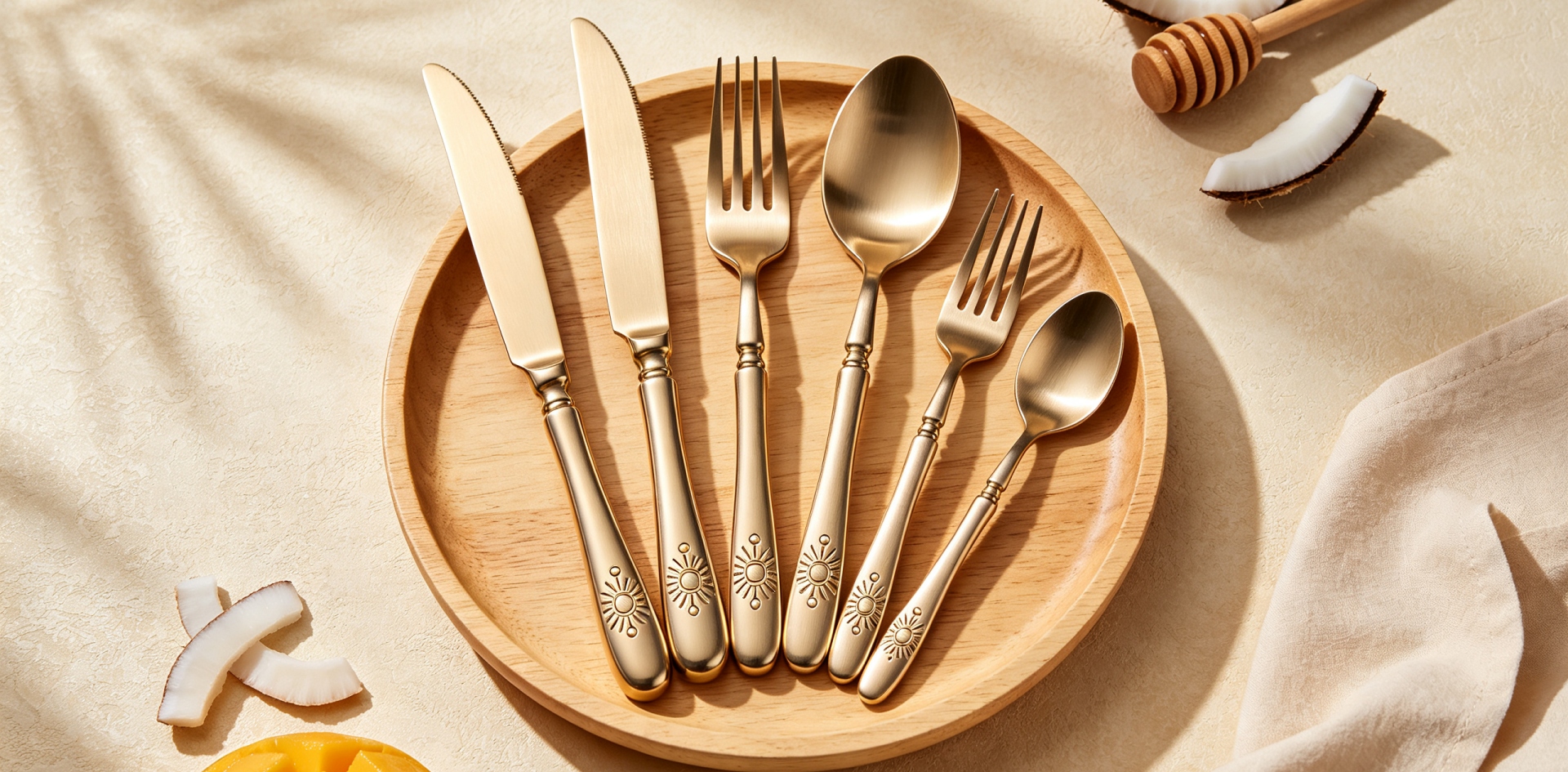
Stainless Steel Fork Head Crown Geometry for OEM and Private Label Production
The fork head is one of the most recognizable areas of stainless steel flatware. While buyers often focus on tine length, spacing and handle design, the upper contour of the fork head also contributes to the overall character of the product.
This upper contour can be described as the fork head crown. It is the curved or shaped area that connects the upper sides of the fork head and establishes the visual transition toward the tine structure.
For OEM and private label manufacturing, crown geometry can be an important specification when a customer wants a distinctive fork design. Small changes to the crown curve can make a fork appear softer, sharper, more traditional or more contemporary.
Homefelt factory supports customized stainless steel forks, spoons, knives and complete flatware collections for wholesale and bulk customers. By defining the fork head crown during product development, buyers can establish a more repeatable design for commercial production.
What Is Fork Head Crown Geometry?
The crown is the upper contour of the fork head above the tine area. Depending on the design, it may be a smooth arc, a shallow curve, a stronger rounded contour or a more geometric transition.
Although this section may occupy only a small part of the utensil, it is visually important because it forms the upper boundary of the fork head.
The crown also connects with other design features. Its shape needs to work with the fork head width, tine arrangement, handle direction and overall proportion.
For this reason, the crown should be considered as part of the complete fork-head geometry rather than designed independently.
Why Crown Shape Matters
The crown contributes to the visual identity of a fork.
A gentle curve can create a softer appearance, while a more defined contour can support a modern geometric design. For private label collections, this difference can help distinguish one product range from another.
Consistency is equally important. If the crown shape varies from one production piece to another, the difference may become noticeable when several forks are displayed together.
This is particularly relevant for retailers, hospitality suppliers and distributors purchasing large quantities. A consistent fork head helps maintain a uniform appearance across the entire order.
The crown can therefore be both a design feature and a production-control point.
Key Parameters for Crown Development
When developing a custom fork head, several parameters can be considered.
The first is the crown radius or curvature. This determines how strongly or gently the upper contour bends.
The second is the crown height. The position of the uppermost point relative to the fork head reference affects the visual proportion of the product.
The third is the transition toward the side sections of the fork head. The curve should connect naturally with the surrounding geometry.
The fourth is the relationship between the crown and the tine area. A crown that is too high or too low may change the visual balance of the fork head.
The fifth is consistency across different fork models within the same collection. If several fork sizes are used, their crown geometry can be developed according to a shared design language.
These parameters can be defined through technical drawings or established from an approved physical sample.
Material and Forming Considerations
The crown is formed from stainless steel material, so its final geometry is influenced by the material grade, thickness and forming process.
A very tight curve may require different forming conditions from a broad, shallow contour. The selected geometry should therefore be compatible with the actual material specification.
For OEM projects, the customer can provide the required stainless steel grade and thickness together with the desired crown shape. Homefelt can then review whether the proposed geometry is suitable for production.
This is particularly useful when a customer has a design image but has not yet established detailed dimensions.
The goal is to transform the visual concept into a practical production specification without losing the intended appearance.
Crown Consistency Across Production
A fork head contains several connected features, so variation in one area can affect the overall appearance.
During production, forming conditions need to remain stable enough to reproduce the approved crown shape. If the upper curve changes between pieces, the fork may appear wider, narrower, flatter or more rounded than intended.
For high-volume OEM orders, a master reference can be used together with the product drawing to establish the accepted crown profile.
Production inspection can then compare selected pieces with the approved standard.
This approach is especially useful for repeat orders, where maintaining the original design is as important as producing the first batch.
How the Crown Works With the Fork Head
Crown geometry should be reviewed together with the complete fork head.
The upper contour should coordinate with the side edges and the transition into the tine area. It should also support the intended visual relationship between the fork head and handle.
For a complete cutlery collection, this matters even more. The fork should look compatible with the spoon and knife without requiring the three products to have identical geometry.
A well-developed crown can therefore help create a recognizable collection while preserving the individual function of each utensil.
Inspection of Fork Head Crown Geometry
Inspection can begin with visual comparison against the approved sample.
For products with a clearly specified radius or height, dimensional checks can be added to the quality-control process.
Another useful method is group comparison. Several forks from the same production batch can be arranged together to identify differences in crown height, curvature or overall shape.
Inspection should be performed after the relevant forming and finishing processes because the final appearance is what the customer ultimately receives.
For repeat OEM orders, retaining the approved sample and relevant specification provides a useful reference for future production.
Homefelt Factory Experience
Homefelt factory specializes in stainless steel cutlery manufacturing for international B2B customers. Its product range includes stainless steel spoons, forks, knives and complete flatware collections.
For custom fork projects, Homefelt can support product development from initial design concepts through sampling and mass production.
Experience with different fork structures helps the factory evaluate the relationship between material specification, crown geometry, tine arrangement, finishing and production requirements.
This project-based experience is valuable when a customer wants a distinctive fork head but also needs consistent reproduction at commercial volume.
Homefelt has experience with factory qualification and recognized audit requirements, including BSCI, SEDEX 4P, BRC and ISO9001. Relevant certification and testing documentation can be provided according to the specific project.
OEM, ODM and Private Label Fork Manufacturing
OEM buyers may already have a complete fork drawing and require accurate reproduction of the specified crown profile.
ODM customers may provide a visual concept and ask the factory to help develop practical dimensions for manufacturing.
Private label brands can use crown geometry as one of the details that distinguishes their fork collection from standard market products.
Homefelt supports these different project types with a one-stop service covering product design, material selection, manufacturing, packaging and transportation.
Customers can customize an exclusive service package according to their product requirements, target market, order quantity and branding strategy.
This makes it possible to develop individual fork SKUs or complete knife, fork and spoon collections through one manufacturing partner.
What Buyers Should Provide
For a customized stainless steel fork quotation, buyers can prepare:
-
Fork type and intended application
-
Stainless steel grade
-
Material thickness
-
Fork head dimensions
-
Crown shape or reference profile
-
Tine specifications
-
Handle design
-
Surface finish or coating
-
Logo and decoration requirements
-
Packaging requirements
-
Estimated order quantity
A technical drawing provides the clearest reference, but a physical sample or product image can also be useful during the early development stage.
If the crown geometry has not yet been fully defined, Homefelt can review the available reference and help establish practical specifications before sampling.
Related Article



