
Stainless Steel Fork Head Width Specification for B2B Cutlery
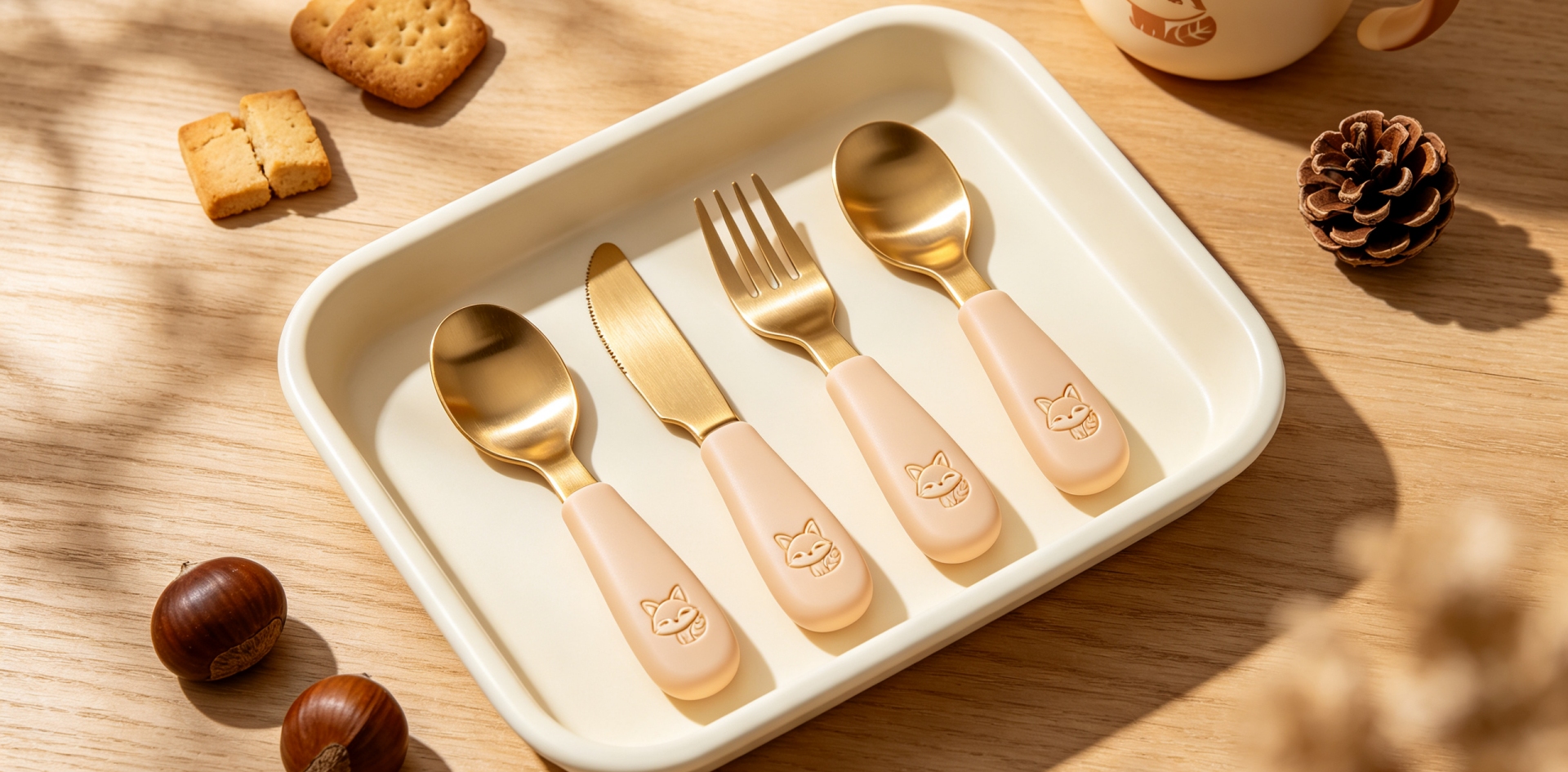
Stainless Steel Fork Head Width Specification for B2B Cutlery
When buyers evaluate stainless steel forks, they often focus on material, overall length, handle design and surface finish. However, the width of the fork head is another important product specification that can influence the overall appearance and proportion of the finished utensil.
The fork head is the front section containing the tines, and its width works together with the number of tines, neck, handle and overall length. A change in head width can make the same basic fork design look noticeably different.
For B2B buyers developing custom stainless steel cutlery, defining fork head width clearly can help establish a consistent product reference for sampling, bulk production and future repeat orders.
What Is Fork Head Width?
Fork head width refers to the overall width of the fork's front section according to the approved product design.
The measurement can be considered at the widest point of the head or according to a specific technical drawing, depending on the product structure.
Different fork designs can naturally have different widths. A standard dinner fork, dessert fork and smaller specialty fork do not necessarily require the same proportion.
Therefore, there is no single width that is suitable for every stainless steel fork.
For a custom B2B project, the important point is to define the intended width according to the complete product design.
Why Fork Head Width Matters
The head is one of the most visible areas of a fork. When several forks are displayed together, differences in width can become easy to notice.
A wider head creates a different visual impression from a narrow head, even when both forks have the same overall length.
Head width also affects the relationship between the fork head and handle. If the two sections are not properly proportioned, the fork may look visually unbalanced.
For wholesalers, hospitality suppliers and private label brands, maintaining the intended proportion can therefore be an important part of product consistency.
Head Width and Overall Fork Proportion
Fork head width should not be considered independently.
It works together with:
-
Overall fork length
-
Head length
-
Number of tines
-
Tine width
-
Tine arrangement
-
Neck width
-
Handle width
-
Handle length
-
Product thickness
These dimensions create the overall visual proportion of the fork.
For example, increasing head width without adjusting the surrounding design may make the fork appear heavier at the front. Reducing the width may create a narrower and more elongated appearance.
The correct choice depends on the design approved by the customer.
Head Width for Different Fork Models
A stainless steel cutlery collection may contain several different fork models.
A large dinner fork may have a broader head, while a dessert fork or smaller fork may use a more compact proportion.
Some collections also use different fork sizes while keeping a similar handle design.
For this reason, each product model should have its own specification.
A useful reference can include the model number, overall length, head width, head length, tine configuration, handle dimensions and approved sample.
This makes it easier for a manufacturer to distinguish different products when a customer orders several models together.
The Relationship Between Head Width and Tine Design
Fork head width is closely connected to the arrangement of the tines, but the two specifications are not the same.
The number, width and arrangement of the tines determine how the head is divided, while the overall head width describes the external proportion of the fork.
Two forks can have the same number of tines but different head widths.
Likewise, two forks with similar head widths can have different tine proportions.
For custom product development, both the external head dimensions and internal tine design should therefore be reviewed together.
Checking Head Width During Sample Approval
A physical sample is useful when confirming the actual proportion of a stainless steel fork.
Buyers can measure the widest part of the head according to the agreed measurement method. They can also compare the sample visually with the product drawing or reference image.
When several samples are available, place them side by side and compare their head outlines.
This can help identify whether the same design is being reproduced consistently.
For an OEM or ODM project, confirming this detail before bulk production can reduce the possibility of discovering a proportion difference after a large order has already been produced.
Why Several Pieces Should Be Compared
A single fork can confirm whether the basic design is acceptable.
Several forks can provide more information about consistency.
When multiple pieces are arranged together, differences in head width, head shape and overall alignment can become more visible.
For B2B buyers, this is particularly useful during sample approval because the final order may contain a large quantity of identical products.
The objective is not to create unnecessary inspection procedures. It is to make sure that the product standard is sufficiently clear before production moves forward.
Head Width and Cutlery Set Coordination
Many buyers do not purchase forks as individual products. They develop complete stainless steel cutlery sets containing spoons, forks and knives.
The fork head does not need to have the same shape as the spoon bowl or knife blade. However, the three products should usually share a coordinated visual proportion.
For example, a collection with slim handles and a minimalist design may require a fork head that maintains a similarly refined proportion.
A heavier commercial collection may use a different relationship between head and handle.
The appropriate specification depends on the customer's product positioning and approved design.
Product Parameters for Custom Stainless Steel Forks
A B2B fork specification can include a combination of basic and detailed product information.
Typical information may include:
-
Product model
-
Stainless steel material
-
Overall length
-
Head length
-
Head width
-
Number of tines
-
Tine dimensions
-
Neck dimensions
-
Handle length
-
Handle width
-
Product thickness
-
Product weight
-
Surface finish
-
Logo requirements
-
Packaging requirements
-
Approved sample reference
The exact parameters can be adjusted according to the product.
For a standard wholesale product, a simpler specification may be sufficient. For an OEM or ODM project, more detailed information can help protect the intended design.
Head Width Consistency in Bulk Production
Bulk production creates a different requirement from sample development.
A manufacturer may need to produce hundreds or thousands of forks according to the same approved design. At this stage, maintaining consistent head proportions becomes important.
Multiple pieces from production can be checked against the approved sample and product specifications.
The purpose is to ensure that the head remains within the agreed design range and that the visual appearance of the batch stays consistent.
For customers planning repeat orders, this reference can also help maintain continuity between different production batches.
Why This Matters for Private Label Brands
Private label brands often build a product identity around a consistent collection.
The handle may contain a logo or custom detail, while the spoon, fork and knife share a common surface treatment and design language.
If the fork head becomes noticeably wider or narrower than the approved version, the appearance of the product can change even when the handle remains unchanged.
For this reason, private label buyers can benefit from documenting important product proportions before the first large order.
The approved sample can then serve as a reference for future production.
OEM and ODM Fork Development
OEM projects may start with a customer drawing, existing sample or detailed product specification.
ODM projects can involve more cooperation during product development, especially when the customer has a general design direction rather than a finished product.
In both situations, fork head width can be included as part of the product development discussion.
Homefelt factory provides OEM and ODM stainless steel cutlery services for B2B customers, including customized forks, spoons, knives and complete cutlery sets.
The project can cover product development, sample confirmation, branding, packaging and large-volume production according to the customer's requirements.
One-Stop Service for B2B Cutlery Projects
For many international buyers, sourcing stainless steel forks is only one part of the purchasing process.
A new product may also require product design, packaging development, transportation arrangements and other customized support.
Homefelt can provide a one-stop service approach and create a customized service package according to each customer's actual situation.
A buyer with an existing product design may require mainly manufacturing and logistics support. Another buyer developing a new private label collection may need assistance from product design and sampling through packaging and shipping.
This flexible approach allows the service to match the customer's project rather than forcing every buyer into the same process.
Experience in Stainless Steel Cutlery Manufacturing
Homefelt has 40 years of experience in the stainless steel cutlery business and focuses on products including knives, forks, spoons and cutlery sets.
For B2B customers, manufacturing experience can be useful when product specifications involve multiple dimensions and different product models.
The company also has experience working with well-known brands and supports OEM, ODM, private label, wholesale and large-volume production.
For a custom fork project, buyers can provide a drawing, reference sample or product concept and discuss the required dimensions before sampling.
Certifications and Supporting Documentation
Supplier qualification is another consideration when international buyers select a stainless steel cutlery factory.
Homefelt's company information includes BSCI, SEDEX 4P, BRC, ISO9001 and Disney audit experience, together with FAMA and FSC certifications.
For individual projects, buyers can discuss which certification documents, inspection records or testing reports are relevant to their specific purchasing requirements.
Combining product specifications with appropriate factory documentation gives B2B buyers a clearer basis for supplier evaluation.
Supporting Repeat Orders and Long-Term Cooperation
For a successful B2B cutlery program, the first order is often followed by additional purchasing cycles.
A distributor may reorder the same fork after selling through its inventory. A restaurant supplier may expand the collection. A private label brand may add matching spoons and knives.
Keeping a clear product reference helps maintain consistency as the business grows.
Homefelt aims to work together with customers for long-term development, providing product customization and one-stop support as their requirements evolve.
The objective is not only to complete an individual order, but to become a reliable manufacturing service partner as the customer's stainless steel cutlery business grows.
What Buyers Should Confirm Before Ordering
Before confirming a custom stainless steel fork order, buyers can review:
-
Material specification
-
Overall fork length
-
Head length
-
Head width
-
Number and configuration of tines
-
Neck dimensions
-
Handle dimensions
-
Thickness and weight requirements
-
Surface finish
-
Logo or branding
-
Approved physical sample
-
Packaging and transportation requirements
For multiple fork models, each model should have its own product reference.
This helps prevent different specifications from being combined during quotation, sampling or mass production.
Conclusion
Stainless steel fork head width is a practical product parameter that can influence the visual proportion and consistency of a cutlery collection.
It should be evaluated together with head length, tine configuration, neck and handle dimensions rather than considered as an isolated measurement.
For B2B buyers, defining the specification through product drawings and approved samples can help establish a clear standard before bulk production. Comparing several pieces during sampling can also provide a better indication of production consistency.
Homefelt factory supports customized stainless steel forks, spoons, knives and complete cutlery sets, with OEM, ODM, private label, wholesale and large-volume production capabilities. Depending on the customer's situation, product design, packaging and transportation can also be integrated into a customized one-stop service package.
If you are developing a new stainless steel fork, complete flatware collection or private label project and need more information about product specifications, customization, certification documents or production, contact Homefelt at ingrid@homefelt.net.
You May Be Interested In
Stainless Steel Cutlery Measurement Tolerances for Consistent B2B Orders
Stainless Steel Spoon Bowl Depth Specification for B2B Orders
Related Article



