
Stainless Steel Fork Neck Length: A Practical Detail for B2B Custom Designs
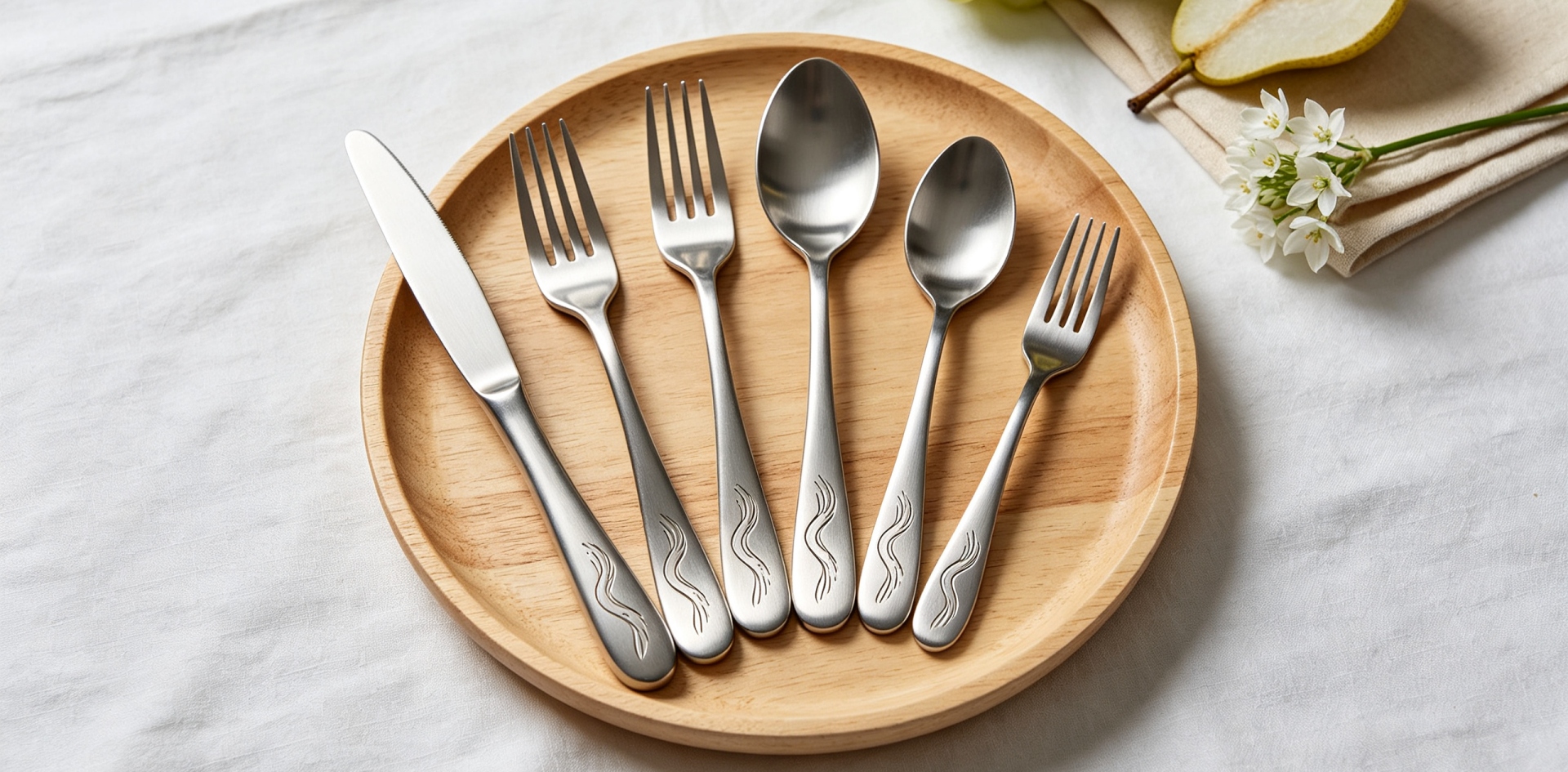
Stainless Steel Fork Neck Length: A Practical Detail for B2B Custom Designs
When developing a custom stainless steel fork, buyers often focus on the fork head, tine design, handle shape, surface finish, and overall length. One smaller area that also deserves attention is the neck between the fork head and handle.
The neck creates the transition from the functional part of the fork to the handle. Its length and shape can influence the visual proportions of the product and the way the complete design comes together.
For B2B buyers developing OEM, ODM, private label, or wholesale stainless steel flatware, understanding this detail can help create a more precise product specification.
What Is the Fork Neck?
The neck is the transition area between the fork head and the main handle.
Although it may appear to be a relatively small part of the product, it connects two areas with different functions and proportions.
The fork head needs to provide the required functional area, while the handle needs to create an appropriate grip and visual balance.
The neck sits between these sections and helps connect them into one continuous design.
When developing a custom fork, the neck should therefore be considered together with the head and handle rather than designed independently.
Why Neck Length Matters
Changing the neck length can alter the visual relationship between the fork head and handle.
A shorter transition may create a more compact appearance, while a longer transition can produce a more elongated visual line.
The appropriate approach depends on the design of the fork and the intended style of the complete collection.
For a traditional flatware design, the transition may be relatively subtle.
For a contemporary private label collection, the neck may become a more noticeable part of the overall design language.
This makes neck length a useful detail for customers looking to create a customized stainless steel fork rather than simply purchase a standard product.
Neck Length and Overall Fork Proportion
A fork is made up of several connected dimensions.
The overall length, head length, head width, tine configuration, neck area, and handle dimensions all contribute to the final proportion.
If one dimension changes, the relationship between the other areas may also need to be reviewed.
For example, increasing the neck length while keeping the overall fork length unchanged will affect the available space for the handle or fork head.
For an OEM project, this is why a requested neck dimension should be considered alongside the complete technical specification.
A manufacturer can then evaluate whether the proposed dimensions form a practical production design.
The Transition Between Fork Head and Handle
The neck is not only about length.
Its relationship with the fork head and handle also matters.
A well-developed transition can make the fork appear visually continuous rather than looking like two separate sections joined together.
The shape, width, curvature, and surface treatment of the transition may all contribute to the final appearance.
For a private label collection, these details can be coordinated with the corresponding transition areas on the knife and spoon.
This helps create a common design language across the complete flatware range.
Custom Fork Development for OEM Projects
B2B customers may approach a manufacturer with different levels of product information.
Some buyers already have detailed engineering drawings.
Others have a physical reference sample or product photograph.
Some brands may only have a general concept for a new collection.
In each situation, the fork neck can be developed according to the requirements of the project.
If the customer has a specific neck length, it can be included in the technical drawing.
If the customer is more concerned with the overall appearance, the manufacturer can review the reference design and develop the corresponding dimensions for sampling.
This allows the project to move from an initial idea toward a production-ready stainless steel fork.
Neck Length in ODM Product Development
ODM projects can also benefit from careful attention to transition details.
A buyer may select an existing manufacturing concept but request changes to make the product more suitable for its brand.
The neck area can be modified as part of this process.
For example, a brand may want the fork to appear more streamlined or may want the transition to match the design of an existing knife and spoon collection.
Small dimensional changes can help the finished product fit better into the buyer's overall product range.
This is particularly relevant when several SKUs need to share the same design identity.
Matching Forks With Knives and Spoons
A complete cutlery collection needs to look coordinated even though each utensil has a different structure.
The fork neck can be compared with the corresponding transition areas on the knife and spoon.
The dimensions do not need to be identical.
What matters is that the products share enough visual characteristics to appear as one collection.
For a private label brand, this can help create a recognizable flatware range.
For a wholesaler, it can also make it easier to build a coordinated product assortment around a common design.
Sample Evaluation Before Bulk Production
A technical drawing provides exact dimensions, but a physical sample gives buyers a clearer understanding of the finished product.
During sample approval, the buyer can examine the fork from different angles and compare the neck transition with the handle and fork head.
The sample can also be placed beside the matching knife and spoon.
If the transition appears too short, too long, too narrow, or visually inconsistent with the collection, adjustments can be made before bulk production.
This stage is particularly useful for custom projects where the final appearance is important to the brand.
Turning the Approved Design Into Mass Production
Once the fork design is approved, the agreed dimensions need to become part of the production specification.
The neck length can be documented together with the fork's other important measurements.
This gives the factory a clear reference for manufacturing and provides the buyer with a defined product standard.
For repeat B2B orders, maintaining the approved specification is especially valuable.
A distributor or private label brand may reorder the same fork months or years later.
A clear product specification makes it easier to reproduce the approved design without relying only on photographs or general descriptions.
Supporting Wholesale and Bulk Orders
Wholesale customers may require large quantities of one fork design or several coordinated SKUs.
In these cases, product consistency becomes an important part of the purchasing program.
The neck area may be small, but it remains part of the overall product specification.
Once the design is approved, the same requirements can be applied across the production quantity.
For buyers ordering large volumes, this provides a clearer basis for communication between product development, production, inspection, and future purchasing.
Private Label Fork Manufacturing
Private label customers often want their stainless steel forks to look different from generic catalog products.
That difference does not necessarily need to come from an unusual shape.
A combination of controlled details can create a distinctive result.
The relationship between the fork head, neck, and handle is one example.
When these details are developed together, the finished product can have a more deliberate appearance that fits the brand's broader flatware collection.
Homefelt for Custom Stainless Steel Fork Projects
Homefelt specializes in stainless steel knives, forks, spoons, cutlery sets, and flatware for B2B customers.
With more than 40 years of experience in the stainless steel cutlery business, the factory supports OEM, ODM, private label, wholesale, and bulk manufacturing projects.
Customers can provide technical drawings, reference samples, photographs, or basic product requirements when starting a custom fork project.
For a stainless steel fork, details such as neck length can be reviewed together with the head, handle, overall dimensions, finish, and matching cutlery pieces.
When developing a complete collection, the design relationship between the fork, knife, and spoon can also be considered from the beginning.
This gives B2B buyers a practical route from initial product concept to sample approval and mass production.
For wholesalers, distributors, and private label brands, the objective is not simply to manufacture a fork in large quantities. It is to establish a clear product specification that can support the commercial product range and future repeat orders.
Start Your Custom Fork Project
If you are developing a new stainless steel fork for wholesale, OEM, ODM, or private label sales, providing your preferred dimensions and reference design can help the manufacturer understand the project more accurately.
If the exact neck length has not yet been determined, a reference sample or drawing can provide a useful starting point.
Once the design direction is confirmed, the specification can be developed into a sample and then prepared for bulk manufacturing.
Request a Custom Stainless Steel Fork Quotation
Develop an OEM Stainless Steel Fork
Start a Private Label Fork Manufacturing Project
Request Wholesale Stainless Steel Fork Pricing
Develop a Matching Stainless Steel Flatware Collection
Stainless Steel Cutlery Product Coding: A Practical B2B Order Management Guide
Stainless Steel Fork Handle Length: A Practical Detail for B2B Custom Flatware
Related Article



