
Stainless Steel Fork Neck Thickness for B2B Cutlery
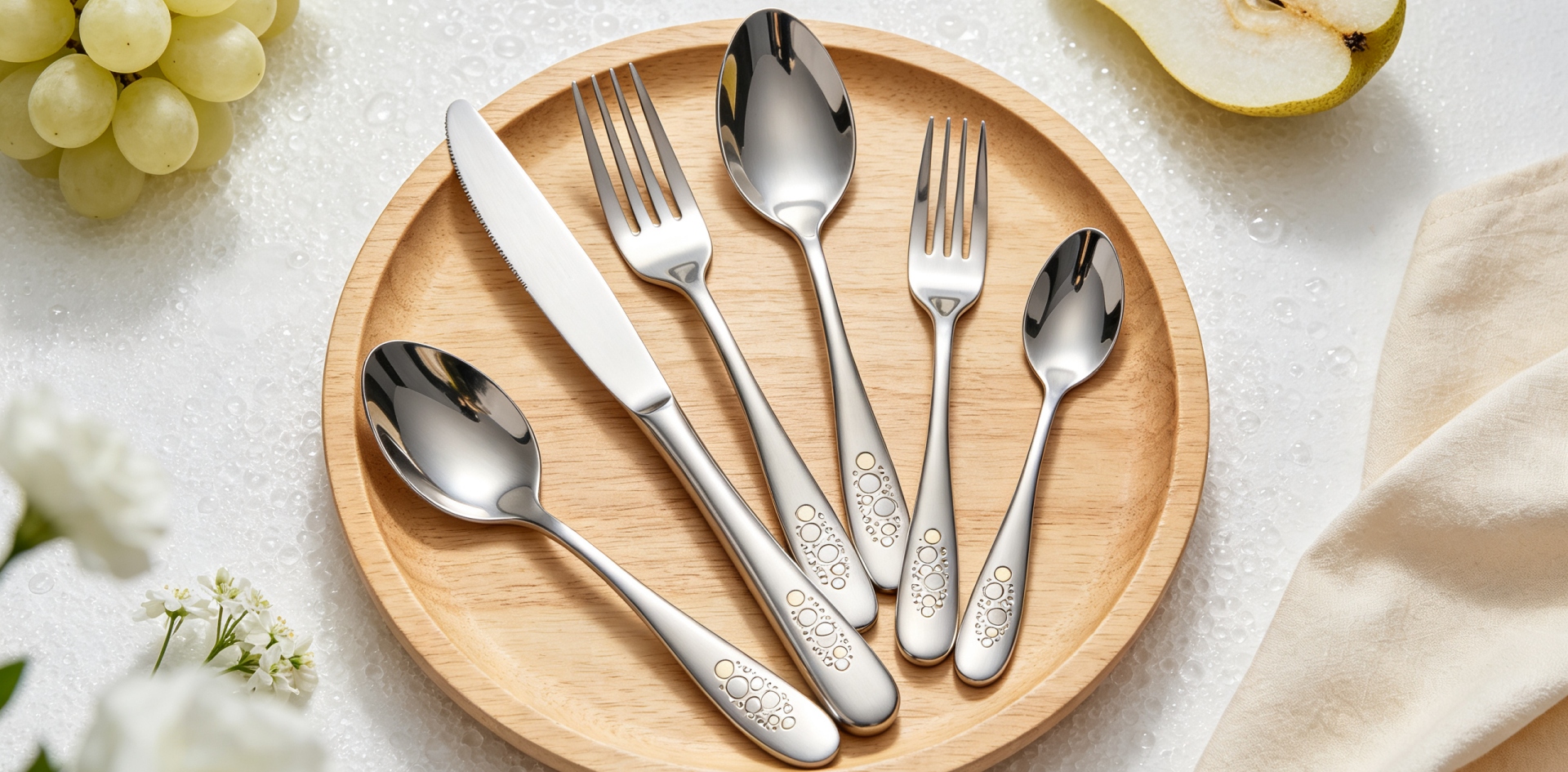
Stainless Steel Fork Neck Thickness for B2B Cutlery
When buyers evaluate a stainless steel fork, attention often goes first to the number and shape of the tines, the handle design or the surface finish. However, another structural area deserves consideration during custom development: the neck of the fork.
The fork neck is the transition area between the head of the fork and the handle. Its thickness contributes to the overall structure and visual proportion of the piece. For B2B buyers developing custom stainless steel cutlery, controlling this area can help create a more consistent and well-balanced product.
This detail becomes especially relevant when a fork is being manufactured in large quantities. A design that looks correct on one sample still needs to be translated into repeatable production requirements for hundreds, thousands or larger-volume orders.
Understanding Fork Neck Thickness
The neck connects two visually and functionally different sections of a fork. The fork head needs to maintain its intended shape, while the handle provides the main gripping area. Between them, the neck creates a transition.
Its thickness therefore needs to work with the overall dimensions of the fork.
A very slim neck may create a lightweight visual impression, while a heavier neck can give the fork a more substantial appearance. Neither approach is automatically suitable for every product. The correct specification depends on the design, material thickness, overall weight, handle construction and intended market.
For OEM and ODM projects, this is why the neck should be considered together with the complete fork rather than treated as an isolated measurement.
Why Neck Thickness Matters in B2B Collections
For individual consumers, a small difference in the transition area may be difficult to notice. For a B2B buyer developing a complete collection, however, proportion becomes more important.
A dinner fork, dessert fork and specialty fork may share the same design language while having different dimensions. If the neck proportions are not properly coordinated, the collection can look inconsistent when the products are displayed together.
A professional stainless steel cutlery manufacturer can review these proportions during development and help convert the design concept into practical manufacturing specifications.
For private label brands, this can also support product identity. A consistent transition between the fork head and handle can become part of the visual language shared across a collection.
The Relationship Between Neck Thickness and Overall Proportion
Fork design is based on relationships between multiple dimensions.
The width and length of the fork head influence the appearance of the neck. The handle width and thickness also affect how large or small the neck appears. Even the surface finish can change the visual perception of a particular area.
For this reason, simply specifying one neck measurement without considering the rest of the product may not produce the expected result.
During custom development, the factory can look at the complete product drawing or reference sample. The neck can then be evaluated in relation to the handle, fork head and overall length.
This approach is particularly useful when a buyer wants a modern, lightweight appearance or, alternatively, a heavier and more substantial table setting.
Maintaining Consistency in Large-Volume Production
Once a fork design has been approved, the next challenge is maintaining consistency during mass production.
The neck is formed as part of the manufacturing process, so material thickness, tooling condition, forming parameters and process control can all influence the finished result.
For a B2B order, consistency is more important than achieving an attractive appearance on only a few samples. The objective is to produce the approved design repeatedly across the entire production quantity.
A clear technical specification gives the production team a reference. The approved sample can also be retained as a physical comparison point where appropriate.
This becomes especially useful when the same fork is reordered later. Instead of relying on memory or general product descriptions, the original design characteristics can be used as a reference for continued production.
Fork Neck Thickness and Material Selection
Material selection is another factor that needs to be considered together with fork geometry.
Different stainless steel specifications and material thicknesses can produce different structural characteristics. A custom fork therefore needs to be evaluated as a complete product rather than by changing one dimension independently.
For B2B buyers, the factory can review the requested material, thickness and design together to determine whether the proposed structure is practical for the intended production quantity.
This can be particularly important for private label collections where the buyer wants a specific appearance but also needs stable manufacturing and repeatable quality.
Designing Forks for a Coordinated Collection
A fork is rarely sold completely independently in professional cutlery projects. It is often part of a group that includes table knives, spoons and additional fork sizes.
When a complete collection is developed, the proportions of each piece should work together.
The fork neck can be designed to visually connect the head and handle while maintaining a similar design language to the other pieces. For example, a collection with slim handles may require a different neck proportion from a collection featuring broad, substantial handles.
The objective is not to make every piece identical. Instead, the pieces should appear related while retaining their individual functional dimensions.
This is one area where an experienced stainless steel cutlery manufacturer can provide practical input during product development.
Custom Fork Development for OEM and ODM Projects
B2B buyers may approach a factory with an existing sample, drawing, CAD file, photograph or general design concept. The amount of available information can vary significantly between projects.
When the design is still being developed, the factory can help identify areas that require additional confirmation.
For a custom fork, these may include overall dimensions, material thickness, head proportions, tine configuration, neck structure, handle design, surface treatment and final weight.
Discussing these details before production can help prevent a gap between the intended design and the manufactured product.
For OEM and ODM projects, the process can also make future modifications easier. Once the main design has been established, related forks can be developed using the same design language.
Supporting Private Label and Wholesale Programs
Private label brands often need products that are recognizable but practical to manufacture at commercial volumes.
A fork with carefully controlled proportions can support this goal without requiring unnecessarily complicated construction.
Wholesale buyers and distributors may also benefit from consistent product specifications. When a successful model needs to be reordered, maintaining the same design characteristics helps provide continuity for customers and sales teams.
For larger product programs, this can become part of a broader manufacturing relationship rather than a one-time transaction.
Homefelt Factory for Custom Stainless Steel Forks
Homefelt factory provides stainless steel knives, forks, spoons and complete flatware solutions for B2B customers. OEM, ODM, private label, wholesale and large-volume production can be developed according to different project requirements.
For a custom fork, customers can discuss product dimensions, material, structure, finish, packaging and other requirements with the factory team. The goal is to create a practical service package around the customer's actual project rather than forcing every buyer into the same standard product.
Homefelt can also support related requirements such as product development, customized packaging and transportation coordination, allowing customers to manage more parts of a cutlery project through one manufacturing partner.
For buyers building a new collection, small structural details such as fork neck thickness can be discussed at the development stage. Once the design is confirmed, the specification can provide a useful reference for bulk production and future reorders.
From Sample to Long-Term Production
The purpose of discussing fork neck thickness is not to make a cutlery project unnecessarily complicated. It is to make sure that important design details are understood before large-scale production begins.
A successful B2B product needs to work at three levels: it should match the intended design, be practical to manufacture and remain consistent when produced in commercial quantities.
When these requirements are considered together, buyers can move from a sample to a stable production program with greater clarity.
For brands, distributors and importers, this approach also creates a stronger foundation for future collection development. A well-defined fork can become the starting point for matching spoons, knives and additional pieces.
A stainless steel fork contains many small structural decisions that collectively determine its finished appearance and manufacturing characteristics. Fork neck thickness is one of those details worth discussing when developing a custom B2B collection.
By defining the structure clearly and working directly with an experienced factory, buyers can create stainless steel cutlery that is suitable not only for the first production run but also for future wholesale and private label orders.
Custom Stainless Steel Forks for OEM & ODM Projects
Private Label Stainless Steel Flatware Manufacturing
Wholesale Stainless Steel Knife, Fork and Spoon Collections
Homefelt Factory Custom Stainless Steel Cutlery
Request a Custom Stainless Steel Cutlery Quotation
Stainless Steel Knife Blade Taper for B2B Cutlery
Stainless Steel Knife Bevel Consistency for B2B Orders
Related Article



