
Stainless Steel Fork Tine Alignment for B2B Cutlery
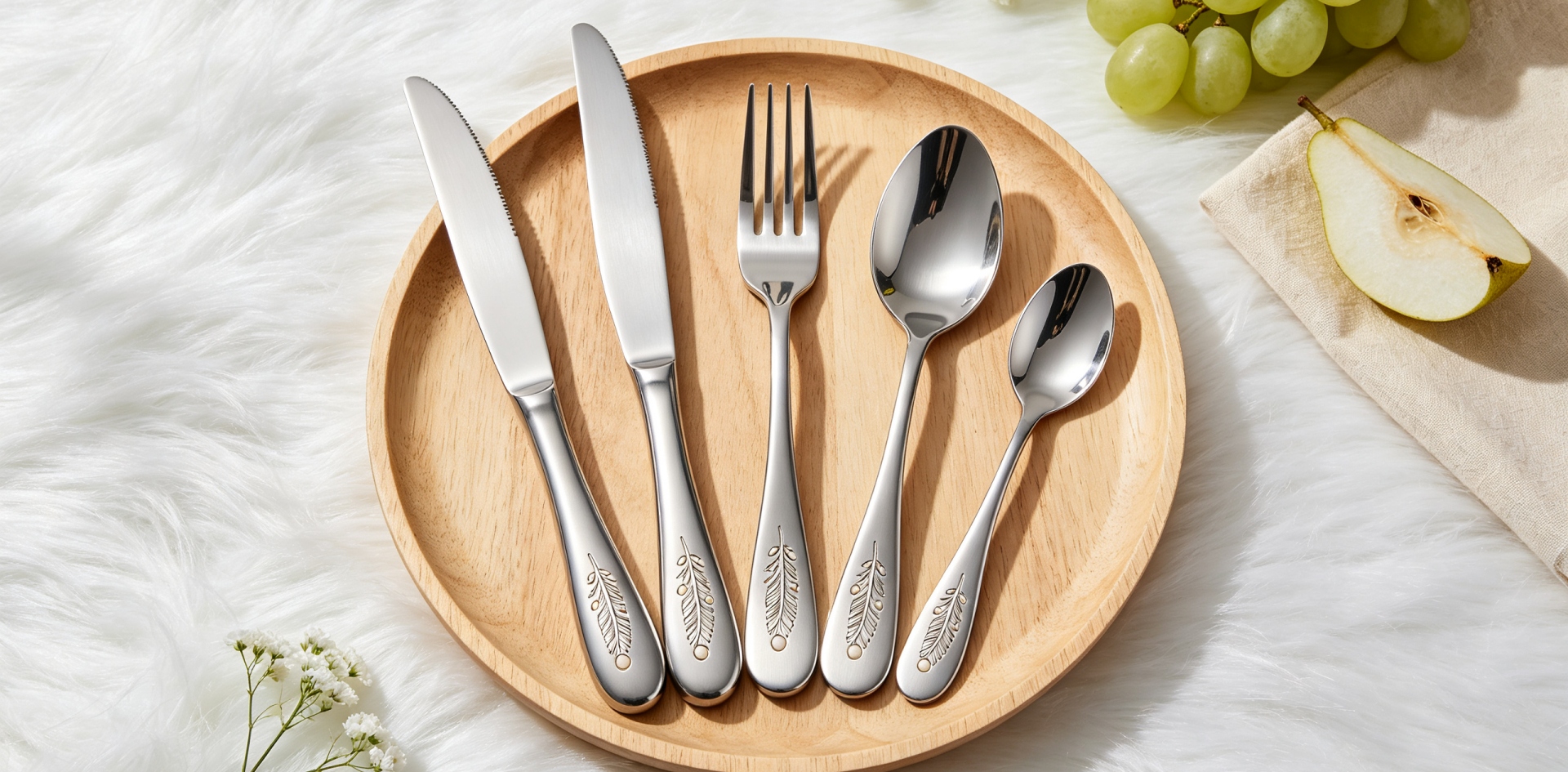
Stainless Steel Fork Tine Alignment for B2B Cutlery
When developing a stainless steel fork for a commercial collection, small details can have a noticeable effect on the finished product. The number of tines, their length, thickness and spacing are important, but another detail deserves attention: tine alignment.
A fork may have the correct overall dimensions and still look inconsistent if the tines do not maintain a clean and uniform relationship with each other. For B2B buyers developing custom flatware, this is particularly relevant because large-volume production requires the same visual standard to be maintained across thousands of pieces.
Tine alignment is therefore not simply a visual detail. It is part of the overall geometry of a stainless steel fork.
What Is Fork Tine Alignment?
Fork tine alignment refers to the relative position and direction of the individual tines. When viewed from the front, the tines should follow the intended design and maintain a consistent relationship with one another.
Depending on the product design, the tines may be relatively straight, slightly curved or shaped according to a particular functional requirement. Whatever the design, the important point is that the finished pieces should consistently follow the approved sample.
For a standard commercial fork, even relatively small deviations can become noticeable when many pieces are placed side by side.
For a custom stainless steel cutlery collection, the alignment should therefore be considered during product development rather than treated as an issue only at the end of production.
Why Alignment Matters for B2B Buyers
For consumers, one individual fork may not reveal every small difference. For a retailer, restaurant supplier or distributor receiving a large shipment, however, consistency becomes much easier to see.
Imagine several hundred forks displayed together. If some tines appear slightly wider apart, tilted or positioned differently, the collection may look less uniform.
This can be especially important for private label products. A brand may invest considerable effort into developing a specific fork shape, and the final production needs to preserve that appearance.
Consistent tine alignment also helps maintain the visual relationship between the fork and the other pieces in the same collection.
Connecting Tine Alignment With the Overall Fork Design
Tine alignment should not be considered independently from the rest of the fork.
The head width, tine length, shoulder area, neck transition and handle all contribute to the final appearance.
For example, a fork with a relatively narrow head and long tines will create a different visual impression from a wider fork with shorter tines. The alignment of the tines needs to work within those proportions.
During custom development, the factory can therefore review the complete fork rather than focusing on one isolated dimension.
This approach helps ensure that the final design remains balanced from the tip of the tines to the end of the handle.
The Relationship Between Alignment and Tine Shape
Not every fork requires perfectly straight tines.
Some designs use slightly curved tines or a particular profile to create a specific appearance or functional characteristic. In such cases, consistency in the curve becomes just as important as the position of the tines.
The approved sample establishes the reference.
Once the shape has been confirmed, production needs to reproduce the same general geometry across the order. This is one reason why sample approval is valuable for customized B2B cutlery projects.
A good sample does more than show the appearance of one product. It provides a physical reference for the production team.
Controlling Alignment During Manufacturing
Stainless steel cutlery passes through multiple manufacturing stages before becoming a finished fork. Forming operations can influence the final geometry, which means tine alignment needs to be considered as part of the production process.
The exact production method depends on the design and construction of the fork.
During development, the manufacturer can evaluate whether the proposed shape is suitable for stable production and whether the desired geometry can be reproduced consistently.
For larger orders, maintaining a controlled production process becomes particularly important. A design that looks good in a single prototype must also remain practical when produced in bulk.
This is where manufacturing experience becomes useful for B2B customers.
Alignment and Surface Finishing
The appearance of tine alignment can also be influenced by finishing.
After forming, stainless steel forks may undergo grinding, polishing or other finishing operations. These processes need to preserve the intended shape while achieving the required surface appearance.
If the final finish is highly reflective, small geometric differences can sometimes become more visible because light reflects differently from each tine.
For this reason, geometry and finishing should be considered together during product development.
A custom fork should not be evaluated only by looking at the surface finish or only by checking the dimensions. The combination of shape, alignment and surface appearance creates the final visual result.
Maintaining Consistency Across a Collection
For brands developing a complete flatware range, the fork should also correspond visually with the knife and spoon.
The fork head may have its own functional structure, but its overall proportions should support the design language of the collection.
The handle shape, surface treatment and transition areas can create visual connections between different pieces.
When a brand develops several fork models, such as a dinner fork and a smaller fork, the same design principles can also be adapted between the products.
This allows the collection to expand while maintaining a recognizable identity.
Why Sample Approval Matters
Before bulk production, a physical sample gives B2B buyers the opportunity to evaluate details that may be difficult to judge from a simple product description.
The buyer can check the overall dimensions, handle proportions, tine shape, alignment, finish and visual relationship with other products.
If changes are required, they can be discussed before the production quantity is released.
For custom stainless steel cutlery, this stage can save time later because design decisions are made before a large quantity enters production.
The approved sample can then become an important reference for the manufacturing process.
Homefelt Factory for Custom Stainless Steel Forks
Homefelt factory provides stainless steel knife, fork, spoon and flatware manufacturing for B2B customers, including customized OEM, ODM and private label projects.
For a custom fork, customers can provide existing drawings, reference products, photographs or initial design concepts. The factory can then discuss the required dimensions, materials, finishing and production requirements.
The service can be adapted to different customer situations.
A brand with a completed technical drawing may mainly need manufacturing and bulk production support. Another customer may have only a basic concept and need assistance developing the design into a production-ready product.
Homefelt can also coordinate related services such as packaging and transportation, allowing customers to manage more of the project through one manufacturing partner.
This one-stop approach can be useful for buyers who are developing a new flatware collection rather than purchasing standard products.
Preparing a Custom Fork Project
When contacting a stainless steel cutlery factory, buyers can provide as much information as they already have.
Useful materials include the desired fork length, head dimensions, tine configuration, handle design, stainless steel specification, surface finish, estimated quantity and packaging requirements.
Reference samples or photographs can also help communicate the desired appearance.
If the tine alignment or shape is an important part of the design, it is worth highlighting this during the initial discussion. The manufacturer can then pay attention to the requirement during sample development.
For OEM and private label projects, it is also helpful to identify whether the fork needs to match existing knives and spoons.
A coordinated specification makes it easier to develop a complete collection with a consistent appearance.
From One Fork to a Long-Term Product Program
A successful B2B cutlery project is rarely limited to one production run. Brands may need repeat orders, additional sizes or new pieces that follow the same design.
When the original design information and approved sample are clearly maintained, future development can be more efficient.
A fork that becomes part of a successful collection may later be accompanied by additional products using similar handle proportions, finishes or design details.
This creates an opportunity for a manufacturer to support the customer beyond the first order.
For growing brands, wholesalers and distributors, having a factory that understands both the technical details and the commercial requirements of the collection can make future product development easier.
A well-designed stainless steel fork combines function, appearance and manufacturing practicality. Tine alignment may be only one part of the product, but it contributes directly to how the finished fork looks and how consistently that appearance can be reproduced.
For B2B buyers, discussing these details early can help turn a design concept into a stable production specification.
Homefelt factory can support stainless steel cutlery projects from product development and customization through manufacturing, packaging and transportation. Whether the requirement is for custom forks, complete knife-fork-spoon collections or private label flatware, buyers can discuss their specifications and production plans directly with the factory.
Custom Stainless Steel Fork Manufacturing for B2B Brands
OEM & ODM Stainless Steel Cutlery Solutions
Private Label Stainless Steel Flatware Manufacturing
Stainless Steel Spoon Curvature for B2B Custom Designs
Stainless Steel Cutlery Piece Coordination for B2B Brands
Related Article



