
Stainless Steel Fork Tine Cross-Section for B2B Cutlery
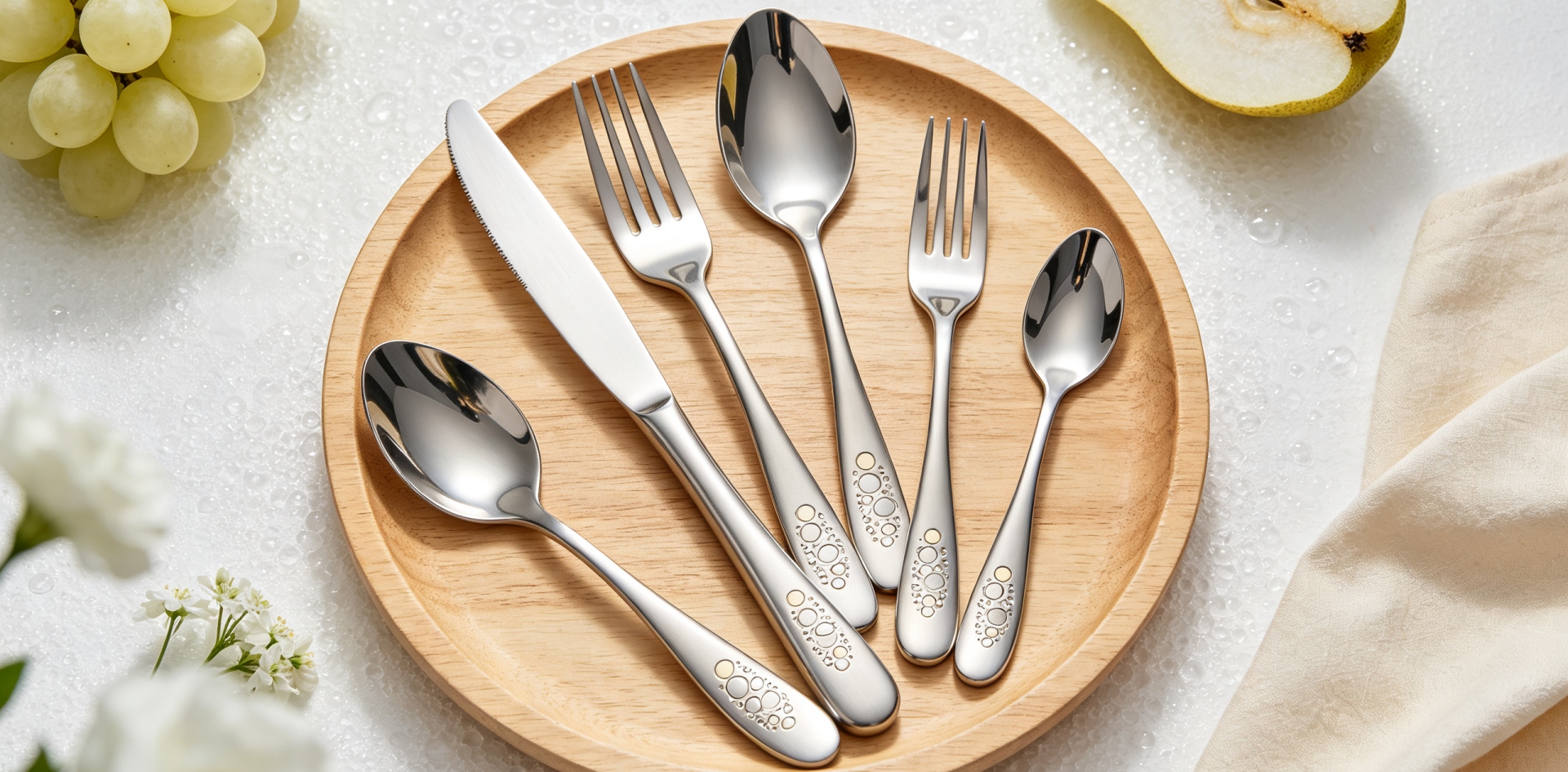
Stainless Steel Fork Tine Cross-Section for B2B Cutlery
The fork tines are among the most recognizable parts of stainless steel flatware. Although they appear simple from the front, each tine has a three-dimensional structure that can influence the appearance and feel of the finished fork.
One detail that is often overlooked during custom development is the tine cross-section.
The cross-section describes the shape of the tine when viewed across its width and thickness. It may be relatively flat, gently rounded, subtly shaped or developed with a more defined profile depending on the product design.
For B2B buyers developing custom stainless steel forks, this small structural detail can influence visual proportions, rigidity, finishing and the overall character of the product.
What Is a Fork Tine Cross-Section?
A fork tine is not simply a flat strip of stainless steel.
When viewed from the end or across its width, the tine has a particular cross-sectional shape. That shape determines how the material is distributed through the tine.
Two forks can have similar overall dimensions while using different cross-sections.
One may appear relatively flat and broad, while another may have a more rounded or structured appearance.
These differences can become noticeable when the fork is held, placed under strong lighting or viewed together with other pieces in the same collection.
For OEM and ODM projects, the cross-section can therefore be considered as part of the overall fork design.
Why Cross-Section Matters in Custom Fork Development
The front view of a fork does not show the complete geometry.
A drawing may indicate the tine width and length, but it may not fully communicate how the tine is shaped through its thickness.
This can become important when a buyer has a specific visual expectation.
A broad, flat tine can create a different impression from a narrower section with a more rounded profile, even when their main dimensions are similar.
For private label brands, these small differences can affect how refined, substantial or contemporary the fork looks.
A clear understanding of the cross-section helps connect the two-dimensional design concept with the three-dimensional finished product.
Cross-Section and Visual Weight
Visual weight is not determined only by the actual amount of stainless steel used.
The way the material is shaped also affects how substantial a tine appears.
A flatter section can visually distribute the material across a wider area.
A more rounded section may create a stronger central profile while appearing different from the same nominal thickness in a flat form.
This means that two forks with similar measurements can still have different visual characters.
When developing a coordinated stainless steel cutlery collection, these differences should be considered alongside the fork head, handle and overall product proportions.
The goal is to create a fork that looks intentional from different viewing angles.
Cross-Section and Fork Rigidity
The shape of a metal section can influence how it behaves under force.
For a stainless steel fork, the tine needs to maintain an appropriate structure during normal use.
Cross-sectional geometry is one part of that structure.
However, it should not be evaluated independently from material grade, overall dimensions, forming process and the rest of the fork design.
A B2B manufacturer can review these factors together when developing a custom fork.
The objective is not simply to make the tine thicker.
Instead, the design should use an appropriate combination of material and geometry for the intended product.
This approach can help maintain the desired appearance without adding unnecessary material.
The Relationship Between Cross-Section and Tine Width
Tine width and cross-sectional shape work together.
A wide tine with a relatively flat section can have a different visual appearance from a narrow tine with a more rounded section.
This relationship is particularly noticeable on forks designed with long or slender tines.
If the cross-section is not considered during development, the final product may look different from what the front-view drawing originally suggested.
For custom OEM projects, the buyer can provide a physical reference or sectional drawing when the exact geometry is important.
For ODM projects, the manufacturer can discuss practical alternatives during sample development.
Cross-Section and Polished Stainless Steel
Surface finishing can reveal three-dimensional geometry more clearly.
On a polished stainless steel fork, light moves across the surface of the tine.
A curved or rounded section may reflect light differently from a flatter section.
This can affect the visual brightness of the tine when viewed from different directions.
For a coordinated collection, the relationship between tine cross-section and polishing should therefore be considered together.
The purpose is not to create a complicated visual effect.
Instead, the objective is to make sure the finished surface supports the intended shape of the product.
For B2B buyers, this is particularly relevant when the fork will be presented in retail packaging, product photography or a showroom environment.
Cross-Section and the Fork Head Transition
The tine does not exist independently from the fork head.
At the rear of each tine, the geometry connects to the wider head structure.
A well-developed transition can make the tine appear naturally integrated with the fork.
If the cross-section changes too abruptly, the transition may look visually disconnected.
The exact structure depends on the fork design, but the principle remains the same: the tine and head should be developed as one connected product.
This becomes especially important for custom designs where the fork head has a distinctive silhouette.
A factory can review the tine profile together with the head geometry before finalizing the production version.
Different Cross-Sections for Different Product Styles
There is no single cross-sectional shape that suits every stainless steel fork.
A commercial collection may use a practical and substantial profile.
A contemporary retail collection may use a more refined and visually light design.
A premium private label range may require a carefully controlled profile that complements the handle and matching pieces.
Distributors may also need several product tiers with different visual characteristics.
The cross-section can become one of the details used to differentiate these products.
When combined with changes in handle design, finish and overall proportions, it can help create meaningful differences between collections without changing the basic function of the fork.
Using Samples to Confirm Fork Geometry
For detailed fork development, a physical sample can communicate information that is difficult to describe with words alone.
A buyer can hold the fork, view the tine from different angles and compare it with existing products.
The sample also makes it easier to evaluate the relationship between the tine, head and handle.
If the cross-section does not create the expected visual effect, adjustments can be made before mass production.
This is particularly useful for private label customers introducing a new design.
Once the sample is approved, it can become a reference for the production team and future repeat orders.
Specifying Cross-Section in an OEM Project
Not every B2B project requires a detailed engineering drawing of the tine cross-section.
The level of specification should depend on how important the feature is to the final product.
If the cross-section is a defining design element, the buyer can provide a sectional drawing or physical sample.
If it is mainly a supporting detail, the buyer may only need to specify the overall appearance and key dimensions.
The manufacturer can then evaluate the practical production approach.
This keeps the product specification focused on commercially important requirements.
For large-volume production, clarity is useful because it gives the factory a consistent reference before production begins.
Cross-Section Consistency in Bulk Manufacturing
A custom fork design needs to remain consistent throughout the production quantity.
If the tine cross-section varies significantly from one piece to another, the difference may become visible when many forks are placed side by side.
Consistency therefore matters not only for individual pieces but also for the appearance of the entire order.
Production control, tooling condition, forming procedures and inspection all contribute to maintaining the intended geometry.
The approved sample can provide a practical visual reference while the agreed specifications define the important dimensions.
For wholesalers and private label brands, this helps create greater continuity between the initial sample and the delivered bulk order.
Fork Cross-Section and Collection Coordination
A stainless steel fork is usually part of a larger product family.
Its cross-section should therefore be considered together with the knife and spoon.
The fork does not need to have identical structural geometry to the other pieces, but its visual weight and finishing should fit the same design direction.
For example, a collection with a refined, slim handle may look more coherent when the fork tines also have a controlled and elegant profile.
A heavier commercial handle may call for a more substantial fork appearance.
This collection-level thinking helps prevent individual pieces from looking disconnected.
OEM and ODM Support for Custom Forks
OEM customers may already have a specific fork design that needs to be reproduced.
In this case, the manufacturer works from the customer's drawings, samples or specifications.
ODM customers may instead provide a general design direction and ask the factory to help develop the final product.
The cross-section can be reviewed during this development stage.
The manufacturer can discuss how the desired appearance relates to the available production methods and the rest of the fork structure.
This creates a practical connection between design expectations and mass production.
Homefelt Factory for Custom Stainless Steel Fork Manufacturing
Homefelt factory produces stainless steel knives, forks, spoons and complete flatware sets for B2B customers.
The factory supports OEM, ODM, private label, wholesale and large-volume production.
For custom fork projects, customers can discuss product design, material, surface finish, packaging and transportation requirements according to their project needs.
Homefelt can provide a customized service package rather than treating every order as a standard product.
This allows product development and manufacturing requirements to be considered together.
For customers developing a new private label collection, the factory can work from product concepts, drawings or samples and move toward a confirmed production version.
From Fork Design to Repeat Production
A well-defined product specification has value beyond the first order.
When a fork becomes part of a successful product range, the same design may need to be reproduced several times.
The approved sample and production specifications can provide continuity for future orders.
This is especially useful for distributors and brands that need stable products across multiple purchasing cycles.
A clear reference also makes it easier to communicate changes if the customer later wants to modify the handle, finish, packaging or other elements while retaining the original fork structure.
Small Structural Details, Clearer B2B Products
Stainless steel cutlery is often judged by its overall appearance, but that appearance is created by many individual details.
Fork tine length, spacing and alignment are important.
The cross-sectional shape adds another dimension that may not be visible in a simple front-view drawing.
When this geometry is considered together with material, forming, polishing and the rest of the fork design, the manufacturer has a clearer understanding of the intended product.
For B2B buyers, this can make custom development more precise without making the project unnecessarily complicated.
The most useful specifications are the ones that help the factory reproduce the product that the customer actually wants.
Building a Distinctive Stainless Steel Fork
A successful custom fork does not need excessive decoration to look different.
Subtle changes in structure and proportion can create a distinctive appearance.
The cross-section of the tine is one example.
When carefully matched with the fork head, handle and surface finish, it can contribute to the visual character of the finished product.
For OEM, ODM and private label buyers, discussing these details during development can help turn a general product idea into a reproducible manufacturing specification.
Homefelt factory can coordinate customized stainless steel knives, forks, spoons and complete flatware collections for wholesale and bulk B2B requirements.
From product design and sample development to manufacturing, packaging and transportation, the service can be adapted to the customer's project.
A fork tine may be a small part of the overall product, but its three-dimensional structure contributes to how the finished fork looks and performs.
By considering the tine cross-section during custom development, B2B buyers can establish a more complete product reference and create stainless steel flatware with a consistent, coordinated appearance.
Custom Stainless Steel Forks for OEM & ODM Projects
Private Label Stainless Steel Flatware Manufacturing
Custom Knife, Fork and Spoon Collections
Wholesale Stainless Steel Cutlery for B2B Buyers
Homefelt Factory Custom Cutlery Service
OEM Stainless Steel Cutlery Manufacturing
Stainless Steel Cutlery Handle Concavity for B2B Brands
Stainless Steel Knife Spine Thickness for B2B Cutlery
Related Article



