
Stainless Steel Fork Tine Root Width for B2B Cutlery
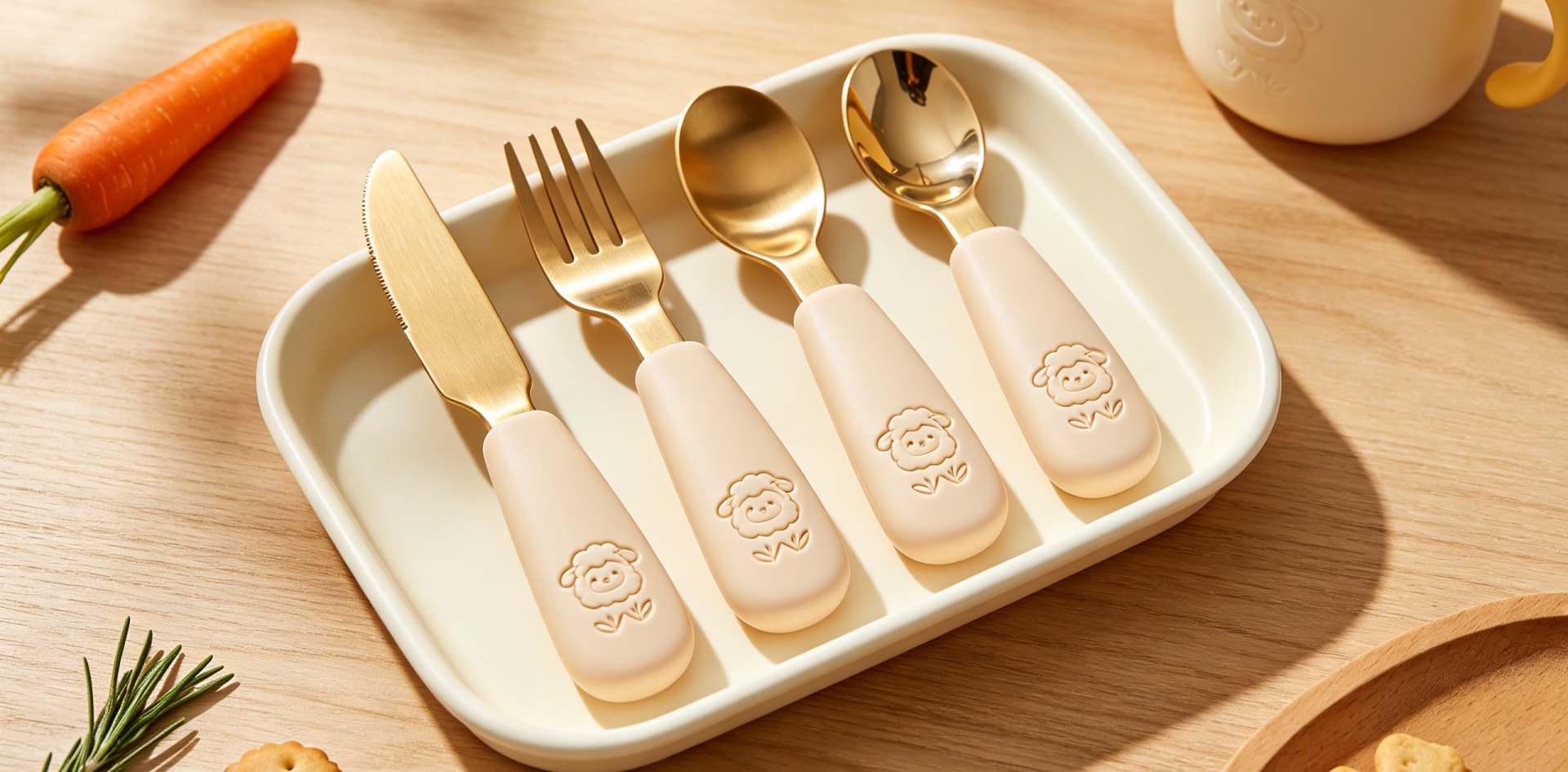
Stainless Steel Fork Tine Root Width for B2B Cutlery
A stainless steel fork is made up of several connected areas, and the transition between those areas can have a noticeable effect on the finished product.
One detail that deserves attention during custom fork development is the tine root width.
The tine root is the area where an individual fork tine begins to connect with the main fork head. Its width and shape influence how the tine transitions into the head and how the overall fork structure appears.
For B2B buyers developing custom stainless steel forks, tine root width can be considered together with tine length, spacing, cross-section, fork head design and surface finishing.
It is a small specification, but controlling the relationship between the root and the rest of the fork can help create a more balanced and reproducible product.
What Is Fork Tine Root Width?
A fork contains several tines extending from the main head toward the front.
The root of each tine is the area closest to the central fork head.
Tine root width describes the width of this connecting area.
It does not necessarily have to remain identical to the width of the tine farther toward the tip.
Depending on the product design, the root may be relatively broad and substantial or more gradually transition into a slimmer tine.
The exact structure depends on the intended appearance and manufacturing requirements.
For OEM and ODM projects, the tine root can therefore be included as part of the overall fork geometry.
Why the Tine Root Matters
The root is where the individual tine visually joins the main fork head.
Because of this position, it affects the transition between the broad head structure and the narrower tines.
If the root is proportioned well, the tines can appear naturally integrated with the fork head.
If the transition is too abrupt, the fork may look visually disconnected.
For B2B brands, this can matter when developing a distinctive fork silhouette.
The goal is not simply to make the root wider or narrower.
Instead, its dimensions should support the proportions of the complete fork.
Tine Root Width and Fork Head Proportion
The fork head provides the structural and visual foundation for the tines.
Its overall width, shape and thickness influence how the roots should be developed.
A broad fork head may support a more substantial tine-root transition.
A slimmer contemporary fork may require a lighter visual connection.
The relationship is particularly important when the fork has long or slender tines.
If the root remains too visually heavy, the front of the fork may appear unbalanced.
If it becomes too narrow, the transition may appear overly delicate compared with the rest of the head.
For custom stainless steel cutlery, these proportions can be reviewed during sample development.
The Relationship Between Root Width and Tine Length
Tine length changes the visual proportion of the fork.
A long tine creates a greater distance between the root and the tip.
A short tine creates a more compact head.
Because of this, the same root width may look different when applied to forks with different tine lengths.
For example, a relatively wide root may appear balanced on a short commercial fork but visually heavier on a long, slender fork.
This is why the root should be considered together with the overall tine geometry.
For OEM and ODM customers, the factory can review these dimensions as a complete set rather than treating each number independently.
Root Width and Tine Transition
The transition from root to tine is important for the visual continuity of the fork.
The change can be gradual or more defined depending on the design.
A gradual transition can create a softer and more integrated appearance.
A more defined transition can create a stronger structural character.
Neither approach is automatically suitable for every product.
The right solution depends on the collection's design language.
For a private label brand, this detail can become part of the overall fork identity without requiring additional decorative elements.
How Surface Finishing Reveals the Root Area
Polished stainless steel reflects light across the fork surface.
Changes in width and geometry can therefore become visible through different reflection patterns.
The tine root is close to the wider fork head, so changes in profile can be particularly noticeable in this area.
A consistent root shape can help create a clean visual transition across the fork.
If different pieces have noticeably different root profiles, the collection may appear less consistent when displayed together.
For B2B buyers, this is another reason to establish a clear production reference before mass manufacturing.
Root Geometry and Three-Dimensional Design
The tine root is not simply a two-dimensional outline.
Its thickness and cross-sectional shape also contribute to the complete structure.
The root needs to connect naturally with the fork head while transitioning into the tine.
This means that front-view dimensions alone may not completely describe the finished geometry.
For detailed custom projects, a physical sample or sectional drawing can provide additional information.
The manufacturer can then evaluate the root area together with the overall fork construction.
This approach helps translate a visual concept into a practical production design.
Designing the Root for Different Market Positions
Different B2B collections may require different fork proportions.
A heavy commercial collection may use a stronger and more substantial fork head.
A modern retail range may prefer slimmer proportions.
A premium private label collection may emphasize carefully controlled transitions between different areas.
Tine root width can be adapted as part of these design directions.
It should not be used in isolation, but it can contribute to the overall visual balance of the fork.
This flexibility allows the same basic product category to be developed for different markets.
Using Drawings and Samples
A drawing can provide the initial dimensions for a custom fork.
If the tine root is important to the design, the drawing can identify the relevant area and show the intended transition.
A sample then allows the buyer to review the actual three-dimensional result.
The customer can compare the root area with the tine, fork head and handle.
If the root appears too heavy or too narrow, changes can be made before the production version is approved.
This is particularly useful for private label projects where the fork needs to match a specific brand style.
Maintaining Root Consistency in Bulk Production
Once the design has been approved, the manufacturer needs to reproduce the same tine-root structure across the order.
A single fork may not reveal a small difference.
When many forks are placed side by side, however, variations in the root area can become easier to see.
Production control and inspection therefore play an important role.
The approved sample can act as a visual reference, while the agreed specifications define the key dimensions.
This combination helps create a practical standard for bulk manufacturing.
For distributors and wholesalers, consistent production is important because customers expect the same product when they reorder.
Tine Root Width and Private Label Collections
Private label products often depend on a consistent design language.
The handle, fork head and tines should appear to belong to the same collection.
A carefully developed tine root can contribute to this relationship.
It does not need to become a decorative feature.
Instead, it can support the visual flow between the fork head and the tines.
When combined with a coordinated knife and spoon, these structural details can help create a more complete collection.
For brands developing several SKUs, maintaining the same design philosophy across different pieces can strengthen the overall product presentation.
How Buyers Can Specify Tine Root Requirements
A B2B buyer does not always need a complex engineering document to begin a custom project.
Useful information may include:
-
Overall fork length
-
Fork head width
-
Tine length
-
Tine width
-
Tine root width
-
General tine profile
-
Material specification
-
Surface finish
-
Reference drawing or sample
-
Required order quantity
If the exact root dimension is critical, it can be clearly identified on the drawing.
If the main requirement is visual appearance, a reference sample can also be useful.
The manufacturer can review the information and determine how the intended geometry can be reproduced efficiently.
OEM and ODM Fork Development
OEM customers may already have a defined fork profile.
The manufacturer then works from the customer's drawings, samples or specifications to reproduce the agreed design.
ODM customers may begin with a broader concept, such as a fork with slender tines and a smooth transition into the head.
The factory can help develop the exact geometry during the sampling stage.
In both situations, the tine root can be reviewed as part of the complete fork structure.
This creates a better connection between design intention and practical manufacturing.
Homefelt Factory for Custom Stainless Steel Fork Manufacturing
Homefelt factory produces stainless steel knives, forks, spoons and complete flatware sets for B2B customers.
The factory supports OEM, ODM, private label, wholesale and large-volume production.
For custom fork projects, buyers can discuss product geometry, material, surface finish, packaging and transportation according to their specific requirements.
Homefelt can provide a customized service package based on the customer's project instead of limiting the development to standard catalog products.
For brands creating a new cutlery collection, the factory can work from drawings, samples or initial concepts and develop them toward an approved production version.
Coordinating the Fork With the Complete Collection
A fork is rarely sold completely independently in a cutlery program.
It normally forms part of a collection with matching knives and spoons.
The exact structure of each piece will naturally be different, but the visual language should remain coordinated.
A particular handle shape, surface finish or overall proportion can connect the different pieces.
The fork's tine root can then be developed to fit naturally within that design system.
This collection-level approach can help prevent one piece from looking noticeably heavier or more delicate than the others.
Root Width and Commercial Production
The purpose of defining tine root width is not to create unnecessary technical complexity.
It is to control a design detail that may influence the final appearance and structure of the fork.
For some standard products, the factory's existing production specification may already provide an appropriate solution.
For a highly customized product, however, the buyer may need greater control over the geometry.
The level of specification should therefore match the importance of the feature.
A professional manufacturer can help determine which dimensions need close control and which can remain within a practical production range.
Sample Approval Before Mass Production
A sample provides an important opportunity to evaluate the relationship between the tine root and the rest of the fork.
The buyer can inspect:
-
Root-to-tine transition
-
Relationship with the fork head
-
Overall visual weight
-
Surface reflection
-
Tine proportions
-
Handle coordination
-
General product appearance
If the result matches the intended design, the sample can be approved as the production reference.
If changes are needed, they can be addressed before the bulk order enters full production.
This helps reduce unnecessary changes later in the project.
Supporting Repeat Orders
A custom stainless steel fork may become a long-term product for a distributor or private label brand.
When the customer reorders the same design, the original specifications and approved sample can provide a stable reference.
The tine root width can therefore remain part of the product documentation when it is considered an important feature.
This helps the manufacturer reproduce the same design over multiple production cycles.
It also provides a clearer basis for discussing any future design revisions.
From Fork Detail to Complete B2B Product
Tine root width is only one part of a stainless steel fork.
The final product is created through the relationship between the fork head, tines, neck, handle, material and surface finish.
Small dimensional decisions can influence how these areas connect.
For B2B buyers, discussing the important details during product development can make the final specification clearer and more reproducible.
The objective is not to control every feature unnecessarily.
It is to identify the details that contribute to the product's commercial appearance and make those requirements understandable to the factory.
Homefelt Factory for OEM, ODM and Private Label Cutlery
Homefelt factory supports customized stainless steel knives, forks, spoons and complete flatware collections for B2B customers.
OEM, ODM, private label, wholesale and bulk production projects can be developed according to different customer requirements.
The service can include product customization, manufacturing, packaging and transportation, allowing customers to coordinate the project through one factory.
For a custom fork, details such as tine geometry can be discussed during development and confirmed through samples before mass production.
This creates a clearer connection between the original design idea and the final product delivered in bulk.
A fork's tine root may be a small area, but it forms an important transition between the tines and the main fork head.
When its width and shape are properly coordinated with the rest of the product, the finished fork can have a more balanced and consistent appearance.
For B2B buyers, defining this type of detail at the right stage can make custom development easier, support stable bulk production and provide a clearer reference for future orders.
Custom Stainless Steel Forks for OEM & ODM Projects
Private Label Stainless Steel Flatware Manufacturing
Custom Knife, Fork and Spoon Collections
Wholesale Stainless Steel Cutlery for B2B Buyers
Homefelt Factory Custom Cutlery Service
OEM Stainless Steel Cutlery Manufacturing
Stainless Steel Knife Blade Shoulder Width for B2B Cutlery
Stainless Steel Cutlery Set Assembly for B2B Orders
Related Article



