
Stainless Steel Fork Tine Thickness for B2B Cutlery
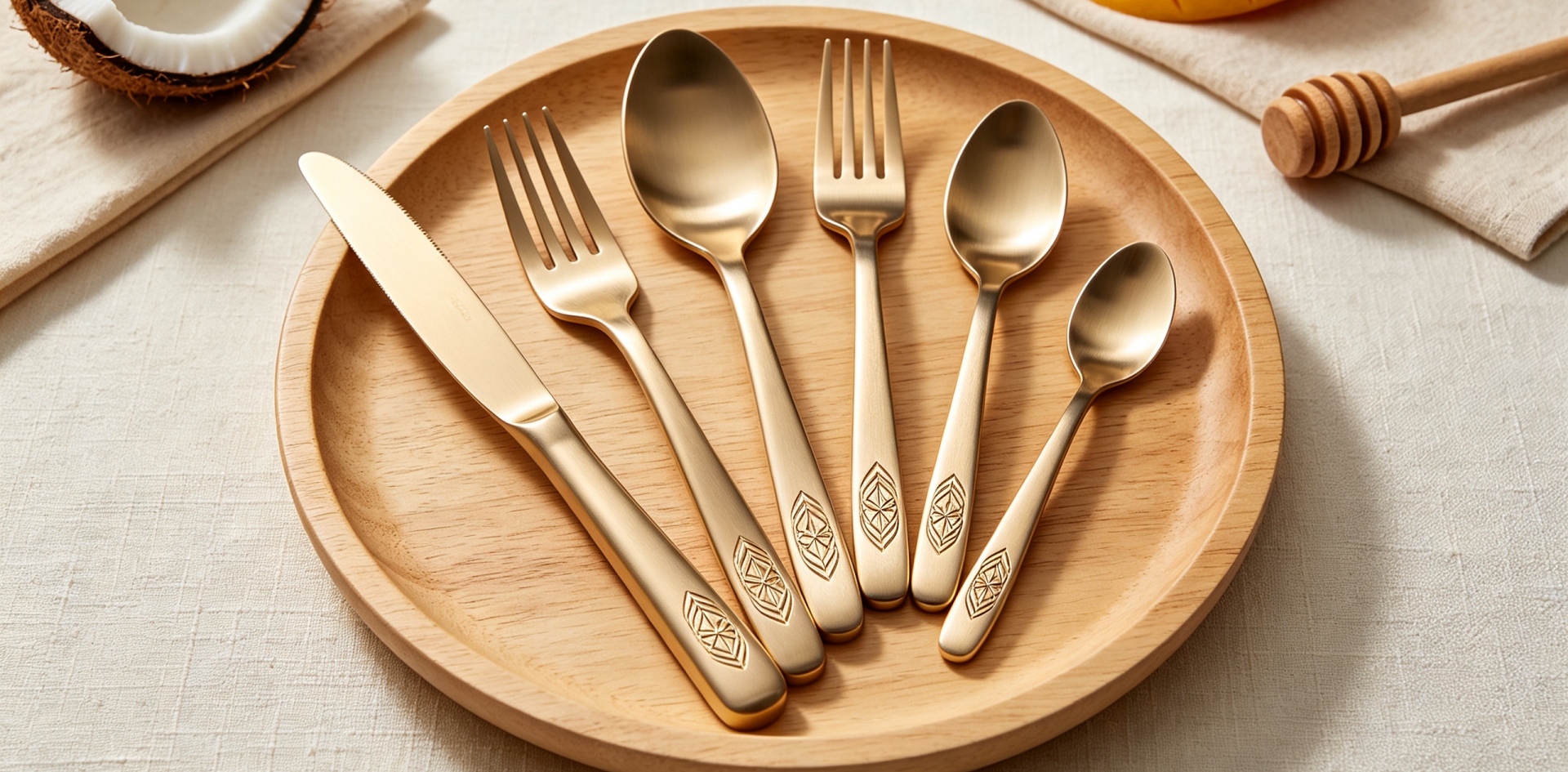
Stainless Steel Fork Tine Thickness for B2B Cutlery
When developing a stainless steel fork for a commercial cutlery collection, buyers often focus on the overall length, handle design and tine spacing. Another detail that deserves attention is tine thickness.
The thickness of the fork tines contributes to the product's appearance, structural feel and relationship with the rest of the cutlery collection. For B2B brands, it can therefore become an important part of the product specification when developing customized forks.
Tine thickness should not be considered as an isolated number. It works together with the fork head shape, tine length, overall dimensions, material and intended application.
What Does Fork Tine Thickness Affect?
The tines are the working part of a fork, so their dimensions influence both appearance and physical feel.
A thinner tine can create a lighter visual impression, while a more substantial tine may give the fork a stronger and more solid appearance.
However, the appropriate specification depends on the complete fork design.
A tine that appears suitable on one fork may not create the same result when applied to another design with different proportions.
For this reason, B2B buyers developing custom stainless steel forks should consider tine thickness together with the complete fork head.
Thickness and Fork Head Proportions
A fork head contains several connected elements, including the tines, shoulders and neck area.
If the tines are changed without considering the surrounding dimensions, the visual balance of the fork can change.
For example, relatively thick tines combined with a very narrow fork head may create a different appearance from the same tine specification used on a broader design.
The relationship between these areas becomes particularly important when a buyer is creating a coordinated knife, fork and spoon collection.
A professional stainless steel cutlery manufacturer can review the complete product rather than treating the tine specification separately.
Tine Thickness and Visual Style
Different B2B collections can require different visual directions.
A slim, refined fork may be appropriate for a modern collection, while a more substantial fork can support a stronger commercial or premium appearance.
Neither approach is automatically suitable for every market.
The target customer, product positioning and overall collection design should determine the direction.
For private label brands, tine proportions can also become part of the product's recognizable appearance.
Small structural details can contribute to how a collection is perceived when several pieces are displayed together.
Considering Tine Length Together With Thickness
Tine thickness should also be considered alongside tine length.
Longer tines can create a more elongated appearance, while shorter tines can make the fork head appear more compact.
Changing thickness without reviewing length may therefore produce an unintended visual result.
For customized projects, buyers can provide an existing fork, reference image or drawing to help communicate the desired proportions.
The factory can then review the available information and discuss which specifications need to be confirmed before production.
Tine Structure and Everyday Handling
The fork needs to perform its intended function as well as look appropriate.
The tines interact directly with food during normal use, so their shape and structure should be suitable for the target application.
A B2B buyer developing a fork for everyday dining may have different requirements from a customer developing a specialized product range.
This is why the intended use should be communicated to the manufacturer during product development.
The goal is to establish a practical specification rather than choosing a thickness based only on visual preference.
Creating Consistency Across a Cutlery Collection
A customized fork normally belongs to a wider product family.
When a brand develops matching knives and spoons, the fork should maintain an appropriate relationship with those products.
The handle can provide one visual connection, while the overall proportions provide another.
Tine thickness contributes to the fork's own character without needing to make the fork identical to the other pieces.
This balance can help create a collection that feels coordinated while allowing each product to retain its own functional design.
Why Samples Are Useful
Tine dimensions can be difficult to judge accurately from photographs.
A physical sample allows the buyer to inspect the fork head, hold the product and compare it directly with existing cutlery.
For OEM and ODM projects, this stage can also reveal whether the proposed design needs adjustment.
A buyer may decide that the tines should look more substantial, more refined or more closely aligned with another product in the collection.
These observations can then be communicated to the factory before commercial production.
Custom Fork Development for Private Label Brands
Private label customers often want their cutlery to have recognizable characteristics rather than relying entirely on standard catalogue designs.
The fork head can be one area where customization is introduced.
Tine thickness, tine length, fork head proportions, handle profile and surface finish can be developed as part of one product concept.
Homefelt factory supports customized stainless steel forks as well as matching knives, spoons and complete flatware sets.
Customers can provide their own drawings, samples or reference products, or start with a general product concept and discuss suitable manufacturing options with the factory.
From Specification to Bulk Production
Once the fork design is approved, the selected specifications need to be suitable for commercial manufacturing.
This is especially important when the product is intended for wholesale or private label distribution.
The same design may need to be produced in large quantities while maintaining the approved appearance and dimensions.
For this reason, tine thickness should become part of the confirmed product specification rather than remaining only as an informal design preference.
A clear specification gives the production team a defined reference for the order.
Supporting a Complete Knife, Fork and Spoon Program
Many B2B buyers do not purchase forks independently.
The fork may be part of a larger flatware collection containing dinner knives, dinner spoons, teaspoons and other pieces.
Homefelt can support these broader projects through stainless steel cutlery customization, OEM and ODM manufacturing, private label services and bulk production.
This allows customers to develop individual products while keeping the wider collection in view.
For example, a customized fork can be developed alongside a matching knife and spoon, with coordinated handles, finishes and packaging.
Packaging and Set Configuration
Once the products have been selected, the collection may also need a suitable sales format.
The fork can be supplied individually, included in a complete cutlery set or offered in several set configurations according to the customer's market.
Packaging requirements can therefore be discussed alongside the product specifications.
Homefelt can support customers with customized packaging and product set coordination as part of an integrated B2B service.
This is useful for private label brands that want to manage product development and packaging through one manufacturing partner.
A Flexible Service Package for B2B Buyers
Not every customer needs the same level of support.
One buyer may already have a complete fork design and only require manufacturing. Another may need assistance developing the product from an existing reference.
Some customers may also require matching knives and spoons, branded packaging and large-volume production.
Homefelt can adapt the service according to the actual project requirements.
The factory's stainless steel cutlery service can cover product customization, OEM, ODM, private label manufacturing, packaging coordination and bulk orders.
This one-stop approach allows buyers to build a service package around their business instead of fitting every project into the same model.
Planning for Repeat Orders
A customized fork may become a long-term product in a brand's collection.
Once the specifications have been approved, keeping a clear reference for the product helps support future orders.
This is particularly useful when the customer later reorders the same fork or develops additional cutlery pieces based on the original design.
The original tine dimensions can remain part of the product reference while new products are developed around the same collection concept.
This can help maintain consistency as the B2B product range grows.
How to Start a Custom Fork Project
A buyer does not need to prepare a complete technical package before contacting a factory.
An existing fork, reference photograph, drawing or simple description can provide a useful starting point.
If available, the buyer can also share the expected order quantity, target market, preferred stainless steel material, surface finish and packaging requirements.
Homefelt can review the information and discuss the appropriate customization and manufacturing options.
The objective is to turn the initial product idea into a clear specification that can support reliable commercial production.
Build a More Distinctive Stainless Steel Cutlery Range
Small product details can contribute significantly to the character of a stainless steel cutlery collection.
Fork tine thickness is one of these details. When considered together with tine length, fork head proportions, handle design and surface finish, it can help create a product that matches the intended market and collection style.
For B2B brands, wholesalers and private label companies, working with a factory during the development stage can make it easier to connect these details with practical production requirements.
Homefelt provides customized stainless steel knife, fork and spoon manufacturing for OEM, ODM, private label and wholesale projects, with support that can extend to packaging, transportation and large-volume production.
Custom Stainless Steel Fork Manufacturing
OEM & ODM Stainless Steel Flatware
Private Label Stainless Steel Cutlery Factory
Custom Stainless Steel Knife, Fork and Spoon
Stainless Steel Cutlery Edge Smoothness for B2B Brands
Coordinated Stainless Steel Cutlery Design for B2B Brands
Related Article



