
Stainless Steel Knife Blade Shoulder Width for B2B Cutlery
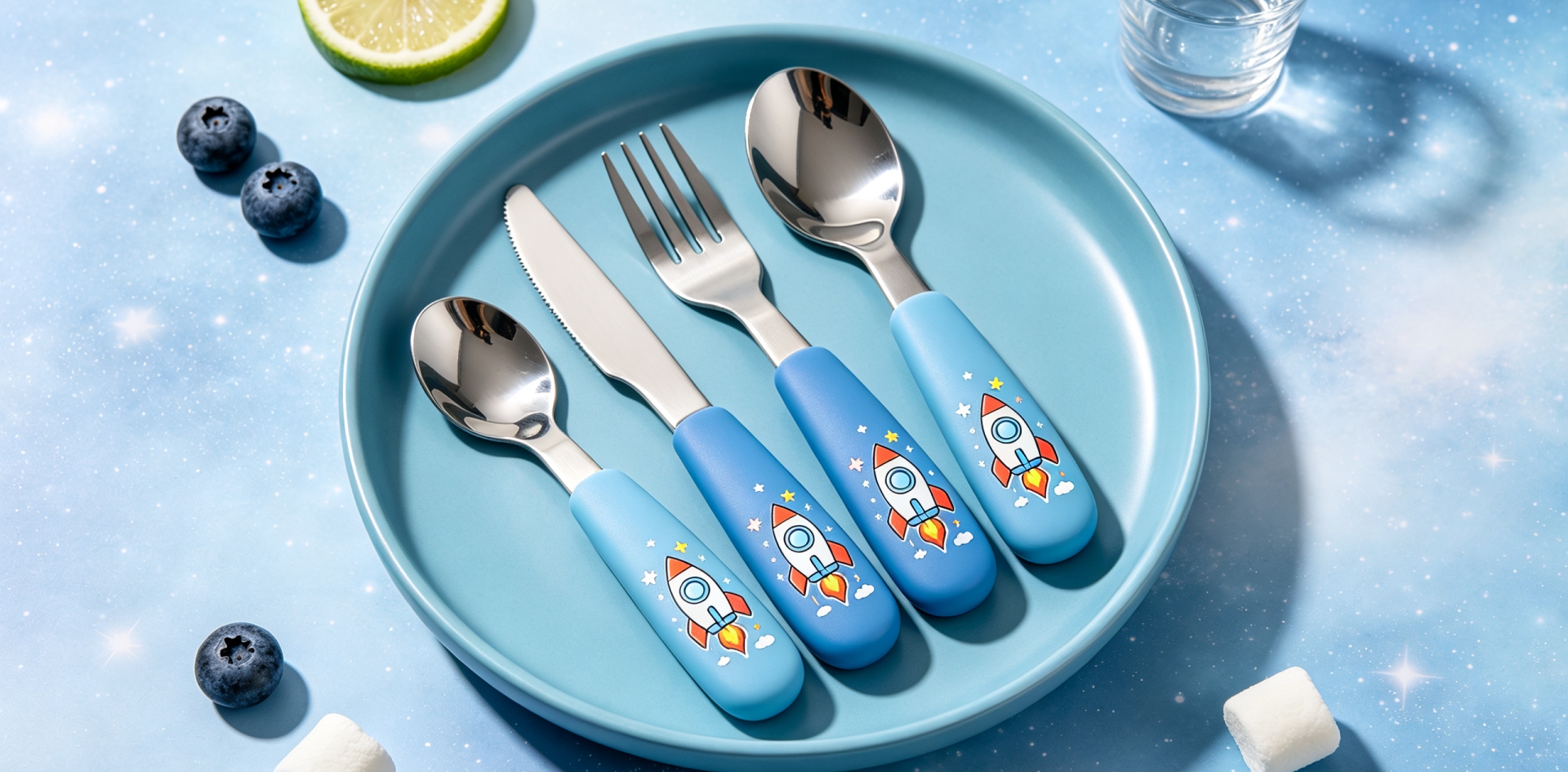
Stainless Steel Knife Blade Shoulder Width for B2B Cutlery
A stainless steel table knife is defined by more than its cutting edge and handle. The area where the blade develops toward the handle also contributes to the overall shape, visual weight and structural character of the product.
One useful design detail in this area is blade shoulder width.
The blade shoulder is the wider transition area of the knife blade near the handle. Its dimensions can influence how the blade connects visually with the handle and how the knife looks when viewed as part of a complete cutlery collection.
For B2B buyers developing custom stainless steel table knives, shoulder width can be considered together with blade length, blade width, handle proportions, material and surface finish.
It is a relatively small part of the product, but it can have a noticeable effect on the overall knife silhouette.
What Is Knife Blade Shoulder Width?
The shoulder is located toward the handle side of the blade, where the blade transitions into the area leading to the handle.
Blade shoulder width describes the width of this section across the blade profile.
The exact shape varies between knife designs.
Some table knives use a relatively broad shoulder that creates a substantial visual connection between the blade and handle.
Other designs use a narrower shoulder for a lighter and more streamlined appearance.
The suitable dimension depends on the complete knife geometry.
For OEM and ODM projects, the shoulder can therefore be included in the product design specification when it is an important part of the desired appearance.
Why the Blade Shoulder Matters
The shoulder helps establish the visual relationship between the blade and handle.
A knife with a broad shoulder may appear more substantial near the handle.
A narrower shoulder can make the blade look more refined and elongated.
Neither approach is automatically appropriate for every market.
A commercial table knife, contemporary retail knife and premium private label knife may all use different proportions.
For B2B buyers, the important point is to select the shoulder proportion as part of the complete product rather than relying on a standard blade profile.
Shoulder Width and Overall Blade Proportion
A knife blade has several interconnected dimensions.
Length, width, spine thickness, cutting-edge geometry and shoulder width all contribute to the finished silhouette.
Changing one area can alter the visual relationship between the others.
For example, a long blade with a broad shoulder can create a different impression from a shorter blade with the same shoulder width.
Similarly, a narrow handle may make a broad shoulder appear more substantial.
This is why custom knife development should evaluate the complete blade and handle together.
The objective is to achieve a balanced product rather than optimizing one dimension independently.
Shoulder Width and Handle Proportion
The shoulder is particularly important because it sits close to the handle.
The handle may be slim, wide, curved, straight or sculpted.
Each handle design creates a different relationship with the blade shoulder.
A substantial handle can visually support a stronger shoulder.
A slim handle may work better with a more controlled blade transition.
For a complete knife, these elements should appear connected rather than looking like separate components.
For private label brands, this relationship can become an important part of the product's visual identity.
The Shoulder and Blade Silhouette
When a knife is viewed from above, the blade outline creates its primary silhouette.
The shoulder forms part of that outline.
A wider shoulder can create a stronger change between the handle area and the main blade.
A narrower shoulder can produce a smoother visual progression.
The effect becomes particularly noticeable when the knife is displayed individually or placed beside matching forks and spoons.
For B2B collections, the silhouette should therefore be considered during product development.
A small change near the shoulder can affect how the entire knife appears.
Shoulder Width and Visual Weight
Visual weight is not determined only by the amount of stainless steel used.
The distribution of material also influences how substantial the product looks.
The blade shoulder is close to the user's hand and therefore contributes to the visual mass around the handle connection.
A wider shoulder can make this area look stronger.
A narrower shoulder can shift more visual attention toward the blade itself.
For different product positions, these effects can be useful.
A hospitality-oriented product may prefer a more substantial appearance, while a contemporary retail collection may emphasize a cleaner and lighter silhouette.
Shoulder Width and Blade Geometry
The shoulder should also be considered together with the rest of the blade.
The transition from shoulder toward the blade body needs to create a coherent profile.
If the shoulder is broad but the rest of the blade is extremely narrow, the change can become visually pronounced.
If the shoulder is too narrow relative to the blade, the connection may look less defined.
The right proportion depends on the complete design.
For custom manufacturing, the factory can evaluate the shoulder together with the blade outline and handle dimensions before the final production sample is approved.
Surface Finish and Shoulder Appearance
Stainless steel finishing can make changes in blade geometry more visible.
A polished surface reflects light across the blade and handle.
The shoulder area may therefore create a visible change in reflection where the blade geometry changes.
A consistent shoulder profile helps maintain a predictable visual appearance across the product.
If the geometry varies from piece to piece, differences in reflection can become easier to notice.
This is especially relevant for private label collections that use bright polished stainless steel and are presented under strong retail lighting.
Shoulder Width in Different Cutlery Styles
Different table knife styles can use different shoulder proportions.
A classic table knife may have a relatively substantial transition from blade to handle.
A modern minimalist knife may use a more streamlined profile.
A premium private label design may use a carefully controlled shoulder to create a distinctive silhouette.
A distributor may also need several knife styles for different price or product ranges.
The shoulder width can be adjusted as part of these broader design decisions.
It should not be treated as a universal measurement that applies to every stainless steel table knife.
Developing Shoulder Geometry With a Sample
A drawing can define the basic blade dimensions, but a physical sample allows the buyer to understand the complete three-dimensional relationship.
The sample can be placed beside the matching fork and spoon.
The customer can then assess whether the knife looks too heavy, too light or appropriately balanced.
If the shoulder appears too wide or narrow, the design can be revised before mass production.
This development stage is particularly useful for custom private label projects.
Once the customer approves the sample, it can become the visual reference for the production team.
How Buyers Can Specify Blade Shoulder Requirements
A practical product brief can include:
-
Overall knife length
-
Blade length
-
Blade width
-
Shoulder width
-
Spine thickness
-
Handle dimensions
-
Material specification
-
Surface finish
-
Reference drawing or sample
-
Target order quantity
If the shoulder is an important design feature, it can be clearly marked on the drawing.
If the exact measurement is less critical and the visual appearance is the main requirement, a physical reference sample can also be useful.
The manufacturer can then review the complete blade structure and determine a suitable production approach.
Shoulder Width and OEM Projects
OEM buyers may already have a finished knife design.
The customer can provide drawings, samples or existing product references.
The factory then works toward reproducing the agreed shoulder profile and the rest of the blade geometry.
In this situation, the shoulder width becomes part of the established product specification.
Clear documentation is useful when the knife will be reordered in the future.
It allows the manufacturer to reproduce the same design rather than relying on a general description such as “standard table knife.”
Shoulder Width and ODM Development
ODM projects may begin with a concept rather than a fully defined drawing.
A buyer may want a modern table knife with a slim handle and a visually strong blade.
The manufacturer can then help develop the blade proportions.
Shoulder width can be reviewed together with blade length, width and handle shape.
Several design directions may be considered before the final sample is confirmed.
This allows the customer to retain control over the intended appearance while benefiting from the factory's manufacturing experience.
Maintaining Consistency in Bulk Production
A custom shoulder profile needs to remain consistent throughout the production quantity.
One knife can be inspected individually, but a large order contains many pieces.
If the shoulder dimensions vary noticeably, the differences may become visible when the knives are placed together.
For B2B orders, the approved sample and production specifications can provide a clear reference.
The factory can use these references during manufacturing and inspection to maintain the intended product profile.
This is especially important for private label brands that expect the same design to be available for future replenishment.
Shoulder Width and Collection Coordination
The knife is normally one part of a complete flatware collection.
Its shoulder should therefore fit naturally with the matching fork and spoon.
The three pieces do not need identical geometry.
Instead, they should share an appropriate visual language.
For example, a knife with a strong blade-to-handle transition may be paired with a fork and spoon that use similarly controlled handle proportions.
This creates a coordinated appearance without forcing every piece into the same structural shape.
For B2B brands, collection-level coordination can make the final product range look more intentional.
Avoiding Over-Specification
Not every project requires the shoulder to be controlled to an extremely precise engineering tolerance.
The level of detail should depend on its commercial importance.
For a standard table knife, existing factory specifications may already provide a suitable solution.
For a highly customized private label design, shoulder width may be a key visual feature and therefore deserve closer control.
A professional stainless steel cutlery manufacturer can help determine which dimensions should be fixed and which can remain flexible within practical manufacturing limits.
This keeps the product specification useful without making it unnecessarily complicated.
Homefelt Factory for Custom Stainless Steel Table Knives
Homefelt factory produces stainless steel knives, forks, spoons and complete flatware sets for B2B customers.
The factory supports OEM, ODM, private label, wholesale and large-volume production.
For custom table knives, buyers can discuss blade design, handle proportions, material, surface finish, packaging and transportation requirements.
Homefelt can develop a customized service package according to the customer's product concept and commercial needs.
This allows the blade and handle to be considered as one complete product during development.
For customers with specific blade proportions, drawings, samples or product references can be used to establish the intended design before bulk manufacturing.
From Blade Concept to Production Reference
A custom knife becomes easier to reproduce when its important characteristics are clearly documented.
The product drawing can define key dimensions.
The approved sample can demonstrate the actual visual relationship between the blade and handle.
Together, these references create a practical production standard.
This is valuable for both the first order and future repeat orders.
If the customer later wants to change the handle, finish or blade proportions, the original reference can also help identify exactly what has changed.
This makes product development more controlled over the life of the collection.
Shoulder Width and Product Differentiation
B2B brands do not always need dramatic decoration to differentiate a table knife.
Small changes in proportion can create a different visual identity.
A carefully developed blade shoulder is one such detail.
It can make the knife look more substantial, streamlined or refined depending on how it is coordinated with the blade and handle.
When combined with other controlled design features, it can help create a recognizable product collection.
For private label customers, these subtle structural differences can be useful when developing products that are distinct from standard catalog designs.
Balancing Appearance and Production
The most visually distinctive blade is not necessarily the most practical for every production program.
The shoulder needs to work with the material, forming process, blade geometry and required order quantity.
A design that is easy to reproduce consistently can provide better long-term value for a B2B brand than a highly complicated shape that is difficult to maintain.
This is why design and manufacturing should be considered together.
The factory can review the customer's concept and identify a practical way to achieve the intended visual result.
Supporting Repeat B2B Orders
Many stainless steel cutlery products remain in a customer's range for an extended period.
The same table knife may be reordered several times.
For this reason, the approved blade profile should remain available as a clear reference.
Shoulder width can be recorded as part of the product specification when it is important to the design.
Future production can then follow the same reference.
This helps preserve consistency between the original launch order and later replenishment.
From Custom Table Knife to Complete Flatware Program
A successful B2B cutlery project is not based on one isolated measurement.
The final product comes from the relationship between material, blade geometry, handle design, surface finish and production control.
Blade shoulder width is one of the smaller details within that system.
When it is considered at the right stage, however, it can help define the visual transition between the blade and handle.
For OEM, ODM and private label buyers, discussing such details before mass production can create a clearer product specification and reduce uncertainty during development.
Homefelt factory can support customized stainless steel knives, forks, spoons and complete flatware collections for wholesale and bulk B2B projects.
Product design, customization, manufacturing, packaging and transportation can be coordinated according to the customer's requirements.
A table knife may look simple when finished, but its proportions are built from many individual decisions.
Blade shoulder width is one of the details that can influence the knife's visual weight and connection with the handle.
By defining this feature together with the complete blade design, B2B buyers can create a more consistent product reference and develop stainless steel table knives that fit naturally within their intended collection.
Custom Stainless Steel Table Knives for OEM & ODM Projects
Private Label Stainless Steel Flatware Manufacturing
Custom Knife, Fork and Spoon Collections
Wholesale Stainless Steel Cutlery for B2B Buyers
Homefelt Factory Custom Cutlery Service
OEM Stainless Steel Cutlery Manufacturing
Stainless Steel Cutlery Tray Fit for B2B Retail Sets
Stainless Steel Fork Tine Root Width for B2B Cutlery
Related Article



