
Stainless Steel Knife Tip Design: A Practical Detail for Custom B2B Flatware
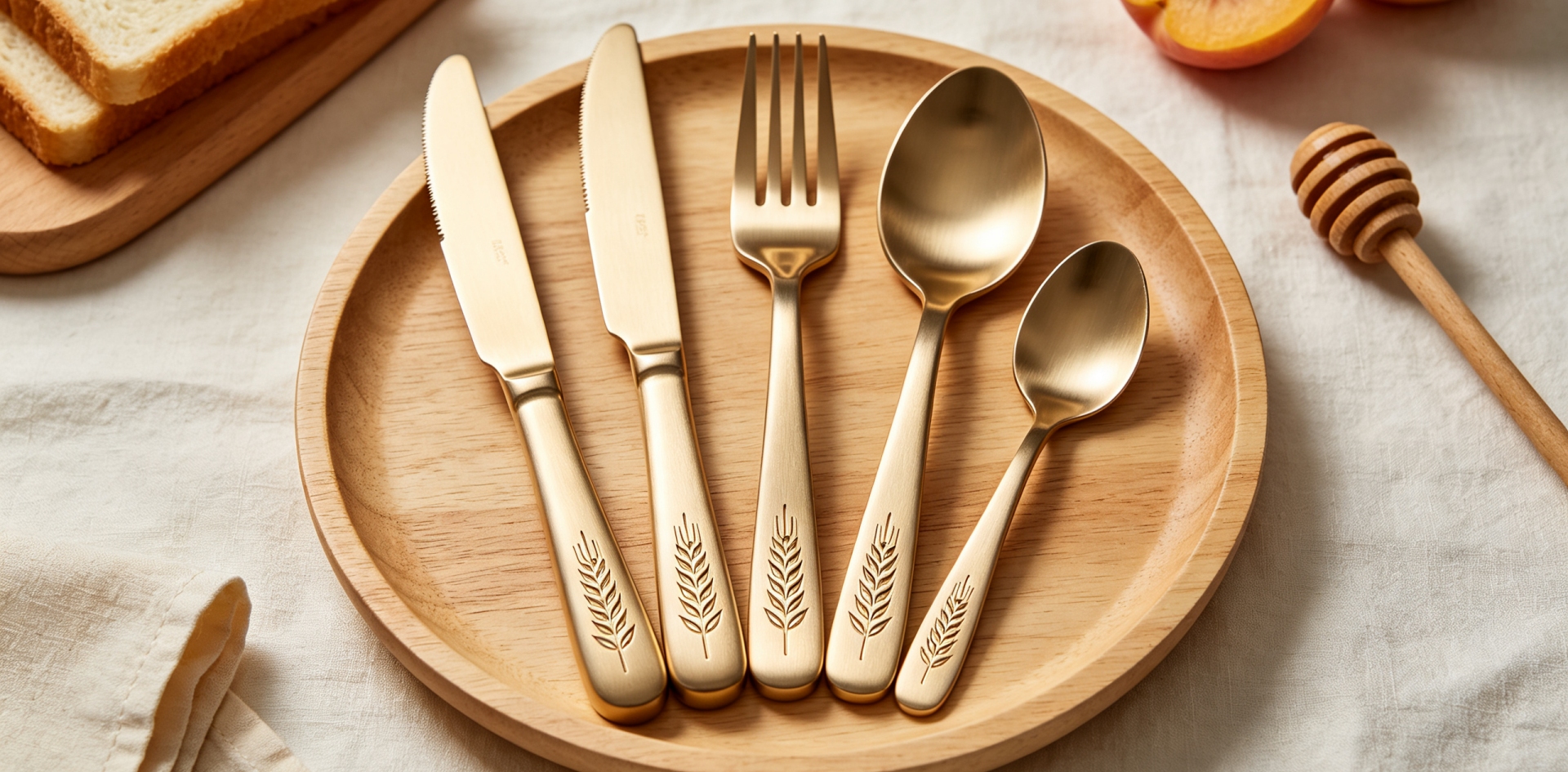
Stainless Steel Knife Tip Design: A Practical Detail for Custom B2B Flatware
When a stainless steel table knife is designed for a B2B product range, most discussions focus on the handle, blade length, blade thickness and overall silhouette. The front end of the blade, however, also deserves attention.
The knife tip is one of the most visible points of the blade. Its shape can influence the character of the knife, the transition of the cutting edge and the overall appearance of the finished product. For an OEM or private label project, the tip can therefore become a useful detail for creating a distinctive design.
Although the change may appear small, it can have an impact on how the knife is interpreted as part of a complete flatware collection.
What Is Knife Tip Geometry?
Knife tip geometry describes the shape and proportions of the front end of the blade.
Depending on the design, the tip can be more pointed, softly rounded, relatively broad or formed through a gradual transition between the upper blade line and the cutting edge.
These variations create different visual effects.
A more pointed tip can give a sharper and more defined appearance, while a softer tip may create a smoother and more understated character. A broader transition can make the blade appear more substantial.
For custom stainless steel knives, the tip should be designed together with the rest of the blade rather than treated as an independent detail.
Why the Tip Matters in a B2B Design
For a standard catalogue knife, the tip shape is already determined by the manufacturer. For a custom project, the buyer has an opportunity to define the overall character of the blade.
This can be particularly useful for brands that want their flatware to have a recognizable appearance.
The knife tip is normally seen immediately when the product is placed on a table, displayed in a retail package or photographed for a product catalogue. Even a subtle change can alter the visual impression of the knife.
For this reason, the tip can be considered part of the design language of the collection.
Different Tip Shapes Create Different Impressions
A narrow and more pointed tip can produce a precise, refined appearance. A rounded tip may feel softer and more traditional. A wider tip can contribute to a stronger and more substantial visual presence.
These are design characteristics rather than universal quality standards.
The appropriate shape depends on the intended product positioning and how the knife relates to the other pieces in the collection.
A premium flatware brand may want a carefully sculpted tip, while a high-volume wholesale program may prefer a straightforward geometry that is easy to reproduce.
For an experienced stainless steel cutlery manufacturer, both types of projects can be evaluated according to their specific requirements.
The Relationship Between Tip and Blade Profile
The knife tip cannot be designed independently from the blade profile.
The upper line of the blade, the cutting edge and the transition toward the tip all need to meet in a controlled way.
If the blade profile is changed but the tip remains unchanged, the final transition may look unbalanced. Conversely, modifying the tip can affect the way the rest of the blade appears.
This is why custom knife drawings should show the complete blade rather than only the tip area.
The manufacturer can then evaluate the entire geometry and determine how the requested changes work together.
Tip and Cutting Edge Transition
The tip is also connected to the cutting edge.
The cutting edge needs to transition naturally toward the front of the blade. The exact geometry depends on the intended knife design, but an abrupt or poorly coordinated transition can change the appearance of the product.
For a custom B2B project, the cutting edge, blade profile and tip should therefore be reviewed as one continuous structure.
This is especially important when the customer has a reference knife but wants to create a modified version. The manufacturer can identify which characteristics need to remain similar and which can be redesigned.
How the Tip Influences the Overall Proportion
The visual proportion of a knife is created by the relationship between several areas.
The handle length, blade length, blade width and tip shape all contribute to the final impression.
A relatively short blade with a very narrow tip may appear different from a longer blade with a broader front section, even when both knives use the same material and finish.
For a complete stainless steel flatware collection, these proportions should be considered at the same time.
The goal is not to make every knife look identical. Instead, the knife should fit naturally into the design language established by the collection.
Manufacturing Considerations for Custom Tips
A custom tip needs to be evaluated for production feasibility.
The shape must be formed, finished and reproduced consistently. More complex geometries may require additional attention during tooling, forming or finishing.
This does not mean that custom tip designs should be avoided. It simply means that the desired appearance should be discussed with the manufacturer before the final production specification is approved.
An experienced factory can review the design and determine whether the proposed tip can be manufactured efficiently at the required quantity.
For B2B buyers, this early discussion can help prevent unnecessary changes later in the project.
The Importance of Repeatability
A prototype can show whether a knife tip looks correct. A bulk order must demonstrate that the same shape can be reproduced consistently.
This is especially important for private label brands, because a customer expects the products within one collection to maintain the same appearance.
If the tip geometry varies significantly between pieces, the difference may become visible when knives are displayed together.
For this reason, the approved sample and technical specification should provide a clear reference for production.
Tip Design Across Multiple Knife SKUs
A B2B flatware program may include several knife models.
There may be a standard table knife, a different blade configuration for another collection, or multiple sizes designed for different product positions.
In such cases, the tip does not necessarily need to be identical across every SKU. However, related design principles can help the products remain visually connected.
For example, similar transitions or comparable proportions can create a common design language while allowing each knife to have its own functional dimensions.
This can be useful for brands planning to expand their product line over time.
Using Reference Samples for Development
A physical reference sample can be especially helpful when discussing knife tip design.
Words such as “rounded” or “slightly pointed” can be interpreted differently. A sample gives both the buyer and manufacturer a concrete visual reference.
The customer can then explain which part of the sample should be retained and which areas should be changed.
For example, a buyer may prefer the tip shape of one knife but want the handle and blade width of another design. This information can be combined into a new custom specification.
This type of development is common in OEM and ODM projects where the final product is based on several design requirements.
What to Include in a Custom Knife Specification
When preparing a custom stainless steel knife request, buyers can provide overall dimensions, material requirements, blade thickness, handle specifications and surface finish.
If the tip is an important part of the design, a detailed drawing or reference sample should also be supplied.
It can be useful to indicate the intended application and approximate order quantity as well.
For a manufacturer, these details provide context for evaluating the project and preparing a quotation.
A clear initial brief can also reduce the amount of back-and-forth required during sample development.
From Custom Design to Bulk Production
The development of a custom knife usually becomes more efficient when the important geometric details are identified early.
The tip, blade profile and cutting edge can be reviewed together during the sample stage. If changes are required, they can be incorporated before the final specification is confirmed.
Once the sample has been approved, the agreed geometry becomes part of the production reference.
This creates a direct connection between the original design idea and the finished bulk order.
For B2B buyers, that is important because the real objective is not simply to create a good-looking prototype. The objective is to establish a commercial product that can be manufactured repeatedly.
Custom Stainless Steel Table Knives for Brands
The tip of a stainless steel table knife may occupy only a small part of the product, but it can influence the character of the entire blade.
When combined with the blade profile, cutting edge, handle and surface finish, it can help create a more distinctive product for a private label or OEM collection.
Homefelt supports B2B customers developing stainless steel knives, forks, spoons and complete flatware sets for wholesale, OEM, ODM and private label programs. Customers can provide drawings, reference samples or initial concepts for evaluation and quotation.
If you are developing a custom table knife, the tip shape is one detail worth defining before the final design is approved. Discussing it early with the manufacturer can help ensure that the intended appearance is compatible with the complete blade construction and production process.
A carefully developed knife specification can then provide a clear foundation for sampling, approval and bulk manufacturing.
Request a Custom Stainless Steel Table Knife Quotation
Send Your Custom Knife Drawing
Stainless Steel Knife Spine Design: A Practical Detail for Custom B2B Flatware
Stainless Steel Fork Head Thickness: A Practical Detail for B2B Custom Designs
Related Article



