
Stainless Steel Knife Tip Profile for Custom B2B Cutlery
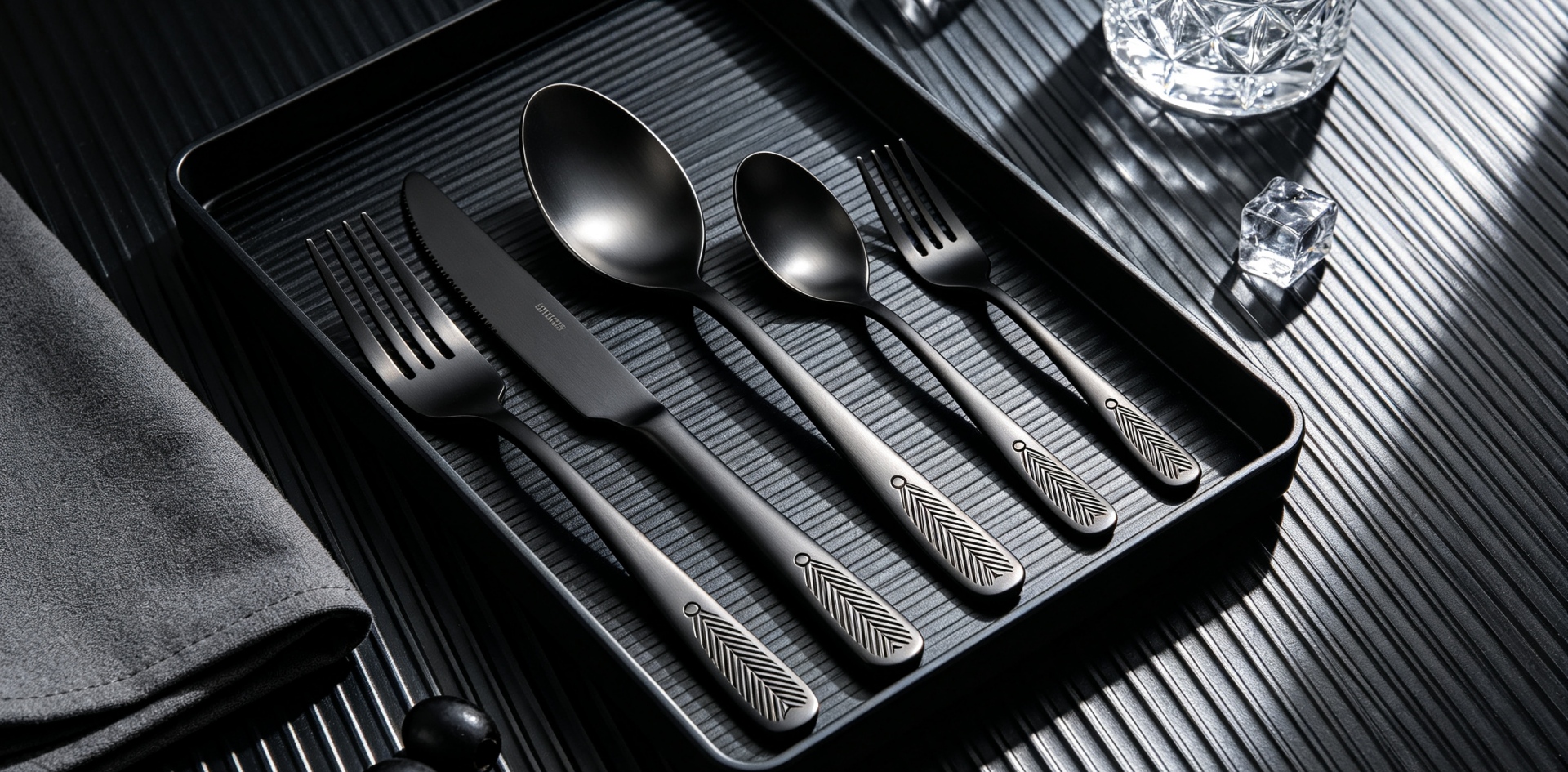
Stainless Steel Knife Tip Profile for Custom B2B Cutlery
When developing a stainless steel table knife, most attention naturally goes to the handle, blade length and overall shape. However, the tip of the knife is another important product detail that can influence both appearance and practical performance.
The knife tip is the front end of the blade, and its shape contributes to the overall silhouette of the stainless steel knife. Depending on the intended design, the tip can be more rounded, more pointed, or developed with a gradual transition from the cutting edge to the upper blade profile.
For B2B buyers developing custom stainless steel cutlery, understanding this small detail can help create a knife that is visually balanced and consistent with the intended product style.
Why Knife Tip Shape Matters
A stainless steel table knife is not simply a flat piece of metal with a handle attached. Its blade is a three-dimensional product with several connected sections, and the tip is where several visual lines come together.
The shape of the tip can affect how the knife looks when placed on a table or arranged together with a stainless steel fork and spoon.
A softer rounded tip may create a more traditional appearance, while a sharper and more defined tip can contribute to a modern visual style. The transition between the upper blade line and the cutting edge also changes the overall character of the knife.
For custom stainless steel knives, these differences can be discussed during product development instead of being limited to standard designs.
Knife Tip and Blade Proportion
The tip should be considered together with the complete blade.
If the blade is relatively long and narrow, an overly large or heavy-looking tip can disturb the visual proportion. If the blade is shorter and wider, a different tip transition may be more suitable.
The main dimensions to consider include:
-
Overall knife length
-
Blade length
-
Blade width
-
Blade thickness
-
Cutting-edge profile
-
Upper blade contour
-
Tip shape
-
Handle proportion
These elements influence one another. Changing the tip without considering the rest of the blade may create an inconsistent appearance.
For OEM and ODM stainless steel cutlery projects, the tip can therefore be treated as part of the complete blade design rather than as an isolated feature.
Rounded and Defined Knife Tips
Different stainless steel knife designs can use different approaches to the front tip.
A rounded tip provides a softer visual transition and can work well with classic handle designs. A more defined tip creates a clearer blade silhouette and may suit contemporary stainless steel flatware.
There is no single tip shape suitable for every cutlery collection. The appropriate design depends on the intended appearance of the knife and how it relates to the rest of the collection.
For example, a simple stainless steel knife with a smooth handle may benefit from a clean and uncomplicated blade tip. A more decorative cutlery collection may use a stronger blade contour to create a recognizable product character.
The important point is consistency. Once a specific tip profile has been selected, it should be reproduced consistently throughout the production of the same product.
Knife Tip and Cutting Edge Transition
The relationship between the knife tip and cutting edge is particularly important.
The cutting edge needs to follow a controlled profile from the main blade area toward the front of the knife. A sudden or poorly coordinated transition can affect the visual smoothness of the blade.
For a custom stainless steel table knife, the cutting edge and tip should therefore be evaluated together.
The objective is to create a blade where the different lines appear intentional and connected. This can be especially important for premium-looking stainless steel flatware, where small changes in the blade silhouette can be easily noticed.
The tip should also be compatible with the intended use of the table knife. The product design should balance appearance with the functional characteristics expected from the finished knife.
Matching Knife Tip Design With the Handle
The handle and blade should look like parts of the same product.
A slim, minimalist handle may look better with a clean and controlled blade profile. A heavier handle may require a stronger visual transition toward the blade so that the entire stainless steel knife remains balanced.
The connection between handle, neck and blade should be considered during development.
This is particularly relevant when creating a complete stainless steel cutlery collection. The knife does not need to have the same shape as the spoon or fork, but its overall visual language can be coordinated with them.
For example, a knife with a gentle handle curve can be paired with a spoon and fork using related handle proportions. The result is a collection where each piece has its own function while still looking like part of the same range.
Knife Tip Design for Custom Stainless Steel Cutlery
Standard stainless steel knives are often produced according to established dimensions. Custom projects provide more flexibility.
A B2B customer may already have a drawing, reference sample or visual concept. In other cases, the customer may only have an idea for the desired appearance and need help turning it into a manufacturable product.
During this process, the knife tip can be adjusted together with the blade dimensions and handle design.
For example, a customer may request a softer blade silhouette, a more distinctive front profile or a specific relationship between the blade and handle. These requirements can be reviewed as part of the overall stainless steel knife design.
This approach helps avoid designing individual parts independently.
Evaluating the Knife From Different Angles
The tip profile should not be judged only from a top view.
A front or top view shows the overall blade outline, while a side view can reveal the relationship between blade thickness, edge and tip. Viewing the actual sample from different angles provides a more complete understanding of the final product.
This is one reason why physical samples can be useful during custom stainless steel cutlery development.
A sample allows buyers to check whether the actual knife matches the intended proportions and whether the tip looks appropriate alongside the handle and other cutlery pieces.
For B2B projects, these details can be confirmed before moving into larger production.
Consistency of the Knife Tip in Production
Once the final knife design has been approved, consistency becomes important.
Every stainless steel knife in the same production batch should maintain the intended blade shape and tip profile. Differences in the front contour can become noticeable when many knives are displayed together.
For customers developing a private-label stainless steel cutlery range, consistent product appearance is especially important because the same design may be produced repeatedly over time.
A clearly defined product specification and approved sample can provide a useful reference for continued production.
Homefelt Custom Stainless Steel Knife Development
Homefelt specializes in stainless steel cutlery customization for B2B customers, including stainless steel knives, forks, spoons and complete flatware sets.
For custom knife projects, customers can discuss blade shape, tip profile, handle design, dimensions, material and other product requirements. When the knife is part of a complete collection, the design can also be coordinated with the corresponding stainless steel fork and spoon.
Homefelt provides OEM and ODM manufacturing support for customers developing their own stainless steel cutlery products. Depending on the project, the service can be organized around a customer's drawings, reference samples or specific product requirements.
The one-stop service can also be arranged according to the customer's situation, covering product design, customization, packaging, transportation and other related services.
For long-term B2B cooperation, maintaining the approved product design is also important. A stable product specification allows customers to continue developing their stainless steel cutlery range while working with the same manufacturing partner.
The knife tip may be only a small part of a stainless steel table knife, but it contributes to the complete blade silhouette and the relationship between the blade and handle. When this detail is carefully considered, the finished knife can have a more controlled and recognizable appearance.
Stainless Steel Knife Back Thickness for Custom B2B Cutlery
Stainless Steel Fork Back Profile for Custom B2B Cutlery
Related Article



