
Serrated Stainless Steel Table Knife Design for OEM and Wholesale Orders
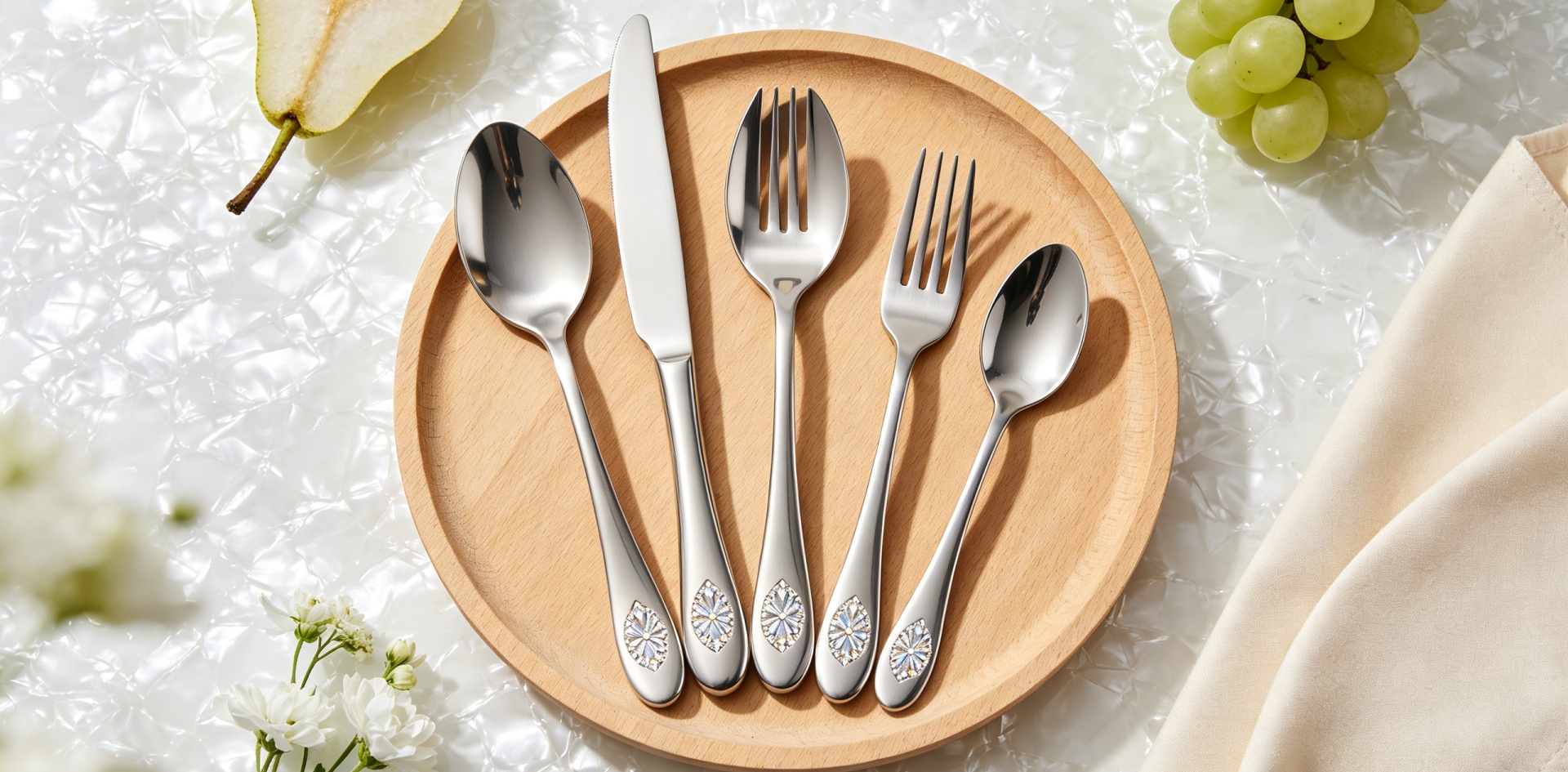
Serrated Stainless Steel Table Knife Design for OEM and Wholesale Orders
For restaurants, hotels, catering companies, retailers and private-label brands, the cutting performance of a stainless steel table knife is closely related to its blade edge design. A serrated table knife is not simply a standard knife with teeth added to the edge. Tooth spacing, tooth height, blade thickness, edge profile and the relationship between the blade and handle all affect how the finished knife performs in daily use.
For B2B buyers developing a new cutlery collection, these details should be confirmed before mass production. Homefelt factory works with customers on stainless steel table knives, forks, spoons and complete flatware collections, providing OEM, ODM and private label manufacturing for wholesale and large-volume orders.
Understanding Serrated Table Knife Tooth Design
The serrated edge is one of the most recognizable features of a table knife. Instead of creating one continuous cutting edge, the blade uses a series of teeth and valleys. This structure is commonly selected for table knives because it can help users cut foods with firmer surfaces without requiring excessive downward pressure.
For an OEM project, tooth geometry can be developed according to the intended application. Important parameters include tooth spacing, tooth height, valley shape and the overall length of the serrated section.
A finer serration pattern can create a different visual and functional impression from a knife with fewer, deeper teeth. The choice should therefore be coordinated with the blade dimensions and the positioning of the knife within the overall flatware collection.
Blade Thickness and Serration Proportion
Blade thickness is another parameter that needs to be considered together with the serrated edge. If the blade is too thin for the intended construction, the knife may not provide the desired rigidity. If it is excessively thick, the finished piece can feel heavier and may not match the weight and appearance of the other pieces.
Homefelt can evaluate the blade thickness together with knife length, width and handle construction during an OEM development project. Rather than selecting one specification independently, the factory can assess how the complete knife will work as a finished product.
For wholesale flatware programs, maintaining consistent blade dimensions is also important. Knives from different production batches should maintain the same overall profile so that replacement orders remain visually compatible with the original collection.
Matching the Blade with the Handle
A serrated table knife needs to look balanced from the blade tip to the handle end. Even when the blade edge is technically suitable, an unsuitable handle proportion can make the finished knife feel visually disconnected from the rest of the flatware.
During product development, buyers can confirm the blade length, blade width, handle length and transition area together. This is particularly useful when the knife is part of a larger collection containing matching spoons and forks.
For private-label projects, Homefelt can manufacture the knife according to approved drawings, samples or customer specifications. The objective is to keep the serrated blade distinctive while maintaining a consistent design language across the entire cutlery set.
Material and Manufacturing Considerations
Stainless steel selection remains an important foundation for table knife production. Depending on the project, customers may specify the stainless steel grade, material thickness, surface treatment and finishing requirements.
For commercial and wholesale orders, material specifications should be documented before production begins. This gives the factory a clear reference for purchasing, processing and quality inspection.
Homefelt's long experience in stainless steel cutlery production also supports projects requiring coordinated production of knives, forks and spoons. Parameters can be reviewed at the development stage rather than waiting until mass production to discover that different pieces do not match.
Experience from B2B Cutlery Projects
In a large-volume flatware project, a table knife is rarely evaluated as an isolated product. Buyers normally need the knife to match an entire collection, packaging specification and target market.
For example, a hospitality customer may require a durable serrated table knife with a particular handle proportion and weight. A retail brand may instead focus more strongly on the appearance of the blade, packaging presentation and private-label requirements. A distributor may need several knife specifications for different customer segments.
These different requirements call for flexible product development rather than a single standard specification. Homefelt factory can adjust stainless steel cutlery according to the customer's application, target price, packaging requirements and expected order volume.
Quality and Documentation for Commercial Orders
For B2B purchasing, product quality should be supported by clear specifications and appropriate documentation. Material information, dimensions, production samples and inspection requirements can be confirmed before mass production.
Homefelt has experience working with well-known brands and has passed audits and certifications including BSCI, SEDEX 4P, BRC and ISO9001, as well as Disney audit requirements. FAMA and FSC certificates are also available within the company's broader supply-chain and project capabilities.
For a specific project, buyers can request the applicable documentation and testing information according to their market and product requirements.
OEM, ODM and Private Label Production
A serrated stainless steel table knife can be developed as a standalone product or as part of a complete flatware program. Homefelt supports OEM and ODM projects covering product specifications, design development, packaging and large-volume manufacturing.
Customers can provide drawings, reference samples, target specifications or simply explain the intended application. The factory can then help determine suitable blade dimensions, serration characteristics, material specifications and matching components.
The service can also extend beyond manufacturing. Based on the customer's situation, Homefelt can provide a one-stop service covering product design, production, packaging and transportation, creating an exclusive service package for different B2B projects.
Why Work with an Experienced Stainless Steel Cutlery Factory?
For buyers placing repeated wholesale or private-label orders, the ability to reproduce an approved product is just as important as developing the first sample. A reliable factory should understand the relationship between product parameters, tooling, finishing, inspection and final assembly.
With decades of experience in the stainless steel cutlery business, Homefelt focuses on knives, forks, spoons and complete flatware collections. This specialized product focus allows customers to discuss individual specifications while keeping the complete collection consistent.
The goal is not only to manufacture one order, but to become a long-term China service partner that can grow together with customers as their product range and order volume develop.
Stainless Steel Flatware Neck Design for OEM and Wholesale Production
Colored Stainless Steel Flatware Consistency for OEM and Private Label Orders
Related Article



