
Stainless Steel Spoon Bowl Width: A Practical Detail for B2B Custom Designs
Stainless Steel Spoon Bowl Width: A Practical Detail for B2B Custom Designs
When developing a stainless steel spoon for a B2B product program, buyers often pay attention to the material, overall length, handle design, finish, and bowl depth. Another important specification is the width of the spoon bowl.
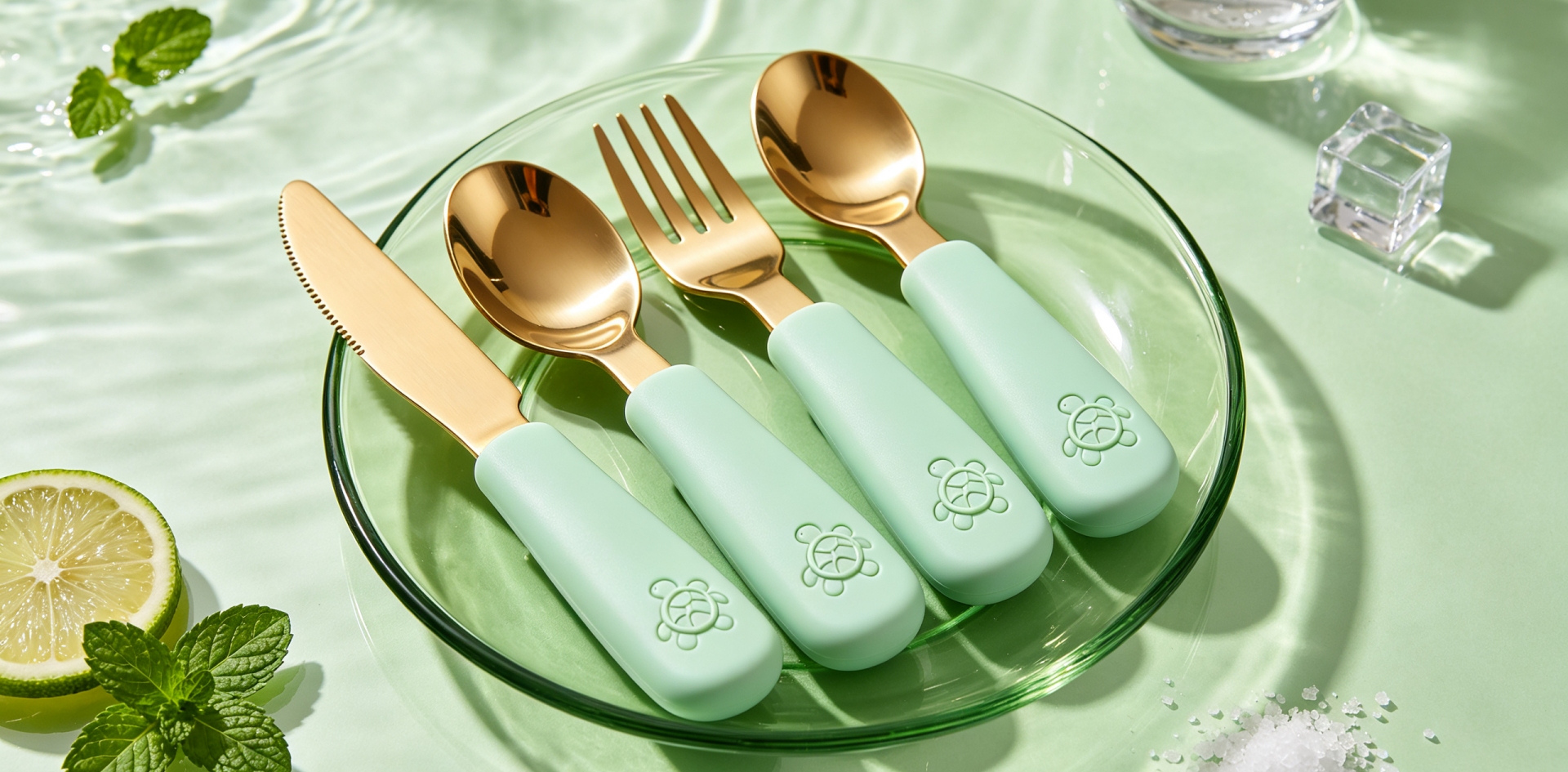
The width of the bowl influences the visual proportion of the spoon and its relationship with the handle. It can also affect how the spoon fits within a coordinated knife, fork, and spoon collection.
For OEM, ODM, and private label projects, defining the bowl width clearly can help buyers and manufacturers create a product that matches the intended design direction before moving into bulk production.
Why Spoon Bowl Width Matters
The bowl is the functional front section of a spoon. Its width contributes significantly to the overall appearance of the product.
A relatively wide bowl can create a stronger and more substantial visual impression, while a narrower bowl can make the spoon appear more streamlined.
Neither approach is universally suitable for every product.
The appropriate specification depends on the product type, intended market, overall spoon dimensions, handle design, and the relationship with other products in the collection.
For B2B buyers developing a custom spoon, the bowl width should therefore be considered as part of the complete product rather than as an isolated measurement.
Connecting Bowl Width With Handle Proportions
A spoon has a clear visual relationship between its bowl and handle.
If the bowl is relatively wide but the handle is narrow, the front section may appear visually dominant. If the handle is wider or more substantial, a broader bowl may create a more balanced appearance.
This relationship becomes particularly important for private label flatware.
A brand may want its spoon to have a distinctive appearance while still looking natural as part of a complete collection. The manufacturer can consider bowl width together with handle width, overall length, and the transition between the two sections.
The objective is to create balanced proportions that reflect the customer's design requirements.
Spoon Bowl Width in a Complete Cutlery Collection
A spoon is rarely developed completely independently in a B2B flatware program.
A customer may want a matching knife, fork, and spoon collection. Although each product has a different function, the three pieces should generally share a coherent visual language.
The spoon bowl width can therefore be reviewed alongside the proportions of the fork head and knife blade.
The dimensions do not need to be identical or mathematically related. Instead, the products should have a compatible visual character when presented together.
For a retail brand or private label customer, this can make the final collection appear more intentional and professionally developed.
Customizing the Bowl Width for Different Product Concepts
B2B buyers may have different reasons for requesting a custom spoon.
Some customers may already have a physical reference product. Others may have a technical drawing or simply a design concept that needs to be converted into a manufacturable product.
In these situations, bowl width can be adjusted as part of the development process.
A buyer may prefer a broader appearance for one collection and a more refined profile for another. The manufacturer can evaluate the requested dimensions together with the spoon's other specifications and production requirements.
This makes it possible to develop a product that is more closely aligned with the customer's intended market position.
Why Samples Matter Before Bulk Production
A spoon bowl width may look straightforward on a technical drawing, but its visual effect is easier to evaluate with a physical sample.
Once a sample has been produced, the buyer can compare the bowl with the handle and examine the complete proportions.
It is also useful to place the spoon beside the matching fork and knife if the project involves a complete collection.
This gives the buyer an opportunity to confirm whether the product has the desired visual balance before approving the final specification.
For OEM and ODM projects, sample approval provides a practical bridge between an initial design concept and large-scale manufacturing.
Bowl Width and Manufacturing Specifications
Once the final design has been approved, the spoon needs to be produced according to defined specifications.
Bowl width can be included together with the other relevant product dimensions and manufacturing requirements.
Clear specifications give the factory a reference for production and give the buyer a clear basis for evaluating the finished product.
This becomes particularly useful when the customer plans to place repeat orders in the future.
Instead of relying on a general description such as “the same spoon as before,” the buyer and manufacturer can refer to the established product specification.
Supporting Private Label Spoon Programs
Private label brands often need products that can remain recognizable across their sales cycle.
A spoon may become part of a branded flatware collection, a kitchen product range, or a larger tableware program.
Once the product has been approved, its design details become part of the commercial product identity.
For this reason, small specifications should be established clearly during product development.
Bowl width, overall length, handle dimensions, finish, and other characteristics can work together to create the final product.
A professional manufacturing partner can help convert these requirements into a practical production specification.
Wholesale and Bulk Spoon Manufacturing
For wholesalers and distributors, product specifications are also important because a successful spoon may eventually be purchased in significant quantities.
A buyer may begin with samples or an initial order and later increase the volume according to market demand.
When the product has been clearly defined from the beginning, the transition from an initial order to larger purchasing programs can be more straightforward.
The manufacturer can work from the established product requirements while the buyer focuses on the commercial quantity and purchasing schedule.
This is particularly useful for companies building a long-term stainless steel flatware range rather than purchasing isolated products.
Discussing Spoon Bowl Width With a Manufacturer
When requesting a quotation for a custom stainless steel spoon, buyers can provide as much relevant information as possible.
Useful information may include a reference sample, drawing, product dimensions, desired finish, material requirements, target quantity, and the intended relationship with other cutlery products.
If the buyer already has a preferred bowl width, this can be specified directly.
If the buyer has a visual concept but does not yet have exact dimensions, the manufacturer can discuss the proposed design and help determine practical specifications for production.
This type of communication can make the development process more efficient and reduce unnecessary changes later.
Homefelt for Custom Stainless Steel Spoon Manufacturing
Homefelt specializes in stainless steel knives, forks, spoons, cutlery sets, and flatware for B2B customers.
With more than 40 years of experience in the stainless steel cutlery business, the factory works with wholesalers, distributors, brands, and professional buyers on OEM, ODM, private label, and bulk manufacturing projects.
For customers developing a custom spoon, the project can begin with a reference product, drawing, sample, or specific product requirements. Details such as bowl width, handle proportions, overall dimensions, surface finish, and other specifications can then be considered as part of the complete design.
When the spoon is intended to belong to a larger collection, the manufacturer can also consider its relationship with the matching knife and fork.
This approach allows a single product to become part of a more coordinated B2B flatware program.
For brands and wholesalers, carefully defining the spoon before bulk production can help create a product that is easier to communicate, manufacture, reorder, and expand into a larger collection.
If you are looking for a stainless steel spoon manufacturer for an OEM, ODM, private label, or wholesale project, providing your product concept or specifications is a practical first step toward a customized quotation.
Request a Custom Stainless Steel Spoon Quotation
Develop an OEM Stainless Steel Spoon
Start a Private Label Spoon Project
Request Wholesale Stainless Steel Spoon Pricing
Stainless Steel Spoon Bowl Length: A Practical Detail for B2B Custom Designs
Stainless Steel Cutlery Compatibility: Building a More Efficient B2B Collection
Related Article



