
Stainless Steel Spoon Handle Angle for OEM and Private Label Production
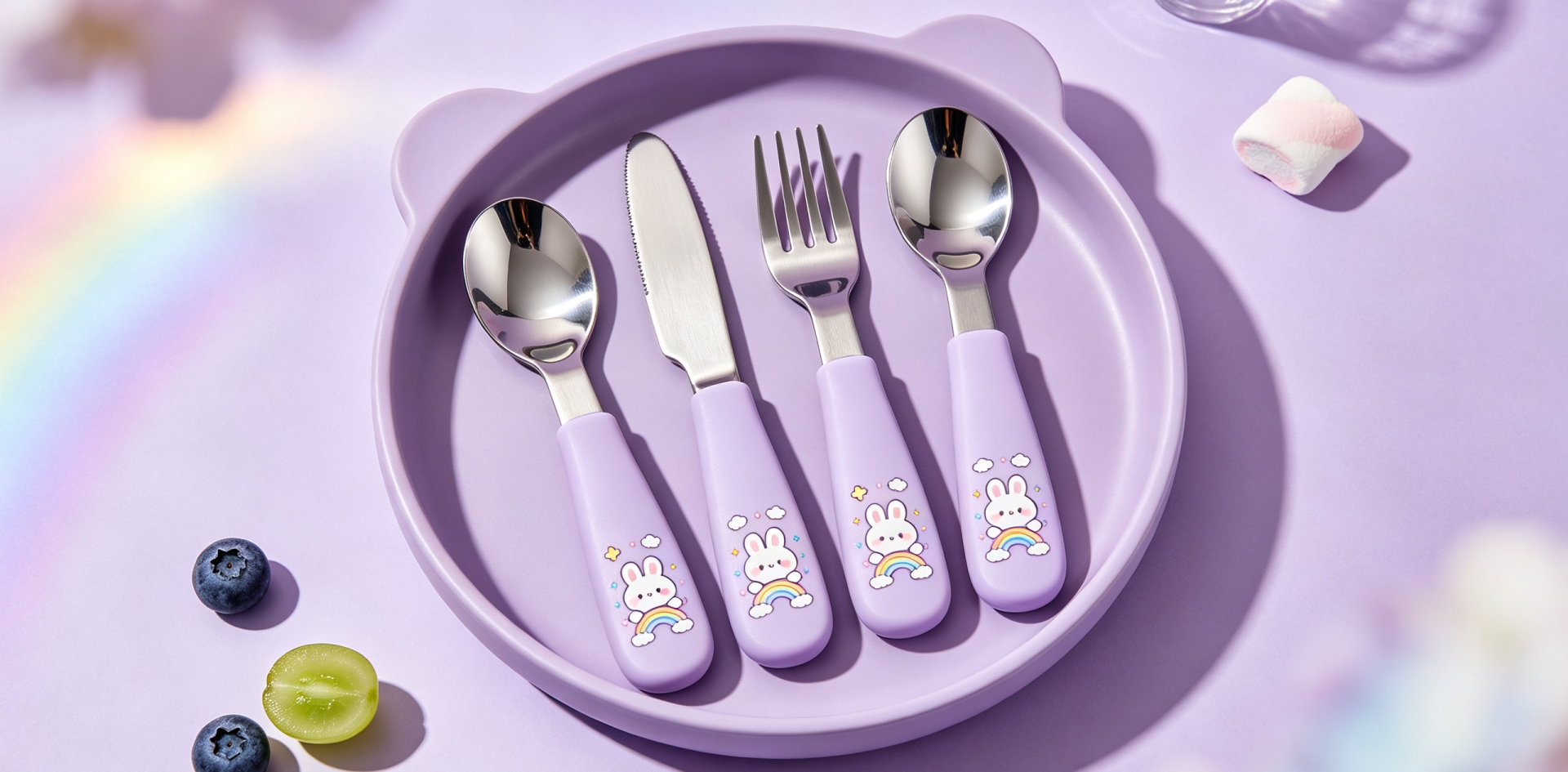
Stainless Steel Spoon Handle Angle for OEM and Private Label Production
The angle between a stainless steel spoon handle and its bowl is an important design detail that can influence how the finished spoon looks and feels during use. Although the angle may appear small on a technical drawing, it can change the relationship between the handle and working end.
For B2B buyers developing stainless steel spoons for restaurants, hotels, catering suppliers, distributors and private label brands, this detail can be included in the product specification from the beginning.
The ideal angle depends on the spoon's overall geometry, intended application and design concept. It should therefore be evaluated as part of the complete product rather than selected as an isolated number.
Homefelt factory specializes in stainless steel knives, forks and spoons and provides OEM, ODM, private label, wholesale and bulk manufacturing for international B2B customers.
Why Spoon Handle Angle Matters
A spoon consists of several connected areas, but the handle and bowl form the main functional relationship.
The angle between these sections affects the orientation of the bowl relative to the handle. This can influence how the spoon is positioned when it is held and used.
The same bowl design can therefore feel different when combined with a different handle angle.
For private label products, the angle can also influence the visual character of the spoon. A flatter relationship may create a different appearance from a more pronounced angle.
This makes the specification relevant to both function and design.
Handle Angle and Spoon Geometry
Handle angle should not be considered independently from the spoon bowl.
The bowl has its own length, width, depth and curvature. The handle has its own length, profile and dimensions.
When these components are combined, the final spoon geometry determines the overall orientation of the product.
For this reason, a manufacturer needs to review the complete spoon design before confirming the final angle.
Homefelt can evaluate the relationship between the bowl and handle during OEM and ODM product development and use samples to confirm the intended result.
Different Spoon Applications
Different spoon products may have different design priorities.
A general table spoon may require a balanced relationship between appearance and everyday use. A serving spoon may have different proportions and therefore require a different handle-to-bowl relationship.
Private label collections may also use several spoon models with related visual characteristics.
The angle does not necessarily need to be identical across every spoon type. Instead, the collection can maintain a common design language while adapting each product to its specific function.
This approach gives B2B buyers more flexibility when developing a complete stainless steel flatware range.
Technical Specifications Buyers Can Define
When developing a customized stainless steel spoon, buyers can provide information such as:
-
Bowl length
-
Bowl width
-
Bowl depth
-
Handle length
-
Handle profile
-
Handle thickness
-
Handle-to-bowl angle
-
Overall spoon length
-
Surface finish
-
Sample acceptance requirements
These parameters provide a more complete description than simply specifying the spoon's overall length.
For OEM projects, technical drawings can define the intended geometry, while a physical reference sample can help communicate the desired final appearance.
Why Sampling Is Important
The handle angle is particularly easy to evaluate through a physical sample.
A buyer can hold the spoon, observe the relationship between the handle and bowl, and compare the product with the intended market positioning.
If the angle needs adjustment, the change can be made before mass production.
Once the sample is approved, the confirmed geometry can be used as the manufacturing reference.
This process helps reduce uncertainty for large-volume orders and gives both the buyer and manufacturer a common product standard.
Consistency During Bulk Production
A spoon may look simple, but maintaining the same geometry across a large quantity requires controlled manufacturing.
If the handle angle varies from piece to piece, the difference may become visible when the spoons are placed together.
For hospitality suppliers, distributors and private label brands, such variation can affect the overall presentation of the collection.
Homefelt has extensive experience in stainless steel cutlery production and supports large-volume OEM and wholesale orders.
Clear specifications and approved samples provide the production team with a practical reference for maintaining consistency throughout the order.
Developing a Coordinated Flatware Collection
A stainless steel spoon is often sold as part of a knife, fork and spoon collection.
The spoon's handle angle should therefore work visually with the rest of the set.
The knife and fork may have different functional structures, but their handle direction, overall visual flow and product character can still be coordinated.
For private label brands, this creates a stronger collection identity.
Homefelt can review the spoon together with the corresponding knife and fork during product development, helping customers establish a consistent design direction across the collection.
Factory Experience in Customized Spoon Production
Homefelt focuses specifically on stainless steel cutlery and has experience producing knives, forks, spoons and complete flatware sets for international B2B customers.
The factory has worked with well-known brands and supports customized OEM and ODM projects.
Customers can provide drawings, reference products or initial design concepts. Homefelt can then discuss the practical specifications, develop samples and move the approved design into bulk production.
This experience helps connect product design with real manufacturing requirements.
Factory Qualifications and Supporting Documentation
Supplier evaluation is also part of B2B purchasing.
Homefelt has passed BSCI, SEDEX 4P, BRC, ISO9001 and Disney audits, and has FAMA and FSC certificates.
Testing and supporting documentation can be discussed according to individual project requirements.
For the spoon itself, however, the approved drawing and physical sample remain the main references for confirming the final geometry and production result.
OEM, ODM and One-Stop Customization
Homefelt provides OEM, ODM and private label stainless steel spoon and flatware manufacturing.
Customers can customize the spoon geometry, handle design, angle, finish and other product details according to their target market.
The factory can also provide one-stop service covering product design, manufacturing, packaging and transportation.
For different customers, Homefelt can develop an exclusive service package according to the actual product requirements, order volume and delivery plan.
This allows distributors, wholesalers and private label brands to manage product development and bulk supply through one manufacturing partner.
From Spoon Sample to Production
A well-defined spoon specification makes the transition from design to manufacturing more efficient.
Handle angle is one of the details that can be confirmed during sample development. Once the buyer approves the product, the same specification can be applied to the bulk order.
For customers planning repeat purchases, keeping the approved specification and sample as a long-term reference can also help maintain consistency across future batches.
Homefelt factory focuses on stainless steel knives, forks and spoons and supports OEM, ODM, private label, wholesale and large-volume production. With one-stop support from product design through manufacturing, packaging and transportation, Homefelt aims to become a reliable China service provider and grow together with customers.
Stainless Steel Flatware SKU Planning for OEM and Wholesale Collections
Stainless Steel Flatware Handle Taper for OEM and Private Label Orders
Related Article



