
Stainless Steel Spoon Opening Profile for OEM and Bulk Production
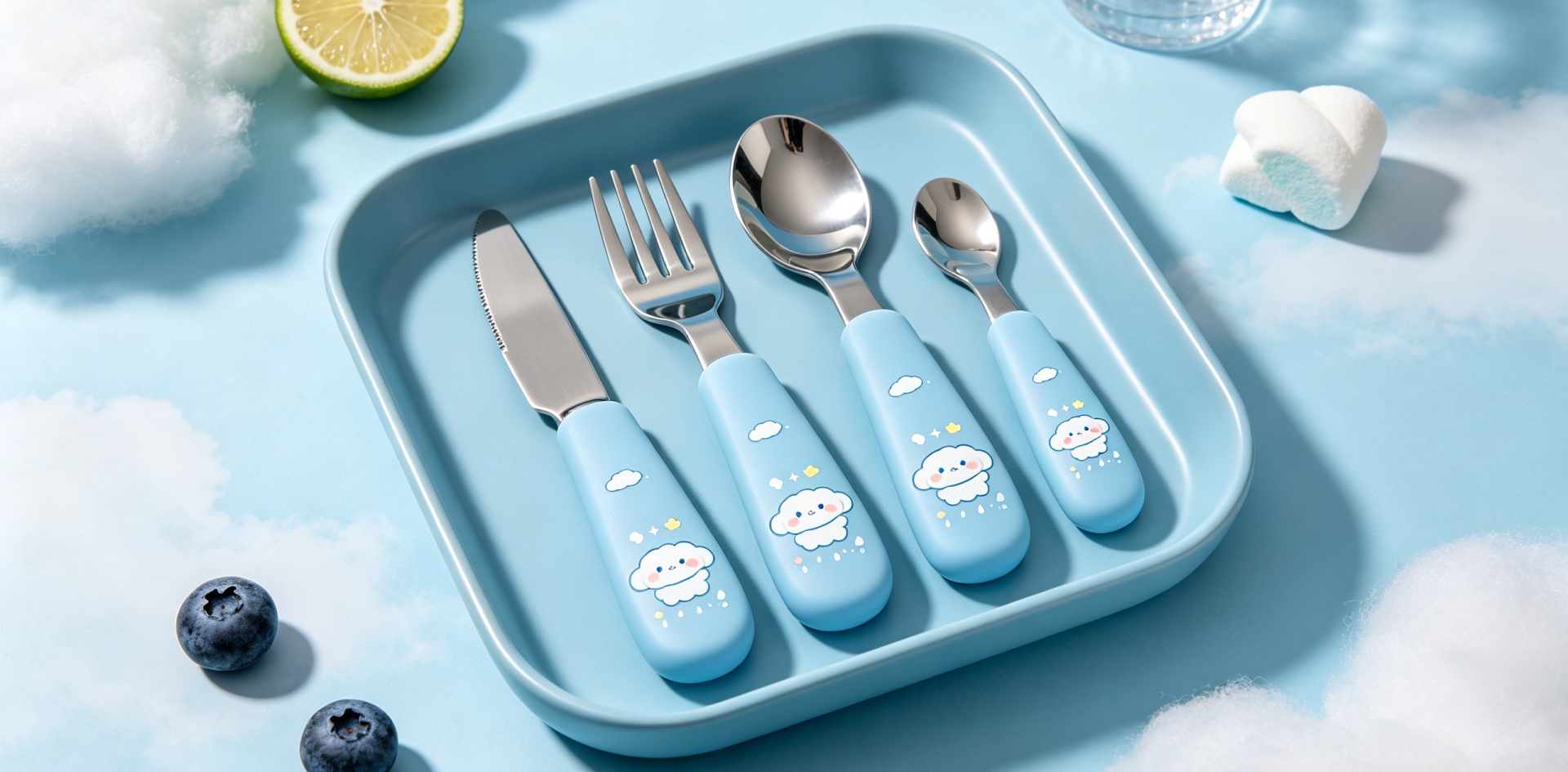
Stainless Steel Spoon Opening Profile for OEM and Bulk Production
When buyers develop stainless steel spoons for wholesale, hospitality or private label markets, the opening of the spoon bowl is one of the first visual features customers notice. The outline around the bowl creates a clear part of the product silhouette and can influence how the spoon looks when displayed or used.
For OEM and ODM projects, the opening profile should be considered during product development rather than left as an undefined detail. A consistent bowl opening helps the factory reproduce the approved design and gives buyers a clearer reference for future bulk orders.
Why the Spoon Opening Profile Matters
The opening is the visible boundary of the spoon bowl. Its shape can make the utensil appear more rounded, elongated, compact or contemporary.
Two spoons may have similar overall dimensions but still look noticeably different if their bowl openings use different contours. For a private label collection, this can affect the visual identity of the product.
The opening profile is also important when several spoons are arranged together. If the left and right sides of the bowl opening vary significantly from piece to piece, the differences can become obvious in a large commercial order.
For B2B buyers, the objective is therefore not simply to choose a spoon that looks attractive in a single sample. The selected opening profile should also be suitable for consistent reproduction in bulk production.
Key Points When Defining a Spoon Opening
The first consideration is the overall outline of the opening. Buyers may prefer a more rounded shape, a softly elongated shape or another specific profile according to their collection concept.
The second is the balance between the two sides of the opening. A centered and balanced outline helps maintain the intended appearance of the spoon.
Another consideration is how the opening relates to the lower portion of the bowl. The entire outline should form one coherent product shape rather than looking like several unrelated curves.
The final consideration is repeatability. Once the buyer approves a specific spoon design, the opening profile becomes part of the product reference for subsequent manufacturing.
Drawings, reference samples and agreed specifications can all help communicate these requirements during OEM product development.
Opening Profile and Spoon Appearance
The spoon bowl is one of the largest visible areas of the utensil, so even a small change to its opening can influence the overall appearance.
A simple spoon design may use a smooth, balanced opening to create a clean appearance. A more distinctive private label collection may require a particular contour to match the style of the rest of the flatware.
There is no single opening profile suitable for every market. The appropriate design depends on the customer's product positioning, existing collection and target buyers.
For OEM manufacturing, the important point is that the factory can work from the customer's actual requirements instead of relying only on a standard catalog shape.
Homefelt supports customized stainless steel spoon and complete flatware development, allowing customers to provide their own drawings, samples or product concepts for discussion.
Maintaining the Profile in Bulk Production
Once a spoon design enters mass production, the opening profile needs to remain stable across the order.
This is particularly relevant for large wholesale projects. A slight difference may not be obvious when looking at one spoon, but repeated variation can become visible when many pieces are placed together.
For this reason, the approved sample should serve as a practical production reference. The manufacturing process needs to reproduce the intended bowl opening consistently rather than allowing the shape to change gradually during production.
Repeat orders require the same consideration. A distributor or private label brand may reorder the same spoon several times. Maintaining the established opening profile helps ensure that the new shipment continues to match the existing product range.
OEM and Private Label Spoon Development
Private label buyers often want a spoon that has a recognizable appearance without making the product unnecessarily complicated.
The bowl opening can contribute to this identity because it is immediately visible and forms an important part of the utensil silhouette.
Homefelt supports OEM and ODM manufacturing of stainless steel spoons, forks, knives and complete flatware collections. Customers can discuss their desired product shape, specifications and target application with the factory before production.
For customers developing a new product, the factory can coordinate product design requirements and manufacturing considerations. For customers with an existing design, the production team can work from approved drawings or samples.
The service can also extend beyond manufacturing. Depending on the project, Homefelt can coordinate product design, customized production, packaging and transportation as a one-stop solution.
This approach is suitable for importers, distributors, hospitality suppliers and brands that require customized stainless steel cutlery in commercial quantities.
Factory Experience and Product Consistency
Small product details become increasingly important when a customized design needs to be reproduced across a large order.
Homefelt has 40 years of experience in the stainless steel cutlery business and has experience working with well-known brands. The factory supports OEM, ODM, private label, wholesale and bulk production of stainless steel knives, forks and spoons.
For B2B customers, manufacturing experience can help connect the product development stage with actual production requirements. The objective is to establish a clear product reference before manufacturing and maintain that reference throughout the order.
Factory qualifications can also help buyers evaluate a potential long-term partner. Homefelt has passed BSCI, SEDEX 4P, BRC, ISO9001 and Disney audits, and has FAMA and FSC certificates. Relevant certification and testing documents can be discussed according to individual project requirements.
Building a Stable Product Reference
A successful cutlery project should not depend entirely on one shipment. For many B2B customers, the same spoon may need to be manufactured repeatedly over a longer period.
The opening profile can therefore become part of the established product specification. Once confirmed, it can help maintain continuity between the original sample, the first bulk order and future replenishment.
Homefelt works with customers to provide a complete manufacturing and supply solution based on their specific situation. Product development, customized production, packaging and transportation can be coordinated through one partner.
The goal is to provide more than a single order. Homefelt aims to become a long-term China service partner for stainless steel cutlery buyers and grow together with customers through reliable manufacturing and practical service.
Stainless Steel Table Knife Edge Angle for OEM and Bulk Production
Stainless Steel Table Knife Tip Design for OEM and Bulk Production
Related Article



