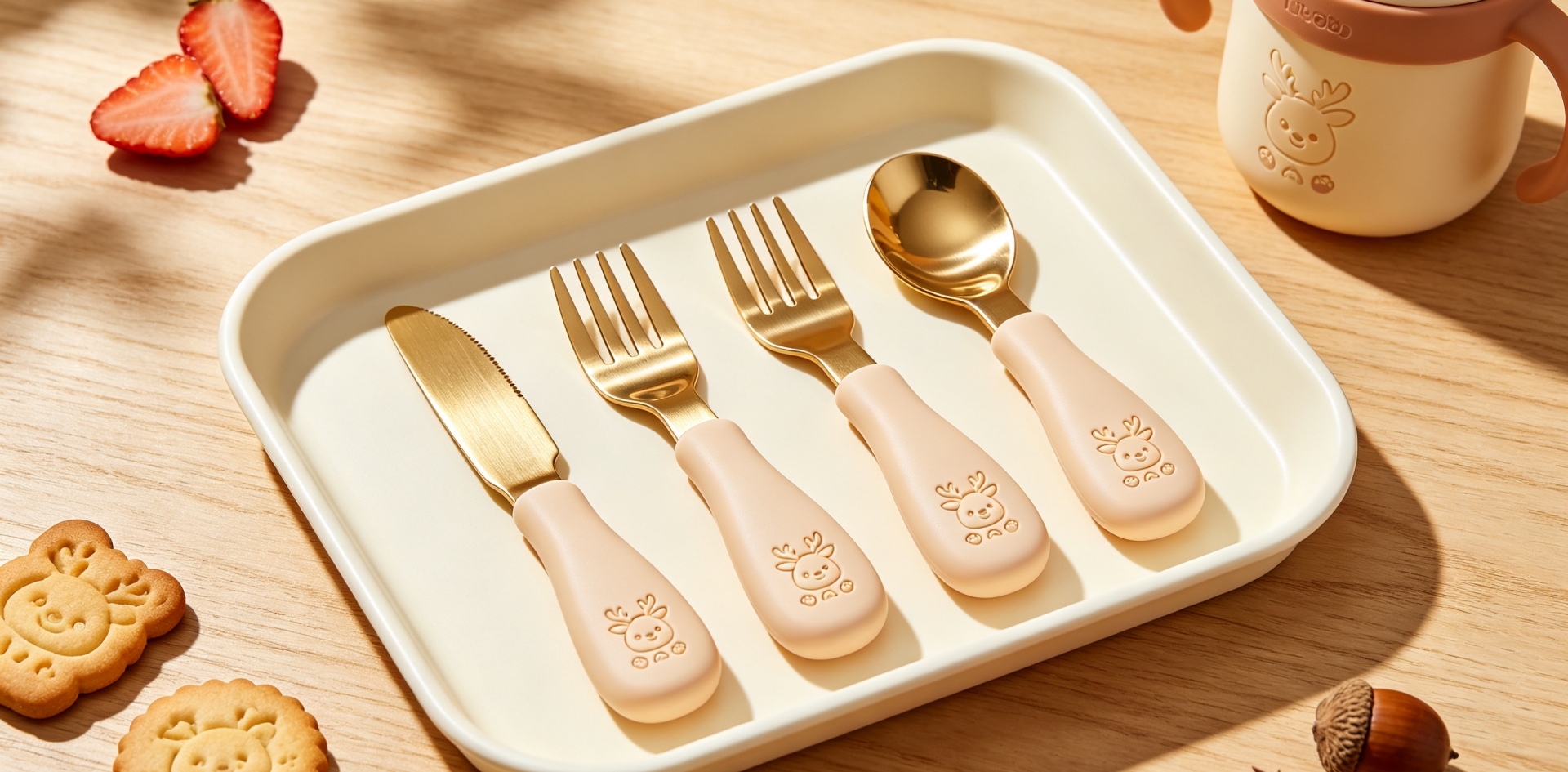
Stainless Steel Spoon Packaging Transit Protection Testing

Stainless Steel Spoon Packaging Transit Protection Testing
Stainless steel spoons can leave a factory in good condition and still arrive with scratches, dents, or damaged packaging if the packing arrangement does not adequately protect them during transportation. For importers, distributors, and private-label brands, evaluating packaging protection before a bulk shipment helps identify potential problems before they affect inventory or customer deliveries.
Transit protection depends on more than the strength of the outer carton. The number of spoons in each package, the arrangement of individual pieces, the use of separators, the fit of the inner box, and the handling conditions throughout the shipping journey all influence the final result.
Homefelt factory supports stainless steel cutlery customization, OEM/ODM projects, wholesale supply, and large-volume production. By discussing packaging requirements alongside the product specification, buyers can establish a more suitable packing plan for their stainless steel spoon orders.
Why Stainless Steel Spoons Need Transit Protection
Stainless steel is durable, but a polished surface can still develop visible scratches when metal pieces repeatedly rub against one another. A spoon bowl may also become dented if the package allows concentrated pressure or excessive movement during handling.
Packaging damage can create additional commercial problems. Crushed retail boxes, torn labels, or deformed inner cartons may affect products intended for retail shelves or private-label presentation, even when the spoons themselves remain usable.
The appropriate level of protection depends on the product and its destination. A standard spoon packed in bulk for industrial distribution may require a different arrangement from a premium spoon set presented in a decorative gift box.
Before choosing a packaging solution, buyers should identify the main risks:
-
Surface-to-surface contact between individual spoons
-
Movement inside retail boxes or inner cartons
-
Pressure from stacked cartons
-
Impacts during loading, unloading, or handling
-
Moisture exposure during storage and transportation
-
Damage caused by unsuitable palletization or overfilled cartons
Understanding these risks helps buyers select relevant packaging checks rather than applying the same method to every product.
Begin With the Actual Packing Configuration
Packaging should be evaluated using the configuration intended for shipment. Testing a single spoon in a protective sleeve will not establish how a full retail set performs inside a master carton.
A useful packaging specification records the number of spoons per pack, the orientation of the pieces, the protective materials used, the inner-box dimensions, and the outer-carton configuration. If several spoon models are packed together, the arrangement should show how each item is separated and protected.
For example, a set containing teaspoons, soup spoons, and serving spoons may have different shapes and dimensions. If the pieces are placed together without a defined arrangement, movement during transportation could cause contact marks or pressure on delicate decorative areas.
Buyers should also confirm whether the packaging includes paper sleeves, plastic bags, trays, dividers, molded inserts, or other protective components. The chosen materials and their placement should be documented so that the approved arrangement can be reproduced during bulk packing.
Check Whether Spoons Move Inside the Package
Excessive movement inside a package can increase the likelihood of scratches and damage. However, completely filling every gap is not automatically the best solution. The packaging must still accommodate the product shape, allow practical packing operations, and avoid placing excessive pressure on the spoons.
During a preliminary review, place the intended quantity of spoons into the proposed inner package and check whether the pieces remain in their designated positions during normal handling. Observe whether the lids close properly, whether inserts shift, and whether the product can move freely inside the box.
The review should focus on the real packing arrangement rather than an idealized layout that cannot be reproduced efficiently on the packing line.
For polished products, inspect the spoons after the handling evaluation. Look for newly visible scratches, contact marks, dents, or other changes that may indicate insufficient separation or an unsuitable arrangement.
Any observations should be recorded alongside the packaging version used in the test. If the insert material, pack quantity, or product orientation changes later, the previous result may no longer represent the final configuration.
Evaluate Carton Strength and Stacking Conditions
The outer carton protects the packaged spoons and helps support the shipment during storage and transportation. Its suitability depends on carton dimensions, board construction, package weight, stacking arrangements, and the handling conditions expected along the route.
An oversized carton may allow the contents to shift if the internal packing is inadequate. An overfilled carton may be difficult to close correctly or may place excessive pressure on the products inside. Cartons that are stacked during warehousing or shipping also need to withstand the conditions defined for the shipment.
Buyers should provide the factory with relevant distribution information where available, such as whether the shipment will travel by sea or air, whether cartons will be palletized, and whether the goods will pass through multiple warehouses.
Carton compression or stacking evaluations may be appropriate when the shipping configuration creates a meaningful risk of crushing. The test method and acceptance criteria should be selected according to the packaging design and the expected distribution conditions.
A carton should not be considered suitable solely because it looks sturdy when empty. Its performance needs to be considered together with the weight and arrangement of the packed goods.
Select Appropriate Transit Tests
Different tests examine different packaging risks. A drop test, for example, can help evaluate the effects of specified impact conditions, while a compression test may assess the ability of a carton to withstand stacking loads.
Other evaluations may focus on vibration, repeated handling, or the stability of a palletized shipment. The appropriate method depends on the product, packaging system, transport route, and applicable customer requirements.
A packaging test plan should identify:
-
The exact product and packaging configuration being tested
-
The test method and relevant conditions
-
The sample quantity and test sequence
-
The product and packaging characteristics to inspect afterward
-
The acceptance criteria established before testing
Not every order needs every test. A straightforward domestic shipment and a complex export distribution route may have different risk profiles. Buyers should choose tests that address the likely hazards rather than treating a single test as proof that every transportation risk has been eliminated.
Where formal testing is required, the buyer and supplier should confirm the applicable method and documentation with a qualified testing provider. Results should be reported accurately and should not be generalized to packaging configurations that were not tested.
Inspect the Spoons After Testing
Packaging performance should be assessed by examining both the package and the products inside it. A carton may show little visible damage while the spoons develop scratches, or the spoons may remain protected even though the outer packaging shows signs of impact.
After the selected test, unpack the products using a consistent method. Check the spoon bowls, handles, decorative features, and other visible areas that matter to the product specification.
For premium polished spoons, appearance changes may be particularly important. For other products, the review may also need to consider whether the package remains suitable for retail presentation or warehouse handling.
The evaluation record can include photographs, a description of observed damage, the affected product locations, and the final decision against the agreed acceptance criteria. If damage occurs, the next step is to identify its likely cause before changing the packaging.
For example, scratches between spoons may call for improved separation, while a crushed carton may indicate that the outer packaging or stacking arrangement requires further evaluation. Adding more packaging material without identifying the cause can increase costs without resolving the actual problem.
Balance Protection With Packaging Cost
A stronger or more complex package may offer additional protection, but it can also increase material consumption, packed dimensions, and shipping costs. The goal is to select a packaging arrangement that provides suitable protection without adding unnecessary expense.
For bulk stainless steel spoon orders, buyers should consider the complete packing system. An effective inner insert may prevent movement more efficiently than simply increasing the outer-carton size. A better arrangement of the spoons may also reduce empty space while maintaining adequate separation.
Any proposed reduction in protective material should be evaluated against the actual distribution requirements. A lighter package is not commercially beneficial if it leads to repeated damage claims, product rework, or replacement shipments.
Packaging decisions should therefore consider both the unit cost and the potential consequences of transit damage. The most appropriate solution depends on the product finish, sales channel, transportation route, and customer expectations.
Confirm Packaging Requirements Before Bulk Production
Packaging changes should be agreed before the factory begins packing a large order. Buyers should confirm the number of pieces per package, protective materials, carton specifications, labeling requirements, and any transit-test expectations that apply to the project.
For OEM and private-label programs, packaging may also include branded artwork, product information, retail inserts, or customized labels. These elements should be reviewed alongside the protective function of the package rather than treated as separate details.
Homefelt factory works with B2B customers on stainless steel spoon and cutlery projects involving customization, OEM/ODM development, wholesale supply, and large-volume production. Product design, packaging coordination, and transportation arrangements can be discussed according to each customer's requirements.
If a test identifies a packaging weakness, the revised configuration should be documented and evaluated as appropriate before it is adopted for the order. This helps ensure that the approved packaging and the actual bulk shipment remain aligned.
Build a Practical Pre-Shipment Protection Checklist
Before dispatching a stainless steel spoon order, buyers and suppliers can review the following points:
-
Does the package match the approved packing specification?
-
Are the spoons positioned and separated as intended?
-
Can the inner box close without forcing the contents into place?
-
Is the outer carton appropriate for the packed weight and shipping arrangement?
-
Have relevant transit risks and customer testing requirements been considered?
-
Are any required test results linked to the correct packaging configuration?
-
Have the packed products been inspected according to the agreed criteria?
This checklist supports a consistent review, but it does not replace a formal packaging test when one is required by the buyer or applicable specification.
Reliable transit protection begins with understanding how the spoons will be packed, handled, stored, and transported. By evaluating the complete packaging system before bulk shipment, B2B buyers can make more informed decisions about product protection, packaging cost, and delivery expectations.
Homefelt factory welcomes inquiries from importers, distributors, and private-label brands sourcing stainless steel spoons and cutlery in bulk. To discuss packaging specifications, transit protection requirements, customized products, or export orders, contact ingrid@homefelt.net with your product details and shipping needs.
You May Be Interested In
Stainless Steel Spoon Barcode and Label Verification for Wholesale Orders
Stainless Steel Spoon Handle Joint Quality and Inspection
Related Article