Stainless Steel Spoon Prototype Validation Before Bulk Production

Stainless Steel Spoon Prototype Validation Before Bulk Production
Before placing a large order for stainless steel spoons, B2B buyers need to establish that the proposed design can be manufactured consistently and meets the intended product requirements. A drawing may communicate dimensions, and a reference image may show the desired appearance, but neither always reveals how the finished spoon will feel, perform, or look in actual use.
Prototype validation provides an opportunity to review these details before committing to bulk production. It helps importers, distributors, retailers, and private-label brands identify design issues, confirm important specifications, and make informed decisions about whether a product is ready for manufacturing.
For Homefelt customers developing customized stainless steel spoons, prototype review can also create a clearer connection between product development, quotation, production planning, and final approval.
Why Prototype Validation Matters for Stainless Steel Spoons
A prototype is an early physical or production-representative version of a proposed product. Its purpose is to help the buyer and manufacturer evaluate the design before moving forward with the agreed production process.
For stainless steel spoons, a prototype can reveal issues that are difficult to identify from a drawing alone. The bowl may appear too shallow for the intended application, the handle may feel unbalanced, or a decorative detail may not produce the expected visual effect.
These findings are easier to address during development than after a large quantity has been manufactured.
Prototype validation is especially useful when a project involves a new handle profile, nonstandard dimensions, customized branding, a distinctive bowl shape, or coordination with an existing cutlery collection.
It is not necessary to create a complicated development process for every standard spoon. The level of validation should reflect the design's complexity, the consequences of a potential error, and the buyer's commercial requirements.
Define What the Prototype Must Prove
Before requesting a prototype, identify the questions that the sample needs to answer. Without clear evaluation criteria, buyers may focus on general appearance while overlooking important technical or functional details.
A prototype review plan can include several areas.
Design and Proportions
Check whether the spoon matches the intended overall shape, handle proportions, bowl geometry, and decorative details. Compare the physical prototype with the drawing or design reference rather than relying solely on memory or visual impression.
Dimensions and Weight
Measure the agreed dimensions, including overall length and relevant bowl or handle measurements. If unit weight is important to the product specification, record it using a consistent weighing method.
The results should be compared with the target values and permitted tolerances established for the project.
Surface and Edge Condition
Review the surface finish, visible marks, transitions between the bowl and handle, and the condition of the bowl edge. The acceptable result should reflect the agreed product requirements and intended market.
Branding and Custom Details
For private-label projects, verify the logo artwork, position, orientation, and appearance. If the product includes engraving, embossing, or another decorative feature, compare it with the approved design reference.
Intended Use
Consider whether the spoon's dimensions, shape, and handling characteristics are suitable for its intended application. A product designed for everyday dining may have different priorities from a spoon intended for serving or inclusion in a premium gift set.
These criteria provide a practical basis for deciding whether the prototype is acceptable, requires revision, or needs further evaluation.
Separate Design Approval From Manufacturing Approval
One common source of confusion is treating a visually acceptable prototype as proof that every production requirement has been confirmed.
Design approval means that the buyer accepts the proposed appearance and configuration. Manufacturing approval also requires the parties to confirm the specifications, production requirements, inspection criteria, and other details relevant to the order.
For example, a spoon prototype may look correct but still lack a confirmed material grade, a defined thickness requirement, or an agreed tolerance for a critical dimension.
Before authorizing bulk production, buyers should confirm the applicable details in writing. These may include:
-
Product model and specification revision
-
Stainless steel grade
-
Overall dimensions and critical measurement points
-
Thickness and target unit weight, where applicable
-
Surface finish and decorative treatment
-
Logo artwork and placement
-
Packaging requirements
-
Inspection and acceptance criteria
The exact list depends on the project. The important principle is that the approved appearance and the written specification should describe the same product.
Check Whether the Prototype Represents the Intended Production Method
Not all samples provide the same level of evidence about how a finished product will be manufactured.
A sample made primarily to demonstrate appearance may not fully represent the processes, tooling, finishing operations, or production conditions planned for bulk orders. Buyers should therefore ask the factory what the prototype is intended to demonstrate and which aspects may differ from the final manufacturing process.
This is particularly relevant for customized spoons. A new handle shape or special decorative feature may require additional development before the factory can confirm the final production arrangement.
If a sample uses a temporary method or differs from the planned bulk process, that limitation should be understood before approval. Where the production method could materially affect appearance or dimensions, a representative pre-production sample may be appropriate.
Buyers should also clarify whether any tooling, setup, or development costs apply to the project. These costs can vary according to the design and should be confirmed rather than assumed to be included in the unit price.
Evaluate Functional Details, Not Appearance Alone
A spoon may look attractive in a product photograph but feel different when held. Prototype evaluation gives buyers an opportunity to consider practical characteristics that are difficult to judge from images.
The handle should be assessed for its proportions and comfort in ordinary use. The spoon's balance, bowl shape, and overall size should suit the intended customer and application.
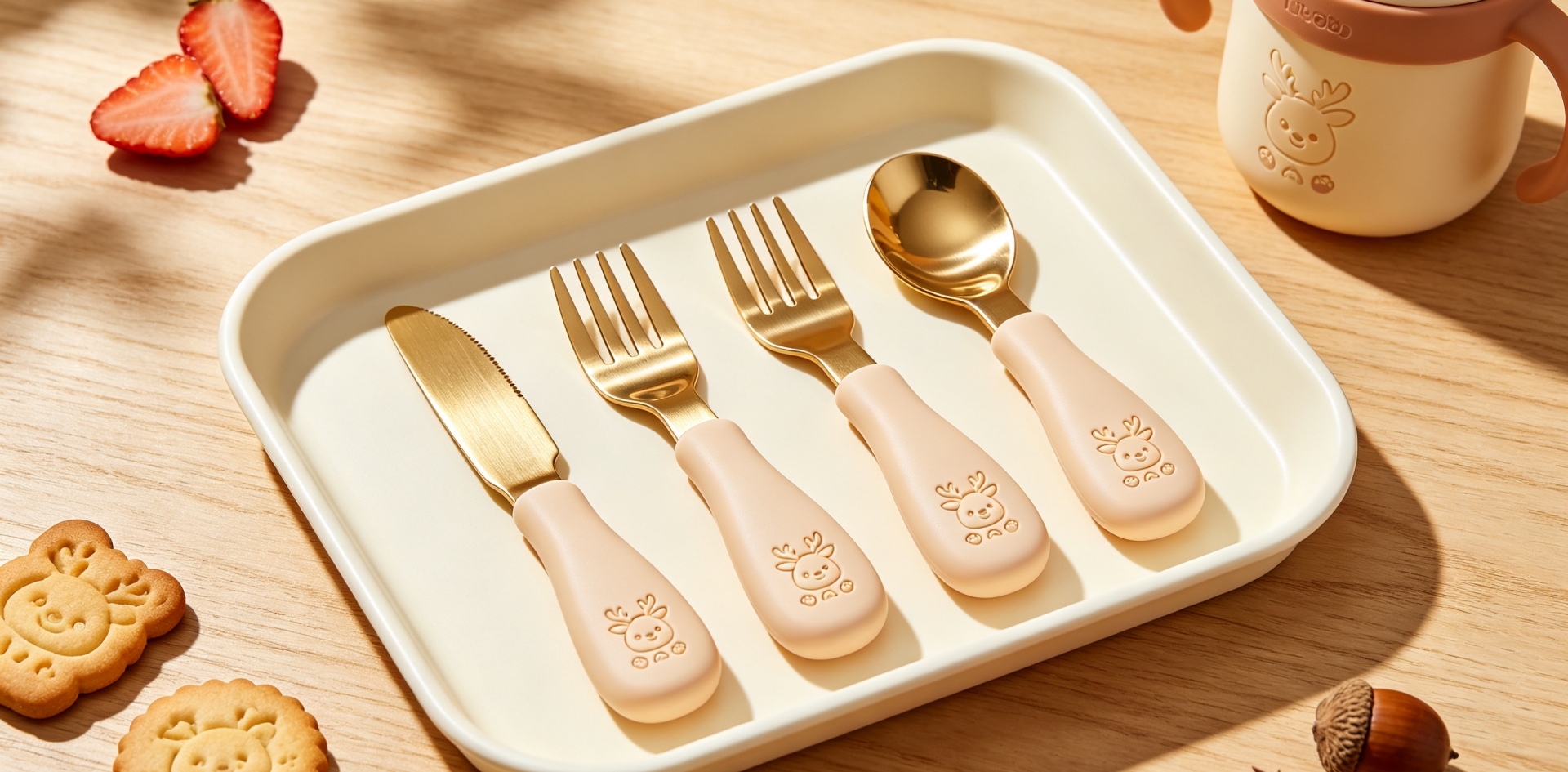
For coordinated flatware collections, compare the spoon with the accompanying knives and forks. Check whether the handle style, decorative pattern, surface appearance, and general proportions work together as a consistent range.
Where the spoon is intended for a specific application, establish appropriate evaluation criteria before testing. For example, a serving spoon may require different bowl dimensions from a small dessert spoon. The assessment should reflect the actual purpose of the product rather than an arbitrary preference.
Functional evaluation should remain proportionate to the project. A standard design may need only a straightforward sample review, while a new or highly customized product may justify a more detailed validation process.
Record Feedback in a Way the Factory Can Use
Prototype feedback is most useful when it identifies a specific issue and the required change.
Comments such as “make it better” or “adjust the handle” leave room for different interpretations. More precise feedback explains what needs to change, where the change applies, and how the revised result will be evaluated.
For example, a buyer can identify a particular handle measurement, attach an annotated drawing, and describe the intended visual adjustment. If the concern relates to the bowl shape, the buyer can provide a marked reference image or a dimensional requirement.
A structured review record can include:
| Record | Information to Include |
|---|---|
| Prototype reference | Model number or sample identification |
| Review date | Date the sample was evaluated |
| Finding | Specific issue or confirmed requirement |
| Requested change | Clear description of the revision |
| Approval status | Approved, revision required, or further review needed |
| Next step | Revised sample, updated drawing, or confirmation |
This record helps the buyer and supplier maintain a shared understanding of the development process. It is also useful when several people participate in product approval.
If a revised prototype is submitted, the buyer should review the changed features and confirm whether any related specifications need updating.
Control Changes After Prototype Approval
Once a prototype has been approved, changes should be handled through a clear revision process. Even a seemingly small adjustment can affect dimensions, appearance, branding, or production requirements.
For example, changing the handle width may affect the overall proportions, while modifying a logo could alter its position or visibility. A change to the bowl profile may also require the relevant dimensions and reference drawings to be reviewed.
The buyer and factory should identify the revised requirement, determine whether a new sample is necessary, and record the final approved version.
Earlier samples and drawings can remain available for reference, but they should not be confused with the current production specification.
This approach is particularly valuable for OEM and ODM projects, where the final product may evolve through several development stages. A clearly controlled approval record reduces the risk of manufacturing from outdated instructions.
Connect Prototype Validation With Bulk Order Planning
Prototype approval is an important milestone, but it should also connect with the commercial order.
Before placing the bulk order, buyers should confirm the approved product specification, required quantity, packaging arrangement, inspection expectations, and proposed manufacturing schedule. They should also establish whether any remaining decisions could affect cost or delivery timing.
For projects involving multiple spoon models, each model should have its own clear approval reference. Approval of one design should not automatically be treated as approval of another model with different dimensions or decorative details.
Homefelt provides stainless steel spoon and cutlery manufacturing for wholesale, OEM/ODM, private-label, and large-volume projects. Depending on the customer's needs, support can include product design coordination, packaging planning, and transportation arrangements.
Providing clear prototype feedback and confirming the final requirements helps the factory prepare a more reliable basis for quotation and production.
If you are developing a new stainless steel spoon or adapting an existing design for your brand, contact Homefelt at ingrid@homefelt.net to discuss your prototype, specifications, and expected order quantity.
You May Be Interested In
Stainless Steel Spoon Packaging Fit and Dimensional Planning
Stainless Steel Spoon Material Efficiency in Product Design
Related Article