
Stainless Steel Spoon Wall Thickness for B2B Orders
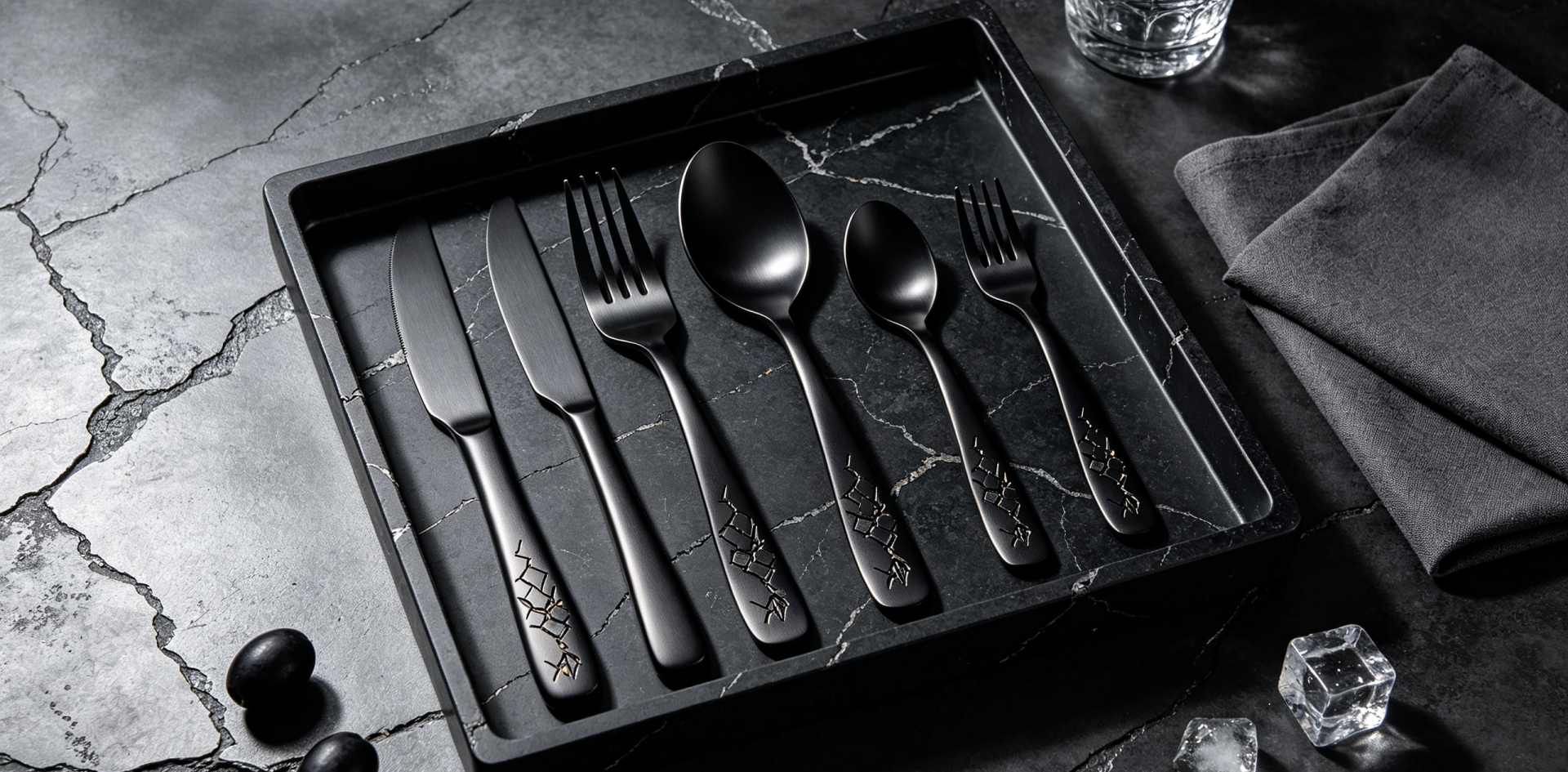
Stainless Steel Spoon Wall Thickness for B2B Orders
When a stainless steel spoon is developed for a B2B collection, buyers usually consider its overall length, bowl size, handle design and material. However, another structural detail can influence the finished product: the thickness distribution of the spoon bowl.
A spoon bowl is not simply a flat piece of stainless steel. Its shape is formed through controlled manufacturing processes, and the material may behave differently across the curved area. For custom cutlery projects, understanding how bowl wall thickness relates to the overall design can help buyers and manufacturers establish more practical specifications.
This detail can become especially relevant when a spoon needs to be reproduced consistently in large quantities.
What Is Spoon Bowl Wall Thickness Distribution?
The bowl of a stainless steel spoon has a curved three-dimensional shape. During forming, the original sheet material is shaped into this profile.
Depending on the product design and manufacturing process, the material may not behave identically at every point of the bowl. The final structure therefore needs to be considered as a complete formed product rather than simply as a single flat thickness value.
For B2B buyers, this distinction is useful.
A specification may state the general material thickness of a spoon, but the finished bowl also needs to maintain the intended shape, proportions and structural characteristics after forming.
This is particularly important for custom stainless steel spoons where the bowl design is different from a standard catalog model.
Why Bowl Thickness Matters in B2B Cutlery
The bowl is the functional part of a spoon that comes into direct contact with food. It also represents a large visible portion of the product.
Its structural characteristics can influence how the spoon feels in the hand and how the bowl maintains its intended shape.
For a wholesale buyer, consistency matters because a large shipment should not contain noticeable differences between individual pieces.
For a private label brand, the bowl is also part of the product identity. A carefully designed spoon can contribute to the overall character of a collection, particularly when the spoon is sold together with matching forks and knives.
The goal is therefore not simply to make the spoon thicker or thinner. It is to achieve an appropriate relationship between material, forming and final bowl geometry.
Bowl Shape and Material Behavior
Spoon bowls can have different shapes.
Some are relatively shallow and broad, while others are deeper or more elongated. The sides may be gently curved or more strongly formed.
Each design places different requirements on the forming process.
A custom spoon should therefore be evaluated according to its actual bowl geometry rather than relying only on a general material specification.
For OEM and ODM projects, the buyer can provide a reference sample or drawing, while the factory reviews the proposed design and determines how it can be translated into a repeatable production process.
This approach can help avoid a common problem in custom development: a product that looks correct in a drawing but changes noticeably after forming.
Maintaining Consistency During Mass Production
For a B2B order, the approved sample needs to become a repeatable production standard.
The factory must maintain stable forming conditions so that the finished spoon continues to match the intended design across the production quantity.
This includes more than the general material thickness. The shape of the bowl, its transition areas and its overall proportions also need to remain consistent.
Quality control can combine visual comparison, dimensional checks and reference samples according to the requirements of the project.
For a large OEM order, establishing these expectations before production begins can make communication much clearer.
The Importance of the Approved Sample
A physical sample can communicate details that are difficult to describe entirely through words.
For example, a buyer may know that the spoon should have a certain visual weight and bowl shape without having a complete technical drawing of every section.
An approved sample provides a practical reference for the manufacturer.
Once the sample is confirmed, important characteristics can be documented for production and future reorders.
This becomes particularly useful for private label brands that expect to sell the same spoon for several years. When a repeat order is placed, the original product reference helps maintain continuity.
Spoon Bowl Thickness and Product Feel
A stainless steel spoon is both a functional object and a tableware product.
The way it feels when held can be influenced by its overall weight, handle construction and bowl structure. Buyers developing a new collection may therefore want the spoon to have a particular sense of substance without making the entire product unnecessarily heavy.
This is where the relationship between material thickness and product design becomes important.
A suitable specification should consider the complete spoon rather than changing one measurement in isolation.
The factory can review the bowl, handle and overall dimensions together to determine a practical construction for the intended product.
Custom Spoon Development for OEM and ODM
Custom spoon projects can vary considerably.
A restaurant supply company may need a practical standard spoon in large quantities. A private label brand may want a distinctive bowl shape. A distributor may require a coordinated collection with several spoon sizes.
Each project can have different priorities.
Homefelt factory can work with B2B customers to discuss the required material, dimensions, bowl design, handle style, finish, packaging and order quantity.
This allows the product to be developed around the customer's actual sales channel and collection requirements.
Rather than treating customization as a simple change to an existing product, the complete design can be considered from the beginning.
Coordinating Spoons With the Complete Collection
A spoon is often sold as part of a matching set.
When developing knives, forks and spoons together, the products should share a coherent design language even though their functional structures are different.
The spoon bowl may have a different shape from the fork head, but the handle proportions, surface finish and overall visual weight can be coordinated.
For private label brands, this can help create a recognizable collection.
For wholesalers and distributors, coordinated products can also make it easier to offer complete sets or multiple product combinations to customers.
The bowl structure should therefore be considered together with the rest of the collection rather than developed completely independently.
Balancing Design and Manufacturing Requirements
A visually attractive spoon still needs to be practical to manufacture.
Very complex bowl shapes may require additional forming development. Changes in material thickness or geometry can also affect the manufacturing process.
For B2B buyers, discussing these factors early can help identify which design details are essential and which can be adjusted without changing the intended appearance.
An experienced stainless steel cutlery factory can help review the design from both a product and manufacturing perspective.
This does not mean limiting customization. Instead, it helps ensure that the final design can be reproduced reliably at the required production volume.
Bowl Thickness and Repeat Orders
Repeatability is an important part of B2B cutlery supply.
A brand may place an initial order, test the product in its market and later return for replenishment. If the product has become part of the brand's regular range, maintaining its original characteristics becomes increasingly important.
The approved spoon sample, product specifications and manufacturing references can provide continuity between orders.
This is especially useful when the same product is produced again after a significant period.
Clear references reduce the need to reinterpret the product from the beginning and help the factory understand the original development requirements.
Homefelt Factory for Custom Stainless Steel Spoons
Homefelt factory provides stainless steel knives, forks, spoons and complete flatware sets for B2B customers.
The factory supports OEM, ODM, private label, wholesale and bulk production projects, with services adapted to different customer requirements.
For custom spoon projects, buyers can discuss bowl dimensions, material, handle design, surface finish, packaging and other product requirements with the factory team.
Homefelt can also coordinate related services such as product development, customized packaging and transportation, creating a one-stop approach for customers managing a larger cutlery program.
For buyers developing a new spoon design, the bowl structure can be discussed together with the overall product instead of being treated as an isolated technical issue.
From Product Concept to Bulk Production
The transition from a design idea to a finished B2B product requires clear communication.
A buyer may begin with a reference image, existing spoon or basic concept. The manufacturer then needs to translate that idea into a production-ready product.
Material, bowl geometry, handle structure, surface finish and production requirements all need to work together.
The more clearly these characteristics are established before mass production, the easier it becomes to maintain consistency throughout the order.
For OEM and private label projects, this process can also create a stronger foundation for future product expansion.
A successful spoon can become the reference point for related sizes and matching pieces in the same collection.
Why Small Structural Details Matter
B2B cutlery quality is rarely determined by one single feature.
Material, dimensions, forming, polishing, surface appearance and product proportions all contribute to the finished result.
Spoon bowl wall thickness distribution is one of the less obvious details, but it can be relevant when a buyer wants a specific bowl shape, product feel and consistent production result.
The most practical approach is to identify the characteristics that matter to the project and discuss them with the manufacturer before confirming bulk production.
This helps create a realistic specification that can be followed during manufacturing and used again for future orders.
For distributors, importers and private label brands, this type of product development can make the transition from sample approval to long-term supply more structured.
A well-developed stainless steel spoon should not only look right in a sample. It should also maintain its intended structure and appearance when produced at commercial volume.
Homefelt Factory for B2B Stainless Steel Cutlery
Homefelt factory supports customers looking for customized stainless steel spoons, forks, knives and complete flatware collections.
Whether the project is an OEM product, ODM development, private label collection or wholesale order, the service can be adjusted according to the customer's requirements.
Product design, customization, packaging and transportation can be considered together as part of an integrated service package.
For customers preparing a new spoon project, discussing the bowl structure early can help create a clearer path from concept to production. Once the product is approved, its key characteristics can be retained as a reference for future bulk orders.
A stainless steel spoon is made up of many connected design decisions. Bowl wall thickness is one part of that structure, and its importance depends on the specific product and manufacturing requirements.
By working closely with an experienced stainless steel cutlery factory, B2B buyers can develop spoons that are suitable for their intended market while also being practical for repeatable large-volume production.
Custom Stainless Steel Spoon Manufacturing for B2B Buyers
OEM & ODM Stainless Steel Flatware Development
Private Label Stainless Steel Cutlery Manufacturing
Wholesale Stainless Steel Knife, Fork and Spoon Collections
Homefelt Factory Custom Cutlery Service
Stainless Steel Table Knife Bolster Design for B2B
Stainless Steel Cutlery Surface Waviness for B2B
Related Article



