
Stainless Steel Table Knife Blade-to-Handle Height for OEM Manufacturing
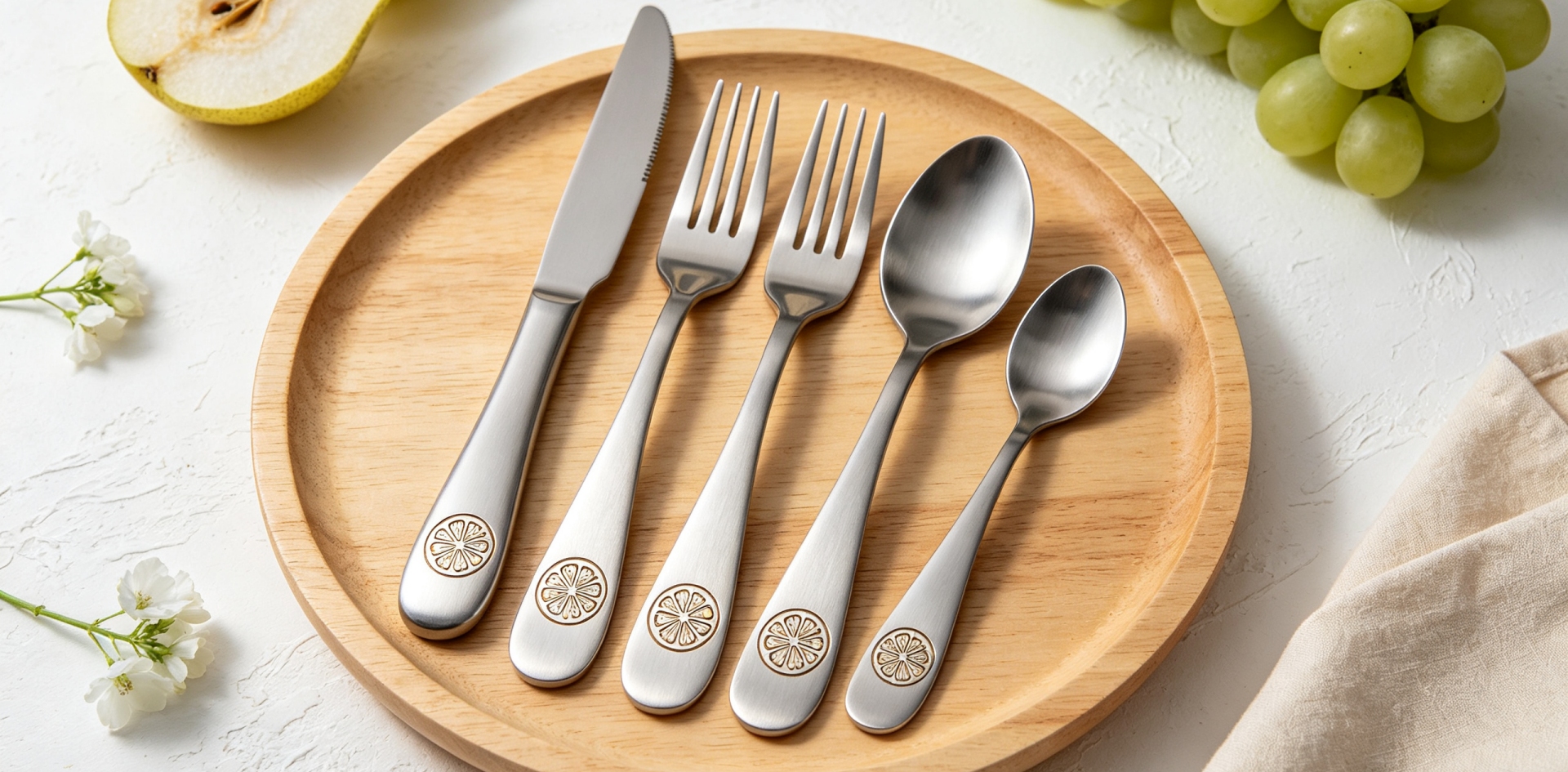
Stainless Steel Table Knife Blade-to-Handle Height for OEM Manufacturing
When sourcing stainless steel table knives for wholesale or private label collections, buyers commonly review blade length, handle dimensions, overall weight and cutting performance. Another useful design detail is the height relationship between the blade and handle when the knife is viewed from the side. This relationship contributes to the knife's overall profile and can affect whether the finished product matches the approved design.
For importers, distributors and hospitality suppliers, defining the intended blade-to-handle height early can help prevent sample disagreements and improve consistency during bulk manufacturing. Homefelt factory supports OEM and ODM stainless steel cutlery projects, including customized knives, forks, spoons and coordinated flatware sets.
What Is Blade-to-Handle Height?
Blade-to-handle height describes the relative vertical position of the blade and handle when the table knife is placed in a defined inspection position. Depending on the construction and design, the blade may sit approximately in line with the handle or follow a different profile.
This dimension is not the same as blade thickness, handle thickness or the knife's overall height. It concerns the relationship between the two main sections of the finished product.
Some designs intentionally use a raised or lowered blade profile. The correct result depends on the approved drawing, intended use and construction method. Buyers should therefore specify the required relationship instead of assuming that every table knife must follow a perfectly straight line.
Why This Detail Matters in Commercial Cutlery
1. Overall profile and appearance
The blade and handle create one continuous visual form. If their height relationship differs from the approved design, the knife may appear uneven or unbalanced when viewed from the side.
This is particularly noticeable when several knives are arranged together for retail display, catalogue photography or hospitality presentation. A defined reference makes it easier to compare the finished product with the intended design.
2. Coordination with forks and spoons
A table knife is often supplied as part of a larger flatware set. Although the knife's construction differs from that of a fork or spoon, its visual profile should complement the overall collection.
Buyers can assess the knife alongside the matching pieces to confirm that handle style, finish and overall proportions work together. Any intentional difference in height or curvature should be reflected in the design specification.
3. Sample approval and repeatability
A physical sample can communicate the intended profile, but a drawing provides measurable references. Using both reduces the risk of subjective interpretation during production.
For repeat orders, the approved drawing helps the manufacturer maintain the same blade-to-handle relationship even if the order quantity or production schedule changes.
Factors That Influence Blade-to-Handle Height
Blade and handle construction
Table knives may use different constructions depending on the product design. Some have an integrated structure, while others use separate components joined during manufacturing.
The construction method influences which dimensions and transitions need to be controlled. For multi-component designs, the position of the blade relative to the handle assembly should be included in the drawing and sample evaluation.
Blade profile and handle shape
The blade may have a curved spine, a raised section or a gradual change in thickness. The handle may also contain contours or decorative features that influence the apparent relationship between the two parts.
A single overall dimension may not fully describe these details. A side-view drawing with clearly identified reference points can provide a more useful specification.
Material and manufacturing process
Stainless steel grade, thickness, forming, grinding and finishing operations contribute to the finished geometry. The manufacturing method must be suitable for the intended design and required dimensional accuracy.
Material selection should be based on the buyer's product requirements. Commonly specified stainless steel grades include 304 and 430, but the appropriate material depends on the application and product construction.
Finishing and assembly
Polishing and other finishing operations can change how the transition between blade and handle appears. For knives made from joined components, assembly positioning may also influence the final profile.
The finished sample should therefore be reviewed after the relevant manufacturing and finishing stages rather than relying only on an unfinished component.
How Buyers Should Specify the Height Relationship
Establish the reference position
The technical drawing should show how the knife is positioned for measurement. It should identify the reference plane or line used to compare the blade and handle.
This is important when the handle is curved or the blade has a shaped profile. Without a common reference, two parties may measure different points and reach different conclusions.
Identify the relevant measurement points
The drawing should clarify whether the requirement concerns the blade spine, the main blade body, the handle surface or another defined feature.
For more complex designs, an additional side view or cross-section can help explain the intended geometry. Photographs may supplement the drawing, but they should not replace important dimensions.
Agree on the permitted variation
If blade-to-handle height is a critical feature, the specification should state the nominal dimension and acceptable tolerance. The tolerance should be realistic for the product design, manufacturing process and available measurement method.
Avoid assigning a numerical limit without first confirming that the feature can be measured consistently.
Approve the finished sample
The approved sample should match the intended construction, material, dimensions and surface finish. Buyers should inspect it from the side and compare the complete profile with the drawing.
If a design revision changes the blade or handle geometry, the updated drawing and sample should be approved together before the revision enters bulk production.
Quality Inspection for Bulk Table Knife Orders
For wholesale and OEM manufacturing, an inspection plan may include:
-
Checking overall knife length and specified blade dimensions.
-
Comparing the blade-to-handle height relationship with the approved drawing.
-
Reviewing the side profile for unintended steps or deviations.
-
Confirming component positioning where the design uses separate parts.
-
Inspecting the finished surface around the blade and handle transition.
-
Comparing samples from the production batch against the approved reference.
Depending on the geometry, a measuring fixture, profile template or suitable dimensional instrument may improve repeatability. The selected method should reflect the drawing and agreed acceptance criteria.
Inspection records can also include applicable material documents and product test reports when required by the buyer. The scope of testing and documentation should be confirmed for the specific product and destination market.
Example: Developing a Private Label Table Knife
A distributor is developing a table knife to match an existing stainless steel fork and spoon collection. The initial knife sample has the correct overall length and handle design, but its side profile looks different from the approved concept.
The buyer and manufacturer can compare the blade and handle reference points, review the construction drawing and determine whether the difference is intentional or requires adjustment. Once the revised sample is approved, the same drawing can guide production inspection and future repeat orders.
This approach helps maintain a coordinated collection while allowing the table knife to retain the geometry required by its own construction and intended use.
Material Documentation and Manufacturing Credibility
Reliable cutlery sourcing requires clear specifications as well as appropriate manufacturing and quality records. Depending on the project, buyers may request material documentation, inspection records and applicable product test reports.
Homefelt has experience in stainless steel cutlery manufacturing and has worked with established brands. Its documented credentials include BSCI, SEDEX 4P, BRC and ISO 9001, along with Disney audit experience and FAMA and FSC certificates for applicable projects. Buyers should confirm the relevance and scope of each document for their particular order.
For a complete purchasing specification, buyers should confirm the blade and handle dimensions, material, construction, surface finish, logo requirements, packaging and agreed inspection criteria before production begins.
OEM and ODM Table Knife Production with Homefelt
Homefelt factory provides stainless steel knives, forks, spoons and coordinated cutlery sets for importers, wholesalers, distributors and private label brands. Services include product customization, OEM and ODM development, wholesale supply and large-volume manufacturing.
Customers can discuss blade and handle geometry, material specifications, surface finishes, logo application and packaging formats. Homefelt can coordinate product design, sample development, manufacturing, packaging and transportation as a one-stop service tailored to the customer's project.
When requesting a quotation, share your drawing or reference sample, estimated order quantity, target market, packaging requirements and delivery schedule. These details help the factory assess the project and identify any specifications that need confirmation before production.
You May Be Interested In
Website: //www.huabao-homecollection.com/
Stainless Steel Fork Shoulder Transition Contour for OEM Manufacturing
Stainless Steel Spoon Bowl-to-Rim Height Profile for OEM Production
Related Article



