
Stainless Steel Table Knife Blade Design and Performance for B2B Buyers
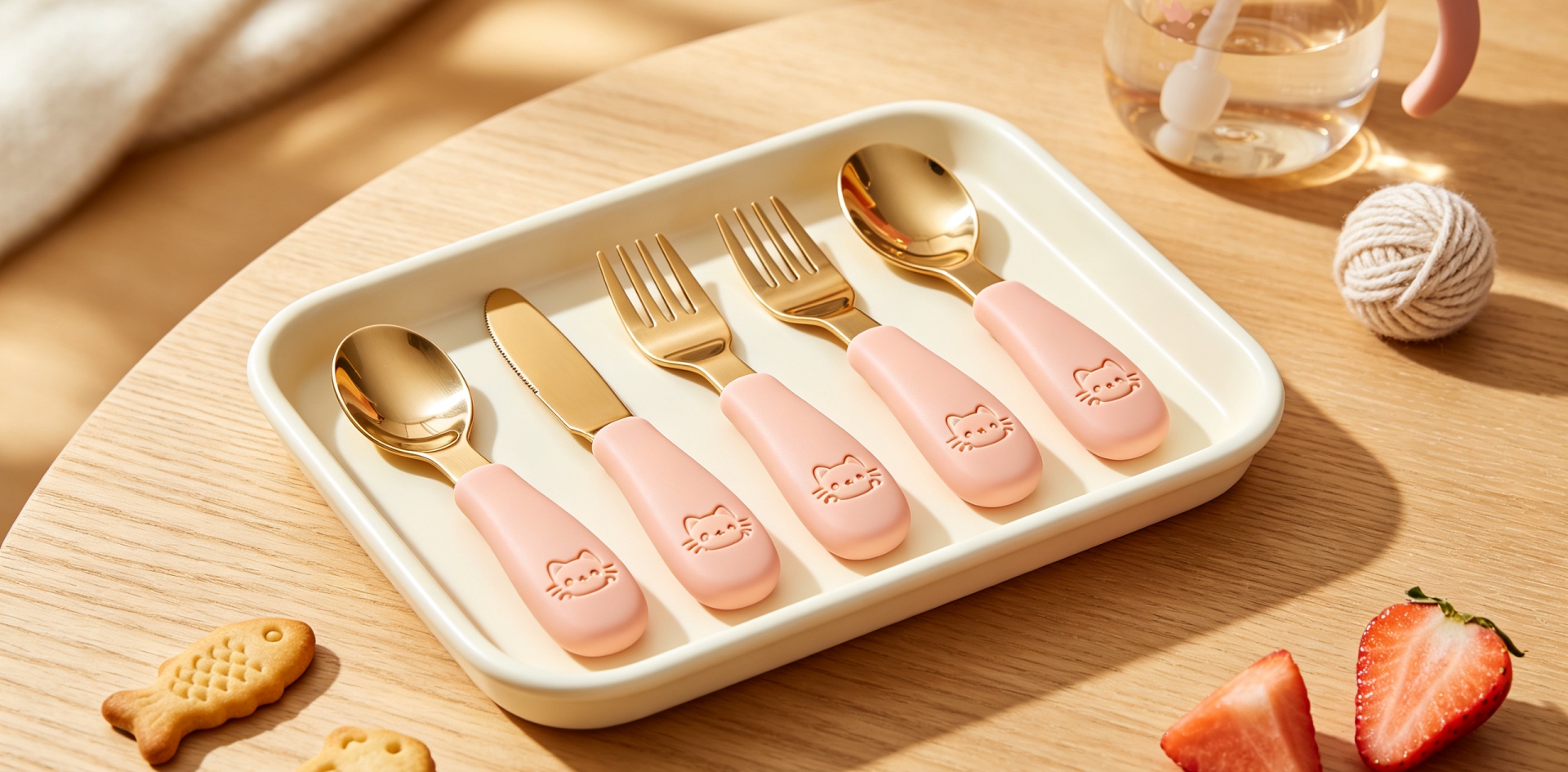
Stainless Steel Table Knife Blade Design and Performance for B2B Buyers
A stainless steel table knife may appear simple, but its blade is one of the most important parts of the product. For wholesalers, restaurant suppliers, distributors and private label brands, blade shape, thickness, length and finishing can all influence the final product specification.
When developing a stainless steel knife for commercial use, buyers should not evaluate the product only by its appearance. The blade needs to match the intended application, the overall cutlery design and the customer's target market.
Homefelt factory specializes in stainless steel knives, forks, spoons and complete flatware collections. The factory supports OEM, ODM, private label and bulk manufacturing for B2B customers that require defined product specifications and consistent production.
Understanding Stainless Steel Table Knife Construction
A table knife normally consists of a handle and a functional blade section. These two areas need to work together as one product.
The blade length affects the overall proportion of the knife and should be considered together with the handle length. A blade that is too short or too long can change the visual balance of the complete cutlery collection.
Blade width is another specification that can influence appearance and practical use. Different knife designs can use different blade profiles according to their intended market.
Blade thickness also needs to be defined during product development. It can affect rigidity, weight and the overall feel of the knife.
For B2B production, these specifications should be confirmed before mass manufacturing rather than relying only on a photograph or general product description.
Blade Shape and Commercial Product Positioning
Different stainless steel table knives can have very different blade profiles even when they are intended for similar table settings.
A traditional dinner knife may use a relatively straightforward blade design, while a more decorative collection may incorporate a shaped transition between the blade and handle.
The blade tip can also contribute to the overall visual appearance. Some designs use a more rounded profile, while others have a more defined point.
For private label projects, these details can become part of the product identity.
A buyer developing a new collection can provide a reference knife, drawing or visual concept and work with the manufacturer to determine which characteristics should be retained in the final production version.
Blade Edge Requirements
The edge of a table knife should be considered according to the intended application.
Not every table knife needs the same edge configuration. Some commercial table knives are designed primarily for everyday dining and require a practical cutting edge suitable for common food applications.
Other products may have a more defined serrated or specialized edge according to the customer's requirements.
For this reason, B2B buyers should clearly specify the required edge type when requesting a quotation or developing a custom knife.
The manufacturer can then evaluate the appropriate production method and confirm the specification through samples.
This is especially important for large-volume orders because an unclear edge requirement can create differences between the buyer's expectations and the final product.
How to Specify a Custom Stainless Steel Knife
A useful product specification for an OEM stainless steel table knife can include several key measurements.
Overall length should be confirmed from the handle end to the blade tip.
Blade length should be recorded separately so that the relationship between the handle and blade can be controlled.
Blade width can be specified at the appropriate reference point according to the product drawing.
Blade thickness should also be documented when the customer has a defined requirement.
The handle dimensions, handle profile and surface finish should be listed together with the blade specifications.
The buyer should also confirm whether the knife requires a standard edge, serrated edge or another customized configuration.
For a private label product, logo position and application method should be added to the specification.
These details give the manufacturer a clearer production reference and make sample approval more effective.
From Product Concept to Approved Sample
In an OEM or ODM project, the first product sample is an important stage because it allows the buyer and factory to verify the actual product rather than discussing specifications only on paper.
A customer may begin with a reference product and request changes to the handle, blade dimensions, surface treatment or logo.
The factory can then develop the customized version according to the agreed requirements.
During sample evaluation, the buyer can check the overall length, blade proportion, handle shape, surface finish and edge configuration.
Once the sample is approved, the confirmed specifications can be used as the production reference for the bulk order.
This process is particularly useful for private label customers who need a product that is different from standard catalogue designs.
Experience in Stainless Steel Cutlery Manufacturing
A professional stainless steel cutlery factory needs to understand how individual specifications affect the final product.
Homefelt has more than 40 years of experience in the stainless steel cutlery business and has worked with well-known brands. This manufacturing background supports customers developing stainless steel knives as individual products or as part of a complete knife, fork and spoon collection.
For B2B customers, manufacturing experience is valuable when a project contains several customized requirements.
A buyer may request a specific blade profile while also requiring a particular handle design, surface finish, logo application and packaging format. The manufacturer needs to consider these requirements together instead of treating each specification separately.
Quality and Certification Information
Product specifications are an important part of supplier evaluation, but international B2B buyers may also need information about factory qualifications and quality management.
Homefelt lists BSCI, SEDEX 4P, BRC and ISO9001 among its audits and certifications, together with a Disney audit. The company also has FAMA and FSC certificates.
These materials can help buyers evaluate the manufacturer's production and compliance background when considering a long-term supply relationship.
For a specific project, buyers can also request relevant product documentation and available testing information according to the requirements of their target market.
OEM, ODM and Private Label Knife Manufacturing
A customized table knife project can range from a simple logo application to a completely new product design.
Some wholesalers may select an existing knife and only customize the packaging.
Other customers may require changes to the blade dimensions, handle structure, surface finish or branding.
Private label brands may want to develop an exclusive knife that forms part of a larger stainless steel cutlery collection.
Homefelt can support these different project requirements through OEM, ODM and private label manufacturing.
The factory can also provide one-stop service according to the customer's situation, covering product design, customized production, packaging and transportation.
This allows buyers to develop the product and coordinate supporting services through one manufacturing partner.
Building a Complete Cutlery Project Around the Knife
Although the table knife can be developed as an individual product, many B2B buyers eventually need a coordinated knife, fork and spoon collection.
In this situation, the knife can serve as one of the main references for the collection's overall design language.
The handle shape, surface treatment and decorative elements can be coordinated with the matching fork and spoon.
At the same time, the blade itself can maintain the functional characteristics required specifically for the knife.
This creates a complete collection without forcing every product to use exactly the same construction.
For distributors and private label brands, this approach can make it easier to build a recognizable flatware range.
A One-Stop Service Package for B2B Customers
Every customer has different product requirements, order quantities, packaging needs and target markets.
Homefelt can develop a customized service package based on the customer's actual situation.
The service can include product design, stainless steel cutlery customization, sample development, packaging and transportation coordination.
Customers can provide their reference product, target specifications, estimated quantity and market requirements. The factory can then discuss the appropriate production solution.
The objective is to make the entire process easier for the buyer while maintaining clear communication from product development through bulk production.
Homefelt aims to become a reliable China stainless steel cutlery service partner and grow together with customers through long-term cooperation.
Stainless Steel Fork Tine Design Guide for B2B Cutlery Projects
How to Develop a Consistent Stainless Steel Cutlery Set for B2B Markets
Related Article



