
Stainless Steel Table Knife Cutting Performance for B2B
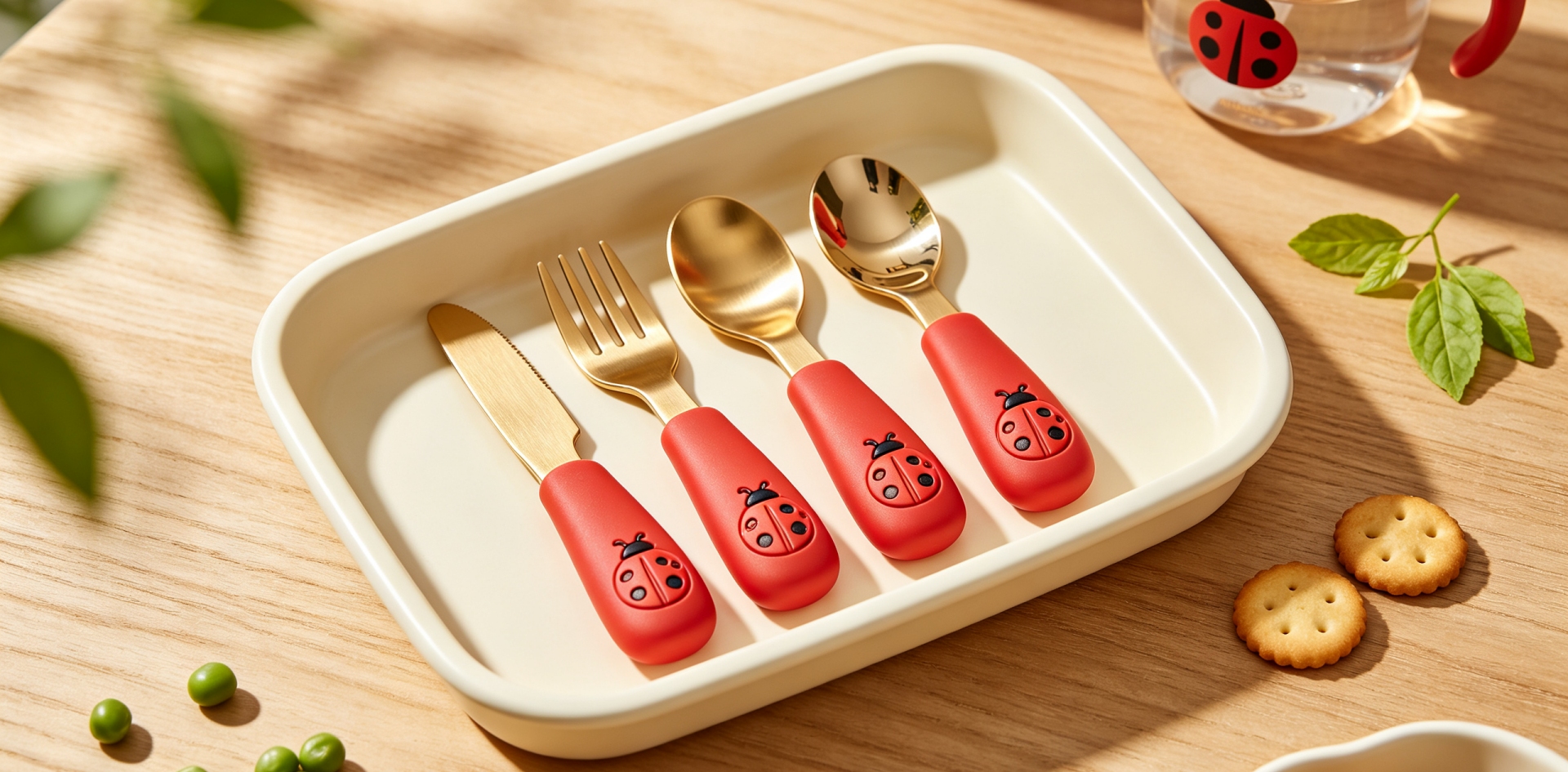
Stainless Steel Table Knife Cutting Performance for B2B
A stainless steel table knife may look simple, but its cutting performance depends on several details working together. For B2B buyers, these details can influence how a knife performs in daily use, how it fits into a cutlery collection and how consistently it can be produced in larger quantities.
When developing custom stainless steel cutlery, buyers often focus on handle design, finish and appearance. These elements are important, but the functional side of the knife should receive the same attention.
A well-designed table knife should balance appearance, handling and practical cutting performance while remaining suitable for commercial production.
What Defines Table Knife Cutting Performance?
Cutting performance is not determined by one specification alone.
The blade profile, edge treatment, blade thickness, material, geometry and overall construction can all influence how a table knife performs.
A knife designed for everyday dining may have different requirements from a more specialized steak knife. The purpose of the product should therefore be clear before the specifications are finalized.
For B2B brands, this is especially important when developing a complete collection. The knife should not only look consistent with the matching fork and spoon, but also provide the level of functionality expected from its intended market.
Blade Geometry and Practical Use
The shape of a stainless steel knife blade influences how it interacts with food.
The length, width, thickness and profile of the blade can affect handling and the way pressure is applied during use.
A broader blade can create a different balance from a narrow one, while a longer blade may provide a different cutting motion.
These details should be considered together rather than selected independently.
For custom projects, a factory can review the proposed dimensions and discuss whether the design is practical for the intended production process.
Edge Treatment Matters
The edge is one of the most important functional areas of a table knife.
Different edge treatments can be developed depending on the intended product and market. The goal is to achieve an edge that provides the required cutting action while remaining appropriate for the product's intended use.
For B2B buyers, consistency is particularly important.
A sample may perform well, but the commercial order needs to reproduce the approved design and edge characteristics across the production quantity.
This makes manufacturing control an important part of the overall product specification.
Balancing Sharpness and Tableware Requirements
A table knife used for everyday dining does not necessarily require the same edge characteristics as a specialized cutting knife.
Its function is generally connected with portioning and cutting common foods at the table while remaining comfortable and appropriate for normal dining use.
This distinction matters when developing a commercial cutlery collection.
Buyers should communicate the intended application to the factory so that the blade design can be considered in the correct context.
For restaurants, retailers, distributors and private label brands, the target customer and expected use can help determine the appropriate product direction.
Material Selection and Blade Performance
The stainless steel specification also forms part of the product's overall performance.
Material selection can affect the knife's manufacturing characteristics, surface appearance, durability and suitability for the intended application.
For this reason, material should be confirmed as part of the complete product specification rather than treated as a separate purchasing detail.
When a B2B customer is developing a customized table knife, the material, blade design and finish can be discussed together before the product enters commercial production.
The objective is to create a balanced specification rather than optimizing only one characteristic.
Handle and Blade Balance
A knife needs to feel balanced when held.
The handle length, handle weight, blade dimensions and connection between the two parts all contribute to the overall handling experience.
A visually attractive blade can still feel unsuitable if the overall product balance does not match its intended use.
For a coordinated stainless steel cutlery collection, this balance should be considered across the knife design while keeping the visual relationship with the matching fork and spoon.
Homefelt factory can discuss customized knife dimensions and handle requirements according to the customer's product concept and target market.
Designing for Commercial Production
A B2B table knife needs to be more than a successful prototype.
The design must also be suitable for repeated production.
Blade geometry, edge treatment and handle construction should be considered with the expected production volume in mind. If a design contains highly specific details, these requirements should be identified before the production order is released.
Early factory involvement can help buyers understand which design elements are straightforward to reproduce and which may require additional manufacturing consideration.
This is especially useful for private label projects where the same product may need to be produced repeatedly over an extended period.
Creating a Coordinated Knife, Fork and Spoon Collection
A table knife is usually part of a larger cutlery program.
When a brand develops a knife together with matching forks and spoons, the products should share a consistent visual direction while retaining their individual functions.
The handle shape, surface finish and decorative elements can create continuity between the pieces.
At the same time, the knife's blade needs to be developed according to its own functional requirements.
This combination of shared design language and product-specific engineering can help create a more complete flatware collection.
Custom Options for B2B Brands
For private label and OEM customers, customization can extend beyond a standard catalogue knife.
Possible requirements may include customized blade dimensions, handle profiles, surface finishes, decorative elements, logo details and packaging configurations.
The exact combination depends on the customer's market and product concept.
Homefelt supports customized stainless steel knives as part of broader stainless steel cutlery programs. Customers can discuss individual knives or develop matching forks, spoons and complete flatware sets.
This makes it possible to create a product range that is more closely aligned with the customer's brand rather than relying entirely on standard products.
Testing and Sample Evaluation
Before placing a large order, buyers can evaluate the physical sample to confirm whether the knife meets the intended requirements.
This review can include appearance, weight, balance, handle comfort, blade dimensions and practical cutting performance.
For B2B projects, it is useful to evaluate the sample as a commercial product rather than focusing only on whether it looks attractive.
If adjustments are required, they can be discussed with the factory before the specifications are finalized.
This approach can help the buyer establish a clearer reference for future bulk production.
One-Stop Support for Custom Cutlery Projects
A table knife may be the starting point for a project, but many B2B customers eventually need a complete product solution.
Homefelt factory can support stainless steel knife, fork and spoon customization together with OEM, ODM and private label manufacturing.
Depending on the customer's requirements, the service can also include product design discussion, set configuration, branded packaging, transportation coordination and large-volume production.
This one-stop approach allows customers to build a service package around their actual project instead of coordinating every stage with different suppliers.
For a new collection, this can simplify communication between product development, manufacturing and packaging.
From Knife Development to Bulk Orders
Once the knife design and specifications are approved, the product can move into commercial production.
For larger orders, consistency becomes just as important as the original cutting performance.
The approved sample and confirmed specifications provide the reference for production, while the factory's manufacturing process supports the transition from development to bulk supply.
For brands planning future reorders, maintaining the same product requirements is also important for keeping the collection consistent over time.
Homefelt provides large-volume stainless steel cutlery manufacturing for B2B customers and can discuss individual products as well as complete private label collections.
Start With Your Knife Requirements
You do not need to have a complete technical drawing before contacting a factory.
A reference knife, product photograph, existing sample or simple description of your target product can provide a useful starting point.
You can also share the expected quantity, target market, preferred material and desired appearance if these details are already available.
Homefelt can review the requirements and discuss suitable options for customization, OEM/ODM production, packaging and bulk manufacturing.
The goal is to turn a product idea into a practical stainless steel cutlery solution that can support your business beyond the first order.
Custom Stainless Steel Table Knives
OEM & ODM Stainless Steel Cutlery Manufacturing
Private Label Stainless Steel Knife Factory
Custom Stainless Steel Knife, Fork and Spoon
Coordinated Stainless Steel Cutlery Design for B2B Brands
Textured Handle Stainless Steel Cutlery for B2B Brands
Related Article



