
Stainless Steel Table Knife Edge Line Consistency for OEM Production
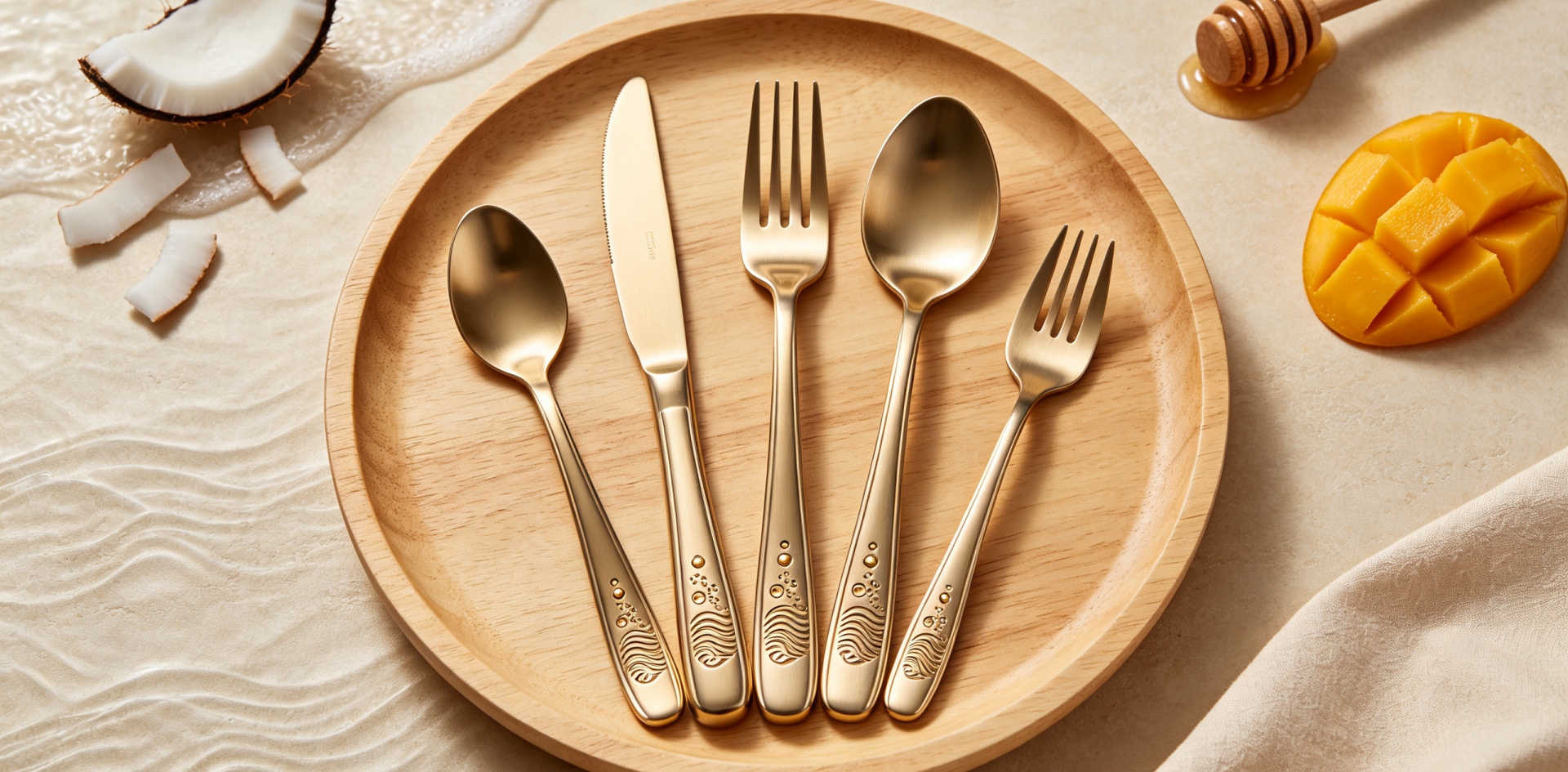
Stainless Steel Table Knife Edge Line Consistency for OEM Production
When buyers source stainless steel table knives for wholesale, hospitality or private label collections, the visible cutting-edge line is an important part of the finished product. Although it represents only one section of the knife, its position and consistency can influence the overall appearance of the utensil.
A table knife may have a polished handle, a carefully developed blade and a specific overall profile, but the edge line still needs to remain visually consistent from piece to piece. This becomes increasingly important when a buyer orders hundreds or thousands of knives for the same project.
For OEM and ODM production, defining the expected edge-line appearance before mass manufacturing can help the factory understand the customer's requirements and maintain a stable product reference.
Why the Knife Edge Line Matters
The cutting edge is one of the most recognizable visual lines on a table knife. When viewed from the side, it forms part of the blade silhouette and contributes to the character of the product.
A relatively straight edge creates a different appearance from a gently shaped edge. The appropriate design depends on the customer's product concept and the intended use of the knife.
For B2B buyers, consistency is often more important than simply choosing one particular shape. Once a sample has been approved, the production knives should maintain the same basic edge-line appearance throughout the order.
If individual pieces show noticeable differences, the variation can become easier to see when knives are arranged together as a complete flatware collection. This is particularly relevant for private label brands that need their products to maintain a consistent appearance across repeated orders.
What Buyers Should Specify
When developing a stainless steel table knife, buyers can clarify several practical references related to the edge line.
The first is the intended visual direction of the cutting edge. The buyer can provide a drawing, reference sample or product image to communicate the desired appearance.
The second is the relationship between the edge line and the blade body. The edge should follow the intended blade geometry rather than appearing visually disconnected from the rest of the knife.
The third is consistency between the left and right visual sides of the product. A balanced blade appearance helps maintain the intended silhouette.
Another important reference is the relationship between the blade edge and the knife tip. These areas should work together to create the final blade outline established during product development.
For customized projects, these details are best confirmed before bulk production rather than being left entirely to interpretation after manufacturing begins.
Edge-Line Consistency in Mass Production
The difference between a prototype and a commercial order is scale. A small variation that may not attract attention on one sample can become much more visible when a large quantity of knives is placed side by side.
For this reason, an experienced stainless steel cutlery factory needs to consider the approved sample as a production reference rather than simply a pre-production display piece.
Homefelt supports stainless steel knife, fork and spoon manufacturing for OEM, ODM, private label and wholesale customers. During product development, customer drawings and approved samples can be used to establish the required product appearance before the order moves into bulk manufacturing.
This approach is especially useful for customers who plan repeat orders. Maintaining the same edge-line characteristics helps ensure that future shipments continue to match the original collection.
Table Knife Design for OEM and Private Label Collections
A table knife rarely exists as an independent product in a B2B flatware project. It is usually supplied alongside spoons and forks as part of a coordinated collection.
The knife edge line therefore needs to work with the visual language of the complete range. A clean, contemporary collection may require a simple blade outline, while another product range may use a more distinctive blade shape.
The factory's role is not to decide that every project should use the same knife design. Instead, OEM and ODM manufacturing should allow the customer to establish the desired product characteristics and then translate those requirements into repeatable production.
Homefelt can support customers who already have their own designs as well as buyers who need assistance developing a new stainless steel cutlery product.
From Product Development to Finished Supply
A successful B2B cutlery project involves more than manufacturing the metal product. Buyers may need assistance with product development, customized specifications, packaging and transportation before the finished goods reach their market.
Homefelt provides a one-stop service according to the customer's situation. Product design coordination, stainless steel cutlery manufacturing, packaging and transportation can be integrated into one project workflow.
For private label brands, this can simplify communication because product requirements can be discussed with one manufacturing partner instead of being divided among several suppliers.
For distributors and wholesalers, the same approach can be useful when a project requires a stable product specification and large-volume production.
Factory Experience and Manufacturing Capability
Consistent product reproduction depends on manufacturing experience as well as product specifications. Homefelt has 40 years of experience in the stainless steel cutlery business and has experience working with well-known brands.
The factory supports OEM, ODM, private label and wholesale production of stainless steel knives, forks, spoons and flatware sets. This experience allows customer requirements to be considered from both the product-development and manufacturing perspectives.
For buyers evaluating a long-term supplier, factory qualifications can also provide useful background. Homefelt has passed BSCI, SEDEX 4P, BRC, ISO9001 and Disney audits, and has FAMA and FSC certificates. Relevant certification and testing materials can be discussed according to project requirements.
The purpose is not simply to complete one production order. A reliable supplier should be able to establish a product reference that can continue to support repeat manufacturing.
Supporting Repeat Orders and Long-Term Supply
For many B2B buyers, the first shipment is the beginning of a longer supply relationship. Retail brands, distributors, hospitality suppliers and commercial buyers may need to reorder the same table knives as their business grows.
Keeping the approved knife edge line consistent can therefore become part of maintaining product continuity. When the original specifications and samples are clearly established, they provide a practical reference for future production.
Homefelt works with customers from product development through manufacturing and supply coordination. The factory can customize stainless steel cutlery according to the customer's requirements while providing a one-stop service covering product design, packaging and transportation.
This reflects Homefelt's goal of becoming a long-term China service partner and growing together with customers through stable manufacturing and practical support.
Stainless Steel Fork Symmetry Control for OEM and Bulk Production
Stainless Steel Fork Shoulder Contour for OEM and Bulk Production
Related Article



